Understanding compressors is essential to mastering how commercial air conditioning systems work. As the heart of every HVAC unit, the compressor drives the refrigeration cycle, ensuring consistent temperature control, energy efficiency, and system reliability. Whether in office buildings, data centers, or industrial facilities, choosing the right compressor determines not only cooling capacity but also long-term cost savings. In this guide, we will explore everything from how compressors work to how to select the ideal model for your business through expert insights from Drezaircon, one of China’s leading commercial air conditioner manufacturers.
What Is a Commercial Air Conditioner Compressor?
A commercial air conditioner compressor is a mechanical device that increases the pressure of the refrigerant vapor, converting it from a low-pressure gas into a high-pressure gas before it passes through the condenser. This process is essential to the refrigeration cycle.
While small residential compressors operate intermittently, commercial compressors are designed for durability and continuous performance, often running for long hours under high-load conditions such as shopping malls, hospitals, and factories.
How Do Commercial Air Conditioner Compressors Work?
A commercial compressor operates as part of a closed-loop refrigeration cycle. It compresses the refrigerant gas, increasing its temperature and pressure. The hot gas then moves through the condenser, where it releases heat and transforms into a liquid. This refrigerant liquid then flows to the evaporator, absorbs heat from the surrounding environment, and cools the air before returning to the compressor.
In air-cooled chillers, the system releases heat into the surrounding air, while water-cooled chillers use a cooling tower to dissipate heat more efficiently. Drezaircon designs optimized compressor systems for both configurations, ensuring high efficiency even under fluctuating temperature conditions common across China’s diverse climates.
Types of Commercial Air Conditioner Compressors
Different applications require different types of compressors, each offering unique advantages:
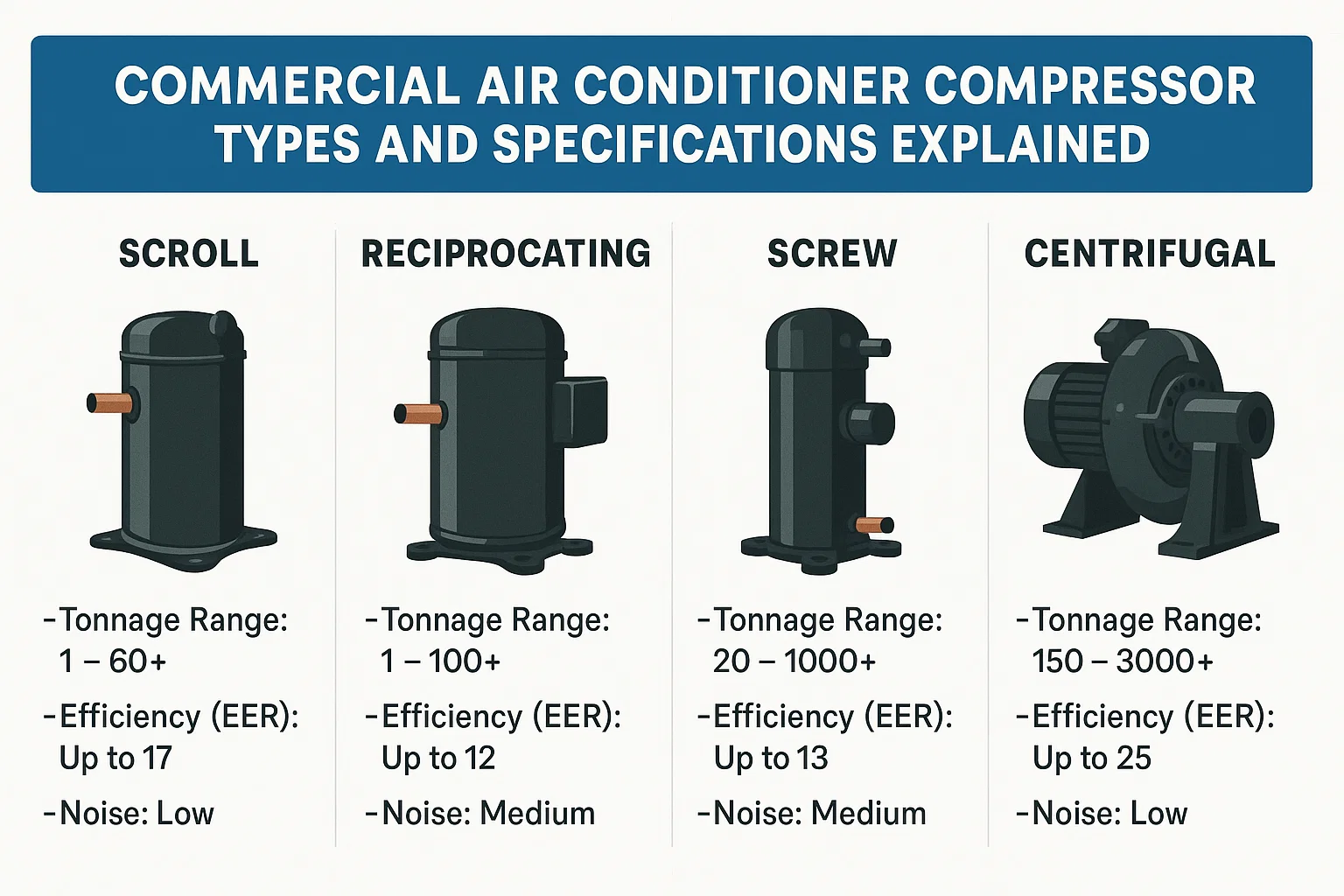
- Reciprocating Compressors – These use pistons to compress refrigerant and are ideal for small to medium-sized commercial spaces.
- Scroll Compressors – Compact and quiet, scroll compressors offer high efficiency and are commonly used in office buildings and retail environments.
- Screw Compressors – Designed for large-scale industrial applications, they provide continuous operation and stable performance for factories and data centers.
- Centrifugal Compressors – Best suited for high-capacity systems such as airports or skyscrapers; they efficiently handle large cooling loads.
- Rotary Compressors – Suitable for small commercial units that require a balance between performance and compact design.
Drezaircon manufactures all major types of compressors, ensuring that customers can choose the most suitable option based on their operating scale and cooling requirements.
Why Are Compressors the Core of Every Cooling System?
In every commercial air conditioning system, the compressor performs the vital task of circulating refrigerant throughout the system. It is responsible for compressing the refrigerant and moving it between the evaporator and condenser coils, enabling heat transfer that makes cooling possible.
For commercial and industrial facilities, this component directly affects operating costs, comfort levels, and energy efficiency.
A high-quality compressor ensures that cooling systems perform effectively under high demand, which is especially valued by businesses in China’s hot and humid regions. Drezaircon specializes in developing advanced compressors designed for these challenging environments, ensuring reliability and sustainability.
The Role of Compressors in Air-Cooled and Water-Cooled Chillers
Air-cooled chillers use outdoor air to remove heat and are easier to install and maintain, making them ideal for locations with limited water availability. Water-cooled chillers, on the other hand, rely on a water source and cooling tower, providing higher efficiency in large-scale or industrial environments.
Each type of chiller requires a specific compressor configuration — Drezaircon customizes both air-cooled and water-cooled compressor systems to achieve precise load management and optimal energy utilization.
Sizing Compressors for Large Commercial Buildings
Proper compressor sizing is critical for energy efficiency and system longevity. An undersized compressor will be overloaded, leading to premature failure, while an oversized unit will cycle too frequently, resulting in wasted energy.
To determine the correct size, engineers perform cooling load calculations, considering factors such as:
- Total floor area and building height
- Occupancy levels and equipment heat generation
- Insulation quality and glass exposure
- Climate conditions and humidity levels
Drezaircon engineers use advanced load simulation tools and formulas, such as BTU and tonnage calculations, to recommend the most suitable compressor size for each building type.
Industrial HVAC Design and Compressor Selection
Compressor selection goes hand in hand with HVAC system design. The right compressor ensures balanced airflow, stable pressure, and efficient heat exchange. Industrial systems in China often require powerful compressors capable of operating 24/7 in dusty, high-temperature environments.
Drezaircon designs compressors to meet the needs of different industries, from pharmaceutical manufacturing and textile production to server cooling and warehouse refrigeration, ensuring precise control and optimized energy consumption.
Compressor Options for Rooftop Air Conditioning Units
Rooftop air conditioning systems are popular in commercial buildings due to their space efficiency and low indoor noise levels. However, compressors in these systems face harsh environmental conditions.
To ensure reliability, Drezircon rooftop compressors are designed with weather-resistant enclosures, vibration control systems, and advanced lubrication systems to handle temperature fluctuations and outdoor exposure.
Industrial and Commercial Refrigeration System Compressors
While the technology used in compressors may overlap, operating requirements differ significantly between industrial and commercial applications. Industrial systems require robust performance and high-capacity output, while commercial compressors prioritize energy efficiency and quiet operation.
Drezircon’s product line covers both sectors, providing customized solutions that maximize service life and maintain superior performance.
Factors Affecting Compressor Performance
Several environmental and operational variables influence compressor efficiency and reliability:
- Ambient Temperature: High outdoor temperatures can place stress on compressors and reduce efficiency.
- Humidity: Excessive humidity affects refrigerant behavior and load handling.
- Maintenance Quality: Regular servicing extends the operational lifespan of compressors.
- Installation Standards: Proper installation ensures stable refrigerant flow and reduces energy losses.
Drezaircon follows strict performance testing protocols to ensure that its compressors deliver optimal results under real-world conditions.
Energy-Efficient Commercial Air Conditioning Compressors
With rising energy costs and environmental regulations, efficiency has become a top priority. Drezaircon compressors incorporate advanced technologies such as variable frequency drives (VFDs), which automatically adjust speed and power based on demand, reducing energy consumption by up to 30%.
In addition, the brand uses environmentally friendly refrigerants with low global warming potential (GWP) and intelligent monitoring systems that detect performance issues early to minimize downtime.
Technological Innovations Shaping Modern Compressors
Modern compressors benefit from continuous research and technological advancements. Features such as digital scroll technology and inverter compressors enable precise modulation, ensuring consistent cooling without wasting energy through sudden power surges.
Drezircon continues to innovate in predictive maintenance systems that use artificial intelligence to predict mechanical wear and enhance overall reliability, keeping businesses in China at the forefront of HVAC efficiency.
Installation Considerations for Commercial Compressors
Proper installation is the key to long-term performance. Factors such as site preparation, piping layout, and electrical settings directly affect efficiency.
Installers must ensure:
- Secure and level foundations for vibration control
- Adequate ventilation for heat dissipation
- Proper alignment and availability of refrigerant and electrical lines
Maintenance and Troubleshooting Best Practices
Regular maintenance is essential for high-capacity compressors. Routine inspections of oil levels, refrigerant charge, and motor condition help prevent costly failures.
Common signs of compressor problems include excessive noise, overheating, or sudden pressure drops. Drezaircon’s after-sales support provides diagnostics and service plans designed to keep systems operating efficiently throughout the year.
Compressors by Manufacturer — Drezaircon’s Advanced Product Range
Drezaircon produces a wide range of compressors, including:
- Scroll and screw compressors for efficient performance and low maintenance
- High-capacity industrial compressors for 24/7 factory operation
- Compact rooftop compressors designed for urban commercial buildings
Each product line is engineered to meet China’s industrial requirements and global efficiency standards, ensuring long-term reliability and reduced operating costs.
Frequently Asked Questions
What Is the Most Efficient Compressor for Commercial Systems?
Scroll and inverter compressors are considered among the most efficient options for commercial HVAC systems. Scroll compressors provide smooth and reliable operation with fewer moving parts, resulting in lower maintenance requirements and long-term durability.
On the other hand, inverter compressors automatically adjust their speed according to cooling demand. This variable-speed technology reduces energy waste, maintains consistent indoor comfort, and significantly lowers electricity costs, making them ideal for commercial environments where efficiency and reliability are top priorities.
How Often Should I Service My Commercial Compressor?
The frequency of compressor maintenance depends on the system’s workload and operating environment. For heavy-duty or continuous-use facilities, such as shopping malls, manufacturing plants, or data centers, quarterly maintenance is highly recommended. Regular servicing helps identify early signs of wear, prevent failures, and maintain optimal energy efficiency.
For lighter commercial applications, such as offices or retail stores, comprehensive servicing every six months is generally sufficient to keep the system running smoothly, extend compressor lifespan, and avoid unexpected repair costs.
Does Drezaircon Offer Customized Compressors?
Yes, Drezaircon specializes in designing and manufacturing customized compressor systems tailored to meet your specific requirements. Whether you need a high-capacity cooling solution, low-noise operation, or maximum energy savings, Drezaircon engineers design each unit based on your project’s specific cooling load, environmental conditions, and sustainability goals.
This customized approach ensures optimal performance, efficiency, and reliability, making Drezaircon a trusted choice for customized commercial cooling solutions.
Conclusion — Why Choose Drezaircon for Commercial Air Conditioner Compressors in China
Selecting the right commercial air conditioner compressor is a decision that affects energy costs, reliability, and overall comfort. With deep expertise in HVAC engineering, Drezaircon stands as a trusted manufacturer in China’s refrigeration industry, providing advanced, efficient, and durable compressor systems.
By combining innovation with local expertise, Drezaircon ensures that your business stays cool, efficient, and sustainable, regardless of how demanding your cooling requirements may be.