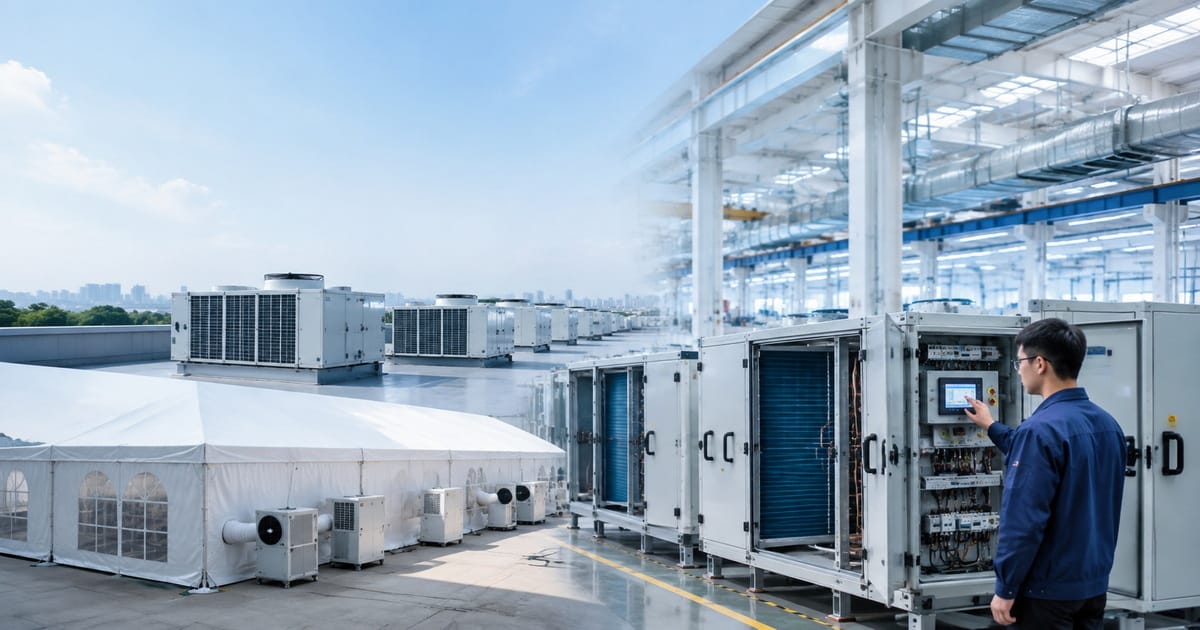
Ductable Air Conditioner efficiency levels compared to split and window AC units is an important topic for both homeowners and businesses trying to balance comfort with electricity costs. Air conditioning has evolved from a seasonal luxury into an essential part of daily life, but operating it efficiently can make the difference between manageable utility bills and unnecessary expenses.
While many people choose an AC system based on upfront price or brand reputation, the real long-term impact comes from how efficiently each type operates. Ductable systems, split units, and window ACs are all designed for cooling, but their design, coverage area, and energy consumption patterns vary significantly.
The differences become even more noticeable when comparing how they perform across different room sizes, climates, and usage hours. Understanding these distinctions not only helps you save money but also extends the lifespan of your equipment.
Ductable Air Conditioner Efficiency Levels Compared to Split and Window AC Units
In this guide, we will explain the real-world efficiency levels of ductable air conditioners compared to split and window AC units using data-driven comparisons and case studies.
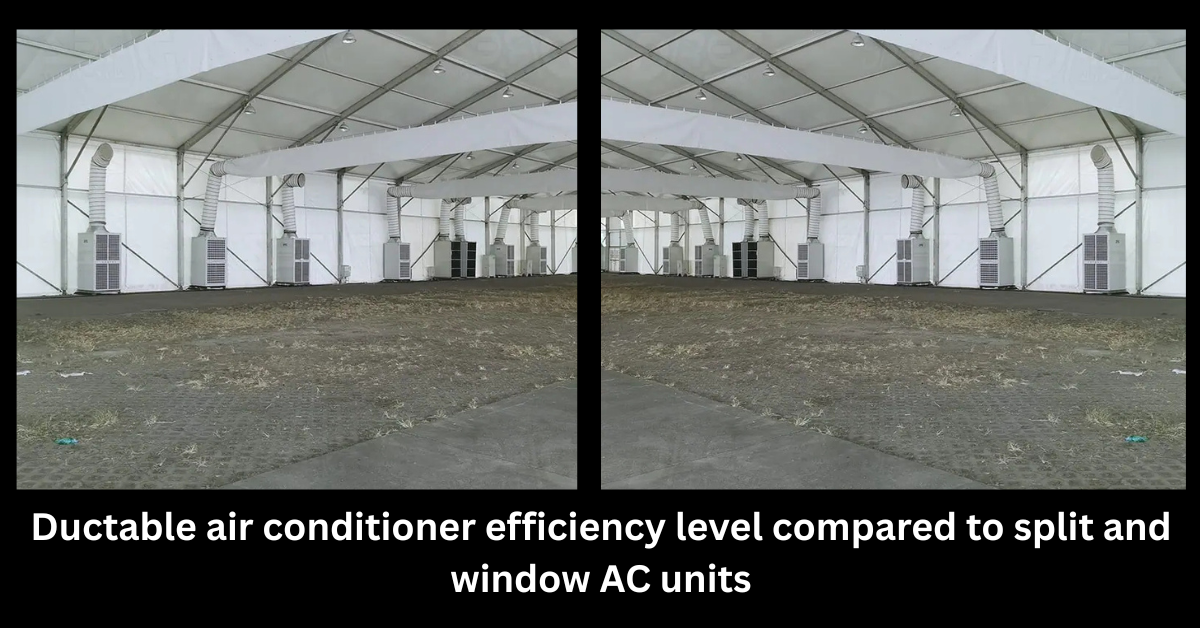
1: Understanding the Three Systems
When comparing the efficiency of ductable air conditioners with split and window AC units, it is important to first understand the design and operation of each system. Efficiency is not only about electricity usage; it is also about how each system delivers cooling, how much space it can handle, and the type of environment it is designed for.
1.1 Ductable Air Conditioners
Ductable air conditioners are centralized systems designed to cool multiple rooms or large open spaces using a network of insulated ducts. A single indoor unit, usually installed in the ceiling or hidden in a utility area, pushes cooled air through ducts to different outlets throughout the space.
- Ideal Use: Large offices, hotels, shopping malls, showrooms, and large homes.
- Cooling Distribution: Even, centralized, and controlled from a single point.
- Efficiency Factors: Performs best when ducts are properly insulated, airflow is balanced, and the system is correctly sized for the cooling load.
- Disadvantage: If ducts are poorly maintained, energy losses can occur, reducing efficiency.
1.2 Split AC Units
Split air conditioners have an indoor unit mounted on the wall for each room, connected to an outdoor compressor. Each unit cools its specific space independently.
- Ideal Use: Homes, small offices, or spaces where separate temperature control is required.
- Cooling Distribution: Zone-specific; units in unused rooms can be turned off to save energy.
- Efficiency Factors: Star-rated split ACs with inverter technology can achieve high seasonal efficiency.
- Disadvantage: Multiple units mean higher installation costs for large spaces.
1.3 Window AC Units
Window air conditioners are compact systems that fit into a wall or window opening. The compressor, condenser, and evaporator are all contained within a single unit.
- Ideal Use: Small rooms or budget-conscious setups.
- Cooling Distribution: Limited to a small space.
- Efficiency Factors: Low installation cost, but generally lower efficiency compared to split ACs.
- Disadvantage: Higher noise levels, limited cooling range, and less control over air distribution.”
2: Key Efficiency Metrics That Matter
To make a fair comparison between ductable, split, and window AC units, you need to examine standardized efficiency measurements. These metrics help determine how much cooling is delivered for each unit of electricity consumed.
- EER (Energy Efficiency Ratio): Measures cooling output (BTU) per hour divided by power input (watts). A higher EER means more cooling with less energy.
- SEER (Seasonal Energy Efficiency Ratio): Similar to EER but averaged over an entire cooling season. It is important for split and window AC units.
- COP (Coefficient of Performance): The ratio of cooling provided to electrical energy consumed; higher values indicate better efficiency.
- IPLV (Integrated Part Load Value): For larger systems such as ductable ACs, it measures performance under varying load conditions.
Typical Industry Ranges:
- Ductable AC: EER between 8.5-10, IPLV varies depending on load and design.
- Split AC: EER between 10–12.5, with SEER between 14–22 for high-efficiency models.
- Window AC: EER between 8–10, with SEER between 10–13.
The higher these ratings are, the less electricity the system consumes for the same amount of cooling.
3: General Energy Consumption Trends
Although we will not break down a complete case study here, general consumption trends are well documented through industry surveys and energy audits:
- Ductable ACs generally have higher initial energy usage because they cool larger spaces from a single system. However, in buildings where all zones are occupied, centralized cooling can be more consistent and cost-effective per square foot.
- Split ACs are the most flexible, allowing selective use in occupied rooms, which often reduces total consumption. Inverter models further adjust energy usage based on demand.
- Window ACs are typically less efficient than split ACs but can match ductable systems in smaller, high-use areas. They have lower installation costs but higher ongoing costs when multiple units operate simultaneously.
4: Breaking Down the Results
Looking at efficiency from a broader perspective:
- Cooling Coverage:
- Ductable systems are designed for uniform cooling across large spaces but may waste energy in unused zones.
- Split systems excel at targeted cooling, preventing energy waste in unoccupied rooms.
- Window units are limited to small areas, so efficiency depends entirely on correct sizing.
- Control and Flexibility:
- Ductable ACs rely on a single control point, which can be a limitation if occupancy changes throughout the day.”
- Split systems provide individual control in each space, maximizing usage efficiency.
- Window units offer minimal control beyond basic temperature and fan settings.
- Operational Efficiency:
- Split systems often have higher efficiency ratings due to modern inverter technology.
- Ductable systems are efficient when operated at full or near-full capacity but lose efficiency when cooling partial loads.
- Window units maintain relatively constant energy usage regardless of room load.
5: Maintenance and Efficiency Over Time
Maintenance plays an important role in the long-term efficiency of all three AC types.
- Ductable ACs:
- Require regular duct inspections, filter cleaning, and insulation checks. Dust accumulation or duct leakage can reduce efficiency by up to 20%.
- Split ACs:
- Easier to maintain with regular filter cleaning and coil servicing. Efficiency loss occurs more slowly, averaging around 5% over five years with proper care.
- Window ACs:
- More prone to efficiency decline due to their compact design and frequent dust accumulation. They may lose 10-15% efficiency over several years without maintenance.
Consistent servicing not only keeps performance high but also extends the lifespan of the system, making the investment more worthwhile.
6: Choosing the Right System Based on Efficiency Needs
The right AC choice depends on your usage patterns, space size, and budget priorities.
- Choose Ductable AC if you have a large, continuously used space and need uniform temperature across all zones. It is best suited for commercial setups or large homes where centralized control is preferred.
- Choose Split AC if you want the highest energy efficiency in spaces where occupancy varies. Zone-based control allows you to operate only what is needed, reducing wasted energy.
- Choose Window AC if you need a low-cost, quick installation for a small space and can accept lower long-term efficiency.
The goal is to match the system capacity and design with the actual cooling requirement, avoiding both oversizing and undersizing.
Conclusion
When comparing ductable air conditioner efficiency levels with split and window AC units, there is no single best option for every situation. Each system has strengths and limitations that affect real-world performance. Ductable ACs are suitable for large spaces requiring consistent and centralized cooling, but they may waste energy if many areas are unoccupied.
Split ACs provide zone-based control, often delivering the highest operational efficiency, especially in setups where room usage changes throughout the day. Window ACs remain the simplest and most affordable to install, but they generally fall behind in energy savings and long-term performance.
Efficiency is not only about technical ratings such as EER or SEER; it is also about matching the right system to the right environment, maintaining it properly, and using it in a way that minimizes waste. A well-selected and properly maintained AC system can keep energy bills predictable while providing reliable comfort year after year.
Ultimately, the right choice is the one that aligns your cooling needs, space size, and budget with a system designed to operate efficiently over the long term.