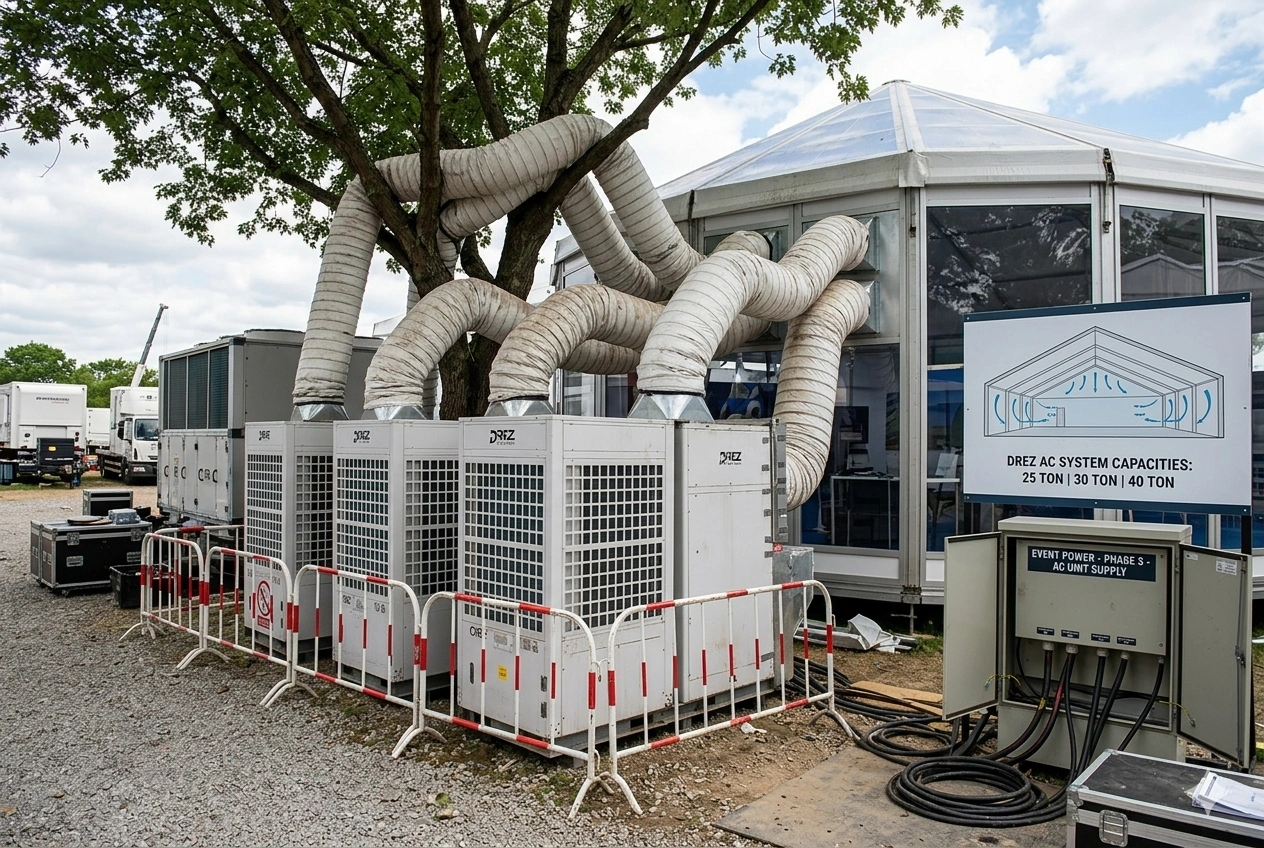
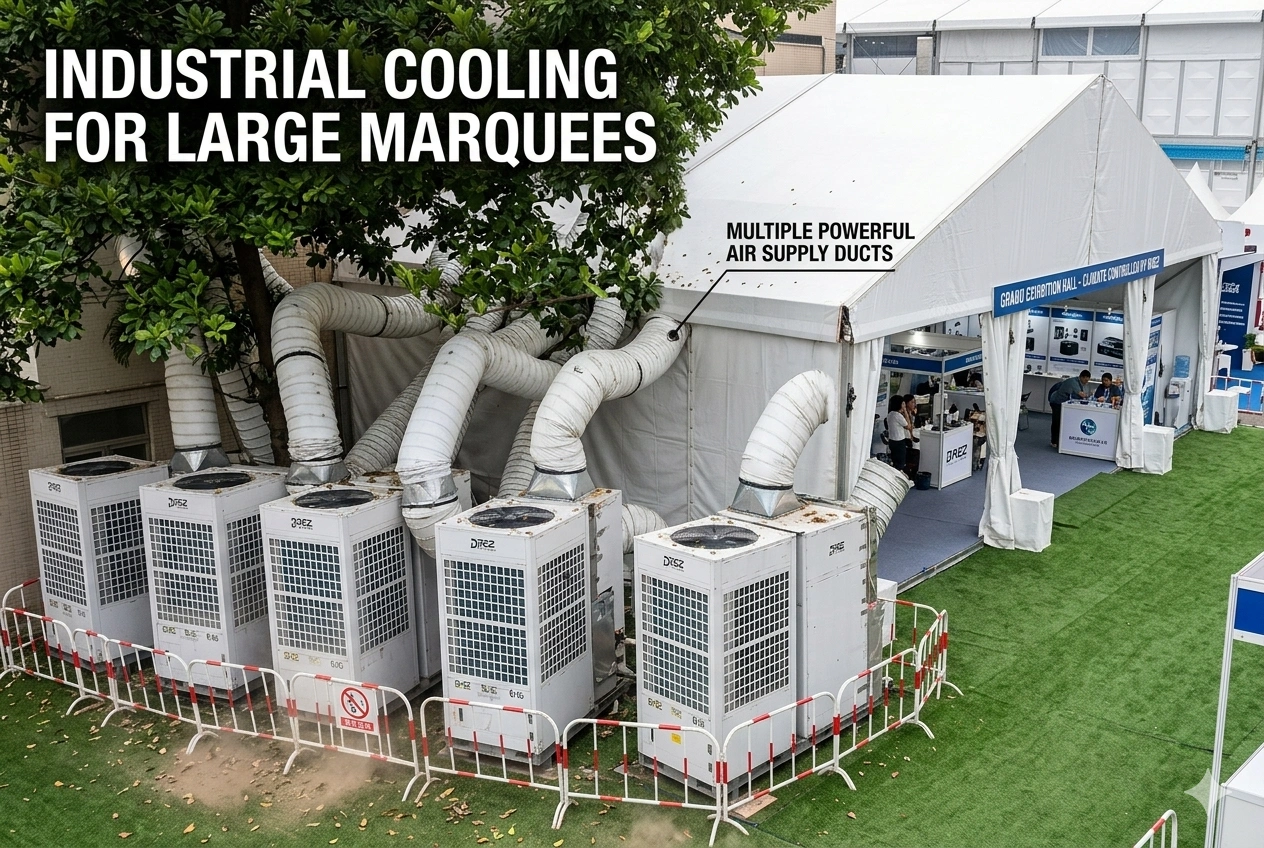
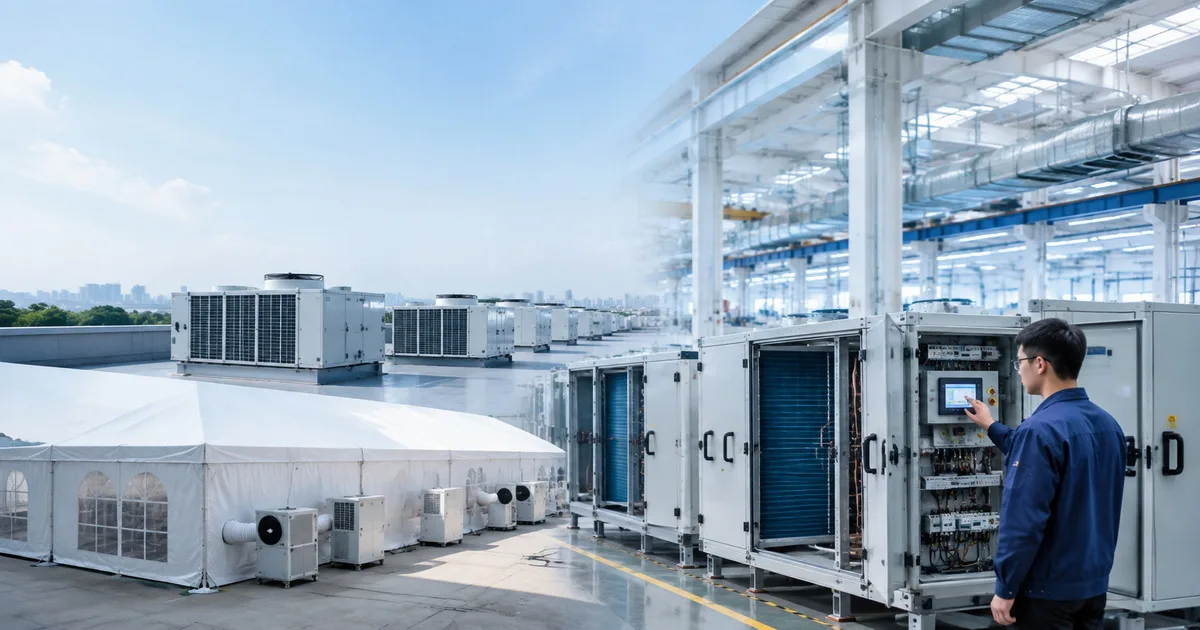
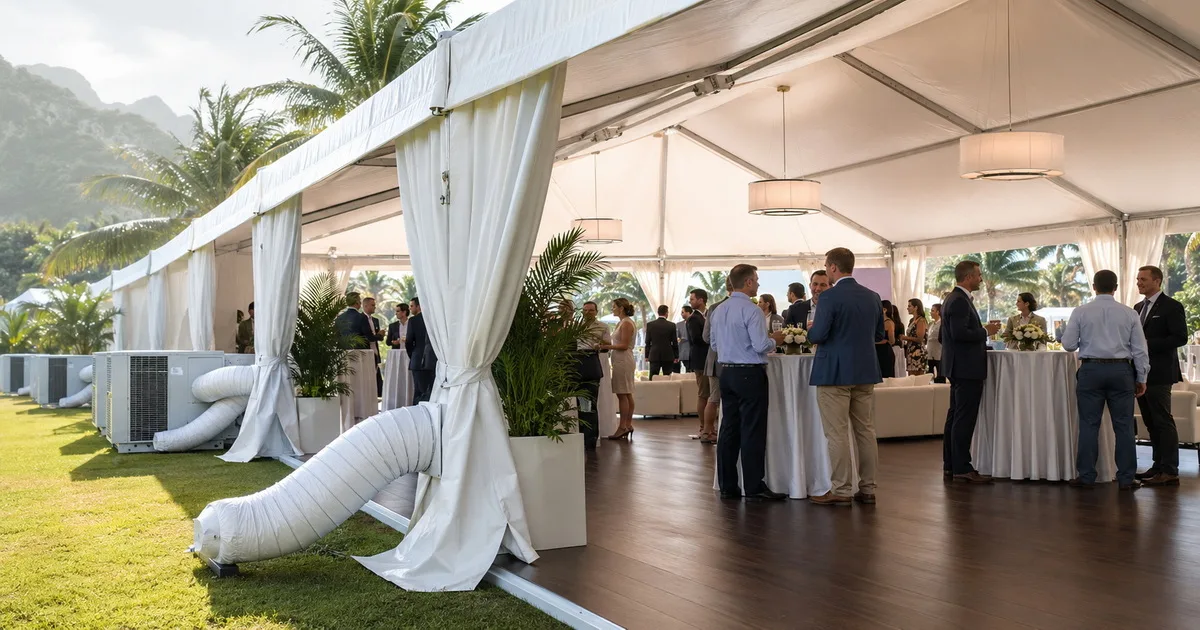
Industrial Air Conditioner for Temporary Structures Used in Events, Exhibitions & Tents is becoming an essential cooling solution for modern large-scale outdoor and semi-permanent environments. With the rapid growth of exhibitions, industrial gatherings, wedding events, emergency relief camps, and temporary commercial setups, the demand for high-performance and mobile cooling systems has increased significantly.
Unlike traditional HVAC systems designed for permanent buildings, industrial air conditioners for temporary structures are engineered for flexibility, fast deployment, and powerful cooling capacity in open or semi-open spaces. These systems are capable of handling high heat loads, large crowd density, and challenging environmental conditions while maintaining stable indoor temperatures.
From large exhibition halls to outdoor tents and industrial workshops, businesses require reliable cooling infrastructure that can be installed and removed quickly without compromising efficiency. Modern portable industrial HVAC systems offer scalable solutions that meet these demands effectively. They ensure comfort, productivity, and safety in environments where temperature control is critical.
Industrial Air Conditioner for Temporary Structures Used in Events, Exhibitions & Tents
This guide explains everything about industrial air conditioning systems designed for temporary structures, their applications, technical features, benefits, and how companies like Drez Aircon are shaping this industry with specialized cooling solutions.
1. Introduction to Industrial Air Conditioner for Temporary Structures
An industrial air conditioner for temporary structures is a high-capacity cooling system designed to provide temperature control in non-permanent spaces such as tents, exhibition halls, outdoor venues, and modular buildings.
Unlike residential or standard commercial AC systems, these units are engineered for:
Rapid installation and removal
High cooling loads (large square footage coverage)
Outdoor and semi-open environments
Continuous operation under harsh conditions
These systems are widely used in:
Outdoor exhibitions
Corporate events
Wedding and festival tents
Industrial workshops
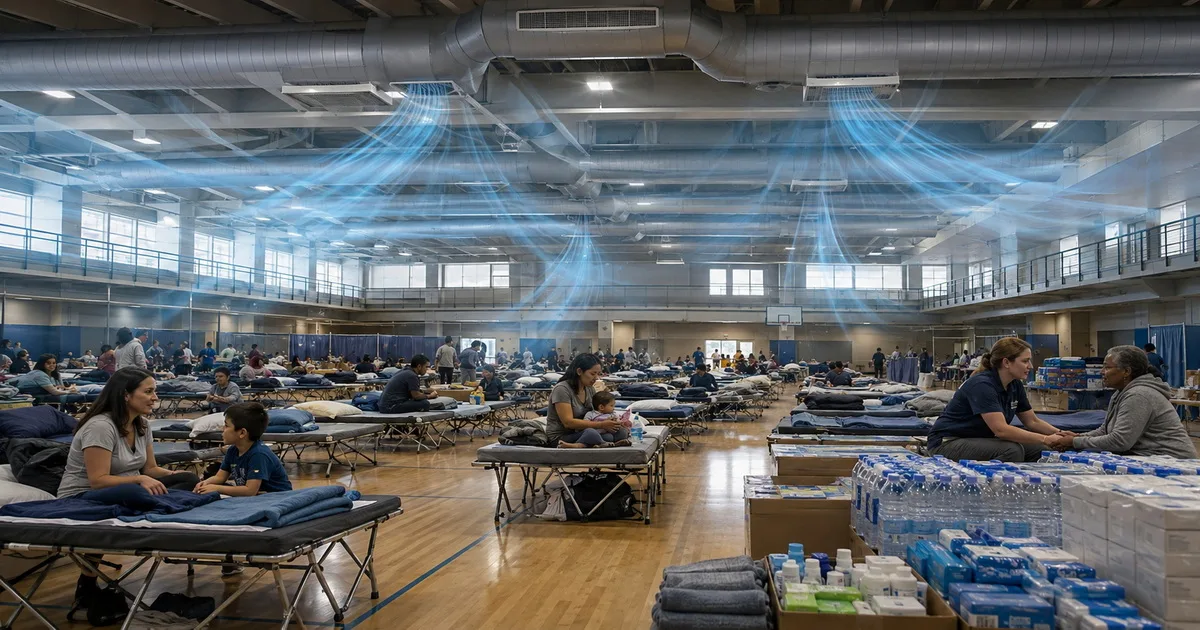
Emergency relief camps
The growing demand for flexible infrastructure has made temporary HVAC systems a core requirement for modern event and industrial planning.
2. What is an Industrial Air Conditioner for Temporary Structures?
A temporary industrial HVAC system is a mobile or modular cooling unit designed to regulate temperature in structures that are not permanent.
Key characteristics:
High BTU or tonnage capacity
Portable or trailer-mounted design
Flexible ducting systems
Industrial-grade compressors
Quick deployment setup
These systems differ from fixed HVAC installations because they are built for mobility and adaptability, not permanent integration.
In simple terms:
It is a “plug-and-play industrial cooling system” for large temporary environments.
3. Industrial Air Conditioning Solutions for Events, Exhibitions & Tents
One of the fastest-growing applications of temporary HVAC systems is the event and exhibition industry.
Common use cases include:
Event tents
Weddings
Corporate gatherings
Festivals
Exhibition halls
Trade shows
Product launches
Expo centers
Outdoor venues
Temporary stadium seating
Open-air conferences
Cultural events
Cooling challenges in these environments:
Heat buildup from crowd density
Direct sunlight exposure
Limited airflow
Large open spaces
An industrial air conditioning system solves these issues by delivering high-volume, evenly distributed cooling.
4. Portable Industrial Air Conditioner Systems for Large Structures
Portable industrial air conditioners are designed for flexibility and fast deployment.
Types of portable systems:
Trailer-mounted HVAC units
Skid-mounted cooling systems
Container-based AC systems
Advantages:
Easy transportation between sites
Fast installation (often under hours)
Scalable capacity depending on structure size
Minimal infrastructure requirements
These systems are especially useful for temporary construction sites, exhibitions, and disaster relief operations where permanent HVAC installation is not possible.
5. Applications of Temporary Industrial Cooling Systems
The use of industrial air conditioner for temporary structures extends across multiple industries.
Warehouses & Logistics
Temperature-sensitive storage
Seasonal overflow storage facilities
Construction Sites
Site offices
Worker rest areas
Events & Exhibitions
Large exhibition halls
Outdoor festivals
Emergency Relief Camps
Disaster response tents
Medical emergency shelters
Industrial Halls
Temporary production setups
Maintenance shutdown cooling
Each application requires a different cooling capacity and system configuration, making customization essential.
6. Benefits of Industrial Air Conditioner for Temporary Structures
Temporary HVAC systems provide multiple operational advantages:
1. Rapid Deployment
Systems can be installed quickly without major construction work.
2. High Cooling Efficiency
Designed for large air volumes and extreme heat conditions.
3. Cost Efficiency
No permanent infrastructure investment required.
4. Mobility
Units can be relocated between multiple project sites.
5. Reliable Performance
Built for continuous operation in demanding environments.
These benefits make them ideal for industries requiring short-term but high-performance cooling solutions.
7. Technical Features of Modular Industrial HVAC Systems
Modern industrial cooling systems include advanced engineering features:
High Tonnage Capacity
Units can range from medium to ultra-large cooling capacities suitable for thousands of square feet.
Ducted Air Distribution
Ensures even cooling across tents or halls.
Skid & Trailer Mounted Design
Enables transport flexibility.
Energy Efficient Compressors
Reduces operational cost while maintaining performance.
Smart Temperature Control
Allows automated monitoring and adjustment.
These features make them suitable for industrial-grade temporary cooling environments.
8. Temporary HVAC System for Industrial and Commercial Use
A temporary HVAC system is not just a cooling unit it is a complete environmental control solution.
Core functions:
Temperature regulation
Air circulation management
Humidity control (in advanced systems)
Scalability:
Systems can be combined to support:
Small tents
Medium exhibition halls
Large industrial warehouses
This modular approach ensures that cooling systems can adapt to different project sizes.
9. Challenges in Cooling Large Temporary Structures
Cooling temporary structures comes with technical challenges:
Heat Load Management
Large crowds and equipment generate excess heat.
Air Distribution
Open spaces make uniform cooling difficult.
Power Supply Limitations
Temporary sites often have restricted electrical capacity.
Environmental Factors
Wind, sunlight, and external temperature affect system efficiency.
Industrial air conditioning systems are designed specifically to overcome these challenges through high airflow engineering and modular design.
10. Why Choose Drez Aircon for Industrial Temporary Cooling Solutions
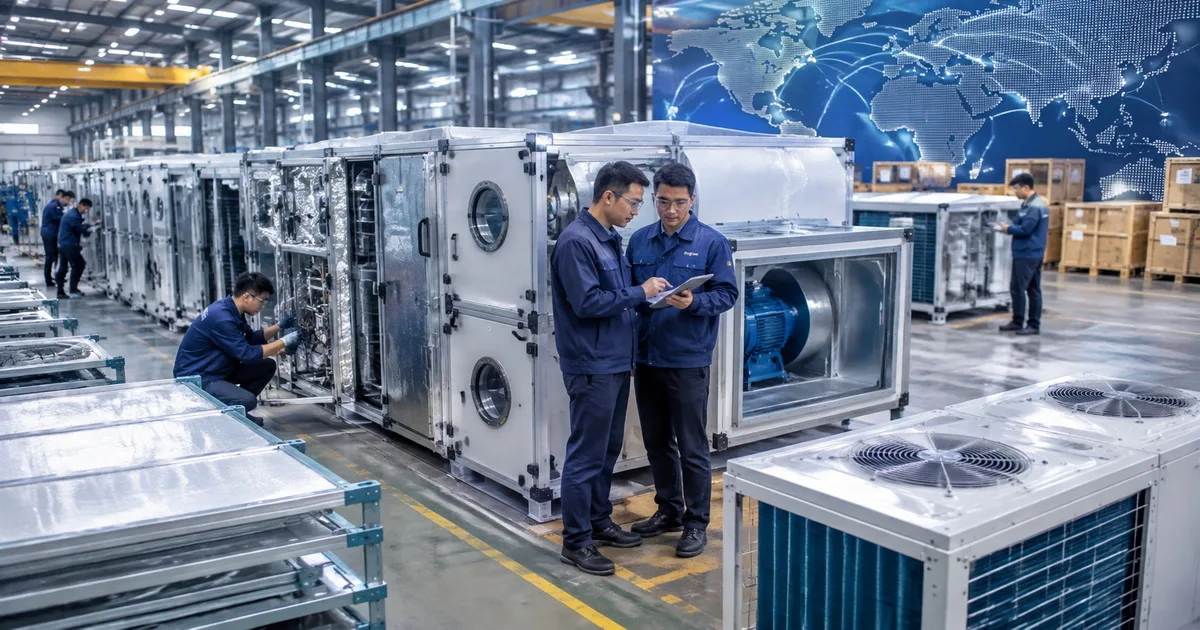
Companies like Drez Aircon specialize in designing and manufacturing industrial-grade temporary HVAC systems for global applications.
Key strengths:
Industrial and event-specific HVAC engineering
Portable and modular cooling system designs
Custom capacity-based solutions
Reliable performance in outdoor environments
Their systems are widely used in:
Events and exhibitions
Industrial temporary installations
Large-scale outdoor cooling projects
This positions them as a solution provider rather than just an equipment supplier.
11. Custom Industrial Air Conditioning Solutions for Temporary Structures
Not all projects have the same cooling requirements. That is why custom HVAC design is essential.
Customization includes:
Cooling capacity planning
Structure size analysis
Airflow distribution design
Power optimization
Engineers assess site conditions and design systems accordingly to ensure maximum efficiency and reliability.
12. Future of Temporary Industrial Air Conditioning Systems
The demand for industrial air conditioner for temporary structures is increasing globally due to:
Growth of outdoor events industry
Expansion of modular infrastructure
Increased climate control requirements
Emergency and disaster response needs
Future systems will focus on:
Lower energy consumption
Smart IoT-based monitoring
Faster deployment mechanisms
Higher portability with compact design
Temporary HVAC is becoming a core infrastructure segment, not just a support system.
FAQs
1. What is an industrial air conditioner for temporary structures?
It is a high-capacity cooling system designed for tents, exhibitions, events, and other non-permanent industrial or commercial spaces.
2. Where is it commonly used?
It is used in events, exhibition halls, wedding tents, warehouses, construction sites, and emergency relief setups.
3. How does it work?
It cools large spaces using industrial compressors and distributes air through ducts or direct airflow systems.
4. Can it cool large areas?
Yes, depending on capacity, it can cool medium to very large temporary structures and halls.
5. Is it suitable for outdoor events?
Yes, it is specifically designed for outdoor and semi-open environments like tents and festivals.
6. What types are available?
Portable, skid-mounted, trailer-mounted, and modular HVAC systems are commonly used.
7. Is it energy efficient?
Yes, modern systems are designed to provide high cooling output with optimized energy consumption.
8. Can it be customized?
Yes, systems can be customized based on structure size and cooling requirements.
9. How fast is installation?
Most systems can be installed and operational within a few hours to one day.
10. Why choose Drez Aircon?
Drez Aircon provides industrial-grade temporary cooling solutions designed for events, tents, and large-scale structures.
Final Takeaway:
An industrial air conditioner for temporary structures used in events, exhibitions & tents is now a critical solution for modern industries that require scalable and mobile cooling systems.
From large-scale exhibitions to emergency relief camps, these systems provide reliable, high-performance climate control where traditional HVAC systems cannot be used.
Companies like Drez Aircon are contributing to this transformation by offering engineered, industrial-grade cooling solutions tailored for temporary environments.
As demand continues to grow, temporary HVAC systems will play an increasingly important role in global industrial and event infrastructure.
Looking for reliable Air HVAC Systems manufacturers in China? Compare 10 leading suppliers by product focus, OEM/ODM capability, certifications, MOQ considerations, and sourcing suitability for
Compare fresh air conditioning vs. dehumidification systems for humid outdoor events. Learn how to control cooling, ventilation, moisture, condensation, and guest comfort in tents, exhibitions,
Compare fresh air conditioning for emergency shelters with standard HVAC cooling systems. Learn how ventilation, humidity control, filtration, clean-air modes, backup power, and OEM/ODM customization
Explore 10 Chinese Air Handling Unit System manufacturers for OEM, ODM, commercial HVAC, cleanroom, mobile cooling, and ventilation projects. Compare supplier strengths, customization capability, certifications,