Content Menu
● Why Emergency Cooling Needs a Fast Decision
● What Is Mobile Air Conditioning?
>> Best Use Cases for Mobile AC
● What Is an Industrial Spot Cooler?
>> Best Use Cases for Spot Coolers
● Emergency Cooling Comparison
● Which One Works Better in Emergency Cooling?
● Performance Factors That Matter Most
>> 3. Efficiency Under Pressure
● Industry Scenarios Where the Choice Changes
>> Warehouses
>> Events and Temporary Structures
● A Practical Decision Framework
● Expert Insight for OEM and ODM Buyers
● Cost, Risk, and Operational Value
● What to Ask Before You Choose
● FAQs
>> 1. Is mobile air conditioning the same as a spot cooler?
>> 2. Which is better for emergency cooling in factories?
>> 3. Can one spot cooler cool an entire warehouse?
>> 4. Are mobile AC units good for temporary buildings?
>> 5. Can I use both systems together?
>> 6. Which solution is more cost-effective?
When emergency cooling is on the line, the right equipment is not just about comfort. It is about protecting production, preventing downtime, and stabilizing critical indoor conditions fast. In most industrial settings, mobile air conditioning is better for broader temporary cooling, while an industrial spot cooler is usually better for concentrated heat removal at a specific machine, workstation, or hot zone.
Why Emergency Cooling Needs a Fast Decision
Unexpected heat events can happen in factories, warehouses, event spaces, temporary buildings, telecom rooms, and manufacturing sites. The wrong cooling choice can leave operators with uneven temperatures, wasted energy, and avoidable shutdowns.
That is why this comparison matters. A mobile air conditioner and an industrial spot cooler may look similar at first glance, but they serve different emergency scenarios and deliver cooling in different ways. For brands, wholesalers, and project buyers working with OEM and ODM suppliers, choosing correctly can directly affect product performance, customer satisfaction, and after-sales credibility.
What Is Mobile Air Conditioning?
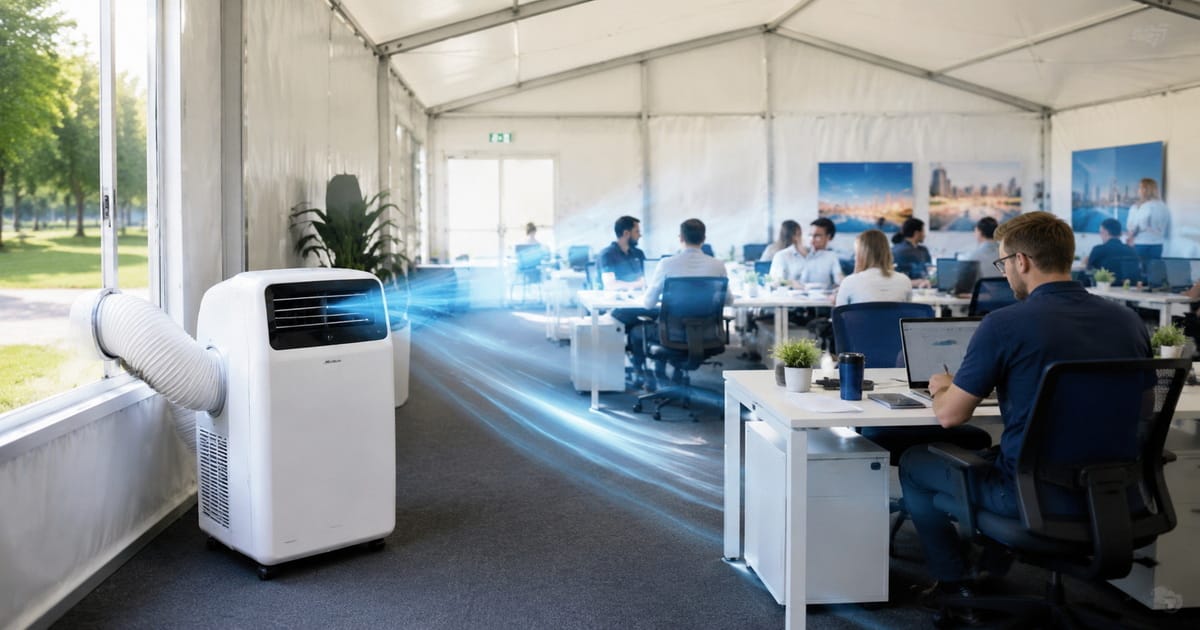
A mobile air conditioning unit is a portable cooling system designed to cool a room, zone, or temporary enclosed area. It is commonly used when you need fast deployment, flexible movement, and broader comfort cooling for people and work areas.
Mobile AC units are especially useful in temporary buildings, event halls, commercial spaces, construction offices, and emergency backup situations. In many real-world cases, businesses choose them because they are easier to move, simpler to install, and better suited to cooling a larger shared environment.
Best Use Cases for Mobile AC
– Temporary offices and modular buildings.
– Event tents and exhibition spaces.
– Retail rooms and customer-facing areas.
– Short-term HVAC failure response.
– Workspaces where occupant comfort is the top priority.
What Is an Industrial Spot Cooler?
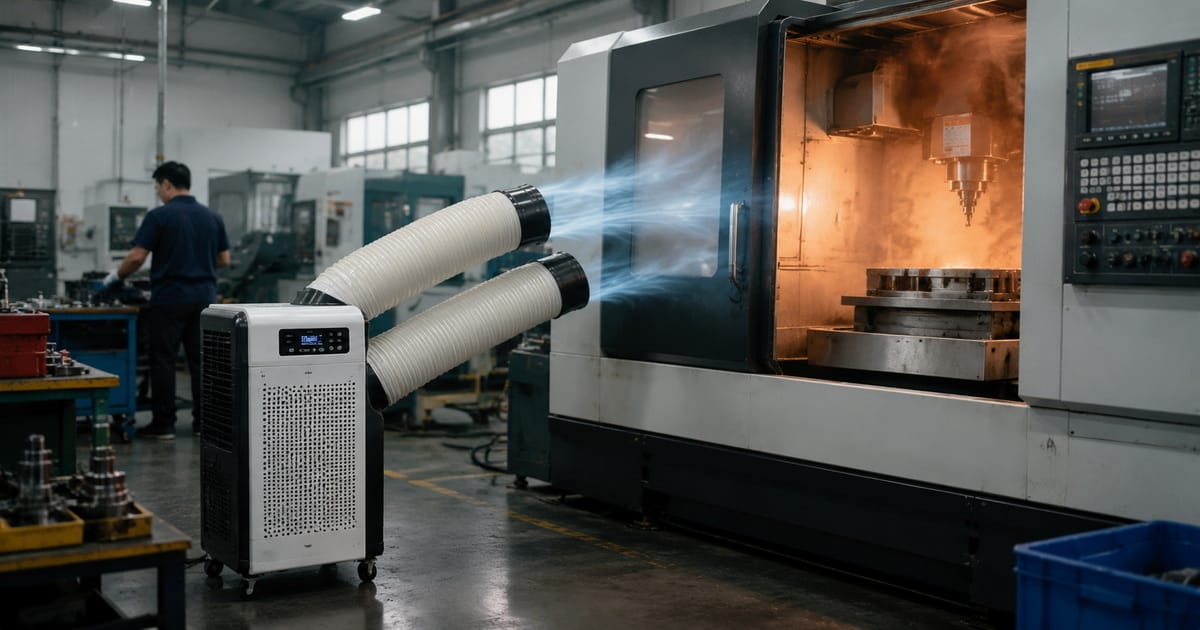
An industrial spot cooler is a targeted cooling system built to send cold air directly to a specific area, machine, or heat-generating point. Instead of trying to lower the temperature of an entire room, it focuses cooling power where it is needed most.
This makes spot coolers highly effective in factories, data rooms, equipment rooms, and production lines with localized heat buildup. When an industrial process creates a hot spot, a spot cooler can help prevent overheating, protect machinery, and maintain process stability.
Best Use Cases for Spot Coolers
– CNC machinery and industrial production lines.
– Server rooms and telecom equipment areas.
– Electrical cabinets and control rooms.
– Warehouses with localized heat zones.
– Emergency protection for temperature-sensitive equipment.
Emergency Cooling Comparison
The most important difference between these two solutions is coverage. Mobile air conditioning is designed for broader area cooling, while industrial spot cooling is designed for focused cooling with higher precision.
| Factor | Mobile Air Conditioning | Industrial Spot Cooler |
|---|---|---|
| Cooling goal | Broader room or zone cooling | Targeted hotspot cooling |
| Best for | People, temporary spaces, shared areas | Machines, racks, and localized hot zones |
| Deployment | Fast and flexible | Fast, but more precise placement required |
| Airflow style | General circulation | Directed cold air delivery |
| Efficiency logic | Better for comfort cooling | Better for critical point cooling |
| Emergency value | Stabilizes occupied spaces | Protects high-value equipment |
| Noise tolerance | Often more acceptable in occupied areas | Often better in industrial-only areas |
In emergency cooling, the best choice depends on what is overheating first: the room or the asset. If the room temperature is the main issue, mobile air conditioning usually wins. If one machine or rack is at risk, an industrial spot cooler is often the smarter answer.
Which One Works Better in Emergency Cooling?
The answer is: it depends on the emergency.
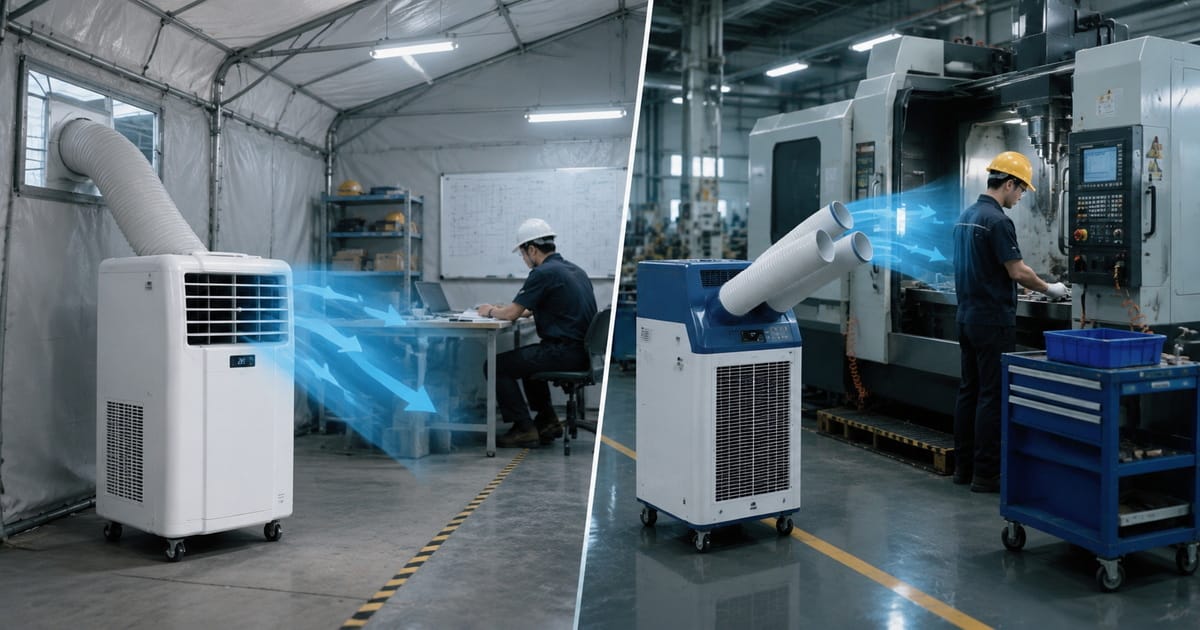
If your site needs rapid cooling for employees, temporary event spaces, or a general indoor environment, mobile air conditioning is usually the better fit because it provides wider comfort coverage. If your emergency involves one overheated machine, a server rack, a control panel, or a single critical workstation, industrial spot cooling is usually superior because it delivers concentrated cooling exactly where the heat load is highest.
From a field perspective, this is the simplest way to think about it:
– Choose mobile air conditioning when the priority is room-level temperature relief.
– Choose an industrial spot cooler when the priority is protecting a heat-sensitive asset.
– Use both together when you need ambient comfort plus hotspot protection.
Performance Factors That Matter Most
Emergency cooling is not only about BTU output. It is also about how quickly the unit can be deployed, how well it handles airflow, and whether it matches the actual heat problem.
1. Cooling Coverage
Mobile AC units spread cooling across a wider area, making them suitable for comfort and temporary occupancy. Spot coolers focus cold air on one critical zone, which improves precision but limits broad coverage.
2. Speed of Response
Both systems can be deployed quickly, but spot coolers often solve localized overheating faster because they do not waste capacity cooling the whole room. Mobile AC units are still valuable when the emergency affects people instead of machinery.
3. Efficiency Under Pressure
Targeted cooling is usually more efficient when only one area is at risk. Broad cooling becomes more efficient when several people or a larger zone must remain usable.
Industry Scenarios Where the Choice Changes
Different industries define “emergency” in different ways. That is why a one-size-fits-all cooling answer does not work well.
Manufacturing Facilities
In manufacturing, a spot cooler is often the first choice when a machine starts overheating or a line runs too hot. If the whole floor becomes uncomfortable, mobile air conditioning may be added to improve worker conditions.
Warehouses
Warehouses often have uneven heat patterns. In these cases, a spot cooler is ideal for problem zones, while mobile AC helps when loading areas or office corners need temporary relief.
Data and Telecom Rooms
For server rooms and telecom spaces, precision matters more than broad comfort. Industrial spot coolers are generally the stronger choice because they protect sensitive electronics from heat spikes.
Events and Temporary Structures
For tents, exhibitions, and temporary venues, mobile air conditioning usually performs better because occupants care about overall comfort and airflow across the full space.
A Practical Decision Framework
Use this quick process when choosing emergency cooling:
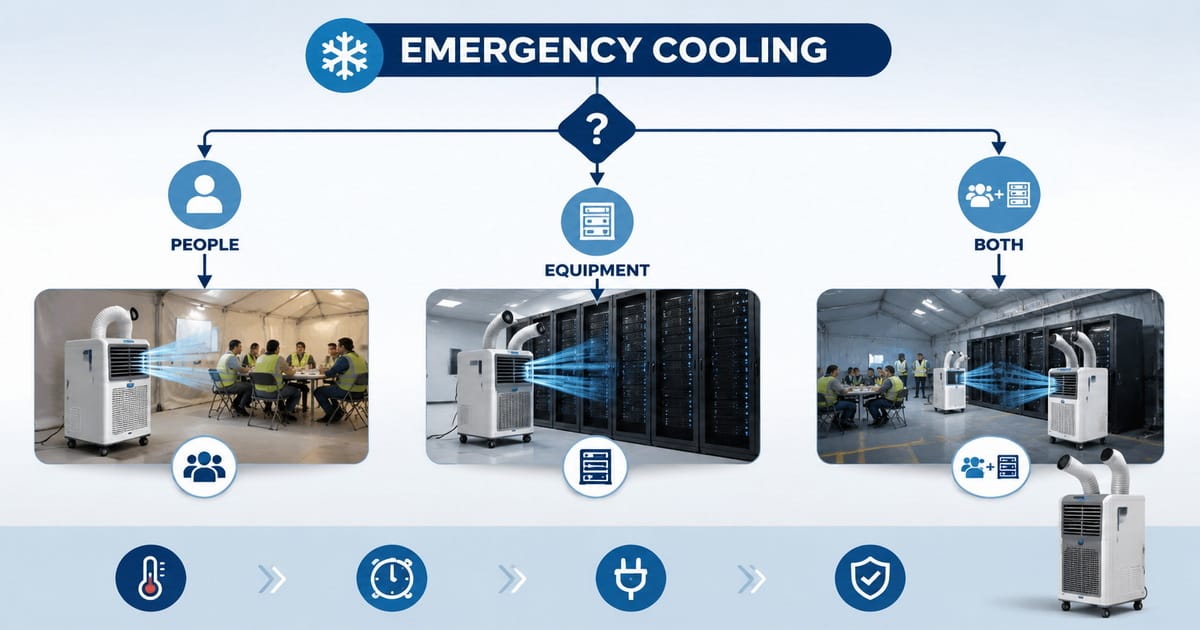
1. Identify what is overheating: people, machines, or both.
2. Measure the affected space and isolate the real hot zone.
3. Check power supply, exhaust routing, and space for installation.
4. Decide whether you need targeted cooling or area cooling.
5. Match the unit type to the urgency and the business risk.
This framework reduces mistakes and helps buyers avoid oversizing or undersizing the solution. It is also useful for OEM and ODM project discussions because it turns a vague request into a technical specification.
Expert Insight for OEM and ODM Buyers
For export-focused manufacturers and brand owners, the product decision should start with the use case, not the machine label. A good supplier should understand whether the application requires ambient comfort cooling, emergency equipment protection, or both.
From an OEM and ODM perspective, this also affects product design. Mobile air conditioning products may need stronger usability features, easier movement, and better user interfaces, while industrial spot coolers may need more robust airflow management, ducting options, and stable performance in harsh environments. That is why a supplier like DREZ, with experience in R&D, manufacturing, and customized climate-control solutions, can create more application-specific value than a generic catalog seller.
Cost, Risk, and Operational Value
A smart emergency cooling decision is not just about purchase price. It is about the cost of downtime, equipment damage, missed delivery deadlines, and worker disruption.
Mobile air conditioning often makes more sense when the cost of discomfort is the main issue. Spot coolers usually justify their value when a heat-sensitive asset is expensive, irreplaceable, or operationally critical. In other words, the higher the risk of failure, the more attractive targeted industrial cooling becomes.
When to Use Both Together
In many real projects, the best answer is not either/or. A facility may need mobile air conditioning to keep workers safe and comfortable while using a spot cooler to protect a critical machine or electrical cabinet.
This hybrid approach is especially effective in warehouses, production plants, and large temporary installations. It gives operators both broad stability and localized protection at the same time.
What to Ask Before You Choose
Before you choose a cooling solution, ask these questions:
– What exactly is overheating?
– How large is the affected area?
– Is the priority comfort or equipment protection?
– How fast must the system be deployed?
– Do you need one unit or a combined solution?
If you are sourcing for OEM, ODM, wholesale, or custom project supply, the best next step is to request a cooling consultation and match the unit design to the real operating condition. A supplier with industrial climate-control experience can help you define the right capacity, airflow pattern, and product structure for your market.
FAQs
1. Is mobile air conditioning the same as a spot cooler?
No. Mobile air conditioning is designed for broader room or zone cooling, while a spot cooler is designed to cool a specific heat source or localized area.
2. Which is better for emergency cooling in factories?
For machine overheating, an industrial spot cooler is usually better. For general worker comfort across a wider area, mobile air conditioning is usually the better choice.
3. Can one spot cooler cool an entire warehouse?
Usually not. Spot coolers are designed for targeted cooling, so they are best for hot zones or critical equipment rather than full-space cooling.
4. Are mobile AC units good for temporary buildings?
Yes. Mobile air conditioning is often a strong option for temporary offices, event spaces, and modular structures because it is flexible and easy to deploy.
5. Can I use both systems together?
Yes. Many facilities combine mobile air conditioning and spot cooling to balance overall comfort with equipment protection.
6. Which solution is more cost-effective?
It depends on the risk. Mobile air conditioning is often more cost-effective for comfort cooling, while spot cooling is more cost-effective when preventing equipment damage or downtime.
References
1. – DREZ (Guangzhou) Intelligent Technology Co., Ltd. – About Us: https://www.drezaircon.com/about-us/
2. – DREZ Made-in-China company profile: https://drez-aircon.en.made-in-china.com/
3. – Cooling Power Corp. – Understanding the Difference Between Spot Cooling and Portable AC Units: https://coolingpowercorp.com/news/understanding-the-difference-between-spot-cooling-and-portable-ac-units/
4. – Preferred Climate Solutions – Spot Cooler vs. Portable AC Rentals: https://preferredclimatesolutions.com/spot-cooler-vs-portable-ac/
5. – Sunbelt Rentals – Portable Cooling and Facility Maintenance PDF: https://www.sunbeltrentals.com/Content/pdfs/ServicesClimateControl/Resources/Portable_Cooling_and_Facility_Maintenance.pdf
6. – MovinCool – Emergency Preparedness Portable AC Units: https://www.movincool.com/applications/emergency-preparedness/
7. – Herc Rentals – Temporary Air Conditioning: https://www.hercrentals.com/solutions/cooling-heating-and-air-quality/temporary-air-conditioning.html
8. – DREZ product page for mobile factory emergency cooling: https://www.drezaircon.com/zh-hans/knowledge-zh-hans/mobile-factory-air-conditioner-for-emergency-cooling/
9. – Cooling Power Corp. – Temporary cooling and emergency shutdown guidance: https://coolingpowercorp.com/news/the-advantages-of-temporary-cooling-for-emergency-and-planned-shutdowns/
10. – Mobile Air – Temporary commercial cooling emergency solutions: https://mobileair.com/temporary-commercial-cooling-emergencies-solutions/
Hot Tags: Mobile Air Conditioning, Industrial Spot Cooler, Emergency Cooling Solutions, Temporary Industrial Cooling, Portable Air Conditioning, Spot Cooling Systems, Industrial Climate Control, Portable Cooling Units, Manufacturing Cooling, Emergency HVAC Backup