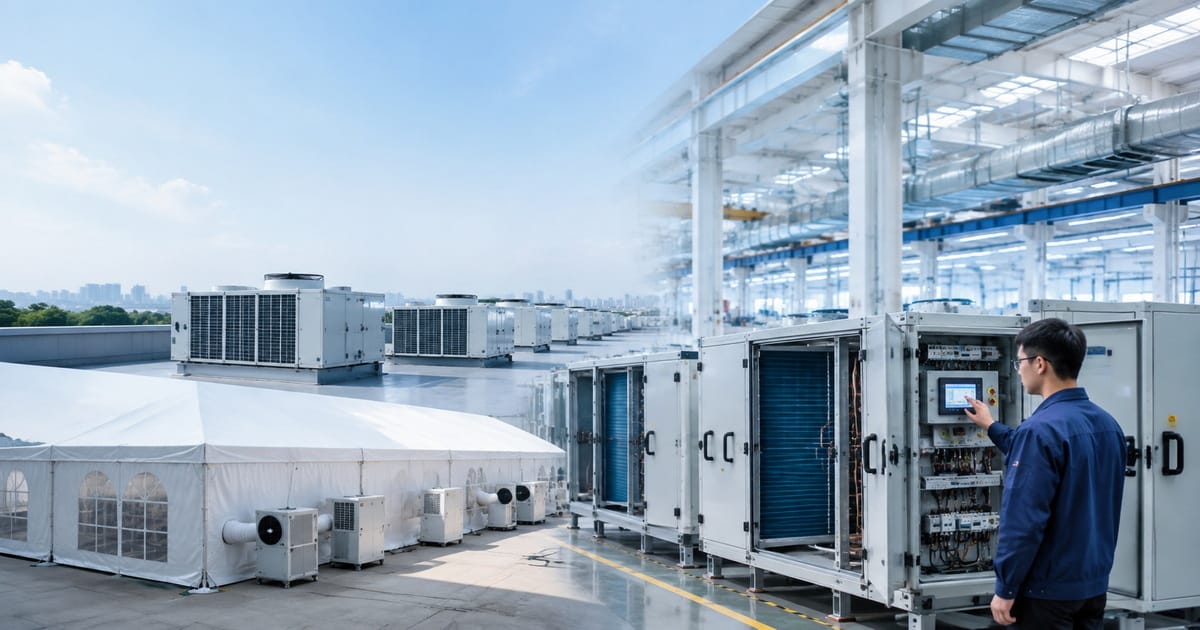
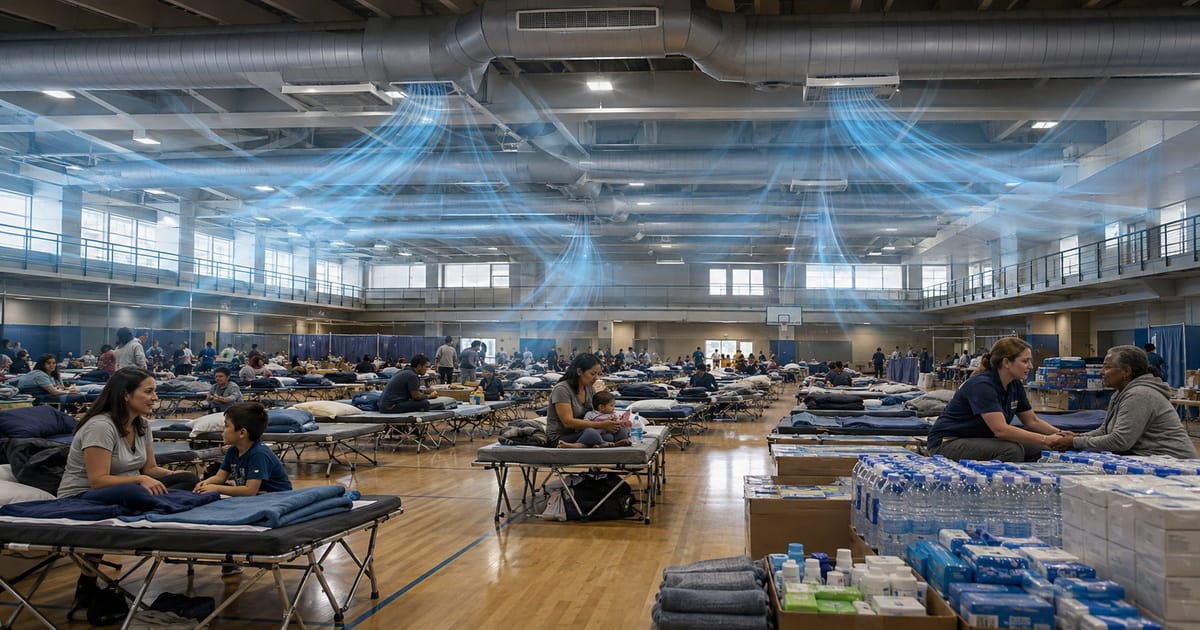
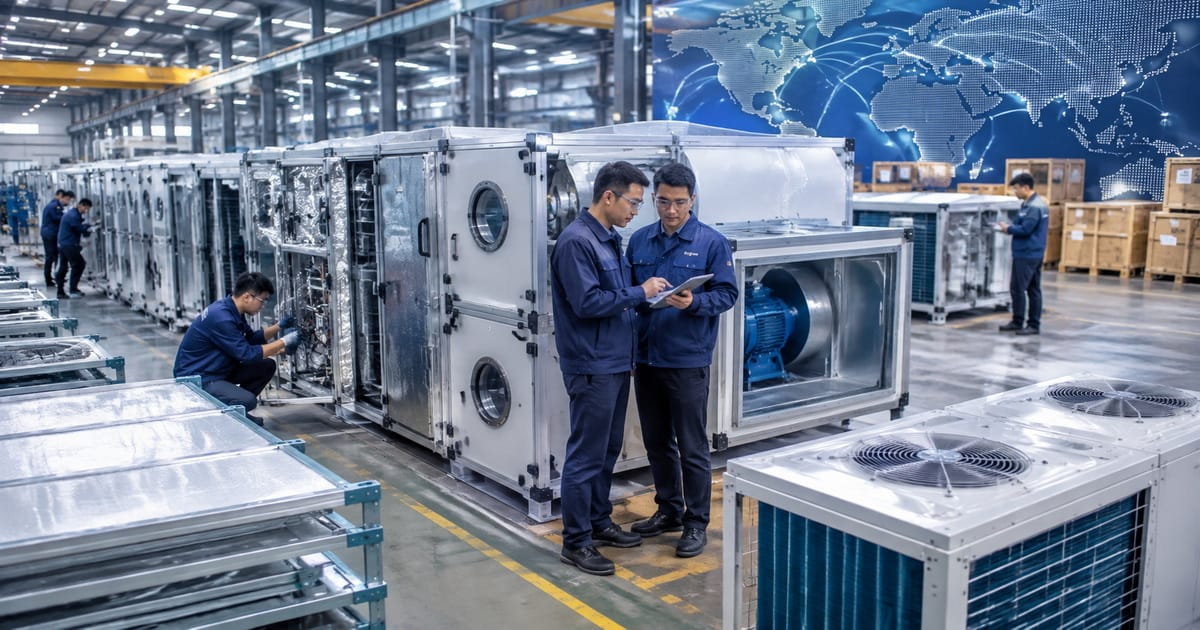
Industrial facilities operate under constant heat pressure generated by machinery, production lines, and enclosed working environments. When temperatures rise unexpectedly or the primary HVAC system fails, factories can experience serious disruptions including production downtime, equipment stress, and safety risks for workers. In such critical moments, a mobile factory air conditioner for emergency cooling becomes an essential solution to quickly restore stable working conditions.
These portable industrial cooling systems are designed to deliver rapid temperature control in large-scale environments such as manufacturing plants, warehouses, and processing facilities. Unlike traditional fixed HVAC systems, mobile units can be deployed directly to high-heat zones, providing immediate and targeted cooling where it is needed most.
Modern industries require flexible and fast-response cooling strategies to maintain operational efficiency and prevent financial losses caused by overheating or system failures. Mobile industrial air conditioners offer this flexibility by acting as backup cooling systems that can be activated instantly during emergencies. They are engineered for high performance, mobility, and energy-efficient operation, making them suitable for both temporary and critical cooling demands.
Mobile Factory Air Conditioner for Emergency Cooling: Fast Industrial HVAC Solutions
Industrial facilities often face sudden temperature spikes, HVAC failures, or heat accumulation from heavy machinery. In such situations, production efficiency drops quickly, and equipment risk increases.
A mobile factory air conditioner for emergency cooling is designed to solve this exact problem. These systems provide fast, flexible, and high-capacity cooling for factories, warehouses, and industrial plants when permanent HVAC systems fail or are insufficient.
This guide explains how mobile industrial air conditioners work, where they are used, how to choose them, and why they are becoming essential in modern manufacturing environments.
What Is a Mobile Factory Air Conditioner for Emergency Cooling?
A mobile factory air conditioner is a portable or trailer-mounted industrial HVAC system designed for rapid deployment in emergency situations.
Unlike fixed cooling systems, these units can be moved directly into high-temperature zones and start cooling within minutes.
Core purpose:
- Stabilize temperature quickly
- Prevent production downtime
- Protect machinery and workers
These systems are widely used in manufacturing plants, warehouses, and temporary industrial setups where cooling demands fluctuate.
Why Emergency Cooling Is Critical for Industrial Facilities
Factories generate heat continuously due to machines, electrical systems, and enclosed working environments.
When cooling systems fail, the impact includes:
- Production stoppage
- Machine overheating
- Worker safety risks
- Product quality issues
Even a 1–2 hour shutdown can cause significant financial losses in large-scale operations.
This is why industries now invest in emergency HVAC backup systems as part of operational risk management.
Common Causes of Factory Overheating and HVAC Failure
Understanding the root causes helps in planning better cooling strategies.
1. Heavy Machinery Heat Output
Industrial machines generate continuous thermal energy.
2. Poor Ventilation Systems
Limited airflow traps heat inside production areas.
3. Extreme Weather Conditions
High ambient temperatures increase internal load.
4. HVAC System Failure
Breakdowns in central systems require immediate backup.
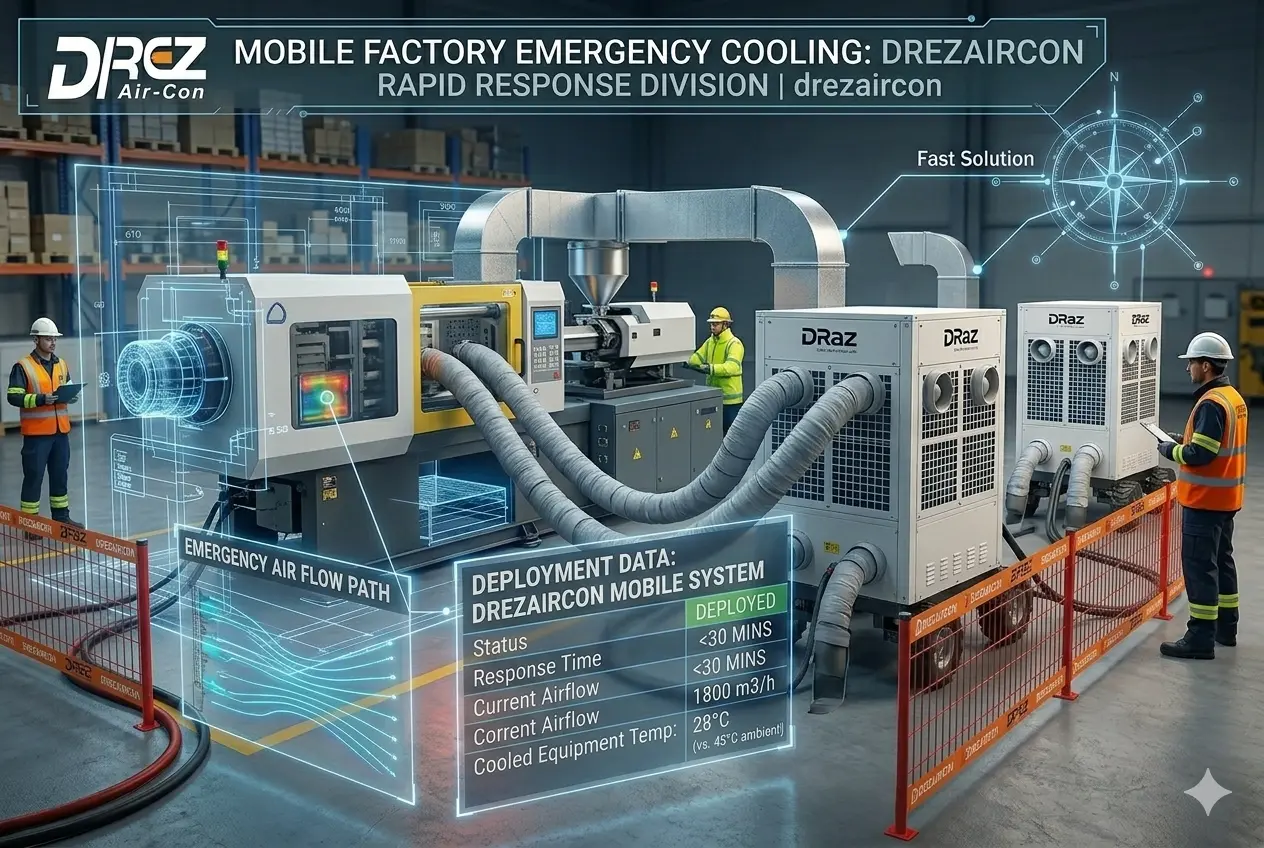
Key Benefits of Mobile Industrial Air Conditioners for Factories
Mobile cooling systems are not just backup units—they are strategic assets.
Benefits include:
Rapid cooling response within minutes
Flexible deployment across factory zones
Temporary HVAC solutions for emergencies
Energy-efficient cooling compared to full plant shutdown costs
These systems are especially useful when installed by companies like
Drez Aircon, which specialize in industrial-grade HVAC solutions.
How Mobile Factory Air Conditioners Work in Emergency Situations
Mobile HVAC systems operate on a simple but powerful principle: quick heat extraction and air circulation control.
Working process:
- Unit is positioned near heat zone
- Air is drawn into cooling system
- Heat is extracted via compressor system
- Cooled air is redistributed into factory space
Modern units can be operational within 15–30 minutes depending on setup.
Types of Portable Industrial Air Conditioning Systems
Different industries require different cooling approaches.
1. Trailer Mounted Air Conditioners
Used for large-scale industrial zones and outdoor factories.
2. Spot Cooling Units
Target specific machinery or production lines.
3. Ducted Portable AC Systems
Distribute air across multiple zones.
4. High Capacity Industrial Air Conditioners
Designed for large factories and warehouses.
How to Choose the Right Mobile Air Conditioner for Factory Cooling
Choosing the correct system depends on technical and operational needs.
Key factors:
1. Cooling Capacity (BTU)
Higher BTU = larger cooling coverage.
2. Factory Size
Larger spaces require ducted or high-capacity systems.
3. Heat Load Calculation
Evaluate machine output and ambient heat.
4. Energy Efficiency
Important for long-term emergency usage.
Use Cases: Where Emergency Factory Cooling Is Most Needed
Mobile HVAC systems are widely used across industries.
Common applications:
- Manufacturing plants
- Warehouse cooling systems
- Production line cooling
- Pharmaceutical clean rooms
- Food processing factories
These systems ensure continuous operation even under extreme conditions.
Mobile vs Fixed Factory Air Conditioning Systems: Which Is Better?
Both systems serve different purposes.
| Feature | Mobile AC | Fixed HVAC |
|---|---|---|
| Deployment speed | Fast | Slow |
| Flexibility | High | Low |
| Cost efficiency (emergency use) | High | Medium |
| Long-term use | Limited | Ideal |
Insight:
Mobile systems are not replacements they are strategic backups.
Best Practices for Fast and Efficient Emergency Factory Cooling
To maximize efficiency:
- Place units near heat sources
- Ensure airflow is unobstructed
- Close unused factory zones
- Monitor temperature zones
Why Portable HVAC Solutions Are Ideal for Industrial Emergencies
Portable systems provide unmatched flexibility.
Key advantages:
- Immediate deployment
- No structural modification required
- Scalable cooling output
- Cost-effective emergency solution
Why Choose Drez Aircon for Mobile Factory Cooling Solutions
Drez Aircon provides industrial-grade cooling systems designed for real-world factory challenges.
Why industries choose DREZ:
- Specialized in industrial HVAC systems
- Portable and trailer-mounted cooling units
- Designed for high-temperature environments
- Global industrial deployment capability
DREZ solutions are engineered for:
- manufacturing plants
- event structures
- emergency industrial cooling

Case Study – Emergency Cooling Deployment in Industrial Plant (Example Scenario)
A manufacturing facility experienced HVAC failure during peak production in summer conditions where indoor temperatures reached 42°C.
Problem:
- Production line slowdown
- Risk of equipment overheating
- Worker discomfort affecting output
Solution:
A mobile factory air conditioning system was deployed within 40 minutes.
Outcome:
- Temperature reduced by 10–12°C in affected zones
- Production resumed within 2 hours
- No machinery damage reported
Key takeaway:
Emergency mobile HVAC systems significantly reduce downtime risk and financial loss.
FAQs About Mobile Factory Air Conditioner for Emergency Cooling
What is a mobile factory air conditioner?
A portable industrial cooling system used for emergency temperature control in factories.
How fast can it cool a factory?
Typically within 15–60 minutes depending on system capacity.
Are mobile AC units energy efficient?
Yes, they are optimized for short-term high-efficiency cooling.
Can they replace permanent HVAC systems?
No, they are designed as backup or temporary solutions.
Where are they most used?
Factories, warehouses, industrial plants, and temporary structures.
Summary
A mobile factory air conditioner for emergency cooling is a critical industrial HVAC solution designed to provide fast and effective temperature control in manufacturing plants, warehouses, and large industrial facilities when normal cooling systems fail or become insufficient. Industrial environments generate significant heat from heavy machinery, production processes, and dense operational activity, which can quickly lead to overheating, equipment stress, and production delays. In such situations, mobile air conditioning systems offer a flexible and rapid response solution by delivering targeted cooling exactly where it is needed most.
These portable industrial units are engineered for high-capacity performance and can be deployed quickly without complex installation requirements. They are commonly used as backup or temporary cooling systems during HVAC breakdowns, maintenance shutdowns, or peak summer conditions. By stabilizing indoor temperatures, they help protect machinery, maintain product quality, and ensure worker safety.
Modern mobile factory air conditioners are also energy-efficient and adaptable to different industrial layouts, making them suitable for a wide range of applications including manufacturing plants, warehouses, and processing facilities. Their ability to provide immediate cooling makes them an essential part of industrial risk management and operational continuity strategies.
Overall, mobile cooling systems play a vital role in reducing downtime, preventing losses, and ensuring smooth industrial operations during emergency conditions.