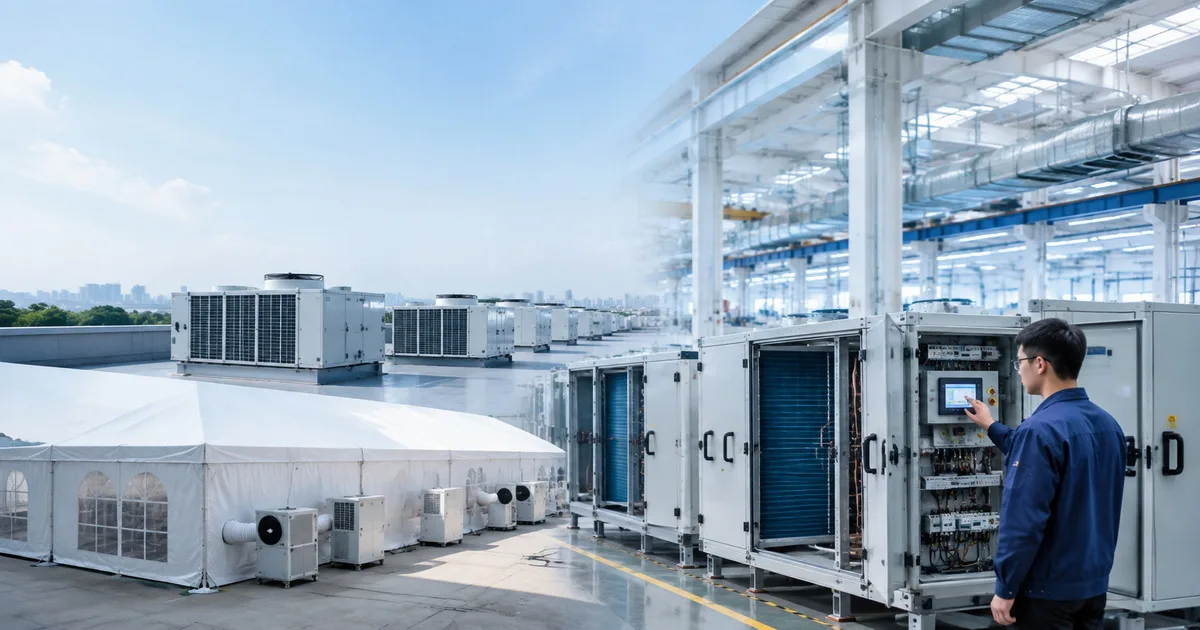
Temporary Industrial HVAC Cooling System for Large-Scale Projects is a critical solution designed to provide fast, efficient, and scalable temperature control in demanding industrial and commercial environments. In modern industries, temperature management plays a vital role in maintaining productivity, protecting sensitive equipment, and ensuring worker safety, especially in large-scale operations where heat generation and environmental conditions can quickly become challenging.
Unlike traditional permanent HVAC installations, temporary industrial HVAC cooling systems are engineered for rapid deployment, flexibility, and high-capacity performance, making them ideal for factories, construction sites, warehouses, event venues, and emergency cooling situations.
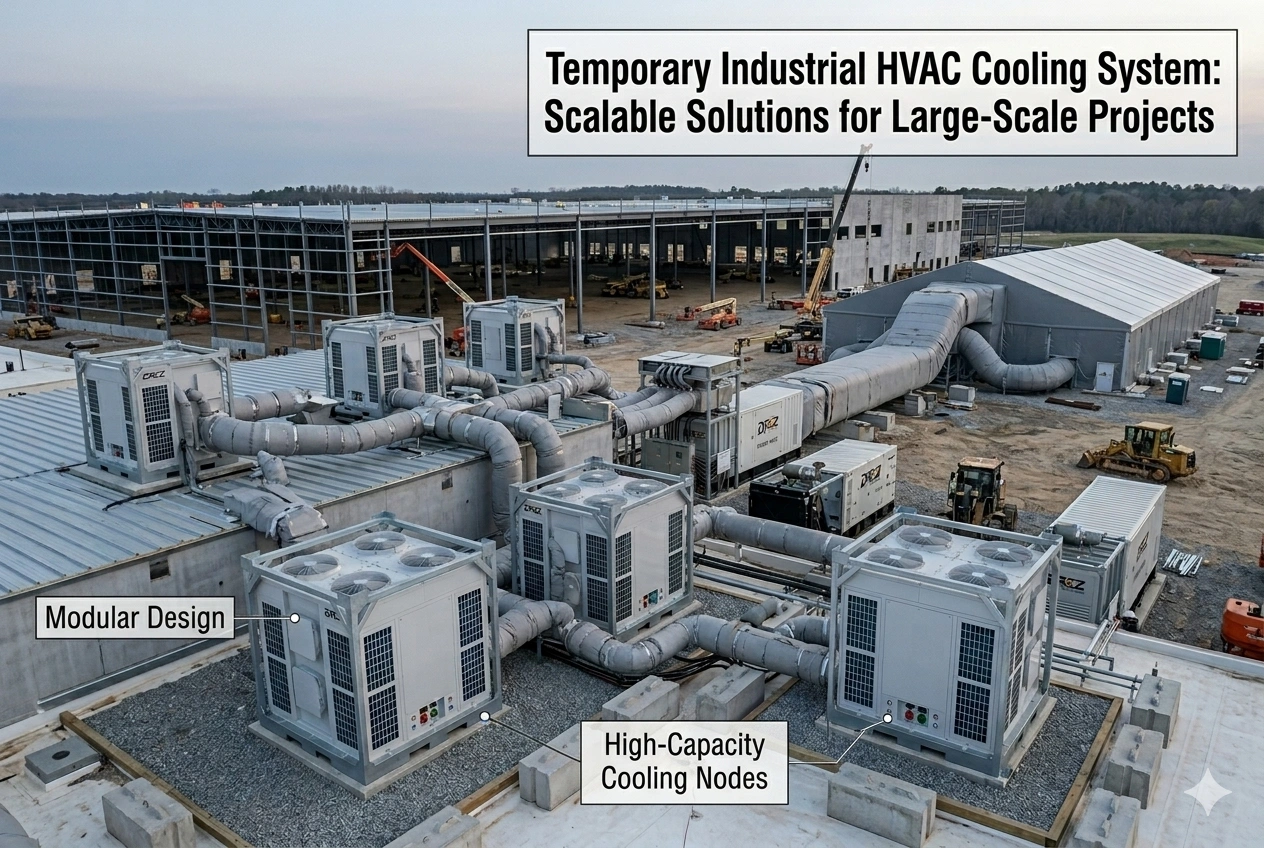
These systems are widely used in projects where long-term infrastructure is not feasible or where immediate cooling is required. Their modular design allows easy installation and scalability based on project size and cooling demand.
Industries rely on these solutions to maintain operational continuity during peak summer conditions, system maintenance shutdowns, or large outdoor events. With advancements in industrial cooling technology, modern HVAC systems now offer improved energy efficiency, better airflow control, and enhanced durability for harsh working environments.
Temporary Industrial HVAC Cooling System for Large-Scale Projects
In this guide we will explain how temporary industrial HVAC cooling systems work, their applications, benefits, types, and how to choose the right solution for large-scale projects.
1. Introduction to Temporary Industrial HVAC Cooling System for Large-Scale Projects
Large-scale industrial and infrastructure projects often operate in environments where temperature control is not optional it is critical for productivity, safety, and operational continuity.
A temporary industrial HVAC cooling system for large-scale projects is designed to provide rapid, scalable, and high-capacity cooling in environments where permanent HVAC installation is not feasible or cost-effective.
These systems are widely used in:
- Industrial production plants
- Construction sites
- Temporary event structures
- Warehouses and logistics hubs
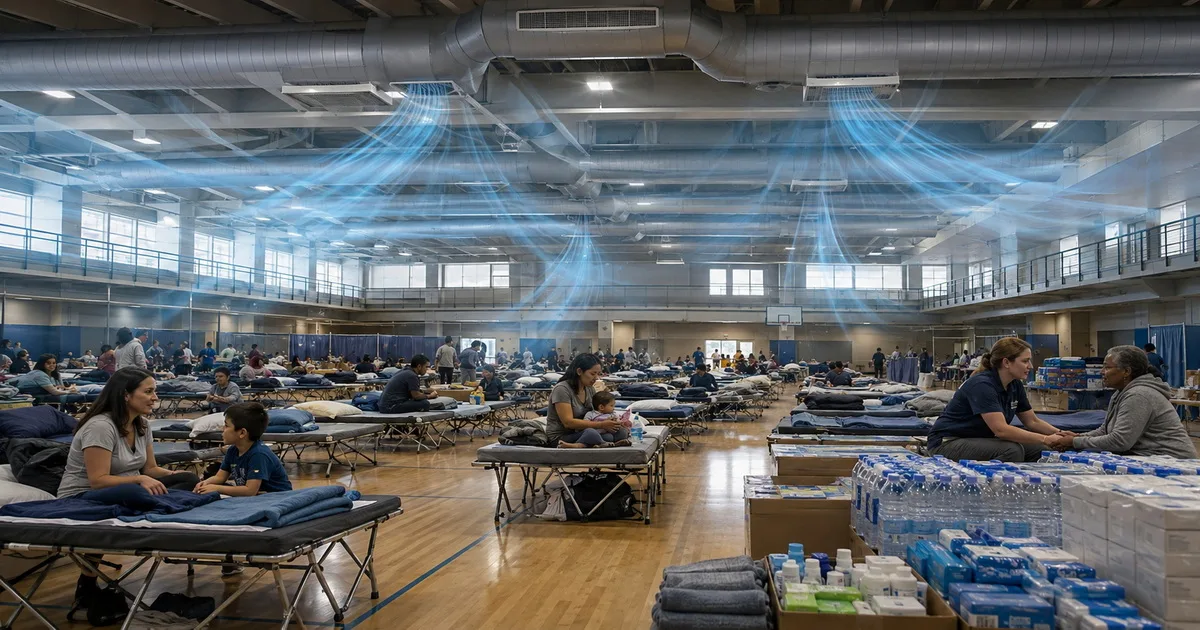
- Emergency cooling deployments
Unlike traditional HVAC systems, these solutions are engineered for mobility, fast installation, and flexible capacity scaling.
Brands like DrezAircon specialize in providing industrial-grade temporary cooling systems for demanding project environments.
2. What Is a Temporary Industrial HVAC Cooling System?
A temporary industrial HVAC cooling system is a portable or modular climate control system designed to regulate temperature in large spaces for a limited duration.
Core Characteristics:
- High-capacity cooling output
- Modular or mobile structure
- Fast deployment (hours or days instead of months)
- Designed for industrial load conditions
- Suitable for indoor and outdoor applications
Key Difference from Permanent HVAC:
| Feature | Temporary HVAC | Permanent HVAC |
|---|---|---|
| Installation time | Fast (temporary setup) | Long-term installation |
| Flexibility | High | Fixed |
| Cost structure | Rental or project-based | Capital investment |
| Mobility | Portable | Stationary |
3. Importance of Temporary HVAC Cooling Systems in Large-Scale Projects
Large-scale projects often face unpredictable thermal challenges such as:
- Heat generated from machinery
- Outdoor environmental conditions
- Enclosed temporary structures
- Worker safety requirements
Why it matters:
- Maintains operational efficiency
- Prevents equipment overheating
- Ensures worker safety compliance
- Reduces downtime in production cycles
In industrial environments, even a few degrees of temperature rise can reduce machinery performance and increase failure risks.
4. Industrial Applications of Temporary HVAC Cooling Systems
Factory & Manufacturing Plants
Used during:
- Equipment installation phases
- Maintenance shutdowns
- Production line expansion
Construction Sites
- Cooling for enclosed structures
- Worker rest zones
- Temporary operational offices
Warehouses & Logistics Centers
- Temperature-sensitive storage protection
- Large-volume airflow control
Energy & Infrastructure Projects
- Power plants
- Substations
- Oil & gas sites
These systems ensure uninterrupted operation even in extreme heat conditions.
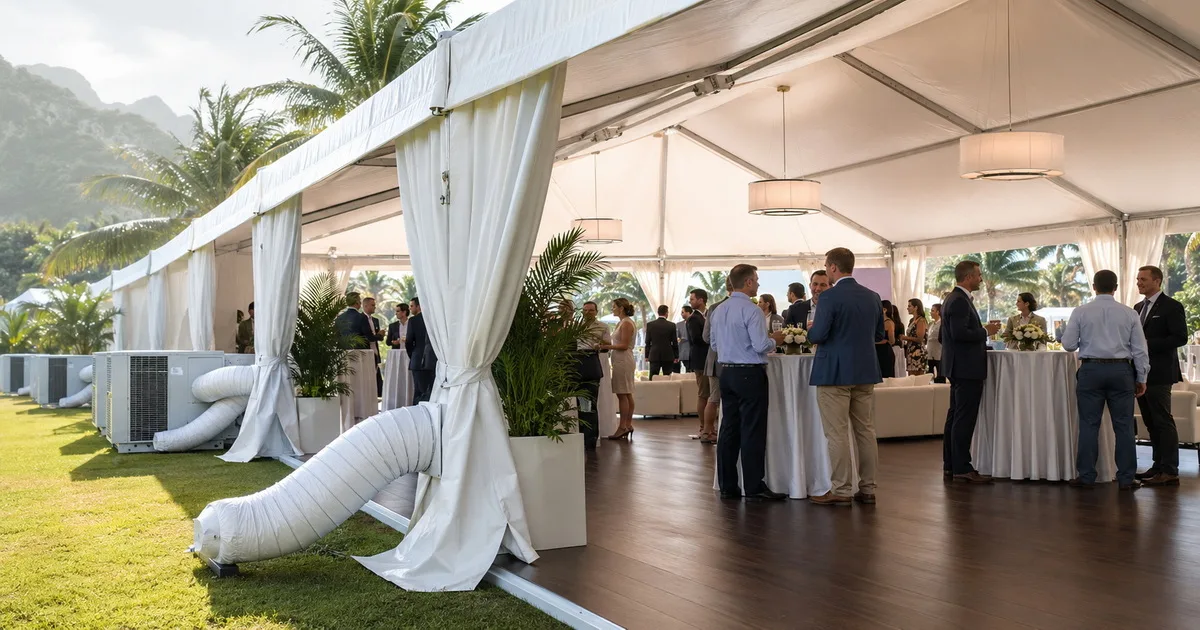
5. Temporary HVAC Cooling System for Events, Tents, and Outdoor Spaces
Temporary HVAC systems are widely used in:
- Wedding tents
- Exhibition halls
- Trade fairs
- Outdoor festivals
Key Requirement:
These environments require rapid cooling without permanent infrastructure, making portable HVAC systems ideal.
Example:
A 10,000–20,000 sq. ft exhibition hall can experience internal temperatures above 40°C in summer. A temporary industrial HVAC system stabilizes this to 22–26°C operational comfort range.
6. Types of Temporary Industrial HVAC Cooling Systems
1. Portable Industrial Air Conditioners
- Small to medium capacity units
- Quick deployment
2. Trailer-Mounted HVAC Systems
- High mobility
- Suitable for construction and remote sites
3. Modular Cooling Systems
- Scalable units
- Can be combined for large projects
4. Centralized Temporary HVAC Units
- High-capacity industrial cooling
- Used in factories and large events
7. How Temporary Industrial HVAC Cooling Systems Work
These systems operate through a standard refrigeration cycle:
Step-by-Step Process:
- Warm air is drawn from the environment
- Air passes over evaporator coils
- Heat is absorbed by refrigerant
- Compressor increases pressure and temperature
- Heat is released outside via condenser
- Cooled air is circulated back into the space
Key Engineering Feature:
Modern systems use variable speed compressors and smart airflow distribution, improving efficiency in large-scale environments.
8. Benefits of Temporary Industrial HVAC Cooling Systems
Rapid Deployment
Systems can be installed within hours to days.
Cost Efficiency
No need for permanent infrastructure investment.
Scalability
Cooling capacity can be increased as project demand grows.
Flexibility
Suitable for multiple industries and environments.
Operational Continuity
Prevents downtime in critical operations.
9. Energy Efficiency and Performance Optimization
Modern temporary HVAC systems focus on:
- Low-energy compressors
- Intelligent load balancing
- Zoned cooling systems
- Real-time temperature monitoring
Performance Advantage:
Compared to traditional fixed HVAC systems, optimized temporary systems can reduce energy consumption by 15–30% in controlled industrial environments.
10. Customization for Large-Scale Projects
Each industrial project has different cooling requirements.
Customization options include:
- Cooling capacity (tons of refrigeration)
- Airflow direction control
- Ducting system design
- Noise reduction features
- Environmental resistance (dust, heat, humidity)
Companies like DrezAircon design systems specifically for project-based industrial applications, ensuring compatibility with complex environments.
11. Installation and Deployment Process
Step 1: Site Assessment
- Heat load calculation
- Space evaluation
- Equipment layout planning
Step 2: System Selection
- Based on cooling demand and duration
Step 3: Deployment
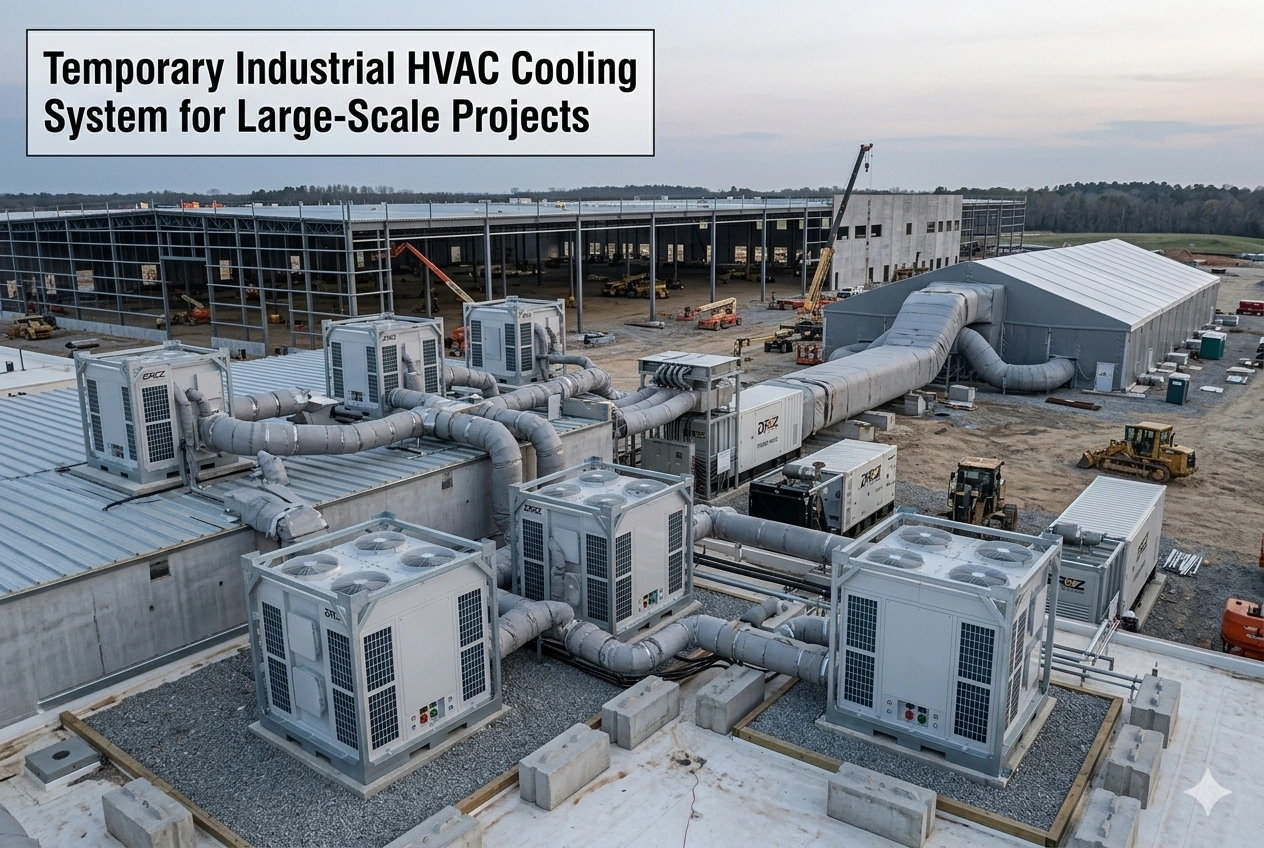
- On-site setup of HVAC units
- Duct installation (if required)
Step 4: Testing & Optimization
- Airflow balancing
- Temperature calibration
- Efficiency testing
12. Choosing the Right HVAC Manufacturer
Selecting the right provider is critical for project success.
Key evaluation factors:
- Industrial engineering capability
- Scalability of systems
- After-sales support
- Experience in large-scale projects
- Availability of customized solutions
A strong manufacturer ensures not just equipment delivery but end-to-end cooling engineering support.
13. Cost Factors of Temporary Industrial HVAC Systems
Pricing depends on:
- Cooling capacity (TR/tons)
- Duration of deployment
- Transportation requirements
- System complexity
- Rental vs purchase model
Cost Insight:
Large industrial temporary HVAC systems are often more cost-effective than building permanent infrastructure for short-term projects.
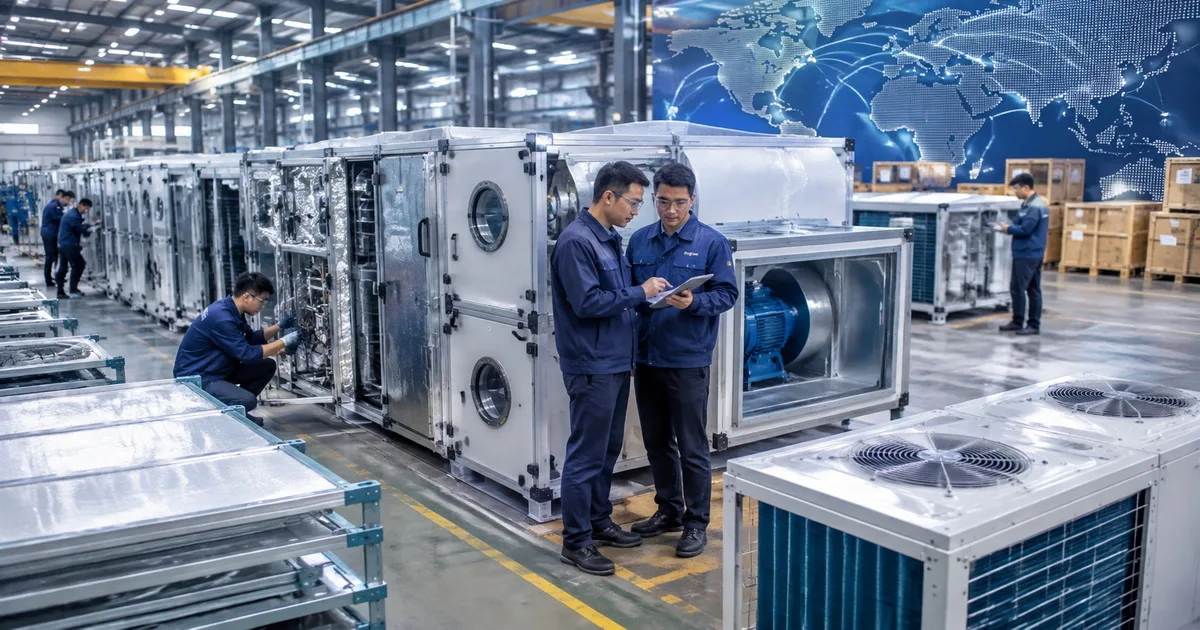
14. Why DrezAircon Is a Reliable Industrial Cooling Partner
DrezAircon specializes in:
- Temporary industrial HVAC systems
- Tent and event cooling solutions
- Large-scale project cooling engineering
- Mobile and modular HVAC systems
Key Strengths:
- Industrial-grade system design
- Rapid deployment capability
- High-capacity cooling solutions
- Experience with global project environments
This makes it suitable for EPC contractors, industrial developers, and event infrastructure companies.
15. Future of Temporary Industrial HVAC Cooling Systems
The industry is evolving toward:
Smart HVAC Systems
- IoT-based monitoring
- Remote temperature control
Energy Optimization
- Hybrid cooling systems
- Low-carbon HVAC solutions
Modular Infrastructure
- Plug-and-play cooling systems
- Faster deployment timelines
Demand is increasing globally due to:
- Climate extremes
- Infrastructure expansion
- Growth in large-scale temporary events
Frequently Asked Questions (FAQs)
1. What is a temporary industrial HVAC cooling system for large-scale projects?
A temporary industrial HVAC cooling system is a high-capacity, mobile cooling solution designed to regulate temperature in large spaces such as factories, events, warehouses, and construction sites for a limited duration without permanent installation.
2. Where are temporary HVAC cooling systems commonly used?
They are commonly used in industrial factories, large-scale construction projects, outdoor events, exhibition halls, warehouses, power plants, and emergency cooling situations.
3. How does a temporary industrial HVAC cooling system work?
It works by pulling warm air, cooling it through a refrigeration cycle using compressors and evaporator coils, and then redistributing cooled air into the targeted space through ducts or airflow systems.
4. What are the benefits of using a temporary HVAC cooling system?
Key benefits include fast deployment, cost efficiency, high cooling capacity, flexibility for different industries, and the ability to scale according to project size.
5. Can temporary HVAC systems be used for outdoor events and tents?
Yes, these systems are widely used for tents, weddings, exhibitions, and outdoor events where fast and powerful cooling is required without permanent infrastructure.
6. Are temporary industrial HVAC systems energy efficient?
Modern systems are designed with energy-efficient compressors and smart controls, helping reduce power consumption while maintaining strong cooling performance.
7. How quickly can a temporary HVAC cooling system be installed?
Depending on system size and project complexity, installation can take from a few hours to a couple of days, making it ideal for urgent cooling needs.
8. What types of temporary industrial HVAC systems are available?
Common types include portable air conditioners, trailer-mounted HVAC systems, modular cooling systems, and centralized high-capacity industrial units.
9. Can cooling capacity be customized for large projects?
Yes, most industrial HVAC systems can be customized based on cooling load requirements, project size, and environmental conditions.
10. How do I choose the right temporary industrial HVAC cooling system?
You should consider factors such as cooling capacity, project duration, site conditions, energy efficiency, and manufacturer experience in large-scale industrial projects.
Final thoughts:
A temporary industrial HVAC cooling system for large-scale projects is no longer a secondary solution it is a critical infrastructure component for modern industrial and event operations.
It enables:
- Rapid climate control deployment
- Cost-effective cooling for short-term projects
- Scalable industrial performance support
- Reliable operation in extreme environments
For industries requiring high-capacity and flexible cooling systems, providers like DrezAircon deliver engineered solutions designed for real-world industrial challenges.