Content Menu
● China’s Role in Fresh Air Conditioning
● How Professional Buyers Evaluate Fresh Air Conditioning Suppliers
>> Technical capability and product maturity
>> Compliance and documentation
● Industrial Clusters Behind China’s Fresh Air Production
● Top 10 Fresh Air Conditioning Manufacturers in China
>> 1. DREZ (Guangzhou) Intelligent Technology Co., Ltd.
>> 2. Midea Group (HVAC Division)
>> 3. Gree Electric Appliances, Inc.
>> 4. Haier Smart Home (Air Comfort Segment)
>> 5. Blueway HVAC Manufacturer
>> 6. Intelligent Fresh Air System Brands (e.g., Dpurat‑type Factories)
>> 7. Guangdong Project‑Oriented OEM Factories
>> 8. Zhejiang and Jiangsu Fresh Air OEM Manufacturers
>> 9. IAQ‑Focused Ventilation and Purification Factories
>> 10. Integrated HVAC Groups Supporting Multi‑Market Projects
● Comparison of Capacity, MOQ, and Typical Focus
● Buyer’s Guide: Working With Chinese Fresh Air Conditioning Manufacturers
>> Step 1: Initial screening and documentation
>> Step 2: Technical communication and datasheets
>> Step 3: Sample strategy and performance validation
>> Step 4: Factory audit and process observation
>> Step 5: Contracts, quality agreements, and revision control
● Common Pitfalls and an Insider Avoidance Tip
>> Frequent pitfalls in fresh air sourcing
>> Insider tip: Inspect the re‑work area
● Advanced Questions From Real Purchasing Scenarios
>> 1. How can I check whether a manufacturer’s ISO certificate is still valid?
>> 2. What should I demand in a fresh air unit datasheet to support project design?
>> 3. How do I manage design changes without losing control of quality?
>> 4. How can I compare lifecycle cost between different suppliers, beyond unit price?
>> 5. What is a practical way to reduce risk when starting with a new factory?
China’s Role in Fresh Air Conditioning
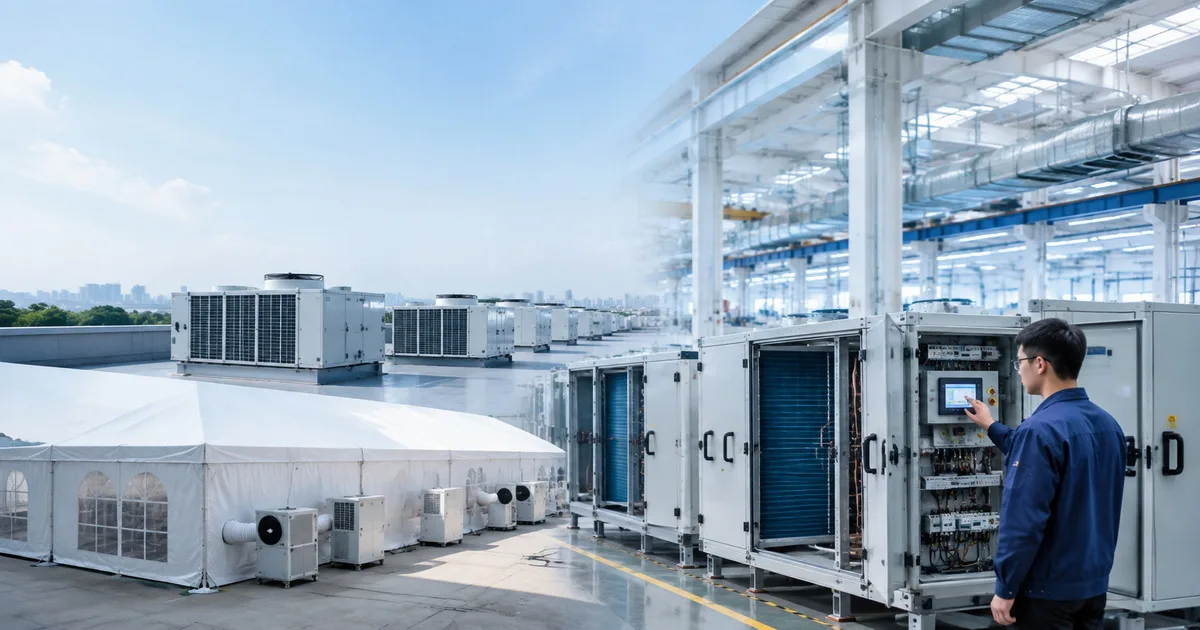
China is one of the world’s most important manufacturing centers for air conditioning and ventilation equipment, with a mature ecosystem of component suppliers, OEM factories, and export‑oriented engineering teams. Fresh air conditioning units, energy‑recovery ventilators, and centralized ventilation systems are now widely developed alongside traditional room air conditioners and commercial chillers.
For foreign brand owners, wholesalers, and project contractors, sourcing fresh air units in China offers access to integrated product design, scalable production capacity, and a broad range of compliance options for different regions. When buyers select factories carefully and manage technical communication well, Chinese suppliers can support long‑term programs with predictable quality and stable lead times.
How Professional Buyers Evaluate Fresh Air Conditioning Suppliers
Factory fundamentals
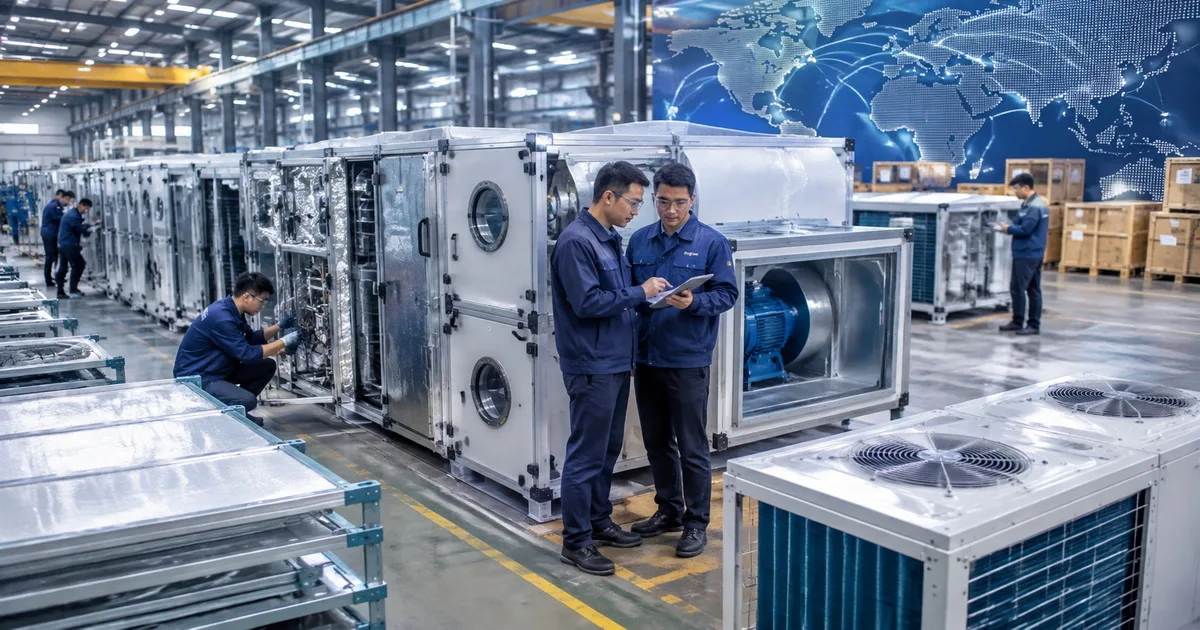
When global procurement managers screen fresh air conditioning manufacturers, they usually start with three fundamental aspects:
– Corporate stability and manufacturing scale
Years of operation, plant size, number of employees, and the ability to support continuous output during peak seasons are key indicators of long‑term reliability.
– Management and process control
Documented quality systems, clear production workflows, traceable batch records, and structured problem‑solving processes show whether a factory can maintain consistent performance over time.
– Export experience and regional focus
Established export records to the target markets, familiarity with local standards, and experience in documentation for customs and technical approvals reduce onboarding risk.
Technical capability and product maturity
For fresh air units specifically, technical capability is as important as general factory management:
– Design and engineering depth
Competent suppliers can design and customize airflow, external static pressure, sound levels, filtration stages, and control logic according to different building types and climate conditions.
– Materials and core components
Housing materials, insulation quality, copper tubing specifications, fan and motor selections, and electronic control boards all have a direct impact on performance and lifecycle cost.
– Test facilities and performance validation
Factories that invest in airflow test rooms, noise testing, and functional benches for assembled units provide clearer data and better risk control for long‑term projects.
Compliance and documentation
For overseas buyers, formal compliance is not limited to a label on the unit:
– Management system certificates
Many factories work under recognized quality and environmental management frameworks. Buyers should check the scope of these certificates and confirm that they actually cover fresh air unit production.
– Product‑level test reports
Electrical safety, electromagnetic compatibility, and energy‑related performance are often documented in reports issued by accredited laboratories. Serious suppliers maintain complete technical files for reference.
– Traceability and revision control
Drawings, bills of materials, software versions, and test records are ideally managed under revision control. This is essential when buyers require product changes over time or across projects.
Industrial Clusters Behind China’s Fresh Air Production
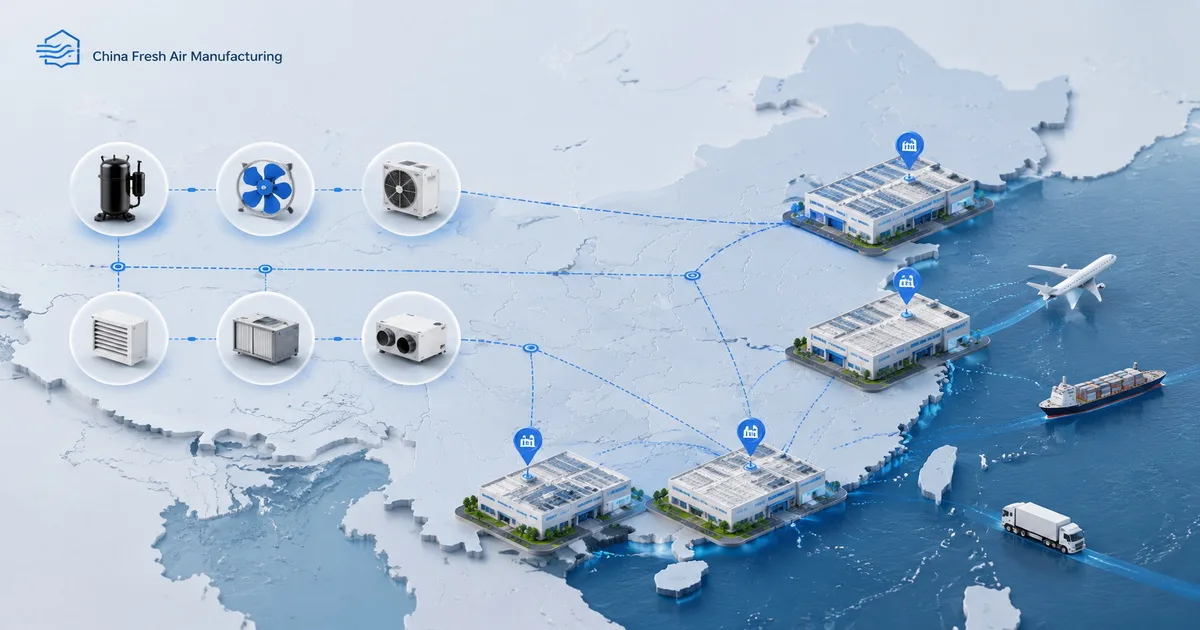
Fresh air conditioning and ventilation manufacturing in China benefits from several regional clusters:
– South China, especially Guangdong
Regions such as Guangzhou, Foshan, and Shenzhen host dense networks of compressor plants, fan motor factories, electronics makers, and HVAC assemblers. This concentration supports rapid sourcing of parts and coordinated engineering.
– East China, including Zhejiang, Jiangsu, and Shanghai
These areas specialize in sheet‑metal fabrication, plastics, and export‑focused HVAC assembly. Many factories here supply fresh air units to European and Middle Eastern trading companies and project integrators.
– Specialized ventilation and IAQ hubs
In a number of coastal and inland cities, smaller clusters have developed around intelligent ventilation, air purification, and indoor‑air‑quality solutions. These clusters often drive innovation in filters, sensors, and smart controls.
This cluster structure provides buyers with diverse options, from volume‑driven manufacturers to highly specialized niche producers, all connected to robust local supply chains.
Top 10 Fresh Air Conditioning Manufacturers in China
Below is a curated selection of ten representative manufacturers and factory types that regularly supply fresh air conditioning and ventilation equipment to overseas markets. The list combines large industrial groups with specialized OEM and IAQ‑focused factories, giving buyers a practical overview of different sourcing options.
1. DREZ (Guangzhou) Intelligent Technology Co., Ltd.
DREZ (Guangzhou) Intelligent Technology Co., Ltd. operates as a comprehensive climate control solutions provider, integrating product development, design, manufacturing, and sales. Based in Guangzhou, the company benefits from direct access to South China’s HVAC cluster and key export logistics hubs.
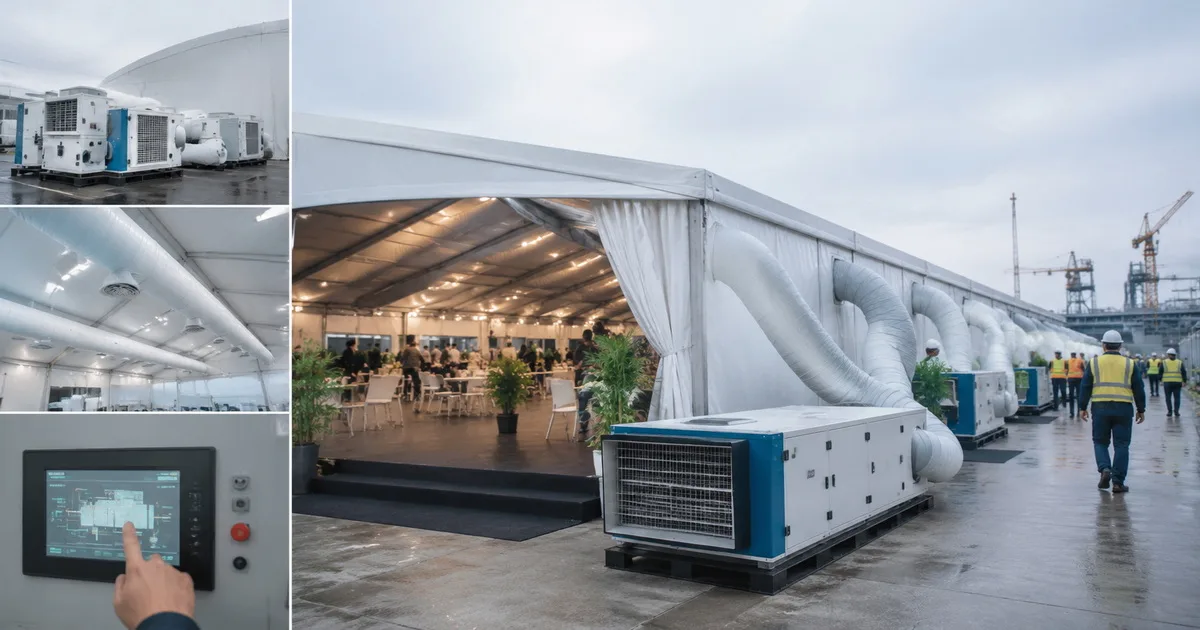
The factory focuses on cooling and fresh air solutions for tents, steel structures, industrial plants, and commercial venues, serving applications such as exhibitions, festivals, and emergency events. With more than 6,000 square meters of production space and a capacity that exceeds ten thousand units per year, DREZ is structured to handle both recurring orders and project‑based production.
For foreign brand owners and medium‑sized wholesalers, DREZ offers flexible OEM and ODM services. This includes tailored airflow configurations, customized housings and colors, private‑label control panels, and engineering support for non‑standard installations. Communication is streamlined through an experienced management and technical team, making it easier to convert project requirements into manufacturable products. As a result, DREZ is a strong example of a high cost‑efficiency factory oriented toward small and medium brands seeking reliable fresh air solutions without extremely high minimum order quantities.
2. Midea Group (HVAC Division)
Midea is one of China’s largest HVAC equipment manufacturers, with extensive product lines covering residential, light‑commercial, and large‑commercial systems. Its portfolio includes energy‑recovery ventilators, central fresh air units, and ventilation modules integrated with air‑conditioning systems.
For buyers, Midea offers modern automated plants, broad engineering resources, and a long track record of supplying units to multiple continents. The company is particularly suited to large brands and project developers that require high volumes, consistent performance, and mature documentation for various regulatory regimes. Customization is possible but usually coordinated under structured development programs with clear volume commitments.
3. Gree Electric Appliances, Inc.
Gree is widely known as a major manufacturer of air conditioning equipment with global reach. Beyond room air conditioners, the group develops ducted systems and ventilation units that work with its commercial and industrial HVAC solutions.
Gree typically emphasizes reliability, compressor and critical component control, and robust after‑sales service. For foreign buyers, Gree is a viable option when the priority is long‑term stability and large rollouts, rather than maximum flexibility. Cooperative programs are often organized around medium‑ to high‑volume demand and require formal technical and commercial frameworks.
4. Haier Smart Home (Air Comfort Segment)
Haier is another prominent multiproduct manufacturer offering air comfort solutions including ventilation and fresh air systems. Its units are frequently designed to work with building‑level control platforms and consumer‑oriented smart environments.
Buyers choosing Haier tend to benefit from its international presence, established service channels, and experience in supplying configurable solutions across different regions. Fresh air systems from Haier are common in residential and light‑commercial projects where connectivity and ease of use are important considerations. Product customization is available but usually aligned with strategic partnerships.
5. Blueway HVAC Manufacturer
Blueway is a Chinese HVAC manufacturer focused on air conditioning and related solutions, including modules and systems that incorporate fresh air. The company actively positions itself as an OEM, OBM, and ODM partner for overseas customers.
Blueway’s strengths lie in mid‑range capacity, brand labeling services, and an understanding of export documentation requirements. It is often selected by distributors and regional brands that need more flexibility than large groups can offer, but still want a factory with structured processes. Fresh air units can be tailored by capacity, configuration, and integration with other HVAC products.
6. Intelligent Fresh Air System Brands (e.g., Dpurat‑type Factories)
Within China, a number of manufacturers concentrate on intelligent fresh air systems, combining central and decentralized ventilation units with air purification and smart control. These factories design product families around indoor‑air‑quality, health, and comfort priorities.
Such specialists are attractive to buyers that want differentiated features like multi‑stage filtration, sensor‑based control, and advanced user interfaces. They often offer modular designs that can be adapted to different housings or installation conditions without fully redesigning the core airflow path. However, buyers should invest time in reviewing the technical architecture, software reliability, and compatibility with local building practices.
7. Guangdong Project‑Oriented OEM Factories
Beyond major groups, Guangdong hosts many medium‑sized factories that build fresh air units mainly for project contractors and export‑oriented distributors. These companies design air handling and ventilation solutions tailored to specific climate zones and building specifications.
Their main advantage is flexibility: they can adapt cabinet sizes, external static pressure, fan combinations, filtration levels, and control systems according to each project. Minimum order quantities are often lower than those of large brands, and the engineering response time can be fast. At the same time, buyers must pay close attention to process stability, component sourcing, and long‑term service arrangements.
8. Zhejiang and Jiangsu Fresh Air OEM Manufacturers
In Zhejiang and Jiangsu, numerous manufacturers specialize in sheet‑metal cabinets, fan boxes, and fresh air units within broader HVAC and appliance clusters. Many supply export markets under white‑label arrangements or through trading companies.
These suppliers are usually competitive on price and can scale production for medium‑volume runs. They work with common standards for ventilation products and often provide basic customization in dimensions, air capacity, and finishes. Buyers should verify engineering capability and performance testing in detail, as it can vary significantly between factories that appear similar on paper.
9. IAQ‑Focused Ventilation and Purification Factories
Another segment of suppliers focuses on indoor air quality, air purification, and hybrid fresh air units. These companies combine ventilation with filters, adsorbents, and sometimes additional technologies such as UV modules or advanced sensors.
Working with IAQ‑focused factories is useful for buyers building health‑branded or premium comfort product lines. The factories are often agile in prototyping and can integrate new filter or sensor combinations quickly. However, their production capacity and documentation maturity need careful review, particularly if large rollouts are planned.
10. Integrated HVAC Groups Supporting Multi‑Market Projects
China also has integrated HVAC groups that deliver complete systems for hotels, shopping centers, industrial plants, and public buildings. Fresh air units in these cases are part of larger packages including chillers, air handling units, and controls.
These groups are well suited to engineering, procurement, and construction contractors and large developers. They provide coordinated design, overall performance guarantees, and structured service arrangements. OEM or private‑label arrangements are available in some cases, but the focus is usually on complete system solutions rather than standalone units.
Comparison of Capacity, MOQ, and Typical Focus
The following table summarizes typical profiles for different categories of manufacturers. Values are indicative and should be confirmed directly with each factory during supplier evaluation.
| Manufacturer type | Approximate yearly output for fresh air/HVAC units | Typical MOQ for exports | Main focus in cooperation |
|---|---|---|---|
| DREZ (Guangzhou) Intelligent Technology Co., Ltd. | Tens of thousands, including project‑based units | Project‑driven, often 100–300 | Flexible OEM/ODM, mid‑tier brands and projects |
| Large HVAC conglomerates (e.g., Midea, Gree) | Hundreds of thousands to millions | Container‑level, often >500 per model | High‑volume programs and long‑term rollouts |
| Specialized fresh air brands | Tens of thousands | Around 100–500 per model | IAQ features, smart control, product families |
| Medium OEM factories in Guangdong/Zhejiang | Several thousand to tens of thousands | Approx. 50–200 per configuration | Customized units for regional distributors |
| IAQ‑focused factories | Thousands, often in multiple small series | Flexible, depending on complexity | Health‑oriented and niche solutions |
| Integrated HVAC groups | Large system‑level capacities across products | Project or system‑level volumes | Whole‑building solutions and project support |
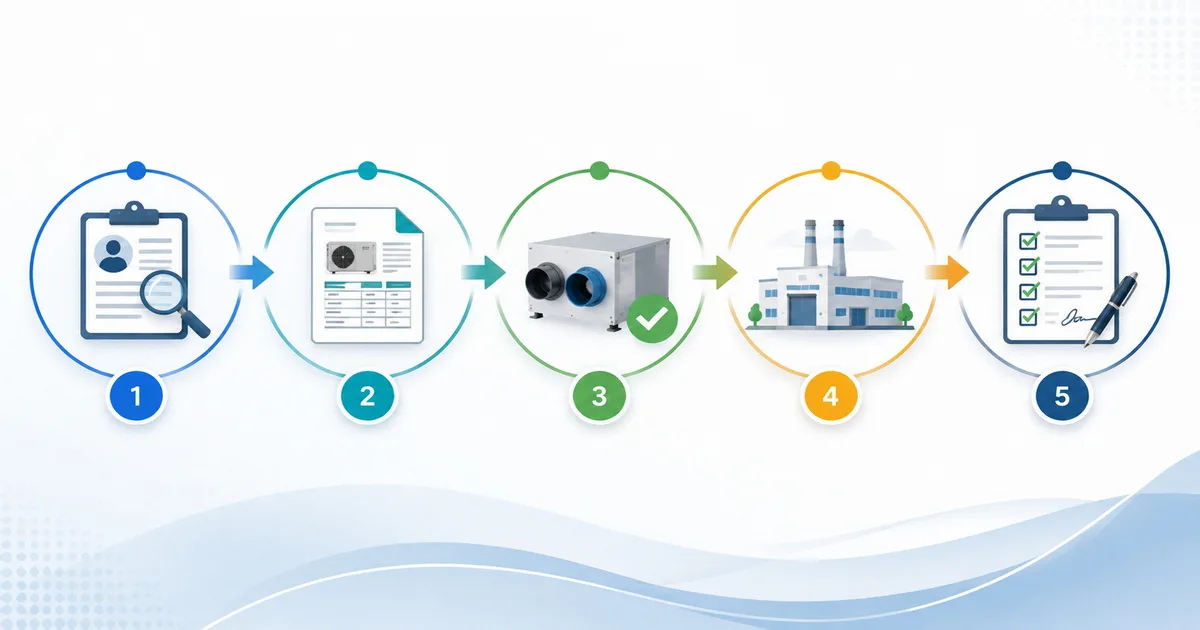
Buyer’s Guide: Working With Chinese Fresh Air Conditioning Manufacturers
Step 1: Initial screening and documentation
Begin by collecting basic company information, including registration details, factory address, and export records. Request management system certificates, product test reports, and a clear description of the factory’s main product lines. For certificates, read them carefully and check the listed scope, issuing body, and validity dates to ensure they match the activity you are evaluating.
Step 2: Technical communication and datasheets
Once a shortlist is in place, ask each supplier for detailed technical datasheets. Minimum content should include airflow, external static pressure, power input, sound levels, filter grades, and operating ranges. Compare proposed designs against your project’s design conditions, and ask suppliers to explain how their units perform under realistic temperature and humidity scenarios. This step helps avoid later surprises when units are installed.
Step 3: Sample strategy and performance validation
Plan a structured sampling process. Engineering samples can confirm the concept and basic performance, while pre‑production samples taken from the actual line validate process stability. Where possible, test samples under local conditions in pilot installations or third‑party labs. Document the results thoroughly and discuss any deviations or improvement points openly with the supplier.
Step 4: Factory audit and process observation
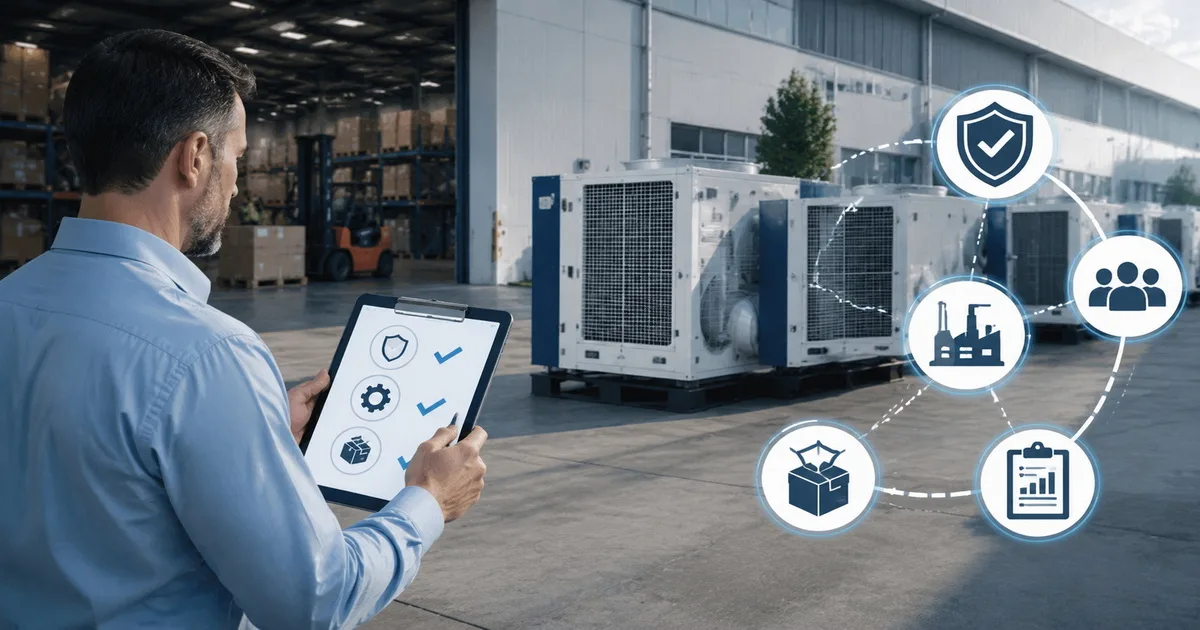
Before committing to large orders, carry out on‑site or remote factory audits. Observe incoming material checks, assembly workflows, leak testing, and final performance tests. Pay special attention to training, work instructions, and traceability practices. Review how non‑conforming units are handled; this shows how the factory manages mistakes and continuous improvement.
Step 5: Contracts, quality agreements, and revision control
Formalize cooperation through clear contracts and technical agreements. Define acceptance criteria, inspection rules, warranty terms, and corrective‑action processes. Require documented procedures for design and material changes, including notification and pre‑approval samples. This prevents unexpected modifications from appearing in production without your consent.
Common Pitfalls and an Insider Avoidance Tip
Frequent pitfalls in fresh air sourcing
– Material downgrading
Subtle changes in copper thickness, fan motor grade, bearing quality, or insulation density can reduce reliability and increase noise without obvious visual differences. The safest approach is to define baseline specifications in writing and request evidence such as material certificates or supplier lists.
– Over‑optimistic performance claims
Some datasheets quote airflow, static pressure, or noise levels under ideal laboratory conditions. If buyers design systems solely against such figures, installed performance may be lower than expected. It is better to ask for performance under realistic conditions and verify key parameters.
– Weak documentation and after‑sales planning
Missing wiring diagrams, incomplete installation manuals, or limited spare‑parts lists complicate long‑term operation and maintenance. Buyers should insist on comprehensive technical documentation and clear spare‑parts support plans before finalizing cooperation.
Insider tip: Inspect the re‑work area
A practical internal technique used by experienced buyers is to visit the factory’s re‑work or return area, not just the main production line. The volume and type of units parked for re‑work reveal patterns of recurring issues, such as leaks, electrical faults, or noise problems. Consistently high re‑work for similar reasons is an early signal that the factory’s processes need improvement. This simple observation provides insight that certificates and presentations often do not show.
Advanced Questions From Real Purchasing Scenarios
1. How can I check whether a manufacturer’s ISO certificate is still valid?
First, request a clear copy of the certificate and read it carefully, looking at the issuing body, accreditation mark, certificate number, scope, and expiry date. Then, visit the issuing body’s official website or the relevant accreditation registry and verify the certificate number or company name. If any detail does not match or no record exists, ask the factory to provide further proof or clarification before proceeding.
2. What should I demand in a fresh air unit datasheet to support project design?
At minimum, insist on airflow at different external static pressures, sound levels measured under defined conditions, power input and efficiency, filter types and grades, operating temperature and humidity ranges, and wiring and connection information. This data allows your engineers to integrate the unit into duct designs, electrical plans, and noise calculations with reasonable accuracy.
3. How do I manage design changes without losing control of quality?
Set up a formal engineering change process that requires written notification of any modifications to components, materials, software, or test methods. Ask for updated drawings and specifications and, where relevant, pre‑production samples for approval. Only after you sign off on these changes should they be implemented in regular production.
4. How can I compare lifecycle cost between different suppliers, beyond unit price?
Consider total cost of ownership, including energy use, filter replacement intervals, expected failure rates, spare‑parts prices, and maintenance workload. Run pilot installations and collect real data wherever possible. A unit with a slightly higher purchase price but lower energy consumption and more stable performance can be more economical over its lifetime.
5. What is a practical way to reduce risk when starting with a new factory?
Avoid committing to large volumes immediately. Instead, use a phased approach: start with a limited batch that goes through your full process—design validation, sampling, installation, and after‑sales feedback. Review results carefully and only scale up once the factory has demonstrated stable performance across the full cycle.
References
1. China Household Electrical Appliances Association (CHEAA) – industry review for air conditioning and related products
https://en.cheaa.org/contents/476/12824.html
2. IBISWorld – Air‑Conditioner Manufacturing in China, industry analysis
https://www.ibisworld.com/china/industry/air-conditioner-manufacturing/617
3. Statista – HVACR industry in China, statistics and facts
https://www.statista.com/topics/13563/hvacr-industry-in-china
4. Statista – Air conditioners market in China, market forecast
https://www.statista.com/outlook/cmo/household-appliances/major-appliances/air-conditioners/china
5. Statista – Industrial production of air conditioners in China
https://www.statista.com/statistics/408888/china-air-conditioner-production
6. HVAC companies directory in China
https://www.hvacinformed.com/companies/china-hvac-companies/directory.html
7. Blueway – China air conditioner manufacturer and factory information
https://www.blueway-heatpump.com/air-conditioner
8. ISO certificate verification guidance
https://iso-cert.uk/check-iso-certification-of-a-company
Hot Tags: Fresh Air Conditioning Manufacturer, China HVAC OEM Supplier, Commercial Ventilation System China, Fresh Air Unit ODM Factory, Industrial Climate Control Solutions, Tent Air Conditioner Supplier China, Energy Recovery Ventilator Manufacturer, Central Fresh Air System Exporter, Custom Ventilation Equipment China, Indoor Air Quality Ventilation China