Content Menu
● The Role of China in Mobile Air Conditioning Manufacturing
● How to Evaluate High‑Quality Mobile Air Conditioning Suppliers
>> Factory Experience and Operational Stability
>> Technical Capability and Product Design
>> Compliance, Materials, and Quality Control
>> Transparency and Long‑Term Partnership Potential
● Top 10 Mobile Air Conditioning Manufacturers In China
>> 1. DREZ (Guangzhou) Intelligent Technology Co., Ltd.
>> 2. Shenzhen Uni‑Right Industrial & Trading Co., Ltd.
>> 3. Ningbo Hoome Information Technology Co., Ltd.
>> 4. Jinan Amrta Air Conditioning Co., Ltd.
>> 5. SONGZ Automobile Air Conditioning Co., Ltd.
>> 6. Dongguan Ruixin Environmental Protection and Energy‑Saving Equipment Co., Ltd.
>> 7. Guangdong Ruitai Ventilation and Cooling Equipment Co., Ltd.
>> 8. Foshan Yitong Environmental Protection Equipment Co., Ltd.
>> 9. Shanghai Daohe Industrial Development Co., Ltd.
>> 10. Huai’an Jujiu Energy‑Saving Technology Co., Ltd.
● Comparative Overview: Capacity, MOQ, and Customization Focus
● Buyer’s Guide: From Shortlisting to First Shipment
>> Shortlisting and Initial Screening
>> Technical Alignment and Sample Development
>> Quality Assurance, Inspections, and Logistics
● Common Industry Pain Points and How to Avoid Them
>> 2. What is the best way to compare two mobile air conditioning designs for the same application?
>> 3. How many sample units should be ordered before a large fleet purchase?
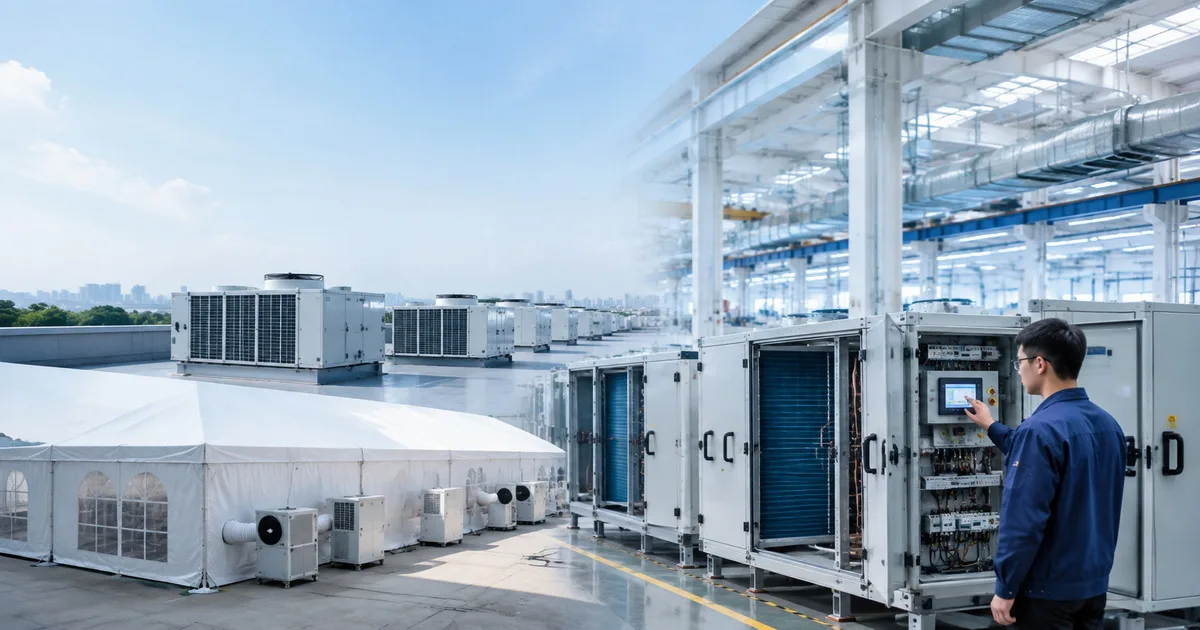
China has become a key production base for mobile air conditioning solutions, serving event organizers, industrial projects, rental companies, and brand owners around the world. Buyers looking for long‑term partners can benefit from mature manufacturing clusters, competitive costs, and increasingly sophisticated engineering capabilities.
The Role of China in Mobile Air Conditioning Manufacturing
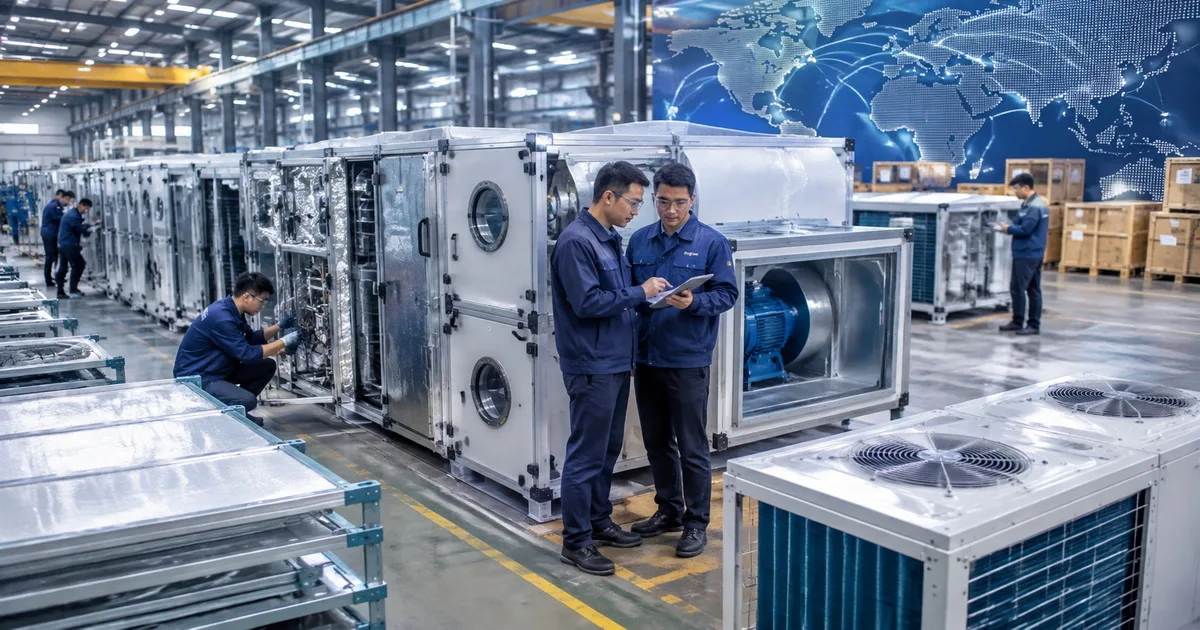
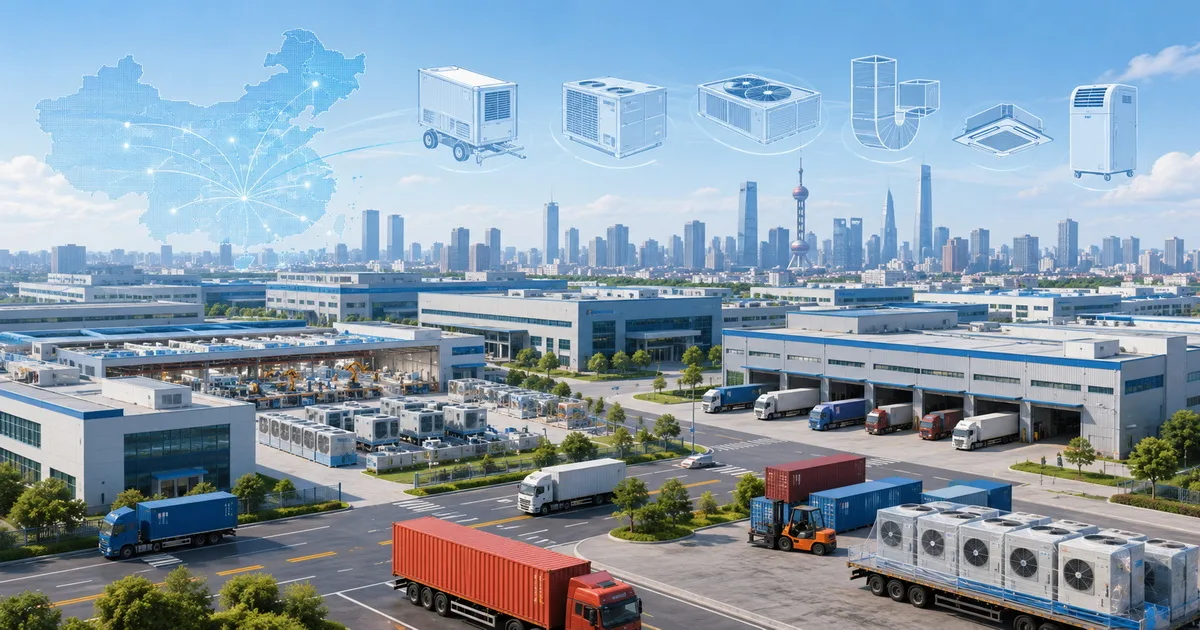
China’s manufacturing clusters have built a comprehensive ecosystem for climate control equipment, ranging from household appliances to industrial and mobile air conditioning systems. This ecosystem covers compressors, coils, fans, electronic controls, housings, and testing facilities, making it possible to scale production quickly when global demand rises.
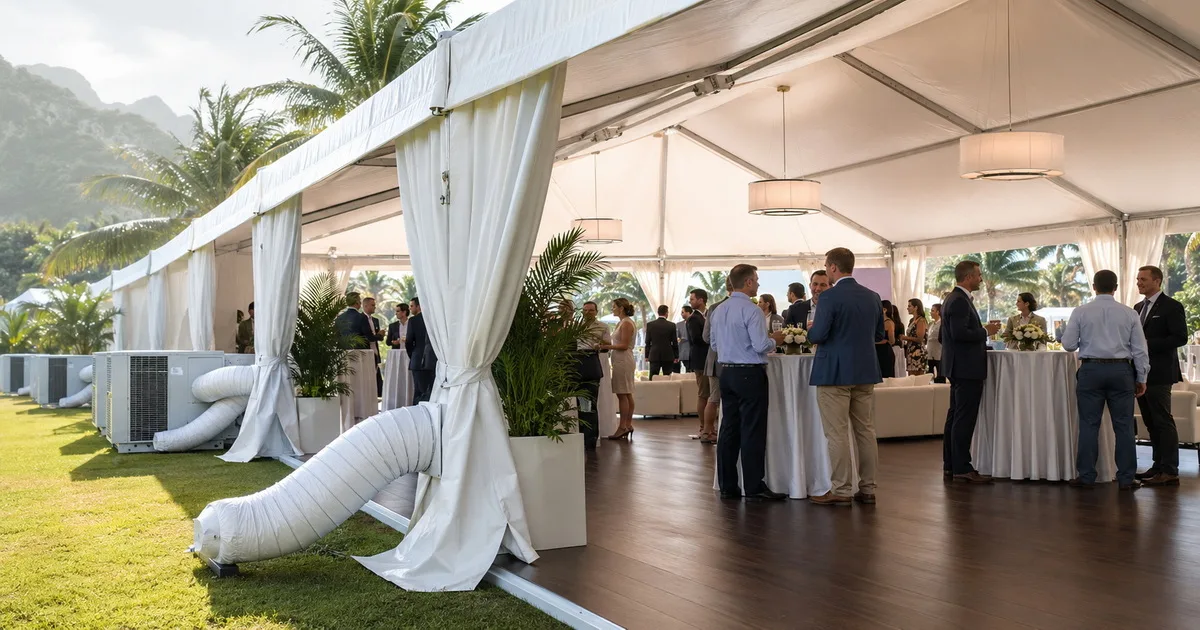
In the segment of mobile air conditioning, Chinese factories now supply tent cooling systems, trailer‑mounted units, rooftop packages, and portable indoor units to project contractors and brand owners in multiple continents. For procurement managers, China offers a flexible sourcing environment where they can combine specialized project‑driven factories with high‑volume appliance producers to build complete product portfolios.
How to Evaluate High‑Quality Mobile Air Conditioning Suppliers
Factory Experience and Operational Stability
When selecting mobile air conditioning manufacturers in China, buyers should first assess the depth of factory experience and operational stability. This includes the number of years in operation, the scale of the facility, and the consistency of past project deliveries. Factories that have supplied equipment to large events, industrial sites, or emergency relief projects tend to have more robust processes for handling demanding applications.
Another factor is capacity planning. Reliable suppliers can articulate their annual production capacity, typical lead times, and peak‑season strategies. This helps buyers avoid stock‑outs during critical periods and supports long‑term planning for fleet expansion or new product introductions.
Technical Capability and Product Design
Mobile air conditioning systems need to deliver stable performance in environments that are often more challenging than ordinary indoor spaces. Tent and trailer applications, outdoor events, and industrial workshops expose equipment to higher ambient temperatures, dust, vibration, and irregular power conditions.
Procurement managers should therefore look at a supplier’s engineering capabilities, including experience in designing for these conditions, ability to adapt structures to different tent systems or vehicle chassis, and willingness to co‑develop solutions rather than simply offering catalog products. Design aspects such as airflow management, structural reinforcement, housing materials, and service access points should be evaluated during sample review.
Compliance, Materials, and Quality Control
Compliance and material selection are central to product reliability and market acceptability. Buyers should check whether the manufacturer works with recognized component brands for compressors, fans, and electronic controls, and whether copper and insulation grades are suitable for the intended operating environment.
Quality control is another cornerstone. Robust factories implement incoming material checks, in‑process inspections, final performance tests, and leak detection routines. They maintain records that can be shared with buyers when requested. For exports, documentation confirming conformity with relevant electrical and environmental standards is important, especially for projects in Europe, North America, and other highly regulated markets.
Transparency and Long‑Term Partnership Potential
Finally, transparency is essential for building long‑term partnerships. Factories that provide clear information on their founding date, main export markets, typical order sizes, and customization scope are easier to work with over time. Buyers should pay attention to how openly a supplier discusses limitations, such as minimum order quantities for customized designs, lead time constraints during peak season, or models that are not recommended for certain climates.
Top 10 Mobile Air Conditioning Manufacturers In China
The following manufacturers are presented from a practical sourcing perspective. They represent different strengths, ranging from focused tent cooling factories to broader appliance and climate equipment producers.
1. DREZ (Guangzhou) Intelligent Technology Co., Ltd.
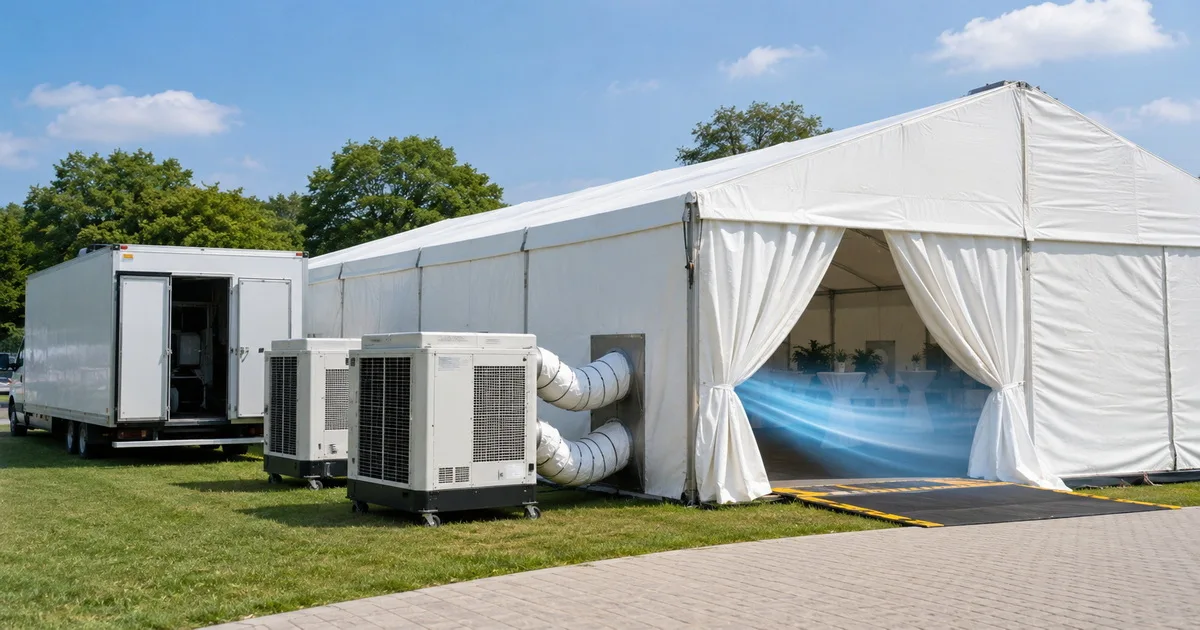
DREZ, based in Guangzhou, is an innovative climate control supplier specializing in mobile and temporary cooling solutions. Its product portfolio covers tent air conditioners, rooftop units for temporary structures, trailer‑mounted air conditioning systems, and fresh air ventilation units. The company integrates research and development, design, production, sales, and customized solutions in one organization.
Over the years, DREZ has worked on numerous event and project‑based applications, including exhibitions, commercial events, industrial zones, and special purpose spaces. This project experience makes the company well suited to buyers who need more than standard catalog units. It is particularly attractive for small and medium overseas brands and rental companies that require high cost‑performance, flexible engineering support, and responsive communication. DREZ typically offers deep customization for OEM programs, adjusting structure, capacity, control logic, and branding to fit the buyer’s application and market positioning.
2. Shenzhen Uni‑Right Industrial & Trading Co., Ltd.
Shenzhen Uni‑Right operates as a combined industrial and trading company that supplies portable and mobile air conditioning products to overseas markets. Its location in Shenzhen gives it easy access to logistics, export services, and a broad network of component suppliers.
This manufacturer is suitable for buyers targeting mid‑volume programs in the portable segment, particularly for consumer or light commercial applications. The company’s strengths lie in established export processes, familiarity with various destination markets, and the ability to handle standard OEM requirements such as logo printing, packaging design, and basic specification adjustments. It is not typically positioned as a heavy project‑engineering factory, but rather as a reliable provider of portable AC appliances and similar products.
3. Ningbo Hoome Information Technology Co., Ltd.
Located in the Ningbo area, Ningbo Hoome is associated with portable air conditioning and home appliance products. Its presence in this segment indicates a focus on high‑volume manufacturing for consumer portable units, with a standardized product range suitable for retail and online sales.
For procurement managers, Ningbo Hoome can be an option when the goal is to develop price‑competitive mobile or portable units for household use and basic indoor applications. The company’s typical support includes cosmetic customization and branding for OEM orders. Buyers seeking deeper engineering modifications or event‑grade mobile AC may wish to combine Hoome with more specialized partners for project‑based deployments.
4. Jinan Amrta Air Conditioning Co., Ltd.
Jinan Amrta is a climate equipment manufacturer known for packaged systems and air conditioning solutions that can include portable or mobile units. With experience in commercial and industrial applications, it often serves projects that require both fixed systems and transportable equipment.
This makes Amrta a potential partner for buyers whose portfolios combine rooftop units, packaged systems, and selected mobile AC products. While it may not focus solely on tent cooling, its broader engineering capabilities can be valuable for customized projects where mobile units must integrate with existing fixed infrastructure or larger climate control schemes. Purchasers should review product lines in detail to identify which models are suitable for mobile deployment and verify documentation per target markets.
5. SONGZ Automobile Air Conditioning Co., Ltd.
SONGZ is widely recognized in the vehicle and automotive air conditioning sector, supplying climate systems for buses, trucks, and special purpose vehicles. This background provides a strong foundation for mobile climate control solutions built into vehicles and trailers.
For buyers interested in mobile air conditioning integrated with transport assets, SONGZ can be relevant. Its engineering focus is on vehicle systems, meaning that mobile solutions often revolve around custom installations on mobile platforms rather than standalone tent units. Discussions with this manufacturer usually center on system integration, refrigerant management, vibration resistance, and compliance with relevant mobility‑related procedures and standards.
6. Dongguan Ruixin Environmental Protection and Energy‑Saving Equipment Co., Ltd.
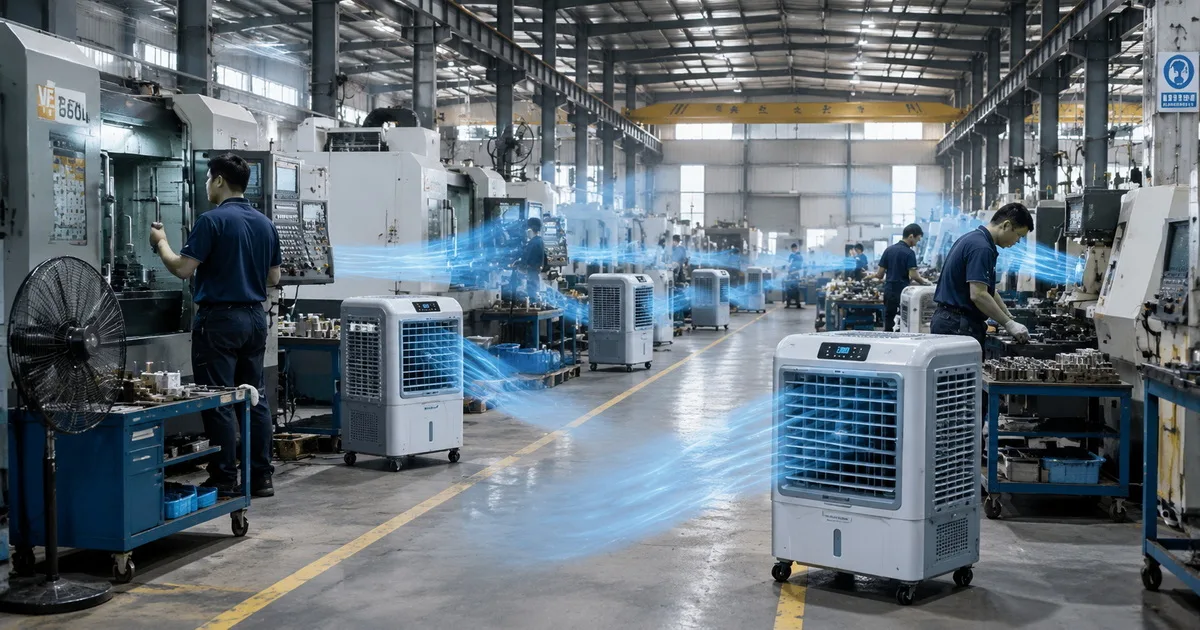
Dongguan Ruixin focuses on environmental protection and energy‑saving equipment, with mobile air coolers and portable cooling devices as part of its range. Its products are often used in factories, workshops, and semi‑open spaces where evaporative cooling or similar technologies are practical.
Buyers can consider Ruixin when they seek large numbers of mobile cooling devices for industrial settings, particularly in climates where evaporative cooling is effective. Combined strategies are common: mobile air coolers from factories like Ruixin for general temperature reduction, and compressor‑based tent AC from other suppliers for zones needing more precise control. Ruixin’s main contribution is broad coverage of practical, energy‑focused mobile cooling equipment.
7. Guangdong Ruitai Ventilation and Cooling Equipment Co., Ltd.
Guangdong Ruitai is a ventilation and cooling equipment provider with mobile air coolers, large fans, and other climate devices in its portfolio. This orientation favors industrial and workshop applications rather than household use.
Procurement teams often work with Ruitai to equip factories with mobile cooling units, particularly when they require high airflow and large coverage areas. The company’s experience in ventilation and industrial environments means its solutions are tailored to withstand dusty conditions and continuous operation. It is generally best suited for buyers whose projects revolve around industrial facilities, warehouses, and production halls.
8. Foshan Yitong Environmental Protection Equipment Co., Ltd.
Foshan Yitong is a newer company with a focus on mobile cooling equipment, including mobile air coolers and water‑cooled climate units. It positions itself in the environmental protection and energy‑saving segment, reflecting a trend towards more efficient and eco‑aligned climate solutions.
For buyers aiming to develop product lines that emphasize energy efficiency and environmentally oriented messaging, Yitong can be a candidate. Potential cooperation often revolves around verifying performance data, water consumption, and energy savings claims, followed by tailoring units to fit specific usage scenarios such as environmentally conscious warehouses, light industrial areas, or event spaces.
9. Shanghai Daohe Industrial Development Co., Ltd.
Shanghai Daohe provides mobile air coolers and heating equipment such as hot‑blast stoves, serving industrial and commercial clients. Its dual focus on cooling and heating enables year‑round climate solutions for facilities that experience both extreme heat and cold.
From a sourcing standpoint, Daohe can be a versatile partner for projects that require mobile equipment across seasons. Procurement may involve combining mobile coolers and portable heating units into a single framework contract, simplifying supplier management. Daohe is typically more oriented towards on‑site industrial applications than general consumer portable AC.
10. Huai’an Jujiu Energy‑Saving Technology Co., Ltd.
Huai’an Jujiu focuses on energy‑saving ventilation and mobile cooling devices for factories and workshops. Its product lineup includes mobile air coolers and large fans designed to improve working environments in industrial settings.
Buyers can integrate Jujiu’s products into broader climate strategies where mobile air coolers supplement or partly replace fixed air conditioning systems. This is often the case in large workshops where full fixed air conditioning is impractical or cost‑intensive. As with other industrial cooling suppliers, cooperation usually centers on coverage, airflow, energy consumption, and durability under continuous operation.
Comparative Overview: Capacity, MOQ, and Customization Focus
The following summary provides a high‑level view of how these manufacturers differ. Exact figures should be confirmed directly with each factory.
– DREZ (Guangzhou): Established, project‑focused factory with meaningful annual capacity for tent and mobile AC systems; supports relatively flexible minimum order quantities for branding and deep structural customization, especially for project‑based buyers and mid‑sized brands.
– Shenzhen Uni‑Right: Mid‑ to high‑volume supplier of portable AC appliances; minimum order quantities are oriented around consumer product runs, with customization mostly limited to branding and packaging.
– Ningbo Hoome: High‑volume household portable AC producer; suited to buyers needing large quantities and standard designs, with MOQ linked to consumer appliance scale.
– Jinan Amrta: Mixed portfolio of packaged and mobile systems; capacity and MOQs vary by product line, with more room for technical adjustments in commercial and industrial projects.
– SONGZ Automobile AC: Large vehicle climate system manufacturer; supports significant volumes in automotive applications and project‑specific customization tied to vehicle platforms instead of generic free‑standing units.
– Dongguan Ruixin: Industrial mobile air cooler supplier; MOQs and capacity fit bulk orders for factories and workshops, with standard models forming the core of its offering.
– Guangdong Ruitai: Large industrial ventilation and cooling capacity; favors orders where buyers need hundreds of units or more to equip facilities or chains of workshops.
– Foshan Yitong: Emerging eco‑oriented producer with growing capacity; MOQs balanced against new product introductions in energy‑saving segments.
– Shanghai Daohe: Industrial climate equipment supplier; capacity suitable for multi‑season projects combining cooling and heating mobile units.
– Huai’an Jujiu: Medium industrial cooling provider; MOQs align with factory‑level deployments and multi‑site industrial rollouts.
Buyer’s Guide: From Shortlisting to First Shipment
Shortlisting and Initial Screening
When starting a sourcing project, buyers should first define their main application scenarios: tent cooling for events, mobile units for industrial zones, portable indoor units for residential customers, or a mixture of these. This clarity helps determine whether to prioritize project‑focused factories like DREZ, industrial cooling specialists such as Ruixin or Ruitai, or appliance‑oriented producers like Ningbo Hoome.
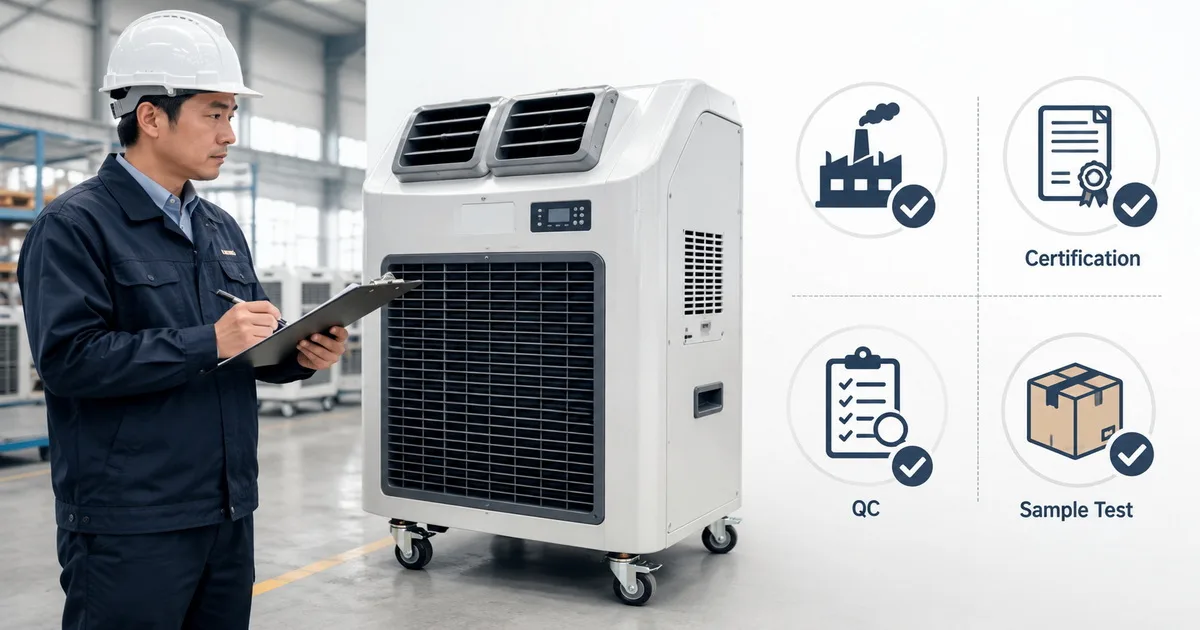
Screening can then focus on product fit, previous project references, export experience in target regions, and the balance between pricing and engineering support. Buyers should request basic company profiles and product catalogs, and verify whether the manufacturer has supplied similar applications before.
Technical Alignment and Sample Development
After shortlisting, the next step is technical alignment. This includes agreeing on required cooling capacity, power supply standards, expected ambient conditions, structural interfaces (tent beams, mounting points, trailer chassis), and any specific noise or energy performance targets. Clear specifications reduce the risk of mismatched products.
Sample development follows technical alignment. It is advisable to order a small series of samples for both laboratory and field testing. At least one unit can be instrumented with additional measurement points to capture temperature, airflow, power draw, and other performance metrics. Mobile units should be tested in realistic set‑ups that reflect final usage, such as event tents or industrial corners with similar loads and ventilation conditions.
Quality Assurance, Inspections, and Logistics
Quality assurance begins at the contract stage. Buyers should include detailed technical annexes describing agreed materials, component brands, and performance criteria. During mass production, pre‑production samples should be signed off before full manufacturing starts.
A practical internal method to protect against substitutions is to perform randomly selected spot teardown inspections during the first major shipment. This involves opening a unit from each batch to confirm that compressors, coils, wiring harnesses, and key components match the agreed bill of materials. Communicating this procedure in advance strongly discourages unauthorized changes.
On the logistics side, attention should be given to packaging design, container loading plans, and handling instructions. Mobile air conditioning systems are relatively heavy and sensitive to impact; robust packaging and sensible stacking strategies can significantly reduce damage rates. Buyers also need to plan spare parts stocking, especially when units are deployed in remote locations or high‑usage environments.
Common Industry Pain Points and How to Avoid Them
Several recurring issues appear in mobile air conditioning procurement:
– Performance gaps between datasheet and real use: Some units perform well under test‑stand conditions but struggle in tents or workshops with hotter ambient temperatures, inadequate ventilation, or non‑standard power supply. Mitigation involves representative field testing, not relying solely on lab data.
– Silent downgrading of components: Differences between sample and mass production can occur when component specifications are not fully frozen. This risk can be reduced by detailed contracts, sample sign‑off, and the spot teardown practice mentioned earlier.
– Incomplete documentation for export: Limited or inconsistent documentation can create obstacles during customs clearance or local inspections. Buyers should establish documentation requirements early and verify them before shipment.
– Under‑managed after‑sales support: Without clearly defined spare parts and maintenance procedures, end users may encounter longer downtime. Structured after‑sales plans and agreed response times help maintain fleet availability.
Experienced procurement managers often insist on a combination of contractual clarity, physical inspections, and long‑term performance monitoring. They also gradually consolidate volume with suppliers that demonstrate stable quality across multiple orders, while keeping a limited number of backup factories to hedge risks.
Frequently Asked Questions
1. How can I confirm that a manufacturer’s quality management system is genuinely implemented, not just documented?
Beyond requesting certificates, buyers can ask for recent internal audit reports, production records, and failure analysis documents. Factory visits focusing on how issues are handled in practice reveal more than a simple certificate copy.
2. What is the best way to compare two mobile air conditioning designs for the same application?
The most effective approach is a controlled field test in the same tent or workspace, under the same load and ambient conditions. Measurements of temperature, humidity, energy consumption, and noise, combined with user feedback, provide a practical comparison.
3. How many sample units should be ordered before a large fleet purchase?
For technically demanding applications, it is advisable to order at least several units from each shortlisted supplier. This allows you to test variability between units, assess consistency, and gather enough data to make a confident decision.
4. What should I consider when combining mobile air conditioning with mobile air coolers or large fans?
The key is zoning. High‑precision mobile AC can be used in areas with strict comfort requirements, while mobile air coolers and fans handle general temperature reduction in less critical zones. Coordinated airflow planning prevents conflicting air patterns and uneven cooling.
5. How often should mobile air conditioning units be inspected in heavy‑usage scenarios such as events or industrial areas?
Regular checks before and after each major deployment are recommended. These should include filters, electrical connections, refrigerant levels, and visual inspection of coils and housings. For permanent high‑usage environments, scheduled preventive maintenance intervals should be agreed with the supplier.
References
1. Statista – Air Conditioners – China Market Forecast (overview of market size and definition):
https://www.statista.com/outlook/cmo/household-appliances/major-appliances/air-conditioners/china
2. Baidu B2B Data – Air Conditioner Manufacturers Ranking (China, 2026):
3. Baidu B2B Data – Mobile Air Cooler Manufacturers Ranking (China, 2026):
https://b2bdata.baidu.com/en/rank/k/all-area/mobile-air-cooler
4. Made‑in‑China – Portable Air Conditioner Manufacturers Directory:
https://www.made-in-china.com/manufacturers/portable-ac.html
5. Ensun – Portable Air Conditioner Manufacturers in China:
https://ensun.io/search/portable-air-conditioner/china
6. SAE International – Procedure for Certification that Requirements for Mobile Air Conditioning System Components, Service Equipment, and Technician Training Meet Applicable Standards:
https://www.sae.org/standards/content/j2911_202002
7. DREZ (Guangzhou) Intelligent Technology Co., Ltd. – Company Profile and Product Overview:
https://www.drezaircon.com/about-us
Hot Tags: Mobile Air Conditioning Manufacturers,China Tent Air Conditioner Supplier,Industrial Mobile Cooling Systems,Event Tent Air Conditioning Rental,OEM Mobile Air Conditioning Factory,ODM Mobile HVAC Solutions,Trailer Mounted Air Conditioner,Rooftop Tent Air Conditioning Unit,Portable Air Conditioner Exporter,Industrial Mobile Air Cooler Supplier