Content Menu
● Why Source Air Conditioning Firms From China
● How We Evaluate High-Quality Air Conditioning Suppliers
>> Experience: What Matters In Real Factory Evaluation
>> Expertise: Technical Signals In Air Conditioning Manufacturing
>> Authoritativeness: China’s HVAC Cluster Advantage
>> Trust: Core Information You Should Expect From Each Factory
● Selection Criteria: How This Top 10 List Was Built
● Top 10 Air Conditioning Firms Manufacturers In China (2026)
>> 1. DREZ (Guangzhou) Intelligent Technology Co., Ltd.
>> 2. Gree Electric Appliances
>> 4. Haier Smart Home (Haier Group HVAC)
>> 5. AUX Group
>> 8. Chigo
>> 9. Changhong
>> 10. Galanz
● Comparison Table: Capacity, MOQ, Certification Signals
● Industry Pain Points And How To Avoid Them
● Internal “Avoidance” Guide: A Rarely Discussed Sourcing Rule
● Buyer’s Guide: How To Verify Factories, Samples And Logistics
>> 2. Certificate And Compliance Checks
● Five Advanced Procurement Questions
>> 1. How can I verify whether an ISO 9001 certificate is still valid?
>> 2. What is the safest way to confirm that a Chinese factory really manufactures the product itself?
>> 3. Why do some suppliers pass sample tests but fail during mass production?
>> 4. Which certifications matter most for export air conditioning products?
>> 5. How can I reduce the risk of hidden material substitution between sample and bulk order?
Why Source Air Conditioning Firms From China
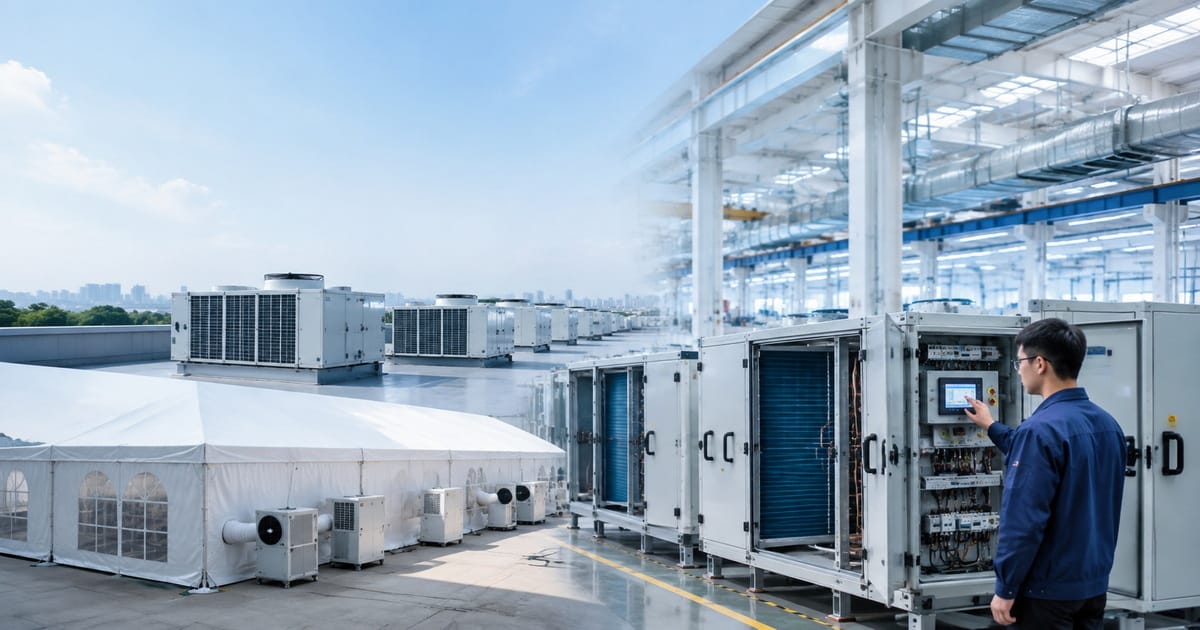
China is currently the largest air-conditioner manufacturing base in the world, with an industry value exceeding 100 billion USD and a highly concentrated market structure dominated by leading HVAC groups. Dense industrial clusters in Guangdong, Zhejiang, Jiangsu and Shandong offer integrated compressor, copper tube, electronics and sheet-metal supply chains, which significantly reduce BOM cost and lead time for overseas buyers.
For procurement managers, the main question is no longer “whether” to source air conditioning systems from China, but how to identify factories that can deliver stable performance, compliant certification, and flexible OEM/ODM support across tent, rooftop, trailer and residential/commercial HVAC programs.
How We Evaluate High-Quality Air Conditioning Suppliers
Experience: What Matters In Real Factory Evaluation
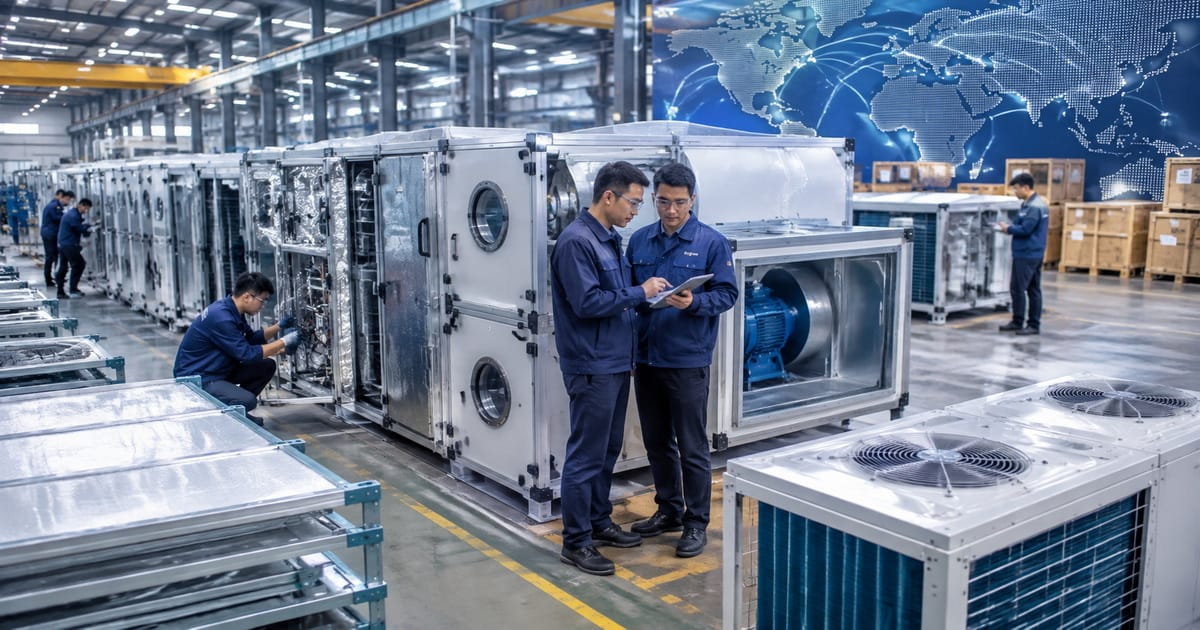
From a buyer’s perspective, high-quality air conditioning firms in China usually share several traits:
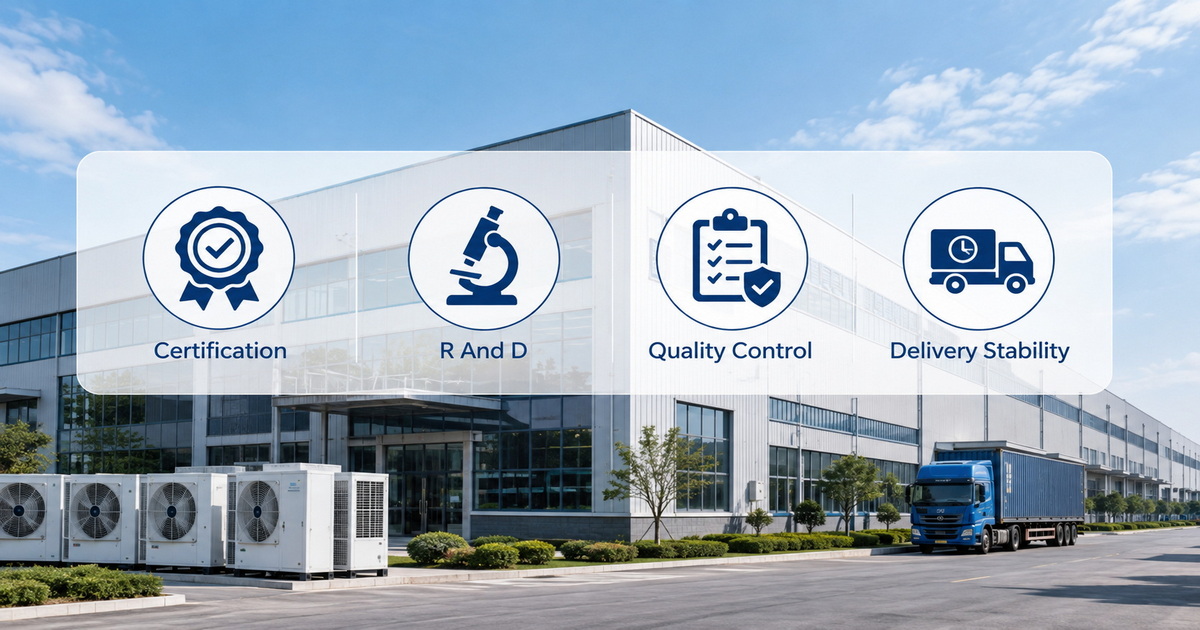
– Factory certification and legal profile
– Valid ISO 9001 (and ISO 14001/45001 where relevant) linked to the actual manufacturing entity.
– Proper business license, export registration, and clear ownership structure.
– Traceable production address near recognized HVAC clusters (e.g., Guangzhou–Foshan–Shenzhen, Ningbo, Qingdao).
– R&D and engineering depth
– Ability to design or adapt tent AC, rooftop units, trailer systems and fresh air units instead of merely re-labeling generic catalog models.
– In-house engineering team and testing capability (performance labs, leak testing, noise measurement, etc.).
– QC workflow and process discipline
– Documented incoming material inspection (compressors, coils, PCB, fan motors).
– Standardized leak tests and refrigerant charge control.
– Final performance testing under specified ambient and load conditions.
– Delivery and capacity stability
– Realistic lead times matched with factory area, workforce and annual capacity.
– Ability to scale project orders without sacrificing quality consistency (pre-production sample, process recipe, repeatability).
Expertise: Technical Signals In Air Conditioning Manufacturing
Professional buyers should pay attention to technical and material details that strongly affect performance and reliability:
– Materials and components
– Coil materials (copper tube, aluminum fin quality, anti-corrosion treatments).
– Compressor sourcing (major brands vs. generic) with clear performance specs and warranty terms.
– Insulation thickness and fire-retardant properties for tent and temporary structures.
– Manufacturing and process standards
– Brazing quality, welding processes, refrigerant charge accuracy.
– Wiring harness and PCB design adapted to ambient conditions in target markets.
– Fan/motor matching for airflow, static pressure and noise control.
– Certifications and environmental compliance
– CE, RoHS and sometimes CB/SASO depending on destination market.
– Energy-efficiency standards aligned with local regulations (SEER/EER, seasonal performance).
– For special applications (e.g. explosion-proof or medical), additional conformity assessments.
Authoritativeness: China’s HVAC Cluster Advantage
China’s HVAC and air-conditioning ecosystem is often described as the largest HVAC “ecosystem” on earth, supported by strong research, component manufacturing and export activity. Key clusters include:
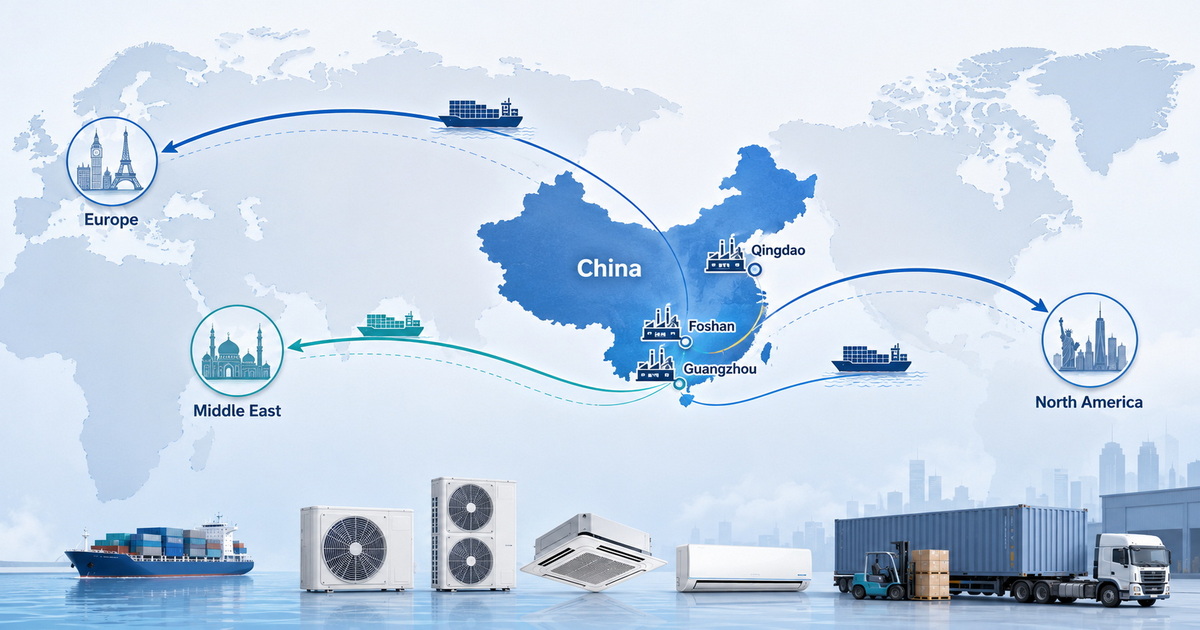
– Guangdong (Guangzhou, Foshan, Shenzhen, Zhongshan) – dense network of tent AC, rooftop units, copper tubes, electronics and logistics hubs.
– Shunde (Foshan), Qingdao, Cixi – known for home appliance and AC manufacturing, including major brands like Midea, Gree and Haier.
These clusters give Chinese air conditioning firms a structural advantage in cost engineering, rapid model refresh cycles and integrated supply chains, which is difficult to replicate in smaller markets.
Trust: Core Information You Should Expect From Each Factory
For each factory on a shortlist, serious buyers should be able to obtain:
– Company profile – establishment year, factory area, production scope, major markets.
– Core strengths – specialization (e.g., tent AC, rooftop, VRF, portable, residential split systems), engineering focus, service style.
– OEM/ODM range – ability to customize enclosures, control logic, mounting methods, electrical specs, and branding.
– Export references – main destination markets (EU, Middle East, US, Asia-Pacific) and project examples where possible.
Selection Criteria: How This Top 10 List Was Built
This Top 10 Air Conditioning Firms Manufacturers in China (2026) list is compiled from a buyer’s lens, based on public industry data, major brand market share, and procurement-oriented guides. The core criteria include:
– Clear factory capabilities: real manufacturing rather than pure trading, with traceable production facilities.
– Demonstrated R&D and customization capacity for OEM/ODM programs.
– Export-oriented quality control discipline and certification readiness (ISO, CE, RoHS, others as applicable).
– Proven international market presence, especially in Europe, Middle East, Asia-Pacific and emerging markets.
– Suitability for different buyer profiles: global brands, regional distributors, and niche project-based climate-control buyers.
Top 10 Air Conditioning Firms Manufacturers In China (2026)
1. DREZ (Guangzhou) Intelligent Technology Co., Ltd.
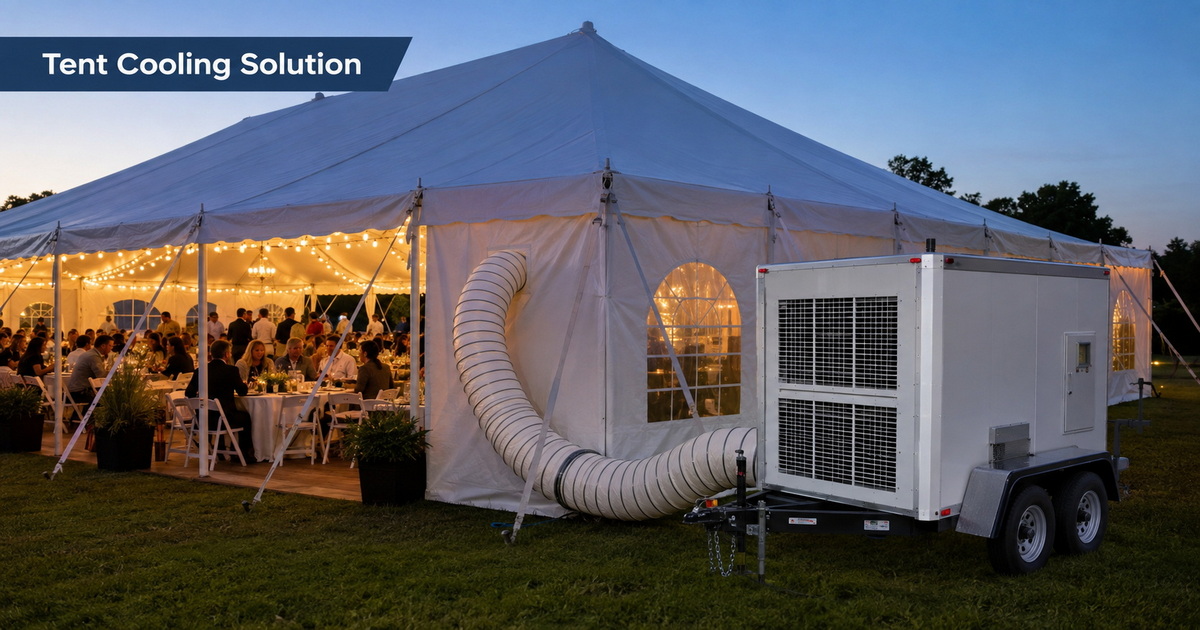
DREZ (Guangzhou) Intelligent Technology Co., Ltd. is a privately invested HVAC company specializing in research, design, manufacturing, sales and service for climate control systems used in large tents, events, festivals, exhibitions, steel structures and other temporary or semi-permanent applications. The factory is located in Panyu, Guangzhou, close to Southern China’s HVAC manufacturing cluster, with more than 6,000 m² of plant area and an annual capacity exceeding 10,000 units.
For overseas buyers, DREZ is particularly suited to medium and small brands, wholesalers and project integrators that need:
– Deep OEM/ODM support for tent air conditioners, rooftop AC units, trailer-mounted systems and fresh air ventilation units.
– Responsive communication and engineering iteration, rather than rigid catalog-only supply.
– Flexible MOQ for project-based orders, with the option to adjust capacity around event seasons or project timelines.
DREZ’s strengths include:
– Integrated R&D and manufacturing with a relatively high proportion of staff holding bachelor degrees or above, which supports technical communication and design adaptation.
– Long experience in event cooling across mainland China, Hong Kong and Macao since the early 2000s, giving the team practical knowledge of installation constraints, noise limits and temporary infrastructure requirements.
– Export-ready positioning for OEM/ODM climate control, where buyers can co-develop configurations (capacity, airflow, ducting, controls) tailored to their brand proposition.
Main markets & OEM/ODM scope: Global export projects focused on tent cooling, outdoor event climate control, industrial and emergency applications, with customized branding, electrical specifications and installation interfaces.
2. Gree Electric Appliances
Gree is widely recognized as one of China’s largest air-conditioner manufacturers, with deep vertical integration and a broad export footprint covering more than 160 countries and regions. Its portfolio spans residential split units, commercial systems and various specialized AC products.
Buyer relevance:
– Strong fit for large-volume residential and commercial programs where stable supply and recognized brand reputation are critical.
– Extensive R&D and energy-efficient technology, particularly inverter systems and advanced control algorithms.
Established: 1990s (listed group)
Core strengths: Scale, R&D investment, complete HVAC portfolio.
Main markets: Global (Asia, Europe, Americas, Middle East, Africa).
OEM/ODM scope: Broad, but typically focused on higher-volume, standardized product categories.
3. Midea Group
Midea Group is one of China’s most diversified appliance and HVAC manufacturers, with a significant share of air conditioner and white goods markets and a strong OEM/ODM presence globally. Midea is also active in robotics, smart home integration and industrial automation.
Buyer relevance:
– Suitable for brands that need mature engineering and wide product coverage, from residential splits to more complex commercial units.
– Often chosen for global-scale OEM programs due to strong process control and international experience.
Established: 1968
Core strengths: Broad HVAC platform, smart technology integration, robust export capability.
Main markets: Worldwide, including extensive presence in Europe and emerging markets.
OEM/ODM scope: Large-scale, multi-category programs with structured engineering support.
4. Haier Smart Home (Haier Group HVAC)
Haier, founded in 1984, is a global appliance and HVAC group with factories in China and overseas markets, leveraging a smart living and ecosystem positioning. Haier’s HVAC portfolio includes VRF systems, intelligent controls and integrated home solutions.
Buyer relevance:
– Credible choice for procurement managers prioritizing brand positioning, global compliance and multi-region support.
– Strong fit for retail and branded distribution where end-user experience and connectivity are important.
Established: 1984
Core strengths: International footprint, smart VRF and control systems, global service network.
Main markets: Asia, Africa, Europe and other regions with significant Haier brand presence.
OEM/ODM scope: Selective, often focusing on programs aligned with Haier’s strategic markets and product roadmap.
5. AUX Group
AUX Group is widely known as a cost-performance HVAC brand in China, frequently appearing in top manufacturer lists. It focuses on air conditioning solutions with competitive pricing while maintaining mainstream technical standards.
Buyer relevance:
– Attractive for distributors and channel buyers needing affordable but technically acceptable AC systems for mass-market channels.
– Often positioned between premium engineering brands and ultra-budget suppliers, making it a practical choice for volume-driven yet quality-conscious programs.
Core strengths: Competitive pricing, active product development, frequency-conversion technologies.
Main markets: Strong domestic presence; exports to the US, Japan, Australia and other regions.
OEM/ODM scope: Channel-dependent, generally flexible but subject to volume and product type.
6. Hisense HVAC
Hisense is a major Chinese electronics and appliance manufacturer with a growing HVAC business, including smart features and international production (e.g., Mexico AC plant). Its air conditioning products emphasize comfort features, styling and connectivity.
Buyer relevance:
– Suitable when the target market emphasizes user experience and design in residential or light-commercial AC segments.
– Often selected for branded distribution, where integration with other Hisense electronics is a plus.
Core strengths: Smart features, design, global brand positioning.
Main markets: Global, with strong presence in selected regions.
OEM/ODM scope: More limited; tends to focus on Hisense-branded programs.
7. TCL Air Conditioning
TCL is a global electronics group with a significant AC business, operating a multi-brand strategy (TCL, Alcatel, RCA). Its HVAC portfolio serves mainstream consumer segments.
Buyer relevance:
– Good option for distributors requiring recognizable branding and stable mainstream AC product lines.
– For OEM/ODM, the key factor is alignment between TCL’s product roadmap and the buyer’s target market requirements.
Core strengths: Global electronics ecosystem, multi-brand strategy, mainstream AC categories.
Main markets: Worldwide consumer markets.
OEM/ODM scope: Selective; more oriented to TCL-led brand strategies.
8. Chigo
Chigo is often associated with high-volume, budget-focused AC supply, exporting to more than 200 countries. It regularly appears in lists of major Chinese air-conditioner manufacturers.
Buyer relevance:
– Considered when price sensitivity is high and specifications are relatively standard.
– Requires careful attention to QC, documentation and traceability to avoid hidden material changes.
Core strengths: Mass production capability, competitive pricing.
Main markets: Global budget and value segments.
OEM/ODM scope: Wide, but buyers must define specs and QC measures very clearly.
9. Changhong
Changhong is a large Chinese industrial and electronics brand with HVAC relevance, often linked to smart-home ecosystems and mainstream appliances. It offers AC products as part of its broader portfolio.
Buyer relevance:
– More suitable for standard appliance-led sourcing, integrated within Changhong’s existing channel.
– Less focused on niche, heavily customized climate-control systems compared with specialized OEM factories.
Core strengths: Brand recognition, mainstream appliance manufacturing.
Main markets: Domestic and selected international markets.
OEM/ODM scope: Moderate; best aligned with Changhong’s core product architectures.
10. Galanz
Galanz is a well-known large-scale appliance manufacturer with AC capabilities, frequently appearing in top manufacturer lists. Its strongest profile is high-volume standardized production.
Buyer relevance:
– A reference point for volume-driven sourcing where standardized AC products are needed.
– Suitable for buyers who prioritize scale and production efficiency, provided that certification and customization requirements are carefully managed.
Core strengths: Large-scale manufacturing, standardized processes.
Main markets: Global appliance markets.
OEM/ODM scope: Structured; more focused on mainstream applications than on niche climatic solutions.
Comparison Table: Capacity, MOQ, Certification Signals
Below is a simplified comparison to illustrate different sourcing profiles. Values are indicative “signals” based on public information and typical market positioning; exact figures should be confirmed directly with each supplier.
| Manufacturer | Typical focus | Approx. capacity / scale signal | MOQ tendency | Certification / compliance signal |
|---|---|---|---|---|
| DREZ (Guangzhou) | Tent AC, rooftop, trailer systems, fresh air units | 6,000+ m² factory, 10,000+ units/year | Flexible, project-based MOQs | Export-ready; ISO & CE/RoHS scope to be confirmed per product line |
| Gree | Residential & commercial AC at global scale | World’s largest AC maker; high output | Medium–high volume, program-based | Strong corporate compliance, broad global certifications |
| Midea | Broad HVAC and appliances | Very large group; multi-factory | Medium–high volume | Wide certification coverage, energy-efficiency focus |
| Haier | Smart HVAC + appliances | Global factories & VRF systems | Medium–high volume | Strong focus on international standards and IoT integration |
| AUX | Cost-performance AC | Large domestic production | Often flexible by channel | Certification present; must verify per SKU and market |
| Hisense | Consumer-oriented HVAC | Significant global scale | Volume tied to brand programs | Market-specific approvals; smart features and safety marks |
| TCL | Mainstream consumer AC | Global electronics group scale | Volume-dependent | Standard CE/RoHS where applicable; requires SKU-level confirmation |
| Chigo | Budget wholesale AC | Mass production profile | Competitive MOQs for volume | QC and traceability require close monitoring |
| Changhong | Mainstream appliances & HVAC | Large appliance group | Volume-oriented | Certificates valid; must check scope and expiry carefully |
| Galanz | Large-scale appliance + AC | Established large-scale production | Volume-oriented | Standard compliance; verify documentation by destination market |
Industry Pain Points And How To Avoid Them
Procurement managers sourcing air conditioning products from China face several recurring issues:
– Hidden material substitution
– Risk: Substituting coil materials, compressor brands or insulation thickness between sample and mass production to cut cost.
– Mitigation: Lock BOM in contracts with detailed descriptions, require batch-specific material certificates and random third-party inspections.
– Certificate misuse or expired ISO/CE/RoHS
– Risk: Certificates referencing different entities, product scopes or expired dates.
– Mitigation: Verify certificate number, scope and validity through official registries (e.g., IAF CertSearch, notified body websites).
– Inconsistent process control between sample and mass production
– Risk: Engineering samples produced under ideal conditions, but mass production suffers from process variability (brazing, charge, assembly).
– Mitigation: Always require pre-production samples from the actual line, not only lab samples, before confirming bulk orders.
Internal “Avoidance” Guide: A Rarely Discussed Sourcing Rule
One internal rule that experienced HVAC buyers follow—but which is seldom mentioned openly online—is:
In practice this means:
– Asking the factory to explain and document key process parameters (brazing temperature range, leak-test methods, refrigerant charging protocol, torque specs for critical fasteners, insulation application method).
– Checking whether the same process recipe will be applied during mass production and whether operators are trained and supervised accordingly.
– Requesting a pre-production run from the real assembly line with full data logs (leak test, performance test, rejection rates).
Many long-term failures (noise, leakage, uneven cooling, premature compressor failure) can be traced not to bad design, but to hidden variation in these process steps. Serious buyers therefore treat the process recipe as part of the contract, not just an internal document.
Buyer’s Guide: How To Verify Factories, Samples And Logistics
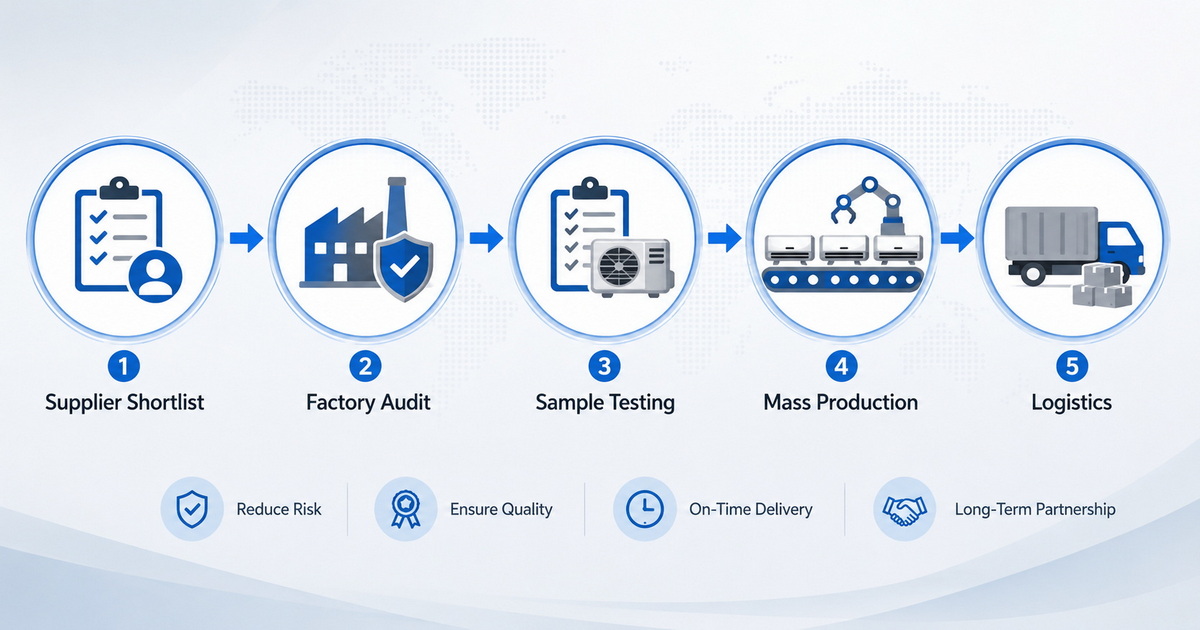
1. Factory Verification
– Cross-check business license and registered address via official records or reputable verification platforms.
– Request factory photos, equipment lists and layout plans showing actual production (coil fabrication, assembly, testing).
– Where possible, commission a third-party audit focusing on QC steps and certification validity.
2. Certificate And Compliance Checks
– ISO 9001: Confirm the legal entity, production scope and expiry date via the issuing body or accredited databases like IAF CertSearch.
– CE/RoHS: Verify the notified body, test reports and product family referenced; beware of “generic” certificates that do not match your actual product configuration.
– Special-market compliance: For GCC, North America or other regions, check local safety marks or energy labels with regulators or recognized labs.
3. Sampling Strategy
– Stage 1: Engineering sample to confirm cooling capacity, dimensions, installation interfaces and general performance.
– Stage 2: Pre-production sample from the real line to validate repeatability with production tooling and workforce.
– Include clear acceptance criteria (capacity tolerance, noise levels, leak-test results, cosmetic standards).
4. Logistics And Packaging
– Define packaging: export cartons, palletization, corner protection, moisture control for sea freight.
– Clarify spare parts strategy (compressors, PCB, fans) and warranty terms per destination market.
– Confirm Incoterms, lead times and the supplier’s experience with consolidation shipments or project-phased deliveries.
Five Advanced Procurement Questions
1. How can I verify whether an ISO 9001 certificate is still valid?
Check the certificate number, issuing body, scope and expiry date printed on the document, then search the issuer’s official website or accredited databases like IAF CertSearch to confirm status and scope. If the entity name or address differs from the factory you are dealing with, treat it as a red flag.
2. What is the safest way to confirm that a Chinese factory really manufactures the product itself?
Request the business license, production address and equipment list, then ask for workshop photos or videos showing real assembly, leak testing and final inspection on site. If possible, conduct a live video audit or commission a third-party inspection that verifies that the core processes are not outsourced to unknown facilities.
3. Why do some suppliers pass sample tests but fail during mass production?
Often, engineering samples are built under special conditions with extra attention and hand-tuned processes, while mass production depends on stable sourcing, operator training and strict process control. A pre-production sample from the actual line reduces this gap by demonstrating whether the factory can repeat performance at scale.
4. Which certifications matter most for export air conditioning products?
For most markets, ISO 9001, CE and RoHS are common baseline requirements. Depending on the destination, you may also need GCC, UL/ETL, SASO or region-specific energy labels. Always map required certifications to product type (residential, commercial, industrial, tent AC, trailer system) and local regulations before finalizing your supplier.
Specify key components and materials (coil material, compressor brand or equivalent standard, insulation grade, PCB specs, fan motor standard) directly in the contract, and require batch-specific evidence such as incoming inspection records, serial numbers and periodic third-party testing. Combine this with random shipment inspections and clear penalty clauses for non-conforming material.
References
1. IBISWorld – Air-Conditioner Manufacturing in China Industry Analysis, 2015–2030 (market size and leading companies). [ibisworld]
2. Faxiangongchang – China home appliance 2026: market scale and CR3 of Midea/Gree/Haier. [faxiangongchang]
3. DREZ official company profile – About Us: DREZ (Guangzhou) Intelligent Technology Co., Ltd. [drezaircon]
4. DREZ expert buyer guide – Top 10 Air Climate Control Manufacturers in China (2026 Updated). [drezaircon]
5. Asian Sourcing Group – Top 10 Air Conditioner Manufacturers in China (manufacturer features and market position). [asiansourcinggroup]
6. LinkedIn industry analysis – China as the biggest HVAC ecosystem on earth. [linkedin]
7. Statista – HVAC and HVACR industry overview in China (market data and segment analysis). [drezaircon]
8. Guangdong industrial cluster context – regional manufacturing and innovation overview. [drezaircon]
Hot Tags: Air Conditioning Firms, China HVAC Manufacturers, Tent Air Conditioner Supplier, Rooftop Air Conditioning Unit, Trailer Mounted AC Systems, OEM ODM Air Conditioning Factory, Industrial Climate Control Solutions, Temporary Structure Cooling Systems, China Air Conditioner Export, Air Conditioning Procurement