Content Menu
● Why Source Air Cooled Heat Pumps from China?
● Top 10 Air Cooled Heat Pump Manufacturers in China
>> 1. DREZ (Guangzhou) Intelligent Technology Co., Ltd.
>> 3. Gree Electric Appliances, Inc. of Zhuhai
>> 4. Guangdong PHNIX Eco-Energy Solution Ltd.
>> 5. Hien New Energy Equipment Co., Ltd.
>> 6. AMITIME
>> 7. SPRSUN
>> 8. Wotech Renewable Energy & Technology
>> 9. Guangzhou Hiseer Air Conditioning Co., Ltd.
>> 10. Shenling Environmental Systems Co., Ltd.
● Technical Checks Buyers Often Miss
>> Do Not Compare Rated Capacity Alone
>> “Copper Tube and Aluminum Fin” Is Not Enough
>> An Industry “Hidden Risk” to Avoid
● FAQ
>> 1. How can I verify that a supplier’s ISO certificate is still valid?
>> 2. Does a CE certificate prove that a heat pump can be legally sold in Europe?
>> 3. Why can two 16 kW heat pumps have very different prices?
>> 4. How can I determine whether a supplier’s COP claim is reliable?
>> 5. How should I negotiate MOQ for an OEM heat pump project?
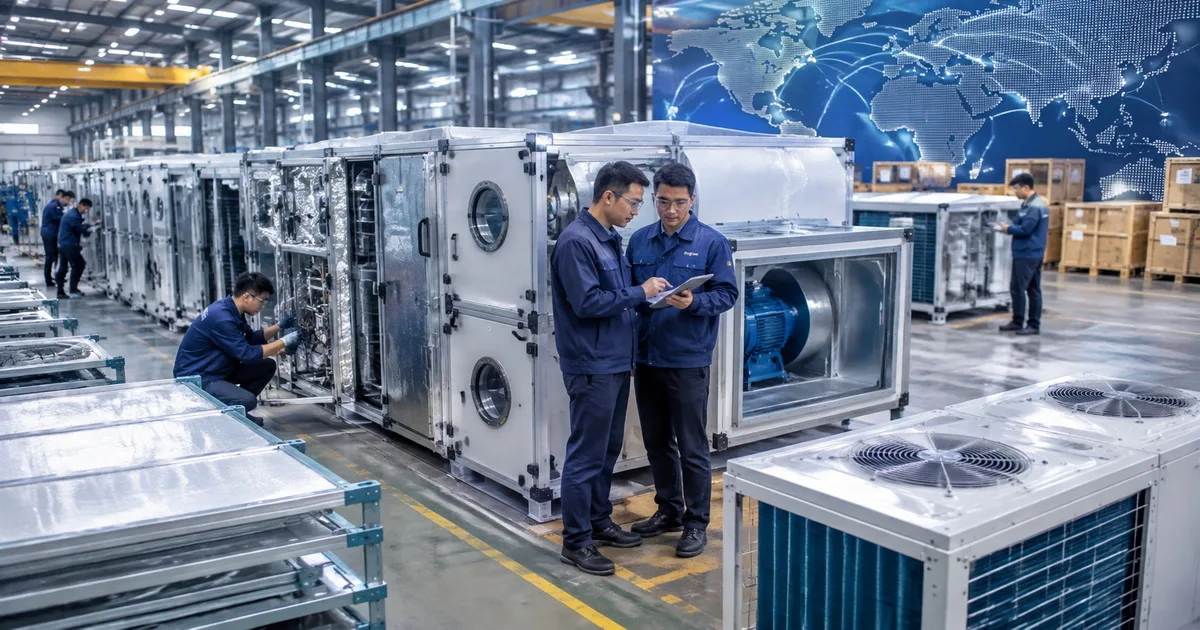
China is one of the world’s most important heat pump manufacturing hubs. The International Energy Agency states that China produced around 35% of global heat pumps in 2022 and remains a major manufacturer of decentralized heat pump systems for buildings.
For international buyers, sourcing from China is not only about lower unit costs. The country offers a mature supply chain for compressors, heat exchangers, sheet-metal fabrication, controllers, refrigerant systems, assembly, testing, packaging, and export logistics.
However, “Made in China” does not automatically mean equal product quality, stable delivery, or full regulatory compliance. Procurement managers looking for long-term Air Cooled Heat Pump suppliers should assess R&D capability, target-market certifications, component traceability, quality-control processes, and after-sales responsiveness—not price alone.
Why Source Air Cooled Heat Pumps from China?
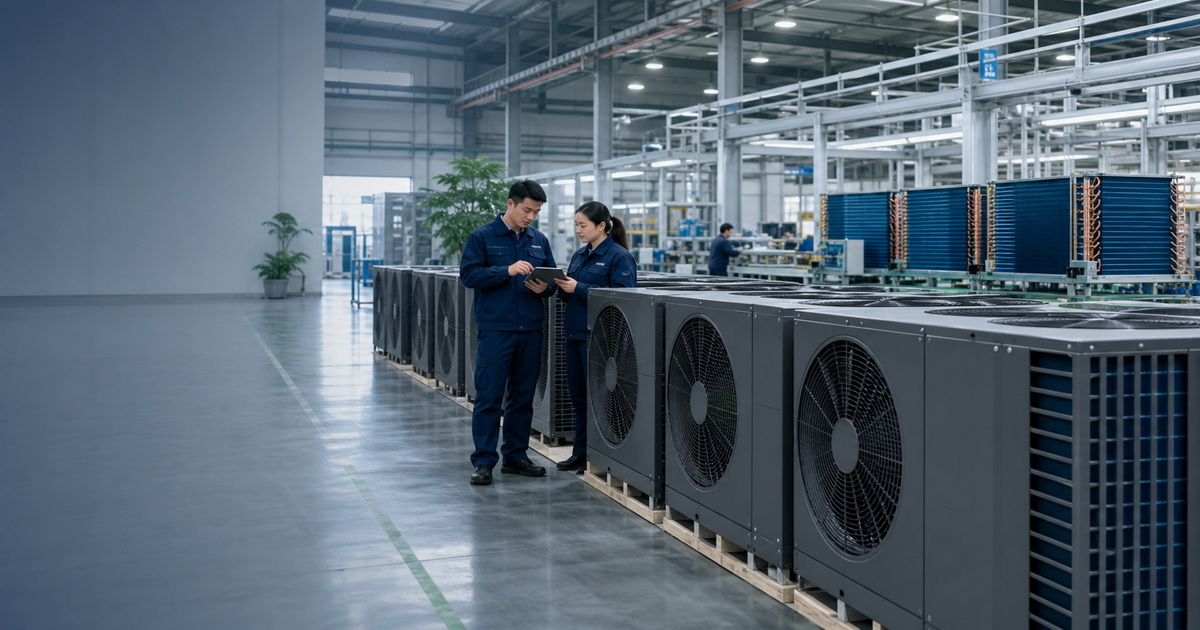
China’s air source heat pump industry is concentrated in Guangdong, Zhejiang, Jiangsu, and other manufacturing regions. Guangdong’s Pearl River Delta, including Guangzhou, Foshan, Zhuhai, and Shunde, is particularly strong in HVAC production because of its dense supply network for components, electronics, sheet metal, heat exchangers, plastics, packaging, and export services.
Mordor Intelligence estimates that China’s heat pump market could grow from USD 16.03 billion in 2025 to USD 16.87 billion in 2026. Air-source systems accounted for an estimated 68.78% of the Chinese market in 2025.
Chinese manufacturers typically offer several cooperation models:
– Standard private-label products for distributors and wholesalers
– ODM platform customization for branding, casing, controllers, software, manuals, and packaging
– Deep OEM development for buyers with proprietary specifications and annual purchase forecasts
– Engineering support for hotels, pools, commercial heating, temporary buildings, camps, events, and industrial temperature-control projects
How We Screen Suppliers
A reliable Air Cooled Heat Pump Factory should not be selected simply because it claims to have CE certification or offers the lowest quotation.
| Evaluation Area | What Buyers Should Check | Why It Matters |
|---|---|---|
| Factory authenticity | Business registration, factory location, live production video, third-party audit, export records | Helps prevent trading companies from presenting themselves as manufacturers |
| R&D capability | Testing labs, low-temperature testing, enthalpy testing, control software, refrigerant-platform development | Determines performance in low temperatures, humid conditions, and defrost cycles |
| Core components | Compressor brand, copper-tube specification, fin coating, EEV, controller version | Similar-looking units may use very different component grades |
| Quality control | Incoming inspection, pressure testing, leak detection, vacuuming, run testing, aging test, serial-number traceability | Reduces refrigerant leakage, noise, efficiency decline, and warranty claims |
| Market compliance | CE DoC, RoHS, ErP, EN 14511, KEYMARK, MCS, ETL, AHRI, or local requirements | Certifications must match the exact model and destination market |
| Delivery reliability | Monthly capacity, peak-season production planning, key-component inventory, packaging standards | Reduces delays and shipment damage |
| OEM/ODM depth | Casing, software, controller, branding, packaging, manuals, spare parts, warranty terms | Determines whether a buyer can build a differentiated brand |
A critical compliance point: CE is not automatically a third-party quality certificate for every heat pump unit. In many cases, the CE mark is based on the manufacturer’s Declaration of Conformity and supporting technical documentation. Buyers should request the applicable directives, test reports, Declaration of Conformity, model numbers, and signatory details—not only a certificate with a CE logo.

Top 10 Air Cooled Heat Pump Manufacturers in China
1. DREZ (Guangzhou) Intelligent Technology Co., Ltd.
Buyer positioning: A practical option for buyers who value flexible communication, project-based customization, and climate-control solutions for specialized or mobile applications.
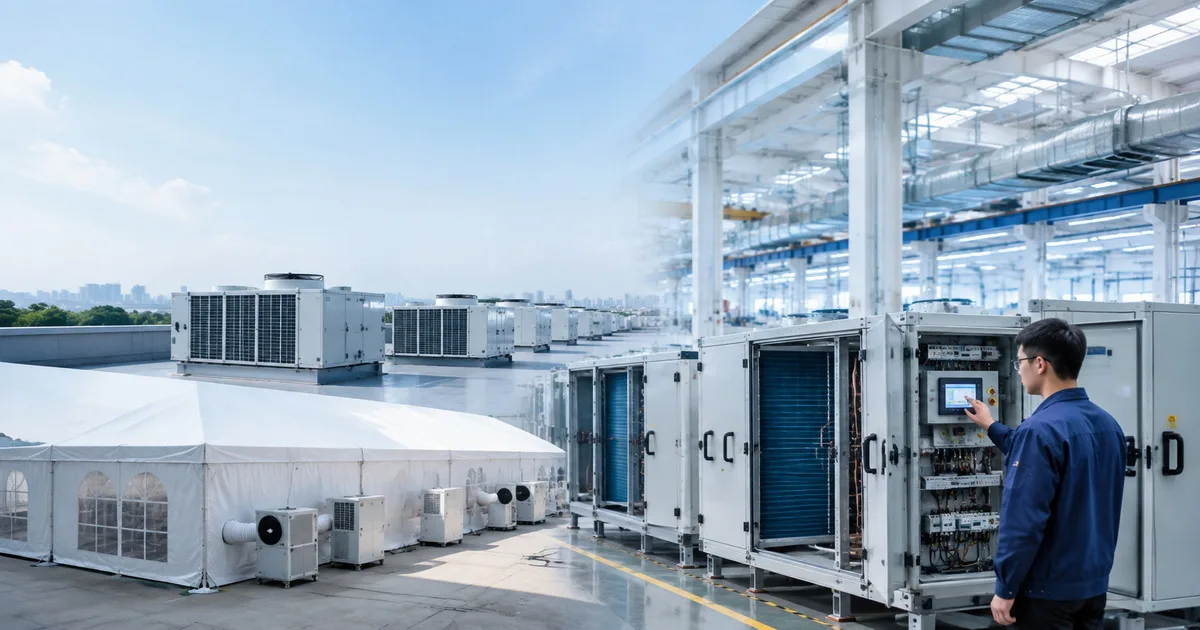
DREZ is a Guangzhou-based climate control solutions provider covering R&D, manufacturing, sales, and rental services. Its public company information states that it operates a factory of more than 6,000 square meters, with annual production capacity exceeding 10,000 units. DREZ Group was established in 2001, while DREZ expanded into overseas markets from 2015.
Unlike large manufacturers focused primarily on standardized residential heat pumps, DREZ is more relevant for buyers requiring flexible HVAC solutions and customized cooperation, including:
– Tent air conditioners
– Rooftop packaged air conditioning units
– Trailer-mounted air conditioning systems
– Fresh-air ventilation units
– Climate-control solutions for events, temporary buildings, camps, emergency facilities, and outdoor projects
– OEM branding, packaging, control settings, and project-specific configuration
DREZ can be particularly suitable for small-to-medium brands, distributors, and project buyers that need faster technical communication and a more flexible OEM process than is often available from high-volume consumer-HVAC manufacturers.
Buyer note: For an Air Cooled Heat Pump project, confirm the exact DREZ product range, refrigerant platform, operating conditions, required certifications, and performance test data during the RFQ stage. Its public materials emphasize climate-control and temporary-space applications, so buyers should not assume that every heat pump configuration or market certificate is already available without model-level confirmation.
2. Midea Group
Established: 1968
Buyer positioning: Large-volume HVAC sourcing, mature product platforms, and global supply-chain capability.
Midea was founded in 1968 and is a global technology company with more than 190,000 employees, according to its public company profile. For procurement teams, Midea’s main strengths are scale, broad HVAC product coverage, international distribution experience, and supply stability.
Midea may be suitable for:
– Large-volume residential air source heat pump programs
– Heating, cooling, and domestic hot-water product portfolios
– Distributors seeking established product platforms
– Buyers requiring stable long-term supply and global market support
OEM/ODM consideration: Large branded manufacturers may have higher MOQs, stricter approval processes, and less flexibility for small custom projects. Buyers should clarify whether the cooperation model is branded distribution, private label, or true OEM/ODM development.
3. Gree Electric Appliances, Inc. of Zhuhai
Established: 1991
Buyer positioning: Large-scale air conditioning manufacturing, low-temperature heat pump applications, and commercial HVAC projects.
Gree was founded in 1991 and has grown into one of China’s major air conditioning manufacturers. Its manufacturing scale and HVAC engineering base make it relevant for buyers requiring mature product platforms and structured project support.
Gree has also publicized cold-climate performance development for its Ultra Heat product line, including Canadian certification-related recognition for low-temperature heating applications.
Gree may be suitable for:
– Cold-climate heating projects
– Commercial and light-commercial HVAC requirements
– Buyers seeking established manufacturing systems
– Projects requiring long-term spare-parts support and technical documentation
4. Guangdong PHNIX Eco-Energy Solution Ltd.
Established: 2002
Buyer positioning: Heat-pump specialization, R290 product platforms, European-oriented projects, and ODM cooperation.
PHNIX was founded in 2002 and focuses on heat pump R&D, manufacturing, and energy-saving solutions. Its public information states that it offers both OEM and ODM services: ODM based on existing product platforms, and OEM development based on customer designs and requirements.
PHNIX’s product portfolio includes residential heating heat pumps, swimming pool heat pumps, commercial heat pumps, and heat pump water heaters. It is commonly considered by buyers targeting Europe or other developed heat-pump markets.
Key areas to verify include:
– Whether CE, ErP, RoHS, KEYMARK, MCS, or other certifications apply to the exact model
– R290 refrigerant safety design and shipping documentation
– Heating capacity at low ambient temperatures
– Defrost logic and output stability during defrost cycles
– Software customization, Wi-Fi functions, and private-label support
5. Hien New Energy Equipment Co., Ltd.
Established: 1992
Buyer positioning: Air source heating, low-temperature heating, and engineering-oriented heat pump projects.
Hien is a recognized name in China’s air source heat pump sector, especially for heating applications. Buyers targeting colder regions should focus less on catalog capacity claims and more on verified low-temperature operating data.
Important technical checks include:
– Heating capacity at A7/W35, A2/W35, A-7/W35, and A-7/W45
– Defrost-cycle stability
– Water-system design and minimum water-volume requirements
– Circulating-pump performance
– Noise level under real operating conditions
– Capacity retention during low-temperature operation
Hien can be relevant for commercial heating, domestic hot-water systems, and cold-climate applications.
6. AMITIME
Established: Verify through the legal manufacturing entity and contract documents
Buyer positioning: DC inverter heat pumps, European-oriented private-label programs, and export-compliance projects.
AMITIME focuses on DC inverter air source heat pumps and export-oriented heat pump products. Its public materials highlight heating and cooling heat pumps, pool heat pumps, fan coil units, and OEM/ODM services.
The company also presents compliance capabilities for multiple regions, including CE, ErP, KEYMARK, MCS, ETL/AHRI, WaterMark, and SAA. Buyers should treat these as a starting point for due diligence, not automatic proof that every model is certified for every market.
Before purchasing, confirm:
– Certification number and issuing organization
– Exact model number covered
– Certification validity date
– Manufacturing-site address
– Destination-market applicability
– Test standard and test conditions
7. SPRSUN
Established: 1999
Buyer positioning: Residential heat pumps, swimming pool heat pumps, R290 inverter models, and mid-sized OEM/ODM programs.
SPRSUN is a Guangzhou-based heat pump manufacturer established in 1999. It has introduced air source heat pumps for swimming pools, spas, and water-based leisure facilities, with publicly reported heating capacities ranging from 6.5 kW to 17 kW for one product range.
Potential buyer applications include:
– Residential heating and cooling
– Swimming pool heat pumps
– Spa and hospitality projects
– Private-label R290 inverter heat pumps
– Mid-sized distributor programs
Key due-diligence areas include corrosion resistance, controller language options, app connectivity, packaging, sample lead time, and spare-parts policy.
8. Wotech Renewable Energy & Technology
Established: Verify through factory registration and contract documentation
Buyer positioning: Air source heat pump systems, water-side applications, and export-oriented product sourcing.
Wotech is often included in Chinese heat pump supplier comparisons because of its heat-pump product focus and international-market orientation. It can be relevant for buyers seeking air source heat pumps and water-system solutions.
Instead of comparing only catalog COP figures, buyers should request:
– Full EN 14511 or equivalent test data
– Heating capacity at multiple ambient and water temperatures
– Seasonal performance information
– Sound power level, not only sound pressure level
– Pump head, water-flow requirements, and hydraulic limitations
– Defrost logic and water-temperature fluctuation data
9. Guangzhou Hiseer Air Conditioning Co., Ltd.
Established: 1996
Buyer positioning: Air source, water source, ground source, and low-temperature heat pump projects.
Hiseer’s public company information states that it was established in 1996 and provides air source, water source, ground source, and low-temperature heat pump products. Its materials reference ISO, CE, TÜV-related testing or certification, and EN 14511-based product testing.
Hiseer may be worth considering when a buyer needs to compare multiple technology routes rather than source only one standard air source product.
It may be relevant for:
– Air source heat pump programs
– Water source and ground source projects
– Low-temperature heating applications
– Multi-technology HVAC tenders
– Engineering customers requiring broader system options
10. Shenling Environmental Systems Co., Ltd.
Established: Verify through the contract entity and official corporate documents
Buyer positioning: Commercial HVAC, modular systems, engineering projects, and system-level procurement.
Shenling is known in China’s commercial HVAC and environmental-control market. It is more relevant for buyers sourcing commercial air cooled heat pump systems, modular units, and integrated HVAC solutions than for small consumer-level private-label projects.
Suitable applications may include:
– Hotels and hospitality facilities
– Hospitals and education projects
– Commercial buildings
– Industrial plants
– Centralized water systems
– Projects requiring BMS integration, group control, redundancy, and technical submittals
Supplier Comparison Table
| Manufacturer | Main Focus | Public Capacity Information | MOQ Reference | Compliance Verification Priority |
|---|---|---|---|---|
| DREZ | Temporary-space cooling, tents, rooftop units, trailer systems, flexible OEM | More than 10,000 units annually | Quotation-based, depending on model and customization | Confirm compliance and testing for the exact air cooled heat pump model |
| Midea | Large-scale residential and commercial HVAC | Not publicly standardized by heat pump category | Usually suitable for volume orders | Verify CE, ErP, and destination-market documentation by model |
| Gree | HVAC manufacturing, low-temperature heating, commercial projects | Not publicly standardized by heat pump category | Project-based | Verify low-temperature performance and local approvals |
| PHNIX | Residential, commercial, pool, and DHW heat pumps | Confirm during audit and quotation | Confirm by OEM/ODM scope | Verify R290 safety documentation, CE, ErP, and market-specific files |
| Hien | Low-temperature heating and engineering projects | Confirm during audit | Project-based | Verify capacity retention, defrost performance, and hydraulic design |
| AMITIME | DC inverter heat pumps and European private-label projects | Confirm during audit | Depends on private-label scope | Verify model-specific KEYMARK, MCS, ETL/AHRI, or other approvals |
| SPRSUN | Residential, pool, and R290 inverter heat pumps | Confirm during audit | Standard and customized MOQs vary | Verify pool corrosion protection, ErP, and market-entry documents |
| Wotech | Air source heat pumps and water-side systems | Confirm during audit | Project-based | Verify EN 14511 performance, sound level, and capacity curves |
| Hiseer | Air source, water source, ground source, and low-temperature systems | Confirm during audit | Project-based | Verify ISO, CE, TÜV, and model-to-report consistency |
| Shenling | Commercial HVAC, modular units, engineering systems | Confirm through project quotation | Usually better for engineering volumes | Verify commercial performance data, controls, and project documentation |
Technical Checks Buyers Often Miss
Do Not Compare Rated Capacity Alone
A heat pump marketed as “12 kW,” “16 kW,” or “20 kW” may deliver significantly different output depending on ambient temperature and water temperature.
For example, heating capacity at A7/W35 does not show how the unit will perform at A-7/W45, particularly during humid, frost-prone conditions.
Request the following data in every RFQ:
– Heating capacity, input power, COP, and operating current
– A7/W35, A2/W35, A-7/W35, and A-7/W45 operating conditions
– Cooling capacity and efficiency
– Seasonal or part-load performance
– Low-temperature heating-capacity curves
– Defrost-cycle behavior
– Maximum outlet-water temperature
– Noise data with stated test conditions
EU ecodesign rules apply to certain space heaters and combination heaters, including heat pump products with rated heat output up to 400 kW. Buyers exporting to Europe should verify whether their product falls within the applicable regulatory scope.
“Copper Tube and Aluminum Fin” Is Not Enough
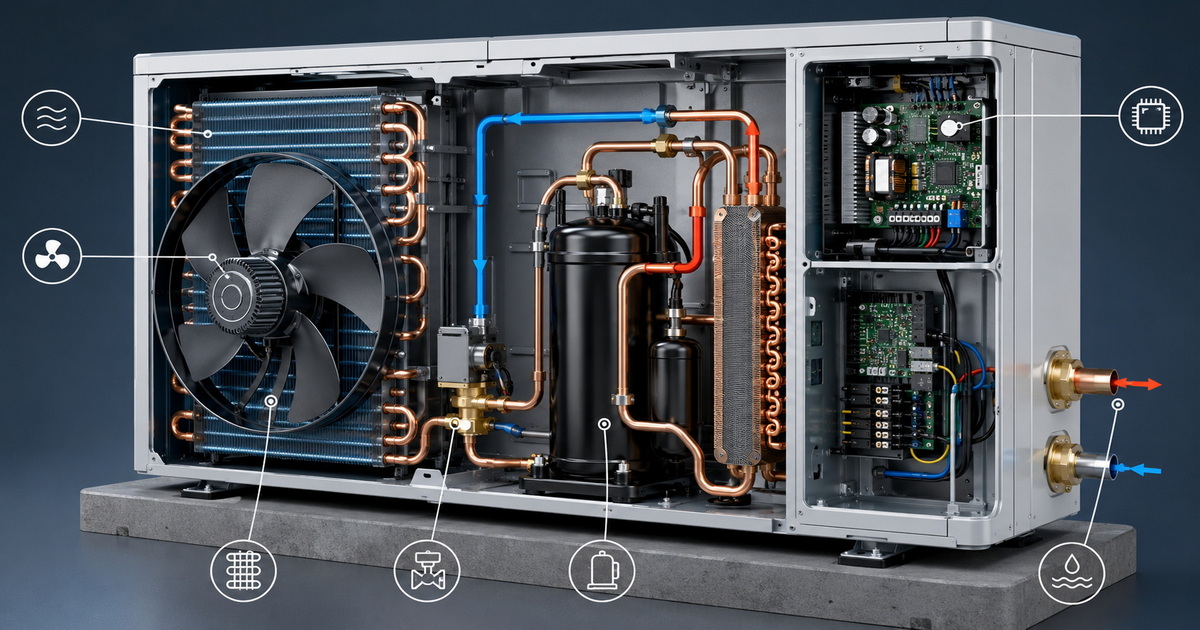
Nearly every supplier lists “copper tube aluminum fin heat exchanger” in its catalog. This description is too general to support a purchasing decision.
The technical specification should define:
– Copper-tube diameter, wall thickness, and grade
– Fin thickness and hydrophilic or anti-corrosion coating
– Heat-exchanger circuit design
– Refrigerant charge and refrigerant type
– Compressor brand, model, frequency range, and origin
– Electronic expansion valve or capillary-tube configuration
– Sheet-metal thickness and coating process
– Salt-spray performance requirement
– Fan-motor type, airflow, static pressure, and sound-control measures
An Industry “Hidden Risk” to Avoid
A common but under-discussed issue is that two heat pumps with the same casing, similar nameplate capacity, and almost identical external appearance may use different compressors, smaller heat exchangers, lower-grade fans, alternative valves, or different controller software.
For this reason, buyers should not approve only an appearance sample.
A stronger control process includes:
1. Requesting a key-component BOM for the approved sample
2. Listing compressor, controller, fan, heat exchanger, and valve models in the technical agreement
3. Adding a “no component substitution without written approval” clause
4. Requiring an Engineering Change Notice process for any BOM replacement
5. Conducting pre-shipment inspection or witnessed factory testing
6. Requiring serial-number traceability and batch-level test records
This approach is more effective than simply writing “mass production must match the sample,” because many quality differences are hidden inside the unit.
Buyer’s Guide
How to Verify a Factory
Before paying a deposit, buyers should:
– Match the business license entity with the contract entity and receiving bank account
– Request a live video inspection of the production line, warehouse, test area, and loading area
– Confirm that the factory can perform assembly, pressure testing, refrigerant leak detection, vacuuming, and final run testing
– Review recent export records, third-party audit reports, or shipment evidence where appropriate
– Request specifications, wiring diagrams, packaging drawings, manuals, key-component lists, and test procedures
Recommended Sample Process
A structured sample process reduces the risk of approving the wrong configuration.
1. Documentation stage: Confirm specifications, performance conditions, appearance, controller interface, packaging, manuals, and certification route
2. Engineering sample stage: Test noise, heating, cooling, defrosting, water leakage, refrigerant leakage, controls, and transport packaging
3. Pre-production sample stage: Confirm final BOM, labels, barcode rules, manuals, spare-parts kits, and inspection standards
For R290 units, buyers should also evaluate dangerous-goods transportation requirements, refrigerant safety labeling, installation ventilation requirements, and local installation regulations.
Logistics Considerations
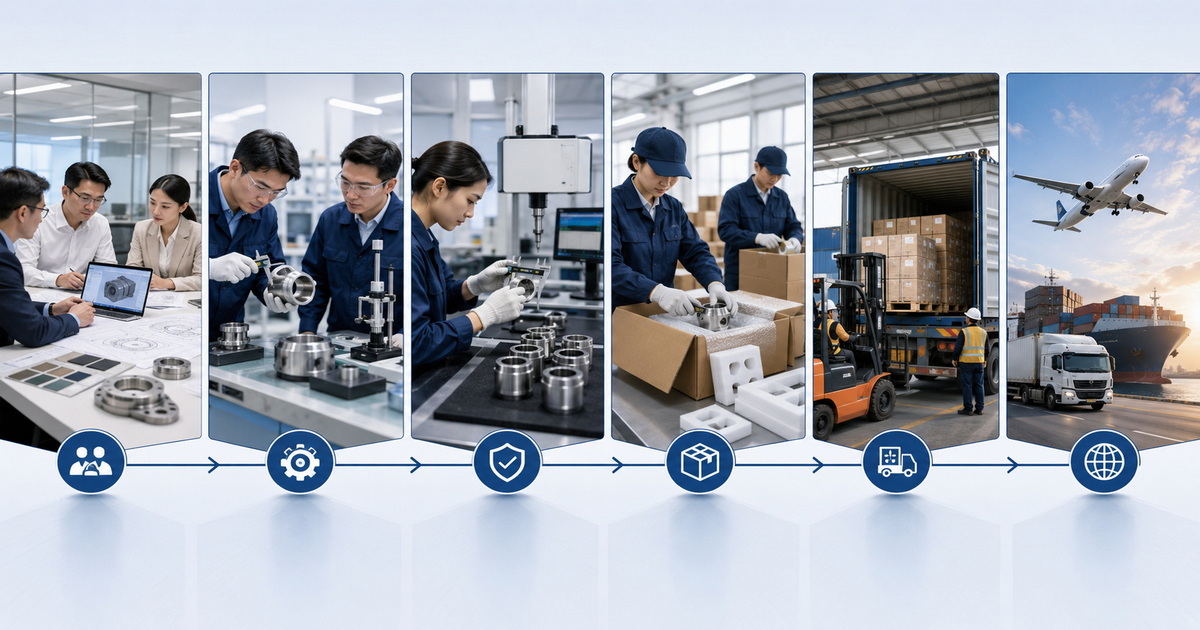
Heat pumps are bulky, relatively heavy, and vulnerable to casing damage during handling. Confirm the following before ordering:
– EXW, FOB, CIF, or DDP responsibilities
– Pallet design, corner protection, moisture barriers, and outer-carton standards
– Container-loading method and stacking restrictions
– Marine-insurance responsibility
– Damage-claim procedure
– Spare-parts package and replacement-unit policy
– HS code, import clearance requirements, and local efficiency/environmental obligations
Conclusion
The right Chinese Air Cooled Heat Pump Manufacturer is not necessarily the supplier with the lowest quotation. The stronger long-term partner is the one that can consistently deliver reliable performance, compliant documentation, stable BOM control, predictable lead times, and accountable after-sales support.
For high-volume standardized sourcing, large manufacturers such as Midea and Gree are worth evaluating. For heat-pump-specialized, European-oriented, or private-label projects, PHNIX, AMITIME, SPRSUN, Wotech, and Hiseer may be suitable candidates. For tent cooling, temporary facilities, mobile climate-control applications, and flexible OEM projects, DREZ is a supplier worth discussing with—particularly for buyers that prioritize direct communication, customization support, and project adaptability.
FAQ
1. How can I verify that a supplier’s ISO certificate is still valid?
Do not rely only on a PDF copy. Ask for the certificate number, certification body, issue date, expiry date, scope, and factory address. Then verify it through the issuing certification body’s official database or by direct email. The certified factory address should also match the actual production site.
2. Does a CE certificate prove that a heat pump can be legally sold in Europe?
Not by itself. CE is often based on the manufacturer’s declaration that the product meets applicable EU requirements. Buyers should request the Declaration of Conformity, applicable directives, technical file references, test reports, and exact model coverage.
3. Why can two 16 kW heat pumps have very different prices?
The price gap may result from the compressor brand, heat-exchanger size, copper-tube thickness, EEV configuration, fan motor, controller, refrigerant, corrosion protection, test standard, certification cost, and spare-parts package. Compare quotations only when the test conditions, BOM level, certification scope, and commercial terms are aligned.
4. How can I determine whether a supplier’s COP claim is reliable?
Ask for the original test report and test conditions. A valid COP value must specify ambient air temperature, inlet/outlet water temperature, flow rate, power supply, refrigerant, and test standard. A high COP number without stated operating conditions is not sufficient for procurement approval.
5. How should I negotiate MOQ for an OEM heat pump project?
First, separate standard private-label products from deep customization. Standard branding usually allows a lower MOQ. A new casing, special controller software, custom mold, exclusive BOM, new refrigerant configuration, or certification program will usually require a higher MOQ. A practical approach is to launch with a standard platform, validate market demand, and then use an annual purchasing forecast to negotiate lower pricing and deeper customization.
References
1. [International Energy Agency: The Future of Heat Pumps in China]
2. [European Commission Regulation (EU) No 813/2013]
3. [AHRI Directory of Certified Product Performance]
4. [U.S. International Trade Administration: EU Legislation and CE Marking]
5. [China Customs Statistics Overview]
6. [Statista: China Air-Source Heat Pump Export Value]
7. [Mordor Intelligence: China Heat Pump Market]
Hot Tags: Air Cooled Heat Pump Manufacturer, Air Source Heat Pump Manufacturer, China Heat Pump Manufacturer, OEM Heat Pump Manufacturer, ODM Heat Pump Manufacturer, Commercial Air Source Heat Pump, Air To Water Heat Pump Manufacturer, R290 Heat Pump Manufacturer, Heat Pump Factory China, Heat Pump OEM Supplier