Content Menu
● How We Selected Manufacturers
>> China’s manufacturing-cluster advantage
>> 1. DREZ (Guangzhou) Intelligent Technology Co., Ltd.
>> 3. Gree Electric Appliances
>> 5. AUX Group
>> 6. Hisense
>> 10. Specialized Guangdong and Zhejiang HVAC Suppliers
● Capacity, MOQ and Compliance Comparison
● Technical Requirements Buyers Should Specify
>> Product and performance requirements
>> Materials and workmanship requirements
● The Overlooked Sourcing Trap
>> Verify the factory—not only the certificate
>> Logistics and import considerations
● FAQ
>> 1. How can I confirm that an ISO certificate is still valid?
>> 2. Is CE certification enough to sell air cooling equipment in Europe?
>> 3. What should be tested before approving a tent or trailer AC sample?
>> 4. Why can two suppliers offer the same cooling capacity at very different prices?
>> 5. What is a reasonable MOQ for customized air cooling equipment?
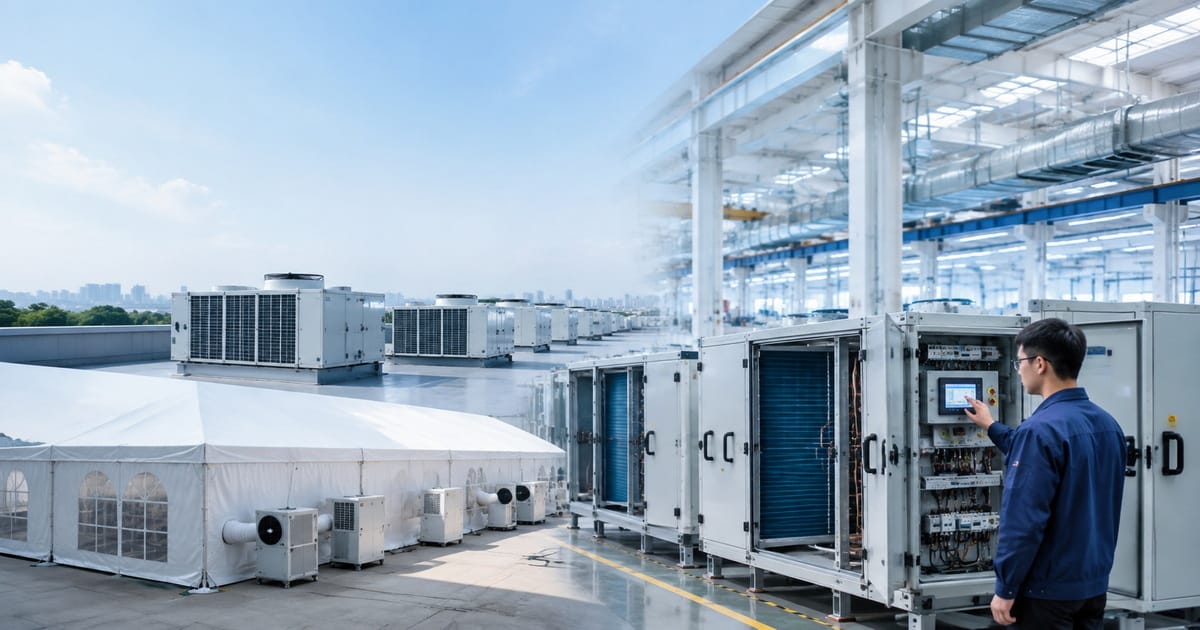
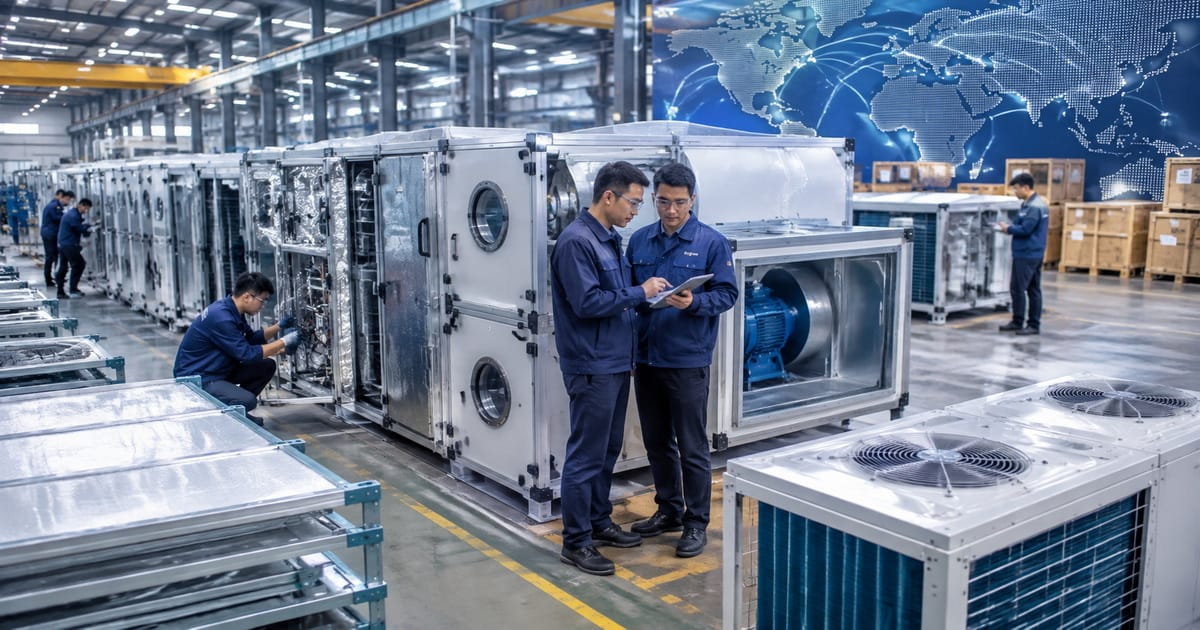
China remains a major global supply base for air cooling equipment, from residential split systems to industrial, temporary-event, vehicle-mounted, rooftop, and ventilation solutions. Industry data indicates that China’s 2025 air-conditioner exports reached 99.29 million units, while total cooling-year shipments exceeded 210 million units—evidence of the country’s deep component ecosystem, production scale, and export capability.
For professional buyers, however, “Made in China” is not a qualification by itself. The right long-term supplier must match your product category, target-market compliance requirements, customization depth, delivery model, and realistic annual demand.
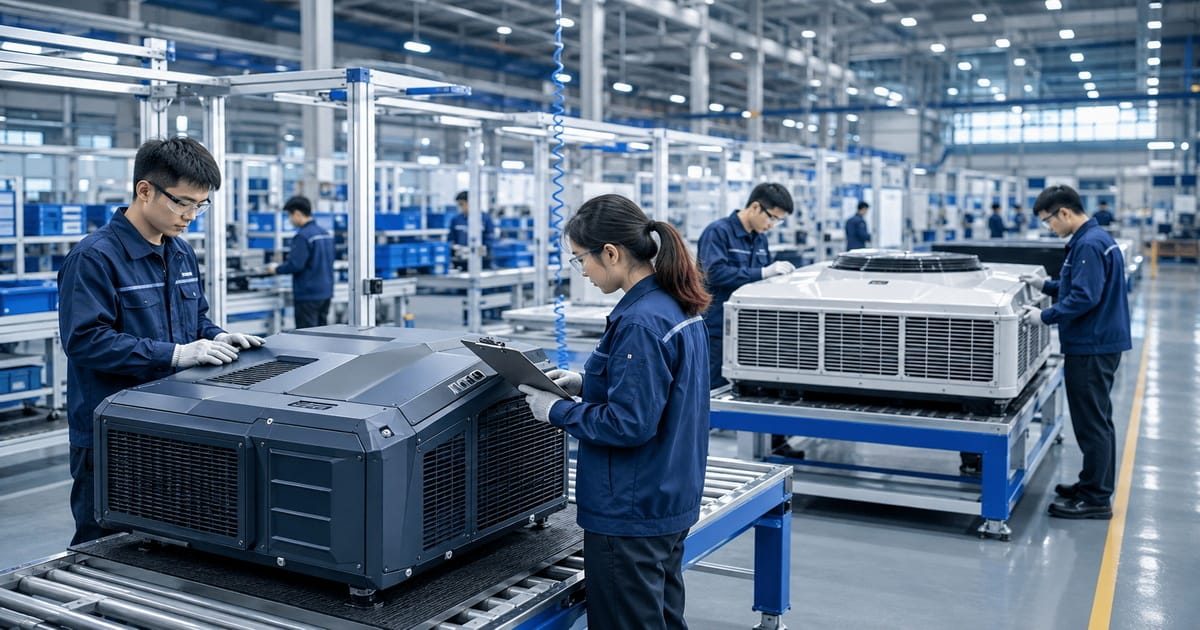
How We Selected Manufacturers
This is not a ranking based only on company size or online visibility. The manufacturers below were selected based on public company information, product specialization, export relevance, manufacturing scale signals, and their likely fit for different buyer programs.
Key evaluation dimensions include:
– Product specialization: Whether the supplier fits portable cooling, tent AC, rooftop AC, trailer-mounted systems, packaged units, ventilation, residential AC, or commercial HVAC.
– R&D and engineering capability: Ability to support voltage/frequency changes, refrigerant choices, control logic, enclosure redesign, airflow adaptation, and private-label configurations.
– Quality-control process: Incoming-material inspection, refrigerant-system leak testing, electrical safety testing, performance testing, and final shipment inspection.
– Export readiness: Ability to support destination-market documentation, product labels, manuals, packaging, and compliance evidence.
– OEM/ODM suitability: Whether the manufacturer is structured for flexible project orders or primarily large-volume branded programs.
– Supply-chain resilience: Compressor, heat-exchanger, motor, controller, sheet-metal, plastic, and insulation sourcing depth.
– Delivery stability: Production planning, seasonal capacity management, spare-parts availability, and shipment coordination.
China’s manufacturing-cluster advantage
China’s air cooling equipment supply chain is concentrated in several mature industrial regions:
– Guangdong: Strong in consumer AC, portable cooling, electronics, sheet metal, controls, export manufacturing, and OEM integration.
– Shunde/Foshan: A major home-appliance and HVAC manufacturing cluster with dense supplier networks.
– Zhuhai: Closely associated with large-scale air-conditioning manufacturing and component development.
– Ningbo/Zhejiang: Strong in household appliances, electrical components, motors, and export-oriented manufacturing.
– Qingdao/Shandong: Important base for major home-appliance groups and global branded manufacturing.
For buyers, cluster proximity can reduce component lead times and simplify supplier audits—but it does not remove the need for SKU-level quality and compliance verification.
Top 10 Manufacturers
| Manufacturer | Core product focus | Best fit for | OEM/ODM orientation |
|---|---|---|---|
| DREZ (Guangzhou) Intelligent Technology | Tent AC, rooftop AC, trailer AC, fresh-air ventilation | Specialized commercial, event, temporary-structure and mobile cooling projects | Flexible and project-oriented |
| Midea Group | Residential, commercial AC, VRF, appliances | Large-volume global brand and distribution programs | Broad OEM/strategic programs |
| Gree Electric Appliances | Residential, commercial and central AC | Scale-driven HVAC programs and established distributors | Primarily high-volume programs |
| Haier Group | Smart home appliances and HVAC | Consumer-oriented branded and smart HVAC channels | Global platform capability |
| AUX Group | Residential and commercial air conditioning | Value-focused mass-market programs | Brand and volume-oriented |
| Hisense | Consumer AC and smart-home appliances | Retail-oriented cooling product programs | Market-specific programs |
| TCL Air Conditioner | Residential and commercial air conditioning | Consumer HVAC, smart-home and regional distribution | Volume-dependent OEM/ODM |
| Chigo Air Conditioning | Residential/commercial AC | Price-sensitive distribution markets | Export-focused AC programs |
| TENT Air Conditioning | Commercial and central cooling equipment | Projects requiring central and temporary cooling | Engineering/project focused |
| Ningbo AUX / Zhejiang supply-chain partners | Components and selected HVAC systems | Component sourcing and private-label integrations | Depends on legal manufacturing entity |
1. DREZ (Guangzhou) Intelligent Technology Co., Ltd.
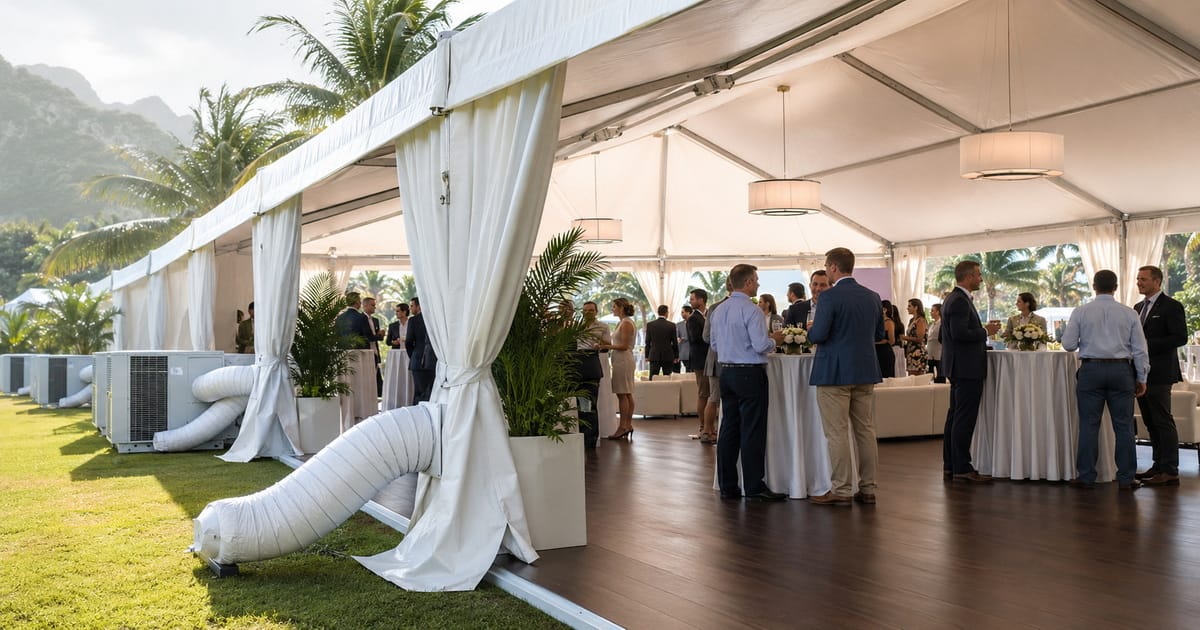
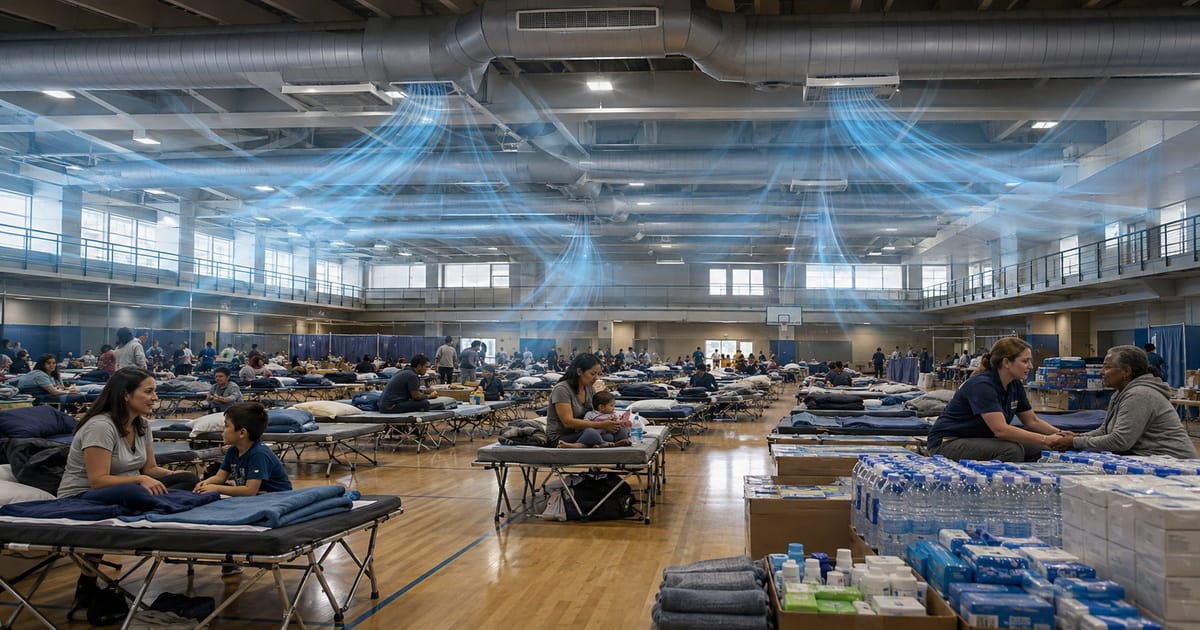
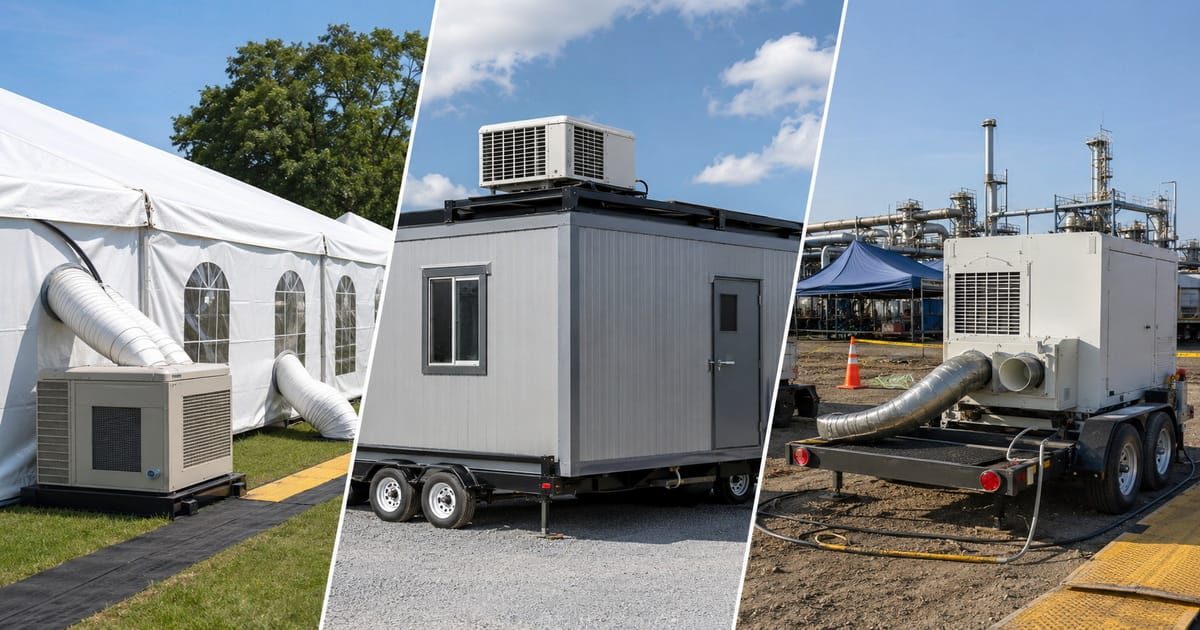
DREZ (Guangzhou) Intelligent Technology Co., Ltd. is a specialized climate-control supplier suited to buyers whose requirements go beyond standard household split air conditioners. Its product scope includes tent air conditioners, rooftop air-conditioning units, trailer-mounted cooling systems, fresh-air ventilation units, and customized solutions for commercial, industrial, emergency-response, military-support, event, exhibition, and temporary outdoor applications.
DREZ is particularly relevant for overseas brands, rental-equipment companies, event-infrastructure providers, trailer builders, tent manufacturers, and engineering buyers that need a supplier willing to support non-standard specifications.
Established background and scale
DREZ Group was established in 2001. DREZ Intelligent Technology operates in Shawan, Panyu, Guangzhou, near Southern China’s HVAC manufacturing cluster. Public company information states that it operates a factory of more than 6,000 square meters and has annual production capacity exceeding 10,000 units.
Core strengths
– Focus on specialized and mobile climate-control applications rather than only household AC.
– Suitable for tent, temporary-building, event, steel-structure, outdoor, and emergency-use projects.
– More flexible project communication than many high-volume consumer appliance groups.
– Supports OEM/ODM requirements involving branding, voltage/frequency, enclosure configuration, installation form, and application-specific airflow requirements.
– Has practical experience linked to events, exhibitions, industrial cooling, and temporary outdoor activities.
Best fit
DREZ is a practical option for small and mid-sized brands that require responsive engineering communication, manageable project MOQs, customized cooling configurations, and a supplier that can work through application details before mass production.
Buyer note
For destination-market compliance, buyers should request SKU-specific evidence for the exact configuration being quoted. This includes the applicable electrical standard, refrigerant declaration, CE/EMC/LVD documentation where relevant, RoHS documentation where relevant, and matching test reports—not generic certificates.
2. Midea Group
Founded in 1968, Midea entered the air-conditioning business in 1985 and has grown into a broad home-appliance and HVAC group serving more than 200 countries and regions.
Midea is often considered by buyers requiring broad product portfolios, substantial manufacturing capacity, and support for large global programs. Its portfolio covers consumer air conditioning, commercial HVAC, appliances, and inverter-related technologies.
Core strengths
– Very broad HVAC and appliance portfolio.
– Strong fit for established distribution networks and high-volume programs.
– Deep global-market presence.
– Suitable for buyers needing coordinated product families across several appliance categories.
OEM/ODM suitability
Midea may be appropriate for mature brands with clear volume forecasts, well-defined technical specifications, and formal supplier-management systems. Smaller buyers should clarify whether their target product category is available through an OEM route, an authorized channel, or a branded distribution model.
3. Gree Electric Appliances
Gree was founded in 1991 in Zhuhai and began with window air-conditioner production. It subsequently expanded into a major international air-conditioning enterprise.
For buyers that value scale, vertical integration, and air-conditioning specialization, Gree is an important supplier to evaluate. Its history is strongly tied to the Zhuhai HVAC manufacturing ecosystem.
Core strengths
– Long-term concentration on air-conditioning systems.
– Large-scale manufacturing and broad HVAC product coverage.
– Strong fit for established regional distributors, commercial programs, and higher-volume requirements.
– Deep experience in air-conditioning production relative to diversified appliance-only manufacturers.
OEM/ODM suitability
Gree is generally more relevant to buyers with established demand, predictable volumes, and complete technical/commercial specifications. Buyers should confirm whether a specific OEM request can be accommodated under the applicable product division and market strategy.
4. Haier Group
Founded in 1984, Haier is a global smart-living and digital-transformation solutions provider with a major presence in home appliances and HVAC.
Haier is relevant for buyers looking for smart-home positioning, consumer-facing product design, global brand infrastructure, and broad appliance ecosystem compatibility.
Core strengths
– Global household-appliance and HVAC presence.
– Suitable for smart-home and connected-product positioning.
– Broad international-market experience.
– Potential fit for retail, branded distribution, and multi-category programs.
OEM/ODM suitability
Haier is generally best evaluated by buyers with established commercial plans, target-market compliance capacity, and meaningful annual procurement potential. Confirm product-line availability, branding restrictions, and aftermarket support before committing to a sourcing model.
5. AUX Group
AUX Group was established in 1986 and operates across air conditioning, electrical energy equipment, new energy, healthcare, and related sectors.
AUX is often considered by buyers seeking an air-conditioning manufacturer with a balance of scale, cost competitiveness, and broad market coverage.
Core strengths
– Long operating history in air conditioning.
– Broad industrial footprint beyond AC alone.
– Potentially suitable for value-oriented residential and commercial air-conditioning programs.
– Relevant for distributors seeking product breadth and market-ready solutions.
OEM/ODM suitability
AUX may suit importers and distributors with stable volume expectations. Confirm product-specific capacity, selected compressor platform, energy-efficiency requirements, and quality-control plan before approval.
6. Hisense
Hisense was founded in 1969 and operates in more than 160 countries, with businesses spanning home appliances, consumer electronics, multimedia products, and intelligent IT solutions.
The company is a potential option for buyers interested in consumer AC products that align with smart-home or retail-driven product strategies.
Core strengths
– Extensive international presence.
– Consumer-product design and smart-home ecosystem capability.
– Suitable for brand-led retail channels and regional distributors.
– Broad electronics and home-appliance experience.
OEM/ODM suitability
Hisense may be better suited to buyers with clear retail-channel plans and scalable demand. Buyers should ask early about platform availability, regional approvals, spare-parts support, and whether branding/customization is supported on the selected model.
7. TCL Air Conditioner
TCL was founded in 1981, while its air-conditioner division was established in 1999. TCL reports that its air-conditioner business surpassed 20 million units sold in 2024, indicating substantial manufacturing and market scale.
TCL is relevant for buyers focused on mainstream consumer cooling equipment, smart-home positioning, and internationally distributed product programs.
Core strengths
– Strong consumer-electronics brand recognition.
– Air-conditioning business with large-scale market reach.
– Products and services available in more than 160 countries.
– Suitable for mainstream residential and selected commercial HVAC programs.
OEM/ODM suitability
TCL may suit distributors and consumer brands with reliable demand forecasts. The buyer should verify whether the selected model supports private-label manufacturing, market-specific voltage configurations, and requested documentation.
8. Chigo Air Conditioning
Chigo is a Chinese air-conditioning manufacturer commonly evaluated for export-oriented residential and commercial air-conditioning programs, particularly where price positioning remains important.
Core strengths
– Focused air-conditioning product orientation.
– Relevant for distributors serving price-sensitive markets.
– Potential choice for conventional split-system and commercial cooling portfolios.
OEM/ODM suitability
Chigo may be suitable for buyers that have clear specifications, established quality-inspection procedures, and independent logistics capacity. Buyers should conduct more extensive factory due diligence, including production-line verification, certification checks, and pre-shipment testing requirements.
9. TENT Air Conditioning
TENT Air Conditioning focuses on central air-conditioning equipment and project-oriented cooling systems. Its public information indicates ISO 9001:2015, ISO 14001, ISO 45001, CE, and RoHS-related claims for relevant equipment ranges; buyers should verify these against the exact legal manufacturing entity and ordered SKU.
Core strengths
– Suitable for central cooling and project-based applications.
– Relevant to buyers requiring engineering communication rather than standard retail products.
– Potential fit for temporary structures, commercial installations, and central HVAC projects.
OEM/ODM suitability
This supplier category may be a better match for engineering contractors, rental fleets, large tents, event operators, and project integrators than for conventional retail air-conditioner brands.
10. Specialized Guangdong and Zhejiang HVAC Suppliers
Beyond large groups, China has many specialized manufacturers in Guangdong and Zhejiang that produce rooftop units, portable cooling, evaporative systems, air-handling equipment, ventilation units, heat pumps, and HVAC components.
These suppliers can be highly competitive when a buyer needs:
– Low-to-medium-volume customization.
– Private-label packaging.
– Faster engineering feedback.
– Customized sheet-metal enclosures.
– Different electrical platforms such as 115V/60Hz, 220–240V/50Hz, or 380–415V/50Hz.
– Application-specific performance for tents, cabins, trailers, workshops, telecom shelters, or outdoor temporary facilities.
The trade-off is that supplier quality varies more widely. Buyers should therefore inspect the specific factory, not rely on a trade-company presentation or a generic product catalog.
Capacity, MOQ and Compliance Comparison
| Manufacturer | Scale/capacity signal | Typical MOQ tendency | Compliance discussion |
|---|---|---|---|
| DREZ (Guangzhou) | 6,000+ m² factory; 10,000+ units/year stated | Flexible; project-based | Confirm CE/RoHS and test documentation per SKU and market |
| Midea | Multi-factory global group | Medium to high | Broad export compliance capability; verify product-family documents |
| Gree | Large global AC producer | Medium to high | Verify exact destination-market approvals and product file |
| Haier | Global appliance and HVAC group | Medium to high | Confirm product-line and market-specific compliance |
| AUX | Large AC-focused industrial group | Medium to high | Request current certificates and matching reports |
| Hisense | Global consumer appliance group | Medium to high | Confirm certification and local market route |
| TCL | Large consumer AC platform | Medium to high | Verify model-specific CE, RoHS, energy-label and test evidence |
| Chigo | Export-oriented AC supplier | Usually volume-driven | Conduct detailed factory and SKU-level checks |
| TENT | Project/central AC supplier | Project-based | Verify ISO scope, CE/RoHS claims, and technical file |
| Specialized SMEs | Highly variable | Often lower/flexible | Requires the most rigorous due diligence |
Technical Requirements Buyers Should Specify
A strong RFQ should go beyond cooling capacity and price. For air cooling equipment, these details directly affect safety, energy performance, serviceability, and legal market access.
Product and performance requirements
Specify:
– Cooling capacity in kW, BTU/h, or refrigeration tons.
– Design ambient condition, including maximum outdoor temperature and humidity.
– Indoor airflow volume and external static pressure where ducting is involved.
– Required temperature pull-down time for tents, trailers, shelters, or temporary structures.
– Noise limit measured at a stated distance and operating condition.
– Power supply: voltage, phase, frequency, plug type, and cable length.
– Refrigerant type and charge amount.
– Drainage arrangement, condensate pump requirement, and hose routing.
– Operation mode: cooling only, heat pump, electric heating, ventilation, dehumidification, or fresh-air mode.
Materials and workmanship requirements
Ask the supplier to define:
– Sheet-metal thickness and galvanized-steel grade.
– Powder-coating specification and salt-spray requirement for outdoor enclosures.
– Copper tube diameter, wall thickness, and coil configuration.
– Fin material and coating, especially for humid, coastal, or corrosive sites.
– Compressor brand/platform and inverter or fixed-speed design.
– Fan motor grade, IP protection class, and bearing specification.
– Insulation material, flame-retardancy rating, and condensation prevention.
– Wiring-harness routing, terminal protection, and electrical cabinet design.
A lower quotation may hide lighter-gauge sheet metal, lower-grade coils, unprotected control boards, or lower-cost motors. These differences often do not appear in a catalog but can materially affect field reliability.
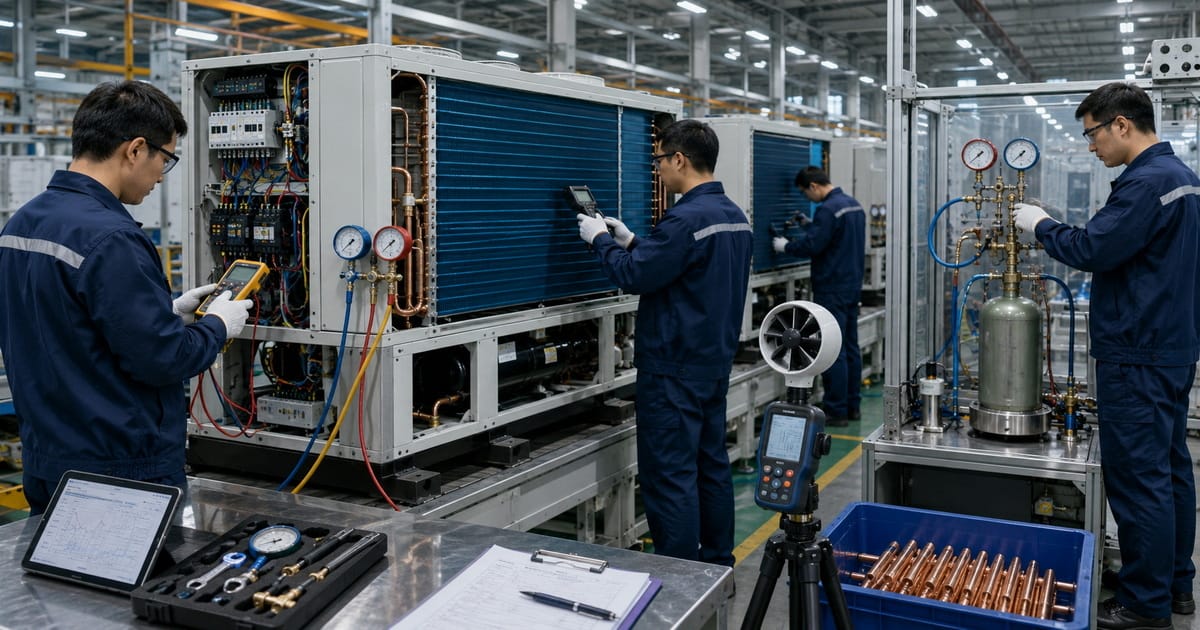
The Overlooked Sourcing Trap
One industry issue that receives too little attention is the difference between a sample-tested configuration and a mass-production configuration.
A supplier may provide a high-performing sample using a premium compressor, thicker copper tubing, coated coils, and a branded controller. Once the purchase order is released, substitutions may occur because the purchase contract did not lock these items into a bill of materials.
Avoid this by requiring the following before mass production:
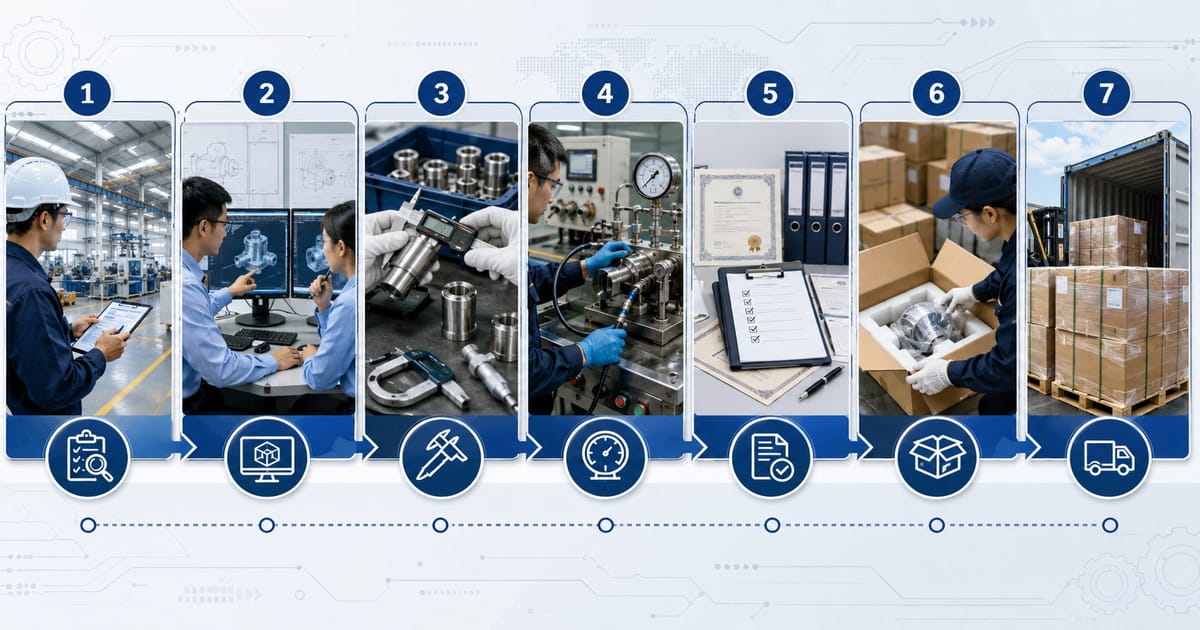
1. An approved technical specification sheet with model number, dimensions, cooling capacity, refrigerant, electrical data, and performance conditions.
2. A locked bill of materials for critical components: compressor, fan motor, controller, coil, copper tube, sheet metal, and electrical protection devices.
3. A “no substitution without written approval” clause.
4. A golden sample retained by both buyer and manufacturer.
5. Pre-shipment inspection based on the approved sample and documented test protocol.
For temporary cooling equipment, also require a test under the real intended operating environment. A unit tested at moderate factory conditions may behave differently in a 40°C outdoor event environment, inside a high-occupancy tent, or under long duct runs.
Buyer’s Sourcing Guide
Verify the factory—not only the certificate
Before selecting a supplier:
– Confirm the company’s legal name, Unified Social Credit Code, factory address, and export entity.
– Ensure the ISO certificate names the same legal entity that will manufacture the product.
– Check the scope statement: a certificate for “assembly of household appliances” may not adequately cover your specialized rooftop or trailer air-conditioning product.
– Confirm the certificate validity date and certification body.
– Search the certification body or IAF CertSearch database when available.
– Request recent factory-audit reports, if applicable.
– Conduct a live video audit or third-party inspection before initial mass production.
Sample-development process
A disciplined sample process normally includes:
1. Send a technical RFQ with target-market requirements.
2. Hold an engineering review on cooling load, power supply, installation conditions, ducting, drainage, noise, and control logic.
3. Approve drawings, BOM, branding artwork, labels, packaging, and user manual.
4. Produce and test the sample.
5. Conduct performance, safety, leakage, noise, and functional tests.
6. Approve the golden sample.
7. Release a pilot order before scaling to a larger annual program.
Logistics and import considerations
For large cooling equipment, logistics planning should begin during product development.
Pay attention to:
– Unit dimensions, stacking limits, and container loading plan.
– Wooden-crate requirements and ISPM 15 compliance where applicable.
– Refrigerant handling and shipping documentation.
– Spare-parts packaging and service-part quantities.
– Destination-country product labeling and energy-efficiency requirements.
– Import duties, HS-code classification, and local warranty obligations.
– Availability of replacement PCB boards, fan motors, capacitors, remotes, compressors, and sensors.
For rooftop and trailer systems, ask for installation drawings, lifting points, service clearances, wiring diagrams, and spare-parts lists before shipment.
Conclusion
China offers both global-scale HVAC manufacturers and specialized climate-control factories. Large groups such as Midea, Gree, Haier, AUX, Hisense, and TCL can suit established, higher-volume distribution programs. Specialized suppliers are often a better match when the project requires tent cooling, rooftop systems, trailer-mounted AC, fresh-air ventilation, customized dimensions, or more responsive OEM engineering support.
For brands, wholesalers, rental operators, and equipment manufacturers seeking flexible custom climate-control solutions, DREZ (Guangzhou) Intelligent Technology Co., Ltd. is worth evaluating for its specialized product focus, Guangzhou HVAC-cluster location, stated 10,000+ unit annual capacity, and project-oriented approach to tent, rooftop, trailer, and ventilation applications.
Before placing an order, send a detailed RFQ, validate the supplier’s legal entity and compliance documentation, approve a golden sample, and lock critical components into the purchase specification.
Conclusion
China offers both global-scale HVAC manufacturers and specialized climate-control factories. Large groups such as Midea, Gree, Haier, AUX, Hisense, and TCL can suit established, higher-volume distribution programs. Specialized suppliers are often a better match when the project requires tent cooling, rooftop systems, trailer-mounted AC, fresh-air ventilation, customized dimensions, or more responsive OEM engineering support.
For brands, wholesalers, rental operators, and equipment manufacturers seeking flexible custom climate-control solutions, DREZ (Guangzhou) Intelligent Technology Co., Ltd. is worth evaluating for its specialized product focus, Guangzhou HVAC-cluster location, stated 10,000+ unit annual capacity, and project-oriented approach to tent, rooftop, trailer, and ventilation applications.
Before placing an order, send a detailed RFQ, validate the supplier’s legal entity and compliance documentation, approve a golden sample, and lock critical components into the purchase specification.
FAQ
1. How can I confirm that an ISO certificate is still valid?
Request the full ISO certificate, including certificate number, issue date, expiry date, certification body, scope, and factory address. Then verify it through the issuing certification body or a recognized database such as IAF CertSearch where accessible. The key check is whether the legal entity and scope match the actual factory making your products—not whether the seller can show an ISO logo.
2. Is CE certification enough to sell air cooling equipment in Europe?
No. CE marking is not simply a standalone “certificate.” Depending on the product, compliance may involve applicable electrical safety, EMC, machinery, radio, RoHS, Ecodesign/ErP, energy-label, WEEE, and F-Gas-related obligations. Ask for the Declaration of Conformity, applicable standards list, technical file evidence, and test reports linked to your exact model.
3. What should be tested before approving a tent or trailer AC sample?
At minimum, test cooling capacity, input power, current draw, electrical protection, refrigerant leakage, condensate drainage, noise, airflow, start-up under voltage variation, controller response, and prolonged operation. If the unit will serve tents or temporary structures, test it with the intended duct length and realistic heat load—not only in an open factory workshop.
4. Why can two suppliers offer the same cooling capacity at very different prices?
Rated capacity alone does not show component grade. Price differences may reflect compressor platform, copper tube weight, coil surface area, fin coating, motor quality, electrical protection, enclosure thickness, control-board protection, packaging, testing time, and warranty provisions. Request a component-comparison sheet rather than comparing only catalog specifications.
5. What is a reasonable MOQ for customized air cooling equipment?
MOQ depends on the degree of customization. A logo, carton artwork, and standard voltage may be possible at lower quantities; a new enclosure, control system, coil design, tool, or electrical platform usually requires a higher order quantity or an engineering/NRE charge. Specialized suppliers such as DREZ can be more suitable for project-based and mid-volume customization than mass-market appliance manufacturers, but buyers should confirm the MOQ at the SKU level.
References
1. – [China Household Electrical Appliances Association: A Review of China’s Air Conditioner Industry in the 2025 Cooling Year] [en.cheaa]
2. – [DREZ: About Us and Manufacturing Capability] [drezaircon]
3. – [Midea: Brand History] [midea]
4. – [Gree: Corporate Profile] [global.gree]
5. – [Haier: About Haier] [haier]
6. – [AUX Group: About AUX] [en.auxgroup]
7. – [TCL HVAC: About Us] [us.tcl]
8. – [Hisense: Corporate Background] [hisense]
Hot Tags: Air Cooling Equipment Manufacturers, Industrial Air Conditioning Systems, OEM Air Conditioner Manufacturer, ODM HVAC Solutions, Tent Air Conditioner Supplier, Rooftop Air Conditioner Manufacturer, Trailer Air Conditioning Systems, Commercial HVAC Equipment, Fresh Air Ventilation Units, Custom Climate Control Solutions