
Content Menu
● How We Evaluated Manufacturers
● Top 10 Air Cooling Machines Manufacturers in China
>> 1. DREZ (Guangzhou) Intelligent Technology Co., Ltd.
>> 2. Gree Electric Appliances, Inc. of Zhuhai
>> 4. Haier Smart Home / Haier Air Conditioning
>> 5. AUX Group
>> 6. Hisense HVAC / Hisense Home Appliances
● Technical Factors Buyers Should Check
>> Application-Specific Design
>> Factory Verification Process
>> Sample Validation Checklist
● FAQ
>> 1. How can I verify whether a supplier’s ISO certificate is still valid?
>> 2. Are CE and RoHS sufficient for selling air cooling machines in Europe?
>> 3. How can I tell whether a supplier is a real manufacturer rather than a trading company?
>> 4. Is MOQ calculated by complete unit, color, packaging, or customization item?
>> 5. How long should I test a tent or portable AC sample?
China offers far more than low-cost production. For professional buyers sourcing tent air conditioners, rooftop AC units, trailer-mounted cooling systems, portable cooling machines, or fresh-air ventilation units, the priority is to find a supplier whose engineering capability, order scale, certification readiness, and service model align with the project.
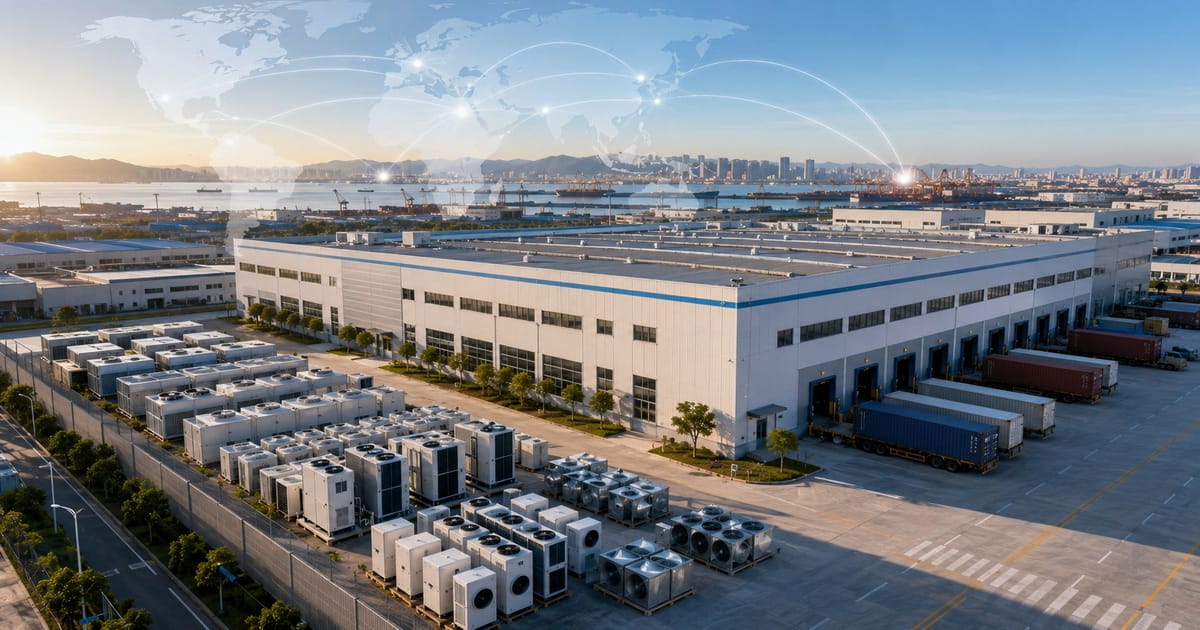
According to the China Household Electrical Appliances Association, total air-conditioner shipments in China exceeded 210 million units in the 2025 cooling year, while exports reached about 99.29 million units. This manufacturing depth gives buyers access to a comprehensive HVAC supply chain as well as a broad range of supplier types—from global mass-production brands to specialized OEM/ODM factories.
How We Evaluated Manufacturers
This is not simply a ranking by brand recognition or sales volume. It evaluates manufacturers from the perspective of overseas procurement managers looking for dependable, long-term supply partners.
The selection criteria include:
1. Manufacturing and supply-chain capability
Whether the supplier has stable production resources for complete units, refrigeration systems, sheet-metal structures, electrical controls, and critical components.
2. R&D and engineering support
Whether the factory can adapt products for voltage, frequency, refrigerant type, casing structure, control logic, packaging, and end-use conditions.
3. Quality-control system
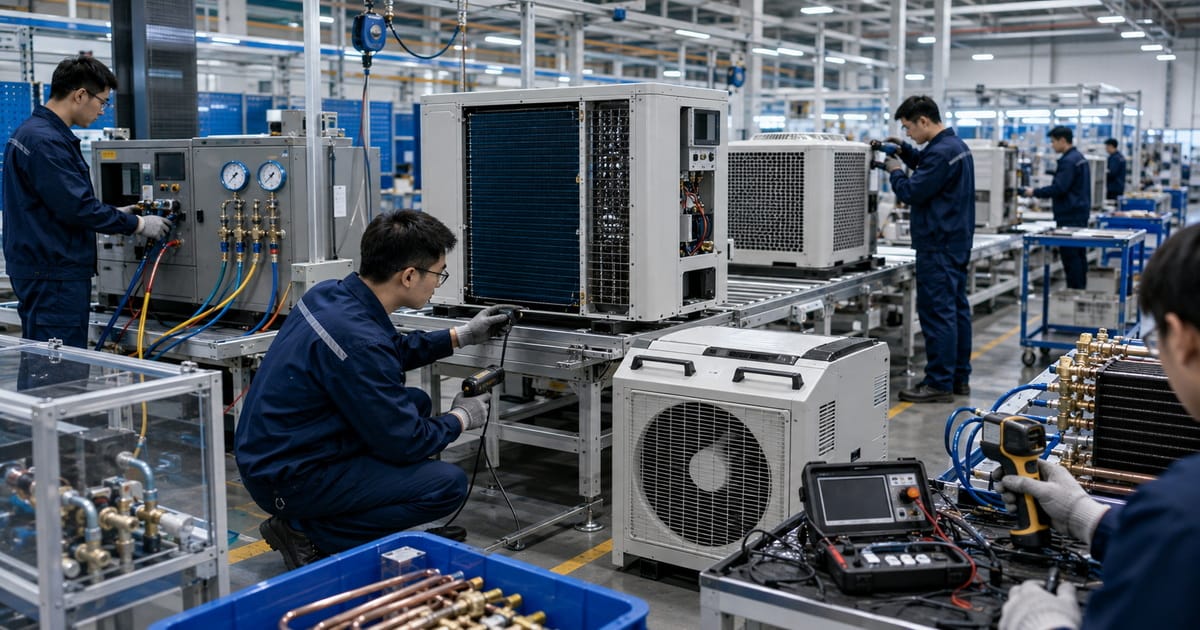
Whether it has defined incoming-material inspection, refrigerant leak testing, electrical safety checks, operating tests, aging tests, and outgoing quality inspection.
4. Compliance readiness
Whether the supplier can provide model-specific documentation suitable for the target market, rather than generic or unverifiable certificates.
5. Capacity and delivery stability
Whether the manufacturer can explain its production planning, component inventory strategy, peak-season capacity, and delivery schedule.
6. OEM/ODM execution
Whether it can manage private labeling, product customization, technical documentation, packaging, change control, spare parts, and after-sales responsibilities efficiently.
China’s HVAC manufacturing clusters are especially strong in Guangdong—including Foshan, Shunde, Zhongshan, Guangzhou, and Zhuhai—as well as Ningbo and other coastal manufacturing regions. These clusters provide access to compressors, copper tubing, heat exchangers, electronics, injection molding, metalworking, and export logistics.
Top 10 Air Cooling Machines Manufacturers in China
1. DREZ (Guangzhou) Intelligent Technology Co., Ltd.
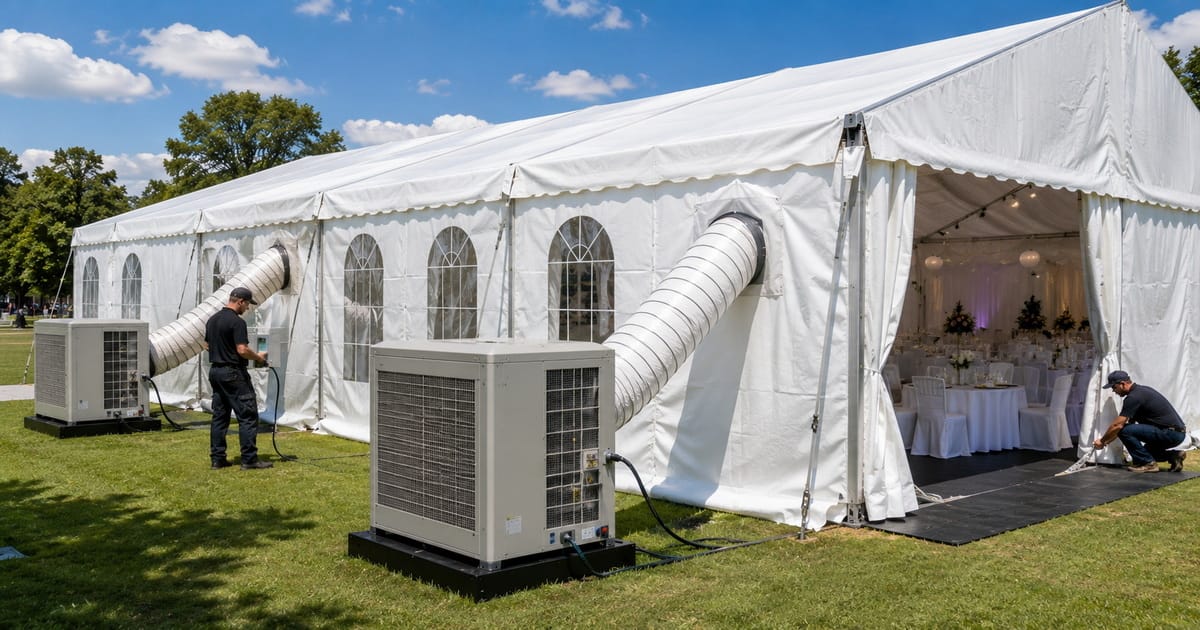
Established: DREZ Group has accumulated more than two decades of experience in event, exhibition, and industrial cooling applications. DREZ Intelligent Technology focuses on HVAC system R&D, manufacturing, sales, and rental services.
Main products:
– Tent air conditioners
– Rooftop air conditioning units
– Trailer-mounted cooling systems
– Portable and mobile air conditioners
– Fresh-air ventilation units
– Temporary building, exhibition, event, emergency, and industrial cooling solutions
Core strengths:
DREZ is a practical option for overseas buyers seeking specialized climate-control equipment rather than standard residential split AC units. Its public company information states that its Guangzhou Panyu facility covers more than 6,000 square meters and has annual production capacity exceeding 10,000 units. The company began expanding into overseas markets in 2015.
DREZ is particularly relevant for small and mid-sized brands, event-equipment rental companies, project contractors, and regional distributors that require a more flexible OEM/ODM process. Compared with very large HVAC groups that mainly prioritize high-volume standardized SKUs, DREZ is better positioned for application-based customization.
OEM/ODM scope:
– Customized cooling solutions for tents, temporary structures, exhibitions, outdoor events, and industrial sites
– Voltage, plug, controller, casing, logo, label, packaging, and airflow-interface customization
– Support for ducted cooling configurations, rooftop installation, portable deployment, and trailer-mounted applications
– More direct communication for small-to-medium private-label projects and specialized product requirements
Best suited for:
Buyers that need a cost-effective but engineering-oriented manufacturer for customized climate-control applications, especially when flexibility, communication speed, and project support are as important as unit price.
Buyer tip:
For tent and mobile air conditioner sourcing, provide the supplier with the tent volume, ambient temperature, expected occupancy, solar exposure, power supply, duct length, and required operating hours. Rated cooling capacity alone does not predict real-world performance.
2. Gree Electric Appliances, Inc. of Zhuhai
Established: 1991
Gree began with window air-conditioner assembly and has grown into a global technology and manufacturing company. Its official profile states that it operates 14 manufacturing bases in China and overseas, employs more than 90,000 people, and has approximately 15,000 R&D personnel. Its products are exported to more than 160 countries and regions.
Core strengths:
– Large-scale residential and commercial air-conditioner production
– Strong vertical integration and manufacturing depth
– Extensive compressor, control-system, and complete-unit engineering capability
– Long-term international export experience
Main markets:
Global residential, commercial, distribution, and project-based HVAC markets.
OEM/ODM scope:
Gree is generally suited to buyers with established annual demand, relatively mature specifications, and large-volume procurement plans. Buyers seeking highly non-standard temporary cooling products or low-volume structural customization should confirm the relevant business unit’s OEM scope early in the negotiation.
3. Midea Group
Established: 1968
Midea is a global home-appliance and HVAC manufacturer. The company reports more than 190,000 employees and business operations in over 200 countries and regions.
Core strengths:
– Broad residential and commercial HVAC product portfolio
– Strong inverter, smart-control, heat-pump, and energy-efficiency capabilities
– Suitable for multi-category sourcing, including air conditioners, portable AC units, dehumidifiers, fans, and related appliances
– Large-scale supply-chain and global market support
Main markets:
Global retail, wholesale, project, smart-home, and distribution markets.
OEM/ODM scope:
Midea is a strong candidate for mature private-label programs, high-volume product sourcing, and buyers that require a broad HVAC or home-comfort product range. Buyers should confirm which Midea business unit handles the target category, destination-country regulations, and exclusivity requirements.
4. Haier Smart Home / Haier Air Conditioning
Established: 1984
Haier Group was founded in 1984 and has developed into a global provider of home appliances, smart-home solutions, and digital transformation products. Its portfolio includes air conditioners, refrigerators, washing appliances, cold-chain equipment, and related home systems.
Core strengths:
– Global brand and international market experience
– Smart-home integration capability
– Residential and commercial air solutions
– Strong potential for multi-category appliance sourcing
Main markets:
Asia, Europe, North America, the Middle East, Africa, and other international markets.
OEM/ODM scope:
Haier is well suited to established distributors and brands that want air conditioning products integrated into a wider smart-home or consumer-appliance portfolio. It is typically more suitable for structured, ongoing purchasing programs than for one-off low-volume projects.
5. AUX Group
Established: 1986
AUX Group operates in air conditioning, power utilization, power distribution, new energy, and healthcare. It has been recognized among major Chinese enterprise rankings and has built long-term experience in air-conditioning production and export.
Core strengths:
– Value-oriented residential and commercial air conditioners
– Inverter AC and export-market development capability
– Competitive for cost-sensitive channels
– Broad production base for standard models
Main markets:
Overseas retail, regional distributors, and price-sensitive commercial projects.
OEM/ODM scope:
AUX can be a practical choice for buyers sourcing standardized air conditioner platforms with balanced cost, performance, and supply reliability. Buyers should verify local energy-efficiency requirements, electrical configurations, packaging regulations, and certification availability for each intended model.
6. Hisense HVAC / Hisense Home Appliances
Established: 1969
Hisense is a global company covering home appliances, consumer electronics, and smart technology. It operates in more than 160 countries and regions.
Core strengths:
– Strong consumer-electronics and home-appliance distribution ecosystem
– Smart control, product design, and connected-home capability
– Suitable for retail-oriented air conditioners and home-comfort products
– International brand-building and channel experience
Main markets:
Global retail chains, e-commerce platforms, appliance dealers, and regional distributors.
OEM/ODM scope:
Hisense may fit buyers looking for contemporary designs, smart features, and retail-ready HVAC products. For private-label cooperation, buyers should clarify the permitted level of product differentiation, software and app ownership, market territory, and after-sales parts support.
7. TCL Air Conditioner
Established: TCL was founded in 1981; the TCL air conditioner business was established in 1999.
TCL states that its air conditioner division operates 12 global manufacturing bases and has annual production capacity of more than 38 million units. Its product portfolio covers residential and commercial air conditioning.
Core strengths:
– Large-scale manufacturing capacity
– Residential and commercial HVAC coverage
– Export retail and private-label experience
– Fast-moving product development in energy efficiency, intelligent control, and styling
Main markets:
International retailers, e-commerce platforms, private-label programs, and regional distributors.
OEM/ODM scope:
TCL is suitable for buyers seeking established AC product platforms with export-market positioning. Buyers should review mold ownership, packaging design, country-specific certification, spare-parts support, and channel exclusivity before committing to a private-label program.
8. Chigo Holding Limited
Established: 1994
Chigo is headquartered in Foshan, Guangdong, one of China’s major HVAC and home-appliance manufacturing regions. The company has long focused on residential and commercial air-conditioner products and export-oriented supply.
Core strengths:
– Access to the mature Guangdong HVAC supply chain
– Residential and commercial AC product coverage
– Suitable for standard product sourcing and conventional private labeling
– Potential fit for cost-sensitive distribution projects
Main markets:
The Middle East, Africa, Latin America, Southeast Asia, and other export-oriented regions.
OEM/ODM scope:
Chigo is generally relevant for standard models, private labeling, carton customization, and regional distribution programs. Buyers should verify the certification status for the specific model intended for sale, since general export capability does not automatically mean compliance in every destination market.
9. Outes Group
Established: Around 2000
Outes is known for heat pumps, air-source water heaters, and broader thermal-management solutions. It is especially relevant for buyers seeking lower-carbon heating, cooling, and hot-water systems rather than only conventional air conditioners.
Core strengths:
– Heat-pump and energy-management specialization
– Suitable for integrated heating, cooling, and hot-water projects
– Relevant to high-efficiency and sustainability-led procurement
– Stronger fit for commercial and engineering-based solutions
Main markets:
Europe, Australia, Asia, and markets developing heat-pump and energy-transition programs.
OEM/ODM scope:
Outes is more appropriate for heat pumps, hot-water systems, and integrated thermal-management projects than for basic portable cooling machines. Buyers should evaluate low-temperature performance, defrost logic, refrigerant selection, safety standards, and local installation requirements.
10. Chunlan Group
Established: 1985
Chunlan is one of China’s earlier air-conditioner manufacturers and has maintained operations involving air conditioners, compressors, and related industrial products.
Core strengths:
– Long-standing air-conditioner manufacturing experience
– Mature product platforms and industrial production knowledge
– Suitable for buyers prioritizing conventional models and cost control
– Potential option for component and conventional AC procurement
Main markets:
Domestic Chinese market and selected international distribution and project markets.
OEM/ODM scope:
Chunlan is better suited to buyers with clear specifications based on established product platforms. For new refrigerants, premium energy-efficiency targets, or highly regulated markets, buyers should conduct model-specific compliance and performance verification before ordering.
Manufacturer Comparison
| Manufacturer | Founded | Main Focus | Publicly Available Scale | Typical MOQ Direction | Certification Readiness* | Suitable Buyers |
|---|---|---|---|---|---|---|
| DREZ | Group experience since 2001; overseas expansion since 2015 | Tent, rooftop, trailer, portable AC, ventilation | 6,000+ m²; 10,000+ units/year | Project-based and small-to-medium volumes | Verify CE/RoHS and market-specific files by model | Small and mid-sized brands, custom OEM/ODM, temporary cooling projects |
| Gree | 1991 | Residential, commercial, industrial HVAC | 14 manufacturing bases | Usually high-volume | Broad export-market capability | Large brands and long-term volume buyers |
| Midea | 1968 | Residential/commercial HVAC, air-comfort products | Global large-scale manufacturing | Usually high-volume | Broad export-market capability | Multi-SKU and global distribution programs |
| Haier | 1984 | Smart home, residential and commercial climate solutions | Global R&D and manufacturing network | Medium-to-large volume | Broad export-market capability | Smart-home and appliance-channel brands |
| AUX | 1986 | Residential and commercial AC | Large manufacturing group | Medium-to-large volume | Verify by model and destination | Value-focused distributors |
| Hisense | 1969 | Smart home appliances and HVAC | Active in 160+ countries | Medium-to-large volume | Verify by model and destination | Retail-oriented smart AC programs |
| TCL AC | 1999 | Residential and commercial AC | 12 bases; 38M+ units/year | Medium-to-large volume | Verify by model and destination | Retail and established private-label programs |
| Chigo | 1994 | Residential and commercial AC | Guangdong HVAC supply-chain base | Medium volume | Verify by model and destination | Standard private-label and regional distribution |
| Outes | Around 2000 | Heat pumps and thermal management | Specialized HVAC manufacturer | Project and product dependent | Verify heat-pump-specific requirements | Low-carbon heating/cooling projects |
| Chunlan | 1985 | AC, compressors, industrial products | Mature industrial group | Medium-to-large volume | Verify by model and destination | Conventional product platform procurement |
Certification readiness does not mean that every product automatically complies with every market. CE, RoHS, UKCA, ERP, CB, ETL, UL, DOE, SASO, G-Mark, WEEE, REACH, and other requirements must be checked by product model, destination country, critical-component version, certificate scope, and certificate validity date.
DREZ publicly reports a facility of more than 6,000 square meters and annual capacity exceeding 10,000 units. TCL reports 12 global manufacturing bases and annual capacity of more than 38 million units. Gree, Midea, and Haier are global manufacturing groups; their actual OEM MOQ depends on product line, destination market, and program scope.
Technical Factors Buyers Should Check
When sourcing air cooling machines, buyers should not compare only price, appearance, and rated cooling capacity. Long-term product reliability, energy consumption, field performance, and after-sales costs depend heavily on technical details.
Refrigeration System
– Compressor matching: Confirm compressor brand, model, operating range, start-stop behavior, and performance under high ambient temperatures.
– Heat-exchanger construction: Define copper-tube dimensions, fin material, fin coating, and corrosion-protection requirements—especially for coastal, humid, dusty, or chemically exposed environments.
– Refrigerant selection: R32, R410A, and R290 have different safety, transport, service, and regulatory implications. A lower-GWP refrigerant is not automatically suitable for every target market or application.
– Condensate management: Mobile, tent, and high-humidity applications require clear drainage design, pump head specifications, automatic evaporation capability, and freeze protection where relevant.
Electrical and Controls
– Confirm voltage and frequency: 110–120V/60Hz, 220–240V/50Hz, 208V/60Hz, or 380–415V three-phase.
– Confirm plug type, cable length, circuit-breaker requirements, grounding, and surge protection.
– For outdoor or mobile units, inspect enclosure protection, cable fastening, vibration resistance, and fault-code readability.
– For OEM models, define ownership and language control for remotes, panels, PCBs, apps, and firmware.
Application-Specific Design
Tent cooling, temporary structures, outdoor events, and mobile applications face high ambient temperature, solar gain, frequent door opening, long duct runs, repeated transport, and variable occupancy. These conditions can create a real cooling load far beyond a simple floor-area estimate.
A practical cooling-load approach is:
Qtotal=Qpeople+Qlighting+Qequipment+Qsolar+Qinfiltration
Here, the total load includes people, lighting, equipment, solar radiation, and heat entering through doors, gaps, and air leakage. For a large event tent, infiltration from repeatedly opened entrances can be a major source of cooling loss.
Buyer’s Guide
Factory Verification Process
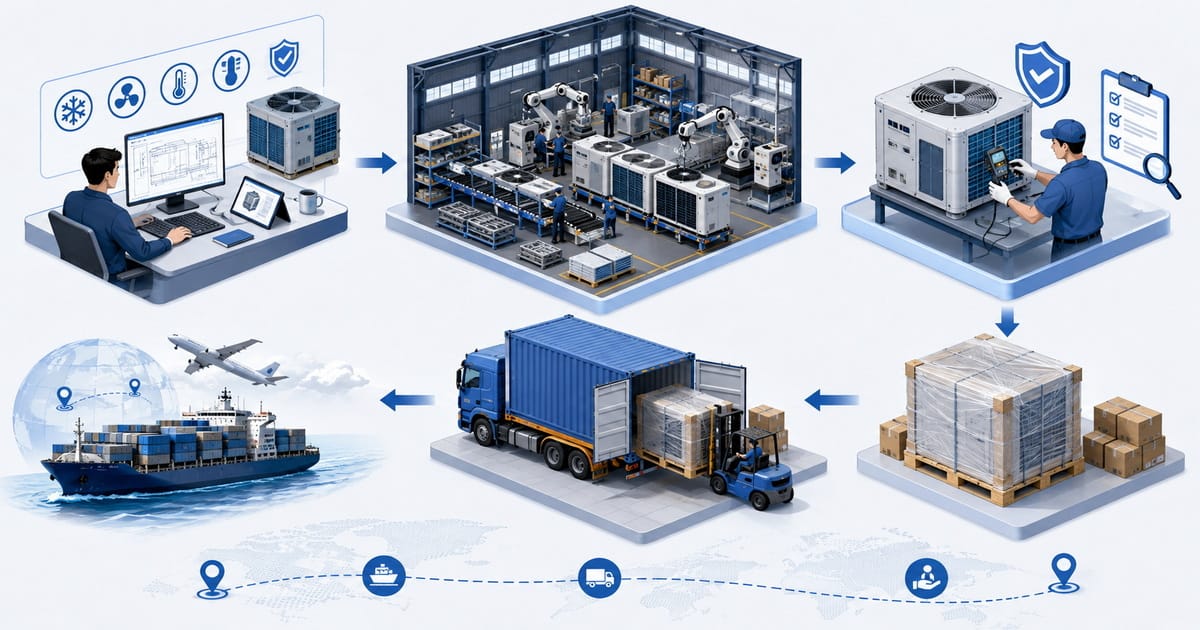
1. Start with the application, not the price.
Provide the destination country, ambient temperature, room or tent volume, occupancy, heat-producing equipment, power supply, installation method, expected annual demand, and target delivery date.
2. Request a model-specific technical package.
Ask for a specification sheet, dimension drawing, wiring diagram, key-component list, packaging details, certificates, test reports, spare-parts list, and operating manual.
3. Conduct a factory audit beyond the showroom.
Request access to incoming-material inspection, assembly lines, refrigerant leak-testing stations, running-test stations, aging areas, finished-goods warehouses, packaging lines, and repair/rework areas.
4. Check traceability.
Ask whether each unit has a serial number, critical-component batch records, testing data, and final-inspection documentation.
5. Approve a sample before mass production.
Use a signed specification sheet, a golden sample, an AQL inspection standard, and a formal engineering-change procedure as part of the purchase agreement.
Sample Validation Checklist
A sample should not pass simply because it produces cold air. Test the following:
– Continuous running under target voltage and frequency
– Actual inlet/outlet temperature difference, noise, vibration, and starting current
– Condensate drainage, drain pump function, and duct compatibility
– Sheet-metal thickness, coating quality, fasteners, anti-corrosion treatment, and export packaging
– Nameplate, instructions, warning labels, plug, barcode, and destination-market language
– For outdoor units: transport vibration, water resistance, dust exposure, and high-ambient operation
Common Sourcing Risks
| Common Issue | Business Risk | How to Avoid It |
|---|---|---|
| Rated cooling capacity does not match actual performance | Poor field cooling, complaints, and costly rework | Request test conditions and performance data, not just nameplate capacity |
| Downgraded copper tubing, sheet metal, or fins | Lower efficiency, weaker corrosion resistance, shorter product life | Include dimensions, material grades, thickness, and coating requirements in the technical agreement |
| Generic “CE certificate” with a mismatched model | Customs, sales, or project-acceptance failure | Verify certificate model, applicant, lab, issue date, product photo, and validity |
| Mass-production units differ from approved samples | Quality inconsistency after delivery | Use a golden sample and written engineering-change control |
| Peak-season component shortages | Delayed shipments and expensive air freight | Define lead time, allocation, component stocking, and split-shipment terms in the PI |
| Selecting only by FOB price | Higher lifecycle, warranty, and logistics costs | Compare total cost of ownership, including spare parts, certification, failure rate, and shipping |
Industry Insider Tip
Always verify the performance test conditions behind the rated cooling capacity.
Many buyers compare only BTU, kW, or tonnage on a datasheet. However, the stated capacity may have been measured under a specific combination of outdoor dry-bulb temperature, indoor return-air condition, airflow, duct length, and external static pressure.
For tent, portable, and ducted cooling units, longer ducts, sharp duct bends, poor return-air design, and high static pressure can reduce actual airflow and cooling performance significantly. Two units with the same rated capacity can therefore perform very differently on site.
Your technical agreement should specify:
– Cooling-capacity test conditions
– Permitted duct length and external static pressure
– Airflow volume and return-air conditions
– Ambient operating range
– Rated and maximum input power
– Starting current
– Allowable performance tolerance
– Inspection and acceptance test method
This is often more valuable than simply requesting a “larger compressor.”
Conclusion
China’s air cooling machine supply base offers different types of manufacturing partners. Large HVAC groups are appropriate for standardized, high-volume, multi-market programs. Specialized manufacturers are often better suited to tent cooling, portable equipment, rooftop systems, trailers, temporary structures, and mid-sized OEM/ODM brands.
For buyers sourcing tent air conditioners, rooftop AC units, trailer-mounted cooling systems, portable cooling machines, or fresh-air ventilation equipment, DREZ is a relevant supplier to consider when flexibility, R&D responsiveness, efficient communication, and customized OEM/ODM support are important.
Before requesting quotations, prepare an RFQ that includes your destination country, ambient temperature, use scenario, required cooling capacity, power configuration, projected annual quantity, compliance requirements, branding needs, and delivery schedule. This will allow suppliers to provide more accurate technical recommendations and reduce costly misunderstandings later in the project.
FAQ
1. How can I verify whether a supplier’s ISO certificate is still valid?
Check the legal entity name, registered address, factory address, certificate scope, certificate number, issuing body, and expiry date. Then verify the certificate through the issuing certification body’s database or directly with the certification body. Remember that ISO 9001 confirms a quality-management system; it does not prove that a particular air cooling machine meets CE, UL, ETL, ERP, or other product regulations.
2. Are CE and RoHS sufficient for selling air cooling machines in Europe?
Usually not. Requirements depend on the product type, refrigerant, electrical configuration, rated capacity, and destination country. Depending on the product, buyers may also need to consider EMC, LVD, RoHS, REACH, ERP/ecodesign, energy labeling, WEEE, packaging obligations, and local installation rules. Equipment using flammable refrigerants may require additional safety and transport assessment.
3. How can I tell whether a supplier is a real manufacturer rather than a trading company?
Do not rely only on a business license or website. Request a factory walkthrough covering production lines, testing equipment, finished-goods warehouses, incoming-material areas, quality records, and export documents. Cross-check the factory address against certificates, audit reports, and customs/export documents. For important orders, use a third-party factory audit and pre-shipment inspection.
4. Is MOQ calculated by complete unit, color, packaging, or customization item?
It must be clarified separately. A base unit may have one MOQ, while custom casing colors, printed cartons, manuals, rating labels, controllers, molds, and logos can each have additional minimum quantities. Do not accept a quotation stating only “MOQ: 100 units” without defining the customization scope.
5. How long should I test a tent or portable AC sample?
The unit should undergo continuous operation, repeated start-stop tests, drainage testing, noise and vibration checks, and target-voltage testing. For project equipment, simulate the actual duct length, ambient conditions, and heat load. For rental, event, and emergency applications, add transportation vibration, frequent handling, and rapid-installation tests.
References
1. – [China Household Electrical Appliances Association: A Review of China’s Air Conditioner Industry in the 2025 Cooling Year] [en.cheaa]
2. – [DREZ: About Us] [drezaircon]
3. – [Gree Global: Company Profile] [global.gree]
4. – [Midea: Company Introduction] [midea]
5. – [Haier: Corporate Profile] [haier]
6. – [AUX Group: About AUX] [en.auxgroup]
7. – [TCL Air Conditioner: Manufacturing Overview] [tcl]
8. – [Grand View Research: Air Conditioning Systems Market] [grandviewresearch]
Hot Tags: Air Cooling Machines, Air Cooling Machine Manufacturers, China Air Conditioner Manufacturers, OEM Air Conditioner Manufacturer, ODM Air Conditioning Solutions, Tent Air Conditioner Manufacturer, Rooftop Air Conditioner Manufacturer, Trailer Air Conditioning Systems, Portable Air Conditioner OEM, Commercial HVAC Equipment Supplier