Content Menu
● Why Festival Cooling Is Different
>> Portable Air Conditioners: Where They Fit
>> Trailer Air Conditioning: Built for Temporary Venues
>> 1. Capacity Is Only Useful When Air Reaches People
>> 2. Festival UX Improves When Equipment Moves Outside
>> 3. Portable AC Ratings Need Careful Interpretation
● How to Size Festival Cooling
>> Example: A Festival VIP Tent
● FAQ
>> Is trailer air conditioning suitable for an open outdoor festival area?
>> How is trailer AC different from a portable air conditioner?
>> Can one trailer AC cool multiple festival tents?
>> What power supply does a trailer air conditioner need?
>> Why is condensate management important at events?
>> Can DREZ provide OEM and ODM trailer air conditioners?
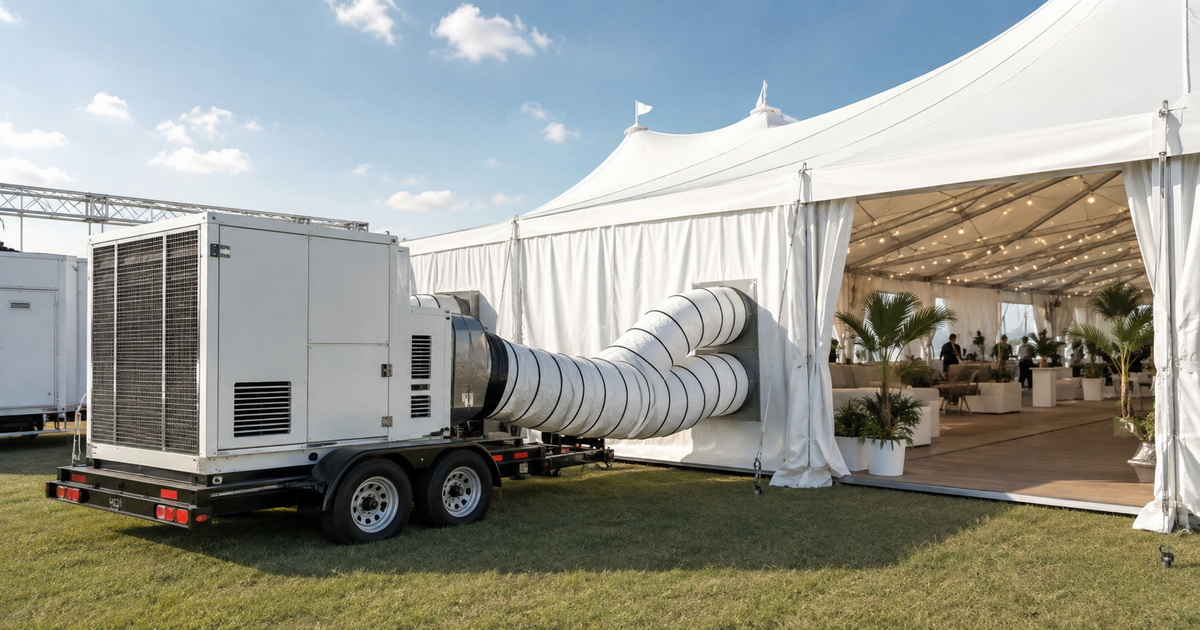
Outdoor festivals create a difficult cooling environment: intense solar gain, fluctuating crowds, temporary structures, dust, noise restrictions, and limited access to reliable power. For organisers, rental companies, and event-infrastructure brands, trailer air conditioning is often a more controllable solution than deploying multiple portable air conditioners across a festival site.
At DREZ (Guangzhou) Intelligent Technology Co., Ltd., we work from a practical product-development perspective: cooling equipment must not only deliver capacity on paper. It must be easy to transport, safe to deploy, serviceable during a live event, and adaptable to branded OEM and ODM requirements. This guide compares trailer-mounted air conditioning systems and portable air conditioners for outdoor festivals, tents, VIP lounges, backstage areas, temporary kitchens, and production zones.
Why Festival Cooling Is Different
Festival cooling is not the same as cooling a room. In an outdoor event, the HVAC system must handle several changing heat loads at once:
– Solar radiation heating tents, containers, stages, and enclosed lounges
– High occupant density in VIP tents, medical stations, staff rooms, and catering zones
– Lighting, AV equipment, refrigeration, cooking equipment, and charging stations
– Frequent door openings and incomplete tent sealing
– Hot, humid, dusty, or rainy site conditions
– Long operating hours with limited time for maintenance
ASHRAE identifies air temperature, humidity, air movement, radiant temperature, clothing, and activity level as important factors in thermal comfort. This is why simply selecting a unit based on floor area can lead to poor results at a crowded festival.
A portable unit may be rated for a room under standardized test conditions. A festival tent, however, has a different operating reality. Its cooling demand can surge at noon, after a crowd enters, or when catering equipment starts running. The event planner needs a solution designed around the actual heat load, not a headline BTU number alone.
Portable Air Conditioners: Where They Fit
Portable air conditioners are self-contained units placed inside the cooled space. They are typically connected to an exhaust hose that vents hot condenser air outside through a window, wall opening, or tent panel.
They can be a sensible choice for:
– Small enclosed security booths
– Temporary offices or ticketing cabins
– Compact dressing rooms
– Backup cooling for a single low-occupancy room
– Short-duration events with limited cooling requirements
Their advantages are straightforward: low initial cost, widespread availability, and simple plug-in operation. A small event may benefit from this simplicity.
However, their limitations become more visible as the venue grows. Each unit consumes indoor floor space, requires a suitable exhaust path, creates noise within the occupied zone, and adds separate condensate, cable, and maintenance points. A large tent may need many individual units, turning a cooling plan into an operational patchwork.
Trailer Air Conditioning: Built for Temporary Venues
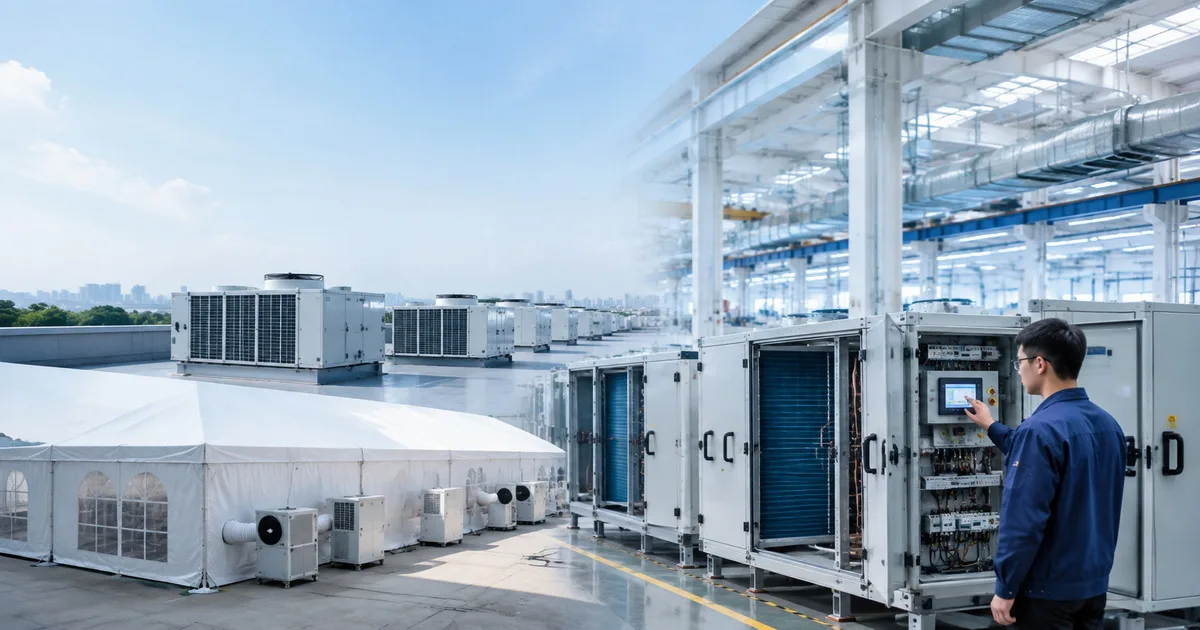
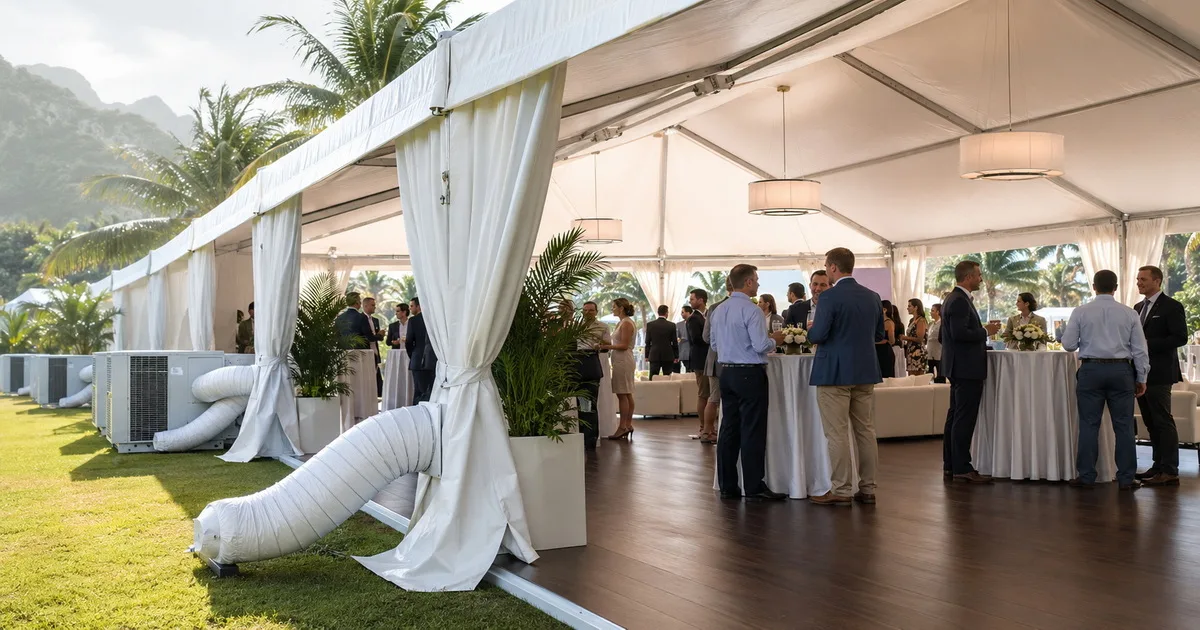
A trailer air conditioning system places the main cooling equipment outside the occupied space. Conditioned air is delivered through flexible ducting into tents, temporary structures, or modular event spaces. The trailer format combines cooling equipment, transportability, and centralized access in one deployable platform.
For a festival operator, this means the cooling source stays outside the guest area while the supply air is directed to where it is needed most.
Common applications include:
– VIP and hospitality tents
– Artist green rooms and backstage compounds
– Medical tents and first-aid stations
– Catering and food-preparation tents
– Brand activation spaces
– Temporary warehouses and production offices
– Sports-event hospitality areas
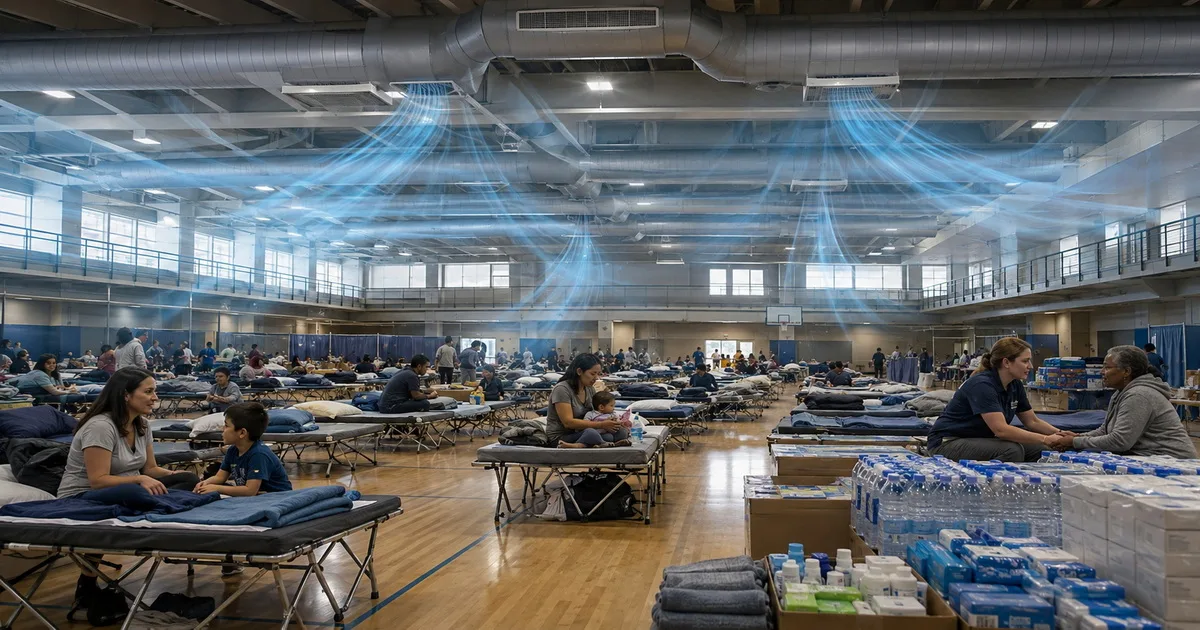
– Disaster-relief or emergency event shelters
Trailer AC vs. Portable AC
The most useful comparison is not “which product is better?” It is “which product matches the event’s cooling load, duration, layout, and operating risk?”
| Decision factor | Trailer air conditioning | Portable air conditioners |
|---|---|---|
| Cooling capacity | Can be configured for larger, centralized temporary cooling loads | Better suited to smaller enclosed zones |
| Air distribution | Ducted supply air can be directed to multiple tent areas | Cooling is concentrated near each indoor unit |
| Indoor footprint | Main equipment remains outdoors | Units occupy usable indoor floor space |
| Noise experience | Compressor and condenser noise can be kept outside | Noise is produced inside the cooled area |
| Installation complexity | Requires planned access, duct routing, and power coordination | Fast for one unit, but complexity rises sharply with multiple units |
| Condensate management | Can be planned centrally as part of the temporary HVAC layout | Multiple units create multiple drainage or tank-emptying tasks |
| Visual appearance | Cleaner guest-facing environment when equipment is positioned outside | Cords, hoses, and units may affect presentation |
| Maintenance | One central system simplifies checks and service access | Many independent units increase failure points |
| Best use case | Large tents, multi-day festivals, high-value or high-occupancy zones | Small rooms, booths, isolated spot-cooling needs |
1. Capacity Is Only Useful When Air Reaches People
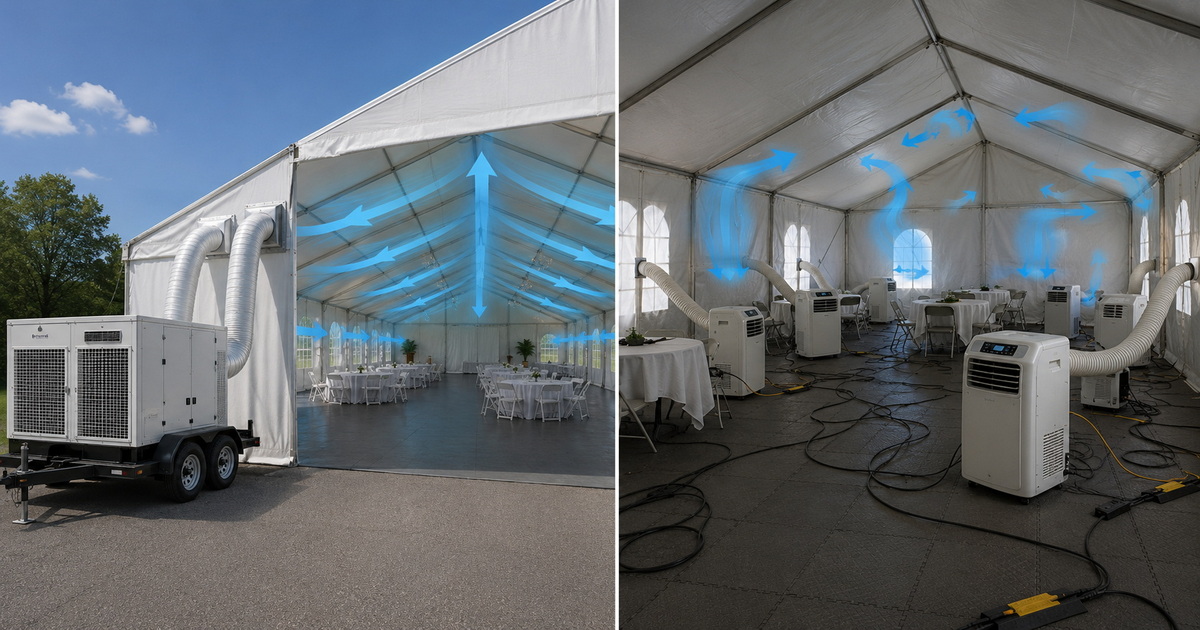
The central advantage of trailer air conditioning for outdoor festivals is air distribution. Cooling capacity must be delivered into the occupied zone without creating hot corners, stagnant air, or uncomfortable cold drafts.
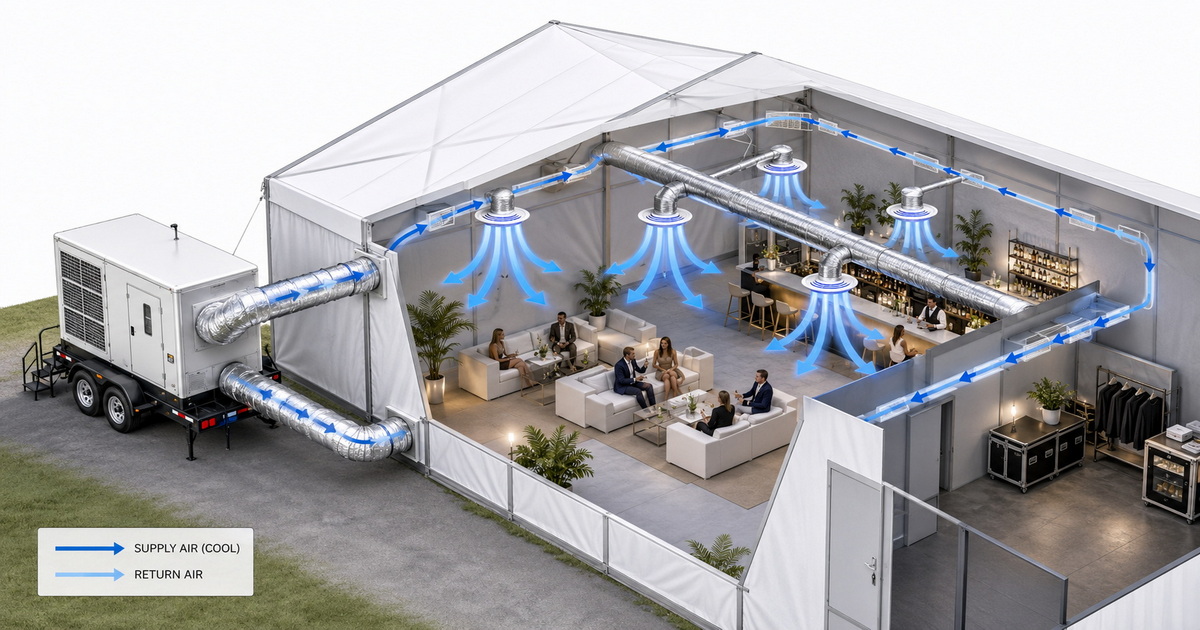
With a trailer-mounted system, event teams can use duct runs, diffusers, and return-air planning to direct air toward the tent areas with the highest heat load. For example, a VIP tent may require balanced airflow across seating, bar service, and entrance zones rather than a strong blast of cold air from one corner.
Portable air conditioners cool locally. This can be adequate in a small booth, but it is less effective in a wide temporary tent with moving crowds. Units close to people may cause drafts and noise, while people farther away may remain uncomfortable.
In temporary HVAC planning, do not treat “cooling capacity” and “air distribution” as separate decisions. A properly sized system with poor distribution can perform worse than a smaller system with well-designed duct placement.
2. Festival UX Improves When Equipment Moves Outside
For premium festival spaces, cooling equipment affects more than temperature. It affects the guest experience.
A portable air conditioner placed inside a lounge takes up floor space and introduces a visible hose, electrical cable, and operating noise. In a branded hospitality space, this can conflict with the desired visual standard. In a medical tent, it can restrict access. In a busy backstage area, it can create trip hazards and complicate circulation.
A trailer air conditioner keeps the main machinery outdoors. The indoor environment can remain cleaner and more intentional, with duct outlets located above, beside, or behind the audience area.
This is especially valuable for:
– Brand owners protecting a premium visitor experience
– Festival producers managing dense foot traffic
– Rental companies standardizing repeatable event layouts
– OEM buyers seeking systems tailored for tent cooling, duct connections, and site mobility
3. Portable AC Ratings Need Careful Interpretation
When assessing portable air conditioners, buyers should compare like-for-like performance data. The U.S. Department of Energy requires portable AC certification information to include metrics such as Combined Energy Efficiency Ratio (CEER), seasonally adjusted cooling capacity (SACC), duct configuration, and condensate-removal method.
This matters because a product’s marketing capacity figure may not be the best measure of real deployed performance. Exhaust configuration, ambient temperature, humidity, duct length, and enclosure leakage all influence the outcome.
For festival buyers, ask suppliers for:
1. Rated cooling capacity under the relevant test method
2. Input power, voltage, phase, and starting-current information
3. Recommended duct diameter and maximum duct length
4. Operating ambient-temperature range
5. Condensate removal method
6. Sound level at defined distance and operating condition
7. Maintenance schedule and spare-parts availability
8. Tent size assumptions, occupancy assumptions, and local climate assumptions
Do not compare only BTU numbers. Compare the complete operating system: capacity, airflow, ducting, power, sound, drainage, and service access.
How to Size Festival Cooling
A credible proposal begins with a site survey or a structured design brief. The objective is to calculate risk before equipment arrives on site.
A Five-Step Cooling Plan
1. Define the enclosure. Record tent dimensions, wall type, roof type, entrance locations, ceiling height, and whether the tent is fully enclosed.
2. Map heat sources. Include people, lighting, LED walls, sound equipment, cooking appliances, refrigerators, and direct sun exposure.
3. Check local weather risk. Review expected daytime temperature, nighttime temperature, humidity, wind, rain, and dust conditions for the event period.
4. Design supply and return airflow. Locate supply ducts to avoid short-circuiting air directly back to the return side. Keep duct paths clear of guest routes and emergency exits.
5. Confirm power and redundancy. Verify the electrical supply before delivery. For generator-powered systems, use qualified electrical personnel and protect public areas from cables and accessible electrical equipment. OSHA’s guidance covers temporary wiring, portable generators, and restricting access to exposed outdoor electrical installations.
Example: A Festival VIP Tent
Imagine a 20 m × 30 m enclosed VIP tent operating for three afternoon-and-evening festival days. It contains guests, bar refrigeration, decorative lighting, staff, and frequent entry traffic.
Using several portable AC units may appear inexpensive initially. But the planner must allocate interior floor space, create multiple exhaust openings, route numerous power cables, monitor condensate, and manage multiple service points.
A trailer air conditioning solution can instead be positioned outside the tent, with ducted supply air distributed along the perimeter or ceiling line. This approach makes it easier to preserve guest space, separate machinery from visitors, and centralize technical supervision.
The final capacity still requires professional load calculation. But from an operational perspective, the trailer-based layout is normally more scalable and easier to manage.
Common Mistakes to Avoid
– Selecting equipment from tent area alone
– Ignoring solar load on dark or uninsulated tent roofs
– Placing supply and return ducts too close together
– Running long, crushed, or poorly insulated flexible ducts
– Forgetting condensate drainage
– Locating noisy equipment beside a stage, VIP lounge, or recording area
– Adding generator capacity without accounting for startup demand
– Treating portable units as a replacement for a planned temporary HVAC system
OEM and ODM Considerations
For overseas brands, wholesalers, and equipment manufacturers, a trailer AC system is not just an event product. It can become a differentiated part of a temporary HVAC portfolio.
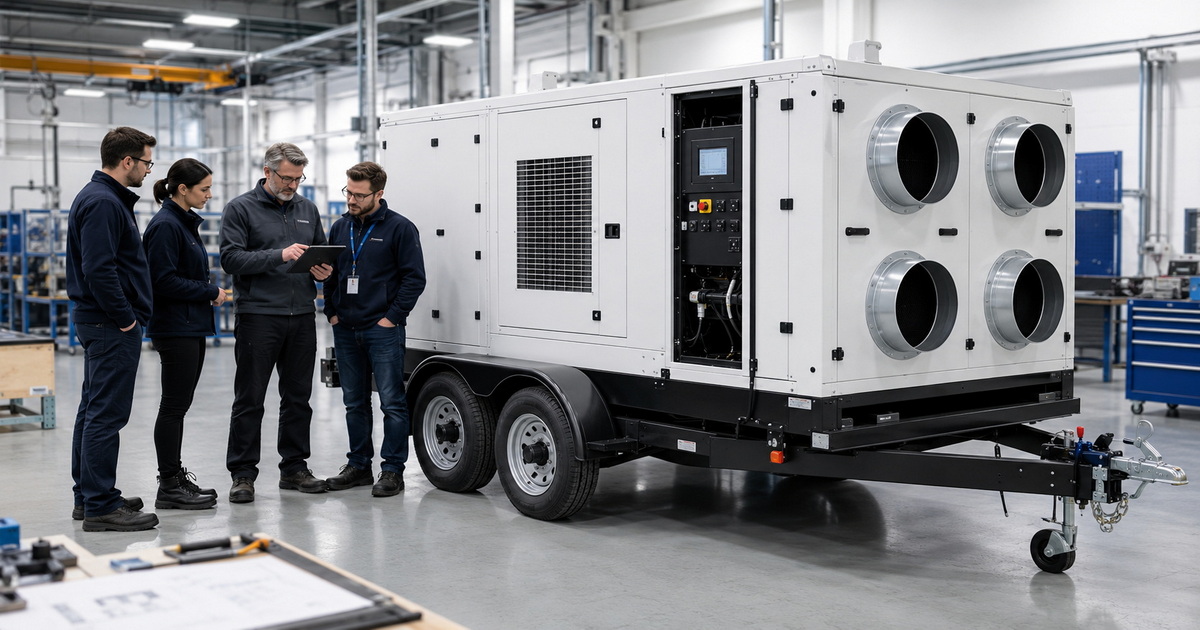
DREZ supports OEM and ODM cooperation for climate-control applications, including trailer-mounted air conditioning systems. A custom development discussion can cover:
– Cooling capacity and compressor configuration
– Trailer dimensions, chassis design, and towing requirements
– Voltage, frequency, plug, and electrical-control compatibility
– Duct outlet quantity, size, and placement
– Remote monitoring, thermostat controls, and alarm functions
– Housing material, corrosion resistance, and weather protection
– Private-label colors, logo positions, panels, and packaging
– Documentation, parts strategy, and market-specific compliance planning
The right OEM/ODM project starts with the intended market. A system for humid coastal events may prioritize corrosion protection and condensate handling. A system for mobile desert events may prioritize filtration, dust control, and high-ambient performance. A system for premium European hospitality rental may emphasize low noise, appearance, and compact transport dimensions.
The Commercial Advantage
A well-designed trailer-mounted HVAC product can help a distributor or brand offer a more complete temporary-cooling solution than a catalogue of small portable units. It creates opportunities for higher-value sales, rental fleet standardization, accessories such as ducts and diffusers, and repeat business from event operators.
Choose Cooling as a System
For small enclosed spaces, portable air conditioners remain useful. For outdoor festivals with substantial tents, long operating hours, changing crowd loads, and high guest expectations, trailer air conditioning provides a more professional route to scalable, ducted, and manageable temporary cooling.
DREZ can help international brands, wholesalers, and manufacturers evaluate trailer air conditioning requirements for event, tent, and temporary-structure applications. Contact our team with your target market, tent sizes, local power standard, expected climate, and OEM/ODM requirements to discuss a tailored trailer AC solution.
FAQ
Is trailer air conditioning suitable for an open outdoor festival area?
Air conditioning works best in an enclosed or partially enclosed space, such as a tent, marquee, container, lounge, medical station, or backstage room. For completely open areas, air movement solutions such as fans or misting systems may be more appropriate, depending on climate and local regulations.
How is trailer AC different from a portable air conditioner?
A trailer air conditioning unit is generally an outdoor, centralized temporary HVAC platform that delivers conditioned air through ducts. A portable air conditioner is usually a self-contained indoor unit that exhausts heat through one or more hoses.
Can one trailer AC cool multiple festival tents?
Potentially, yes, but this depends on unit capacity, duct design, distance, enclosure quality, and separate control requirements. Multiple zones should be engineered rather than assumed, especially when tents have different occupancy or temperature needs.
What power supply does a trailer air conditioner need?
Requirements vary by model and capacity. Buyers should confirm voltage, frequency, phase, running power, starting current, plug or connection type, and generator compatibility before installation.
Why is condensate management important at events?
Cooling humid air produces condensate. If drainage is not planned, water can accumulate near equipment, inside tents, or along walkways. A professional temporary HVAC plan should define where condensate drains and how it is monitored.
Can DREZ provide OEM and ODM trailer air conditioners?
Yes. DREZ provides OEM and ODM climate-control solutions for overseas brands, wholesalers, and manufacturers. Customization can include performance specifications, trailer configuration, electrical standards, controls, appearance, and branding.
References
1. ASHRAE. “[ANSI/ASHRAE Standard 55: Thermal Environmental Conditions for Human Occupancy].” Guidance on evaluating acceptable thermal environments and comfort factors. [ashrae]
2. U.S. Department of Energy. “[Portable Air Conditioners].” Federal appliance-and-equipment standards information. [energy]
3. U.S. Department of Energy. “[Certification Requirements, Labeling, and Enforcement Provisions for Certain Consumer Products].” Portable AC reporting requirements, including CEER, SACC, duct configuration, and condensate-removal information. [energy]
4. Occupational Safety and Health Administration. “[Electrical Standard eTool: Subpart S].” Guidance related to temporary electrical installations, outdoor electrical equipment, and portable generators. [osha]
5. U.S. Green Building Council. “[Thermal Comfort Reference Guide].” Overview of thermal-comfort factors including operative temperature, humidity, air speed, and occupancy considerations. [usgbc]
6. EquipmentShare. “[The Best Event Cooling Solutions for Outdoor Spaces].” Industry context on temporary cooling approaches for outdoor events. [equipmentshare]
Hot Tags: Trailer Air Conditioner, Trailer Mounted Air Conditioner, Temporary Event Cooling, Outdoor Event Air Conditioning, Tent Air Conditioning System, Commercial Portable Air Conditioner, Industrial Portable Air Conditioner, Temporary HVAC Solutions, Event HVAC Rental, OEM Air Conditioner Manufacturer