Content Menu
● 1. Understand Mobile Air Conditioning Cooling Capacity
● 2. Use Floor-Area Sizing Only as an Initial Reference
● 3. Calculate the Loads That Determine Cooling Capacity
>> Building Envelope and Solar Heat Gain
>> People, Lighting, and Equipment
>> Outdoor Air, Leakage, and Door Openings
● 4. Check Sensible and Latent Capacity Separately
● 5. Compare Portable Air Conditioner Ratings Correctly
>> Understand SACC and Other Published Ratings
>> Check the Airflow Arrangement
● 6. Worked Example: Sizing a Temporary Commercial Space
● 7. Avoid Arbitrary Oversizing
● 8. Validate Capacity After Installation
● 9. Build a Better OEM and ODM Capacity Specification
● Specify Your Mobile Cooling Requirement with Confidence
>> 1.How Much Cooling Capacity Do I Need Per Square Meter?
>> 2.Is a Higher BTU Rating Always Better?
>> 3.Can I Use a Residential Sizing Chart for a Tent?
>> 4.Why Does a Portable Air Conditioner Have Two Capacity Ratings?
>> 5.Does Cooling Capacity Tell Me Electrical Consumption?
>> 6.Can One Large Unit Replace Several Smaller Units?
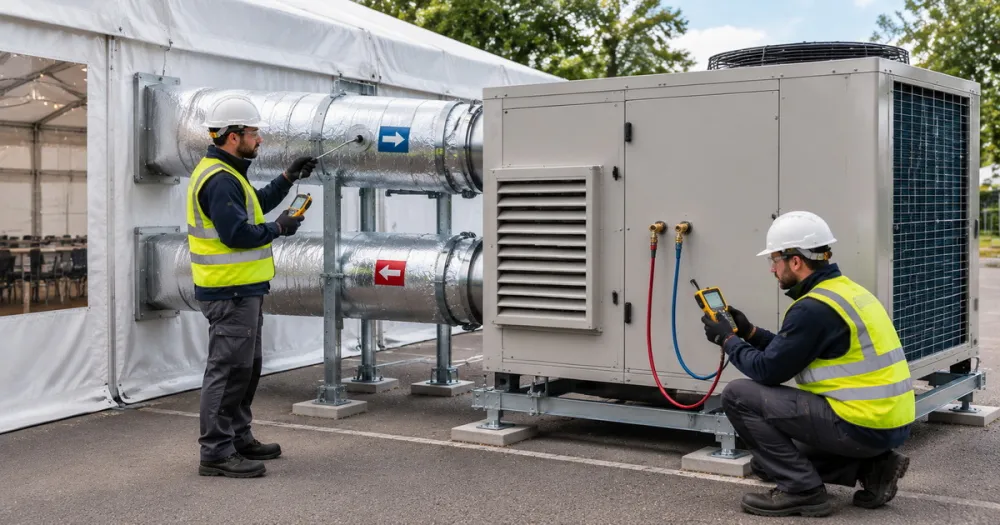
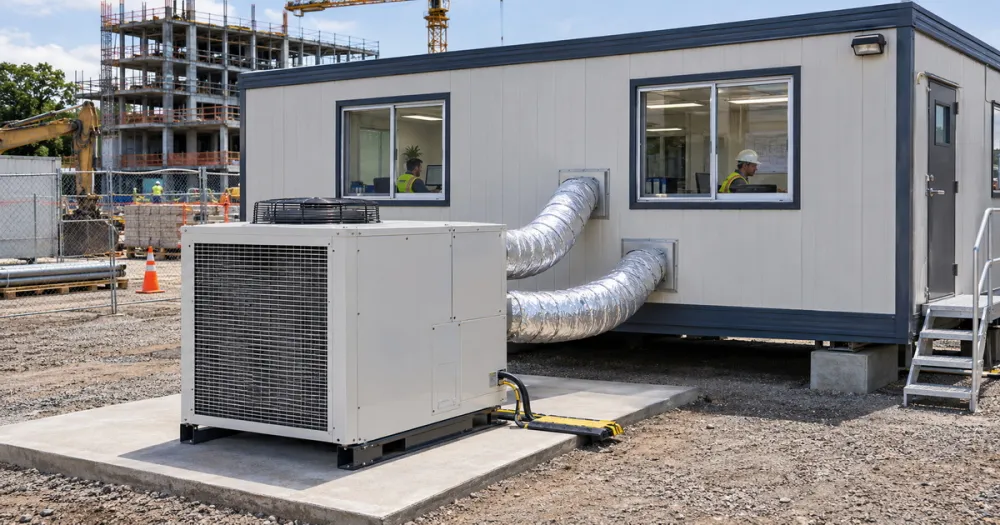
The cooling capacity you need for mobile air conditioning depends on the heat entering your space, the heat generated inside it, and the temperature and humidity you must maintain. Floor area provides a starting point, but it cannot reliably size a system for a sun-exposed tent, busy workshop, or temporary production facility.
1. Understand Mobile Air Conditioning Cooling Capacity
Cooling capacity describes how quickly an air conditioner removes heat. It is normally expressed in British thermal units per hour, kilowatts of cooling, or refrigeration tons.
| Capacity unit | Approximate equivalent | Important distinction |
|---|---|---|
| 1 kW of cooling | 3,412 BTU/h | Thermal output, not electrical consumption |
| 1 refrigeration ton | 12,000 BTU/h | A cooling-capacity unit, not equipment weight |
| 5 kW of cooling | 17,060 BTU/h | Not necessarily 5 kW of electrical input |
| 10 refrigeration tons | 35.2 kW of cooling | Must still be checked against site conditions |
A unit delivering 10 kW of cooling does not necessarily consume 10 kW of electricity. Electrical input depends on efficiency and operating conditions.
Also distinguish nominal capacity from available capacity. The published rating applies to specified test conditions; your installation may involve different temperatures, humidity, airflow, and duct resistance.
For purchasing decisions, request both the rating conditions and performance data relevant to the intended application.
2. Use Floor-Area Sizing Only as an Initial Reference
For ordinary enclosed rooms, published room-air-conditioner guidance provides a useful first comparison.
The following values come from residential room-sizing guidance based on an approximately 8-foot ceiling. They are not commercial mobile-air-conditioning sizing recommendations.
| Enclosed room area | Reference cooling capacity |
|---|---|
| 150–250 sq. ft. | 6,000 BTU/h |
| 250–300 sq. ft. | 7,000 BTU/h |
| 300–350 sq. ft. | 8,000 BTU/h |
| 350–400 sq. ft. | 9,000 BTU/h |
| 400–450 sq. ft. | 10,000 BTU/h |
| 450–550 sq. ft. | 12,000 BTU/h |
These figures become less useful when the application includes:
– High ceilings or poorly insulated temporary structures.
– Strong solar exposure through roofs or glazing.
– Frequent door openings.
– Dense occupancy or significant equipment heat.
– Substantial outdoor-air ventilation.
– Strict humidity or process-temperature requirements.
A workshop and an office can have identical floor areas but very different cooling loads. Avoid turning a residential coverage chart into a universal commercial product claim.
3. Calculate the Loads That Determine Cooling Capacity
A useful cooling-load assessment separates the sources rather than hiding them inside one watts-per-square-meter assumption.
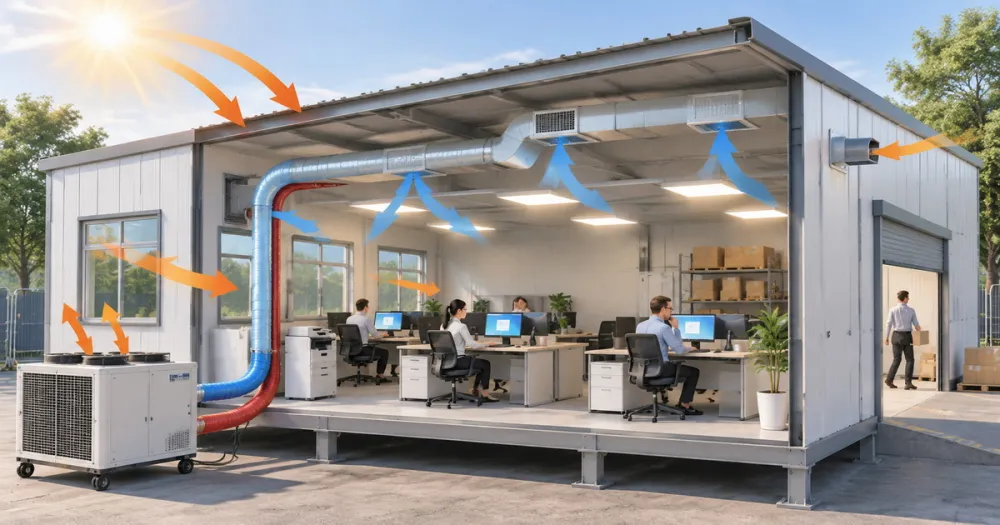
Building Envelope and Solar Heat Gain
Walls, roofs, windows, and floors transfer heat into a cooler interior. Solar radiation adds further heat, particularly through glazing and exposed lightweight roofs.
Record construction materials, insulation, window area, shading, and orientation. For event tents, the fabric construction and solar exposure require particular attention.
A reflective roof or external shading may reduce the required cooling load. However, the saving should be calculated for the actual structure rather than assumed.
People, Lighting, and Equipment
Occupants add both heat and moisture. Their contribution depends on activity: seated visitors and physically active workers do not create the same load.
Lighting, computers, motors, production machinery, and catering equipment also contribute.
For equipment, use measured consumption or justified operating estimates where possible. Not every device operates continuously at nameplate power, and some process heat leaves through dedicated exhaust or other pathways.
Outdoor Air, Leakage, and Door Openings
Fresh-air ventilation and uncontrolled infiltration introduce outdoor heat and moisture.
This can be a major load in humid climates or buildings with frequently opened loading doors. Record ventilation airflow, occupancy schedules, door dimensions, opening frequency, and exhaust operation.
Do not reduce required ventilation simply to make a smaller air conditioner appear adequate. Cooling and ventilation must be designed together.
4. Check Sensible and Latent Capacity Separately
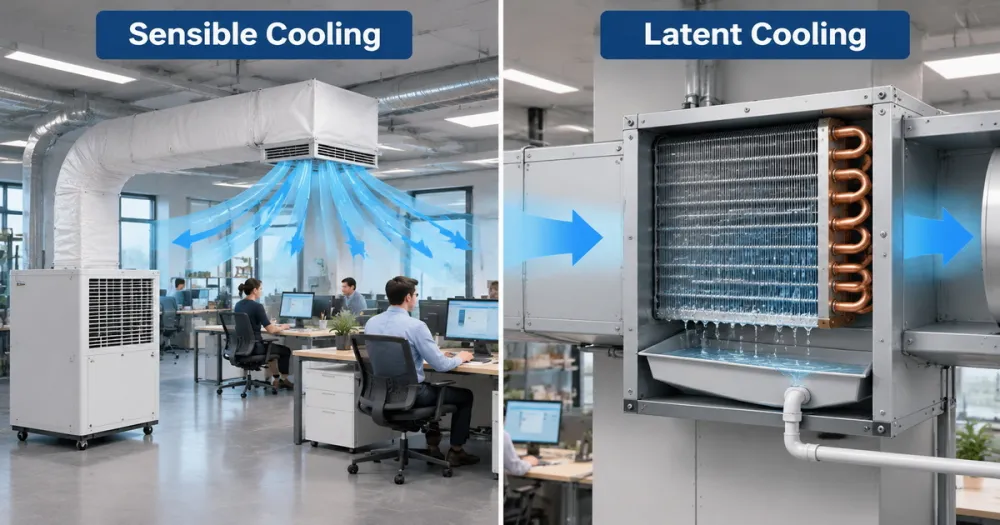
Total cooling capacity contains two components:
– Sensible capacity lowers air temperature.
– Latent capacity removes moisture.
Their relationship matters as much as the total rating.
Consider an illustrative site requiring 18 kW of sensible cooling and 7 kW of latent cooling. Its total load is 25 kW.
A unit offering 25 kW total capacity but only 15 kW sensible capacity would not satisfy the temperature-control requirement, even though the total figures match.
The reverse problem also occurs: a system may lower temperature while failing to remove enough moisture.
Ask suppliers for total, sensible, and latent performance at the proposed indoor and outdoor conditions. A single headline capacity cannot answer all three questions.
For humidity-critical applications, dedicated dehumidification or separate outdoor-air treatment may be necessary.
5. Compare Portable Air Conditioner Ratings Correctly
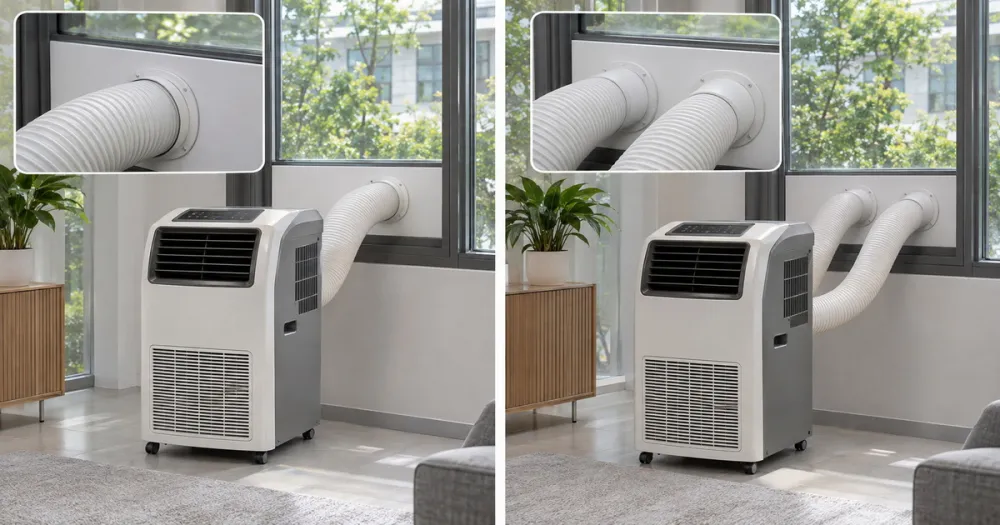
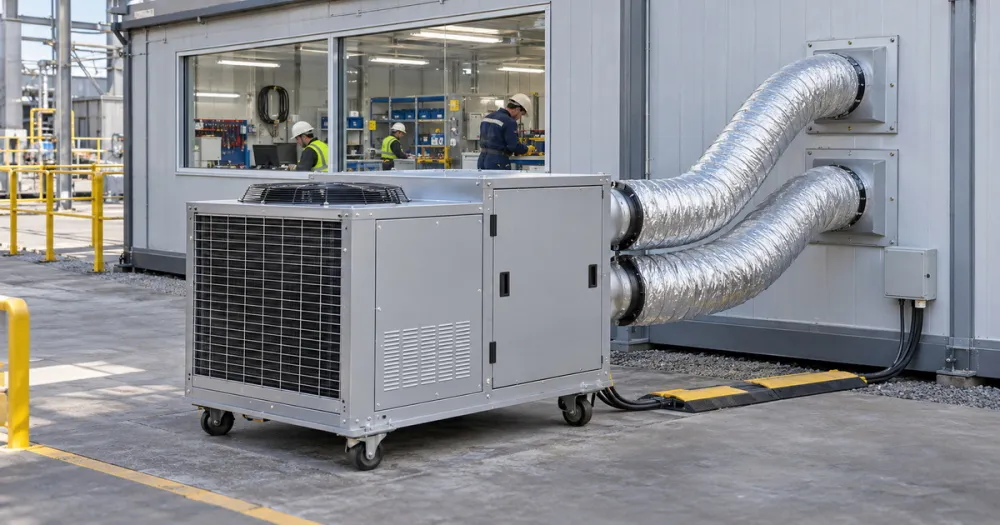
“Mobile air conditioning” covers several equipment arrangements. A wheeled single-hose appliance, split portable system, and outdoor packaged unit should not automatically be compared using one headline number.
Understand SACC and Other Published Ratings
Certain consumer portable air conditioners use seasonally adjusted cooling capacity, or SACC, under the U.S. Department of Energy test procedure.
This method accounts for effects including infiltration and duct heat transfer. Consequently, its capacity value can differ from another published rating for the same appliance.
When comparing products, confirm:
1. The applicable test method.
2. Indoor and outdoor rating conditions.
3. Whether reported capacity includes specified adjustments.
4. Whether the equipment falls within that test method’s scope.
Do not assume SACC applies to every industrial or trailer-mounted cooling system.
Check the Airflow Arrangement
Single-hose portable units can exhaust conditioned indoor air, causing replacement air to enter through leakage paths. That incoming air adds load.
Other configurations handle condenser air differently, but installation still matters. Keep heat rejection separate from the conditioned space and prevent hot discharge air from returning to equipment intakes.
For ducted systems, request airflow data at the expected external static pressure—not only unrestricted airflow.
6. Worked Example: Sizing a Temporary Commercial Space
Consider a hypothetical temporary workspace with a floor area of 120 m². Its operating requirements include staff occupancy, equipment use, outdoor-air ventilation, and a defined indoor temperature target.
Assume a project-specific assessment produces these loads:
| Cooling-load component | Illustrative load |
|---|---|
| Envelope and solar gains | 8.0 kW |
| Occupants | 2.4 kW |
| Lighting and equipment | 5.0 kW |
| Ventilation and infiltration | 6.6 kW |
| Total | 22.0 kW |
These are invented teaching values, not a completed DREZ installation or reusable sizing factors.
Suppose the selected equipment provides only 90% of its nominal capacity at the project’s design conditions. This is also an illustrative assumption, not a universal derating rule.
The nominal capacity needed to provide 22 kW would be:
22÷0.90≈24.4 kW
This does not automatically mean purchasing the next available unit above 24.4 kW. The selection must also satisfy sensible and latent loads, airflow, electrical availability, and part-load operation.
The lesson is straightforward: a 22 kW nominal unit and a 22 kW site load are not necessarily a valid match.
7. Avoid Arbitrary Oversizing
Adding a large safety margin may seem reassuring, but it can create another problem.
An oversized fixed-capacity system may satisfy the thermostat quickly and cycle off before providing sufficient moisture removal. Frequent cycling can also reduce operating efficiency and increase component wear.
An undersized system may run continuously without maintaining the target temperature.
Instead of adding an unexplained percentage:
– Verify uncertain assumptions.
– Separate normal operation from exceptional peaks.
– Check manufacturer performance at design conditions.
– Consider staged or variable-capacity equipment.
– Evaluate multiple units where zoning or continuity matters.
Multiple units can improve flexibility, but they are not automatically redundant. If uninterrupted cooling is essential, define what performance must remain available when one unit is out of service.
Also separate initial pull-down requirements from steady operation. Cooling a heat-soaked structure within a short deadline can require a different selection from maintaining it after stabilization.
8. Validate Capacity After Installation
Installed performance can differ from the equipment’s published rating.
Long or restrictive ducts, air leakage, dirty filters, blocked return paths, and hot-air recirculation can undermine an otherwise reasonable selection.
My practical recommendation is to agree on an acceptance procedure before ordering:
1. Confirm duct routing, insulation, and connections.
2. Check supply and return airflow against the design.
3. Record outdoor temperature and humidity.
4. Measure temperature and humidity across representative occupied locations.
5. Operate with realistic staffing and equipment loads.
6. Check condensate drainage and electrical operation.
7. Compare results with the agreed performance target.
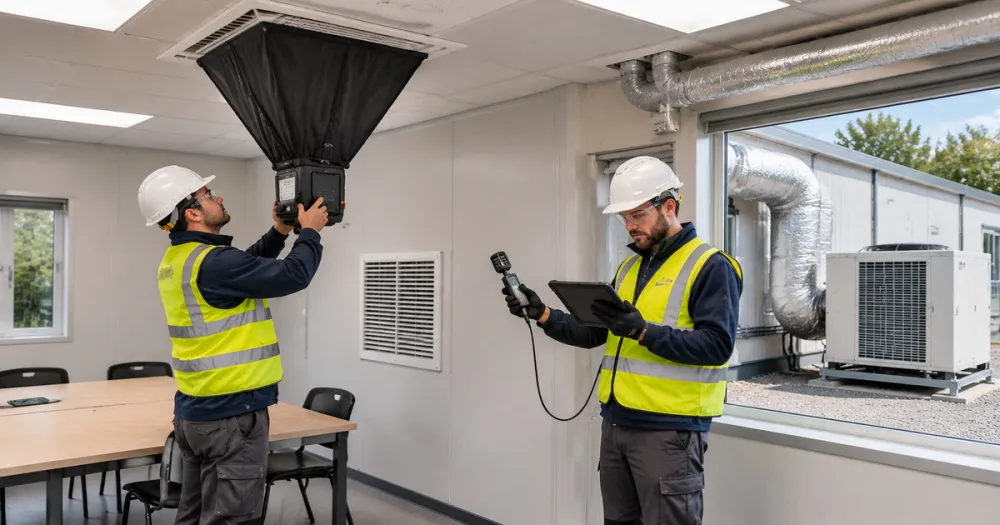
A cold supply-air reading alone does not prove adequate room cooling. It says little about airflow quantity, uneven distribution, or untreated moisture loads.
If acceptance testing occurs in mild weather, document that limitation. It cannot independently demonstrate peak-summer performance without supporting performance data.
9. Build a Better OEM and ODM Capacity Specification
For brands and distributors, cooling capacity affects more than one sale. It shapes product positioning, customer guidance, and after-sales expectations.
A useful inquiry package should include:
| Specification category | Information to provide |
|---|---|
| Application | Office, tent, workshop, warehouse, or process support |
| Space | Dimensions, ceiling height, construction, and zoning |
| Climate | Project location and design outdoor conditions |
| Indoor target | Temperature, humidity, and acceptable variation |
| Internal loads | People, lighting, equipment, and schedules |
| Air exchange | Ventilation, exhaust, leakage, and door operation |
| Installation | Unit location, duct layout, and available clearances |
| Power | Voltage, frequency, phase, and available supply |
| Commercial scope | Branding, controls, documentation, and service needs |
DREZ (Guangzhou) Intelligent Technology Co., Ltd. integrates research and development, design, production, sales, and customized climate-control solutions, including OEM and ODM services.
For a productive technical discussion, provide the site information first and request a proposed configuration with clearly stated assumptions.
Avoid relying on an unexplained “up to” coverage area. Ask what construction, climate, occupancy, and installation conditions support that claim.
Specify Your Mobile Cooling Requirement with Confidence
The right selection begins with a documented load and ends with verified operating performance.
Send DREZ your layout, project location, indoor targets, occupancy, equipment loads, ventilation needs, and power supply. Request a mobile air conditioning proposal covering capacity assumptions, sensible and latent performance, airflow, and relevant OEM or ODM customization options.
Frequently Asked Questions
1.How Much Cooling Capacity Do I Need Per Square Meter?
There is no universal figure for commercial mobile air conditioning. Floor area can support an initial estimate, but final requirements depend on construction, solar exposure, occupancy, equipment, ventilation, humidity, and operating conditions.
2.Is a Higher BTU Rating Always Better?
No. Excess capacity, particularly in fixed-capacity equipment, can cause short cycling and poor humidity control. Match available capacity to the calculated load and consider part-load operation.
3.Can I Use a Residential Sizing Chart for a Tent?
Not as the final selection method. Tents have different heat-transfer, solar-gain, and air-leakage characteristics. Their cooling requirements need an application-specific assessment.
4.Why Does a Portable Air Conditioner Have Two Capacity Ratings?
The figures may come from different test methods. SACC includes specified adjustments for effects such as infiltration and duct heat transfer. Compare products using equivalent rating methods and conditions.
5.Does Cooling Capacity Tell Me Electrical Consumption?
No. Cooling capacity measures heat removal; electrical input measures power consumption. Request rated and maximum input, current requirements, and performance data relevant to the installation.
6.Can One Large Unit Replace Several Smaller Units?
Sometimes, but capacity alone does not determine the answer. Air distribution, zoning, duct resistance, access, noise, and required continuity of service must also be considered.
Source Notes
1. ENERGY STAR, “Room Air Conditioners.” Basis for the residential room-area reference table, its ceiling-height assumption, and the importance of correct sizing. The table is presented only as an initial residential comparison, not a commercial sizing standard. [energystar]
2. U.S. Department of Energy, “HVAC Right-Sizing Part 1: Calculating Loads.” Supports refrigeration-ton conversion, sensible and latent load distinctions, and the importance of accurate ventilation and infiltration assumptions. [energy]
3. U.S. Department of Energy, “Energy Conservation Program: Test Procedure for Portable Air Conditioners.” Explains SACC, test conditions, and the treatment of infiltration and duct heat-transfer effects for equipment within the procedure’s scope. [energy]
4. U.S. Department of Energy, “Technology Fact Sheet: Right-Size Heating and Cooling Equipment.” Supports discussion of oversizing, cycling, humidity control, and installation-related capacity losses. Its residential guidance is used for general principles, not as a commercial sizing prescription. [www1.eere.energy]
5. U.S. Department of Energy Better Buildings Alliance, “Advanced Rooftop Unit Campaign: Sizing Guide.” Supports commercial load assessment, evaluation of relevant design conditions, and coordinated capacity and airflow selection. It is not presented as a mobile-equipment test standard. [betterbuildingssolutioncenter.energy]
6. U.S. Department of Energy, “Strategy Guideline: Accurate Heating and Cooling Load Calculations.” Supports the distinction between sensible and latent gains and the roles of conduction, infiltration, ventilation, and radiation. [www1.eere.energy]
Hot Tags: Mobile Air Conditioning, Commercial Portable Air Conditioner, Industrial Portable Air Conditioner, Mobile Air Conditioning Cooling Capacity, Portable Air Conditioner Sizing, Commercial Air Conditioning Solutions, Tent Air Conditioner, Temporary Cooling Solutions, OEM Mobile Air Conditioner, ODM Air Conditioning Solutions