Air Dome Air Conditioner Installation is a critical aspect of ensuring comfort, safety, and energy efficiency in large tents, domes, and temporary structures. Whether for weddings, exhibitions, industrial sites, or outdoor events, the proper selection, setup, and maintenance of an air dome AC system can make the difference between a successful event and an uncomfortable environment.
Unlike standard residential air conditioners, air dome AC units are designed to handle larger volumes, higher heat loads, and the unique challenges of temporary or semi-permanent spaces.
Modern systems come in portable, trailer-mounted, and packaged configurations, offering flexibility depending on the size of the dome, the expected number of occupants, and the environmental conditions. Choosing the right system requires careful evaluation of cooling capacity, energy efficiency, ventilation design, and refrigerant type, such as R410A, to ensure optimal performance.
Moreover, professional installation and regular maintenance are essential to prevent uneven cooling, equipment failure, or increased energy consumption.
For event planners, industrial managers, and facility operators, understanding the full scope of air dome air conditioner installation is vital for planning, budgeting, and operational success.
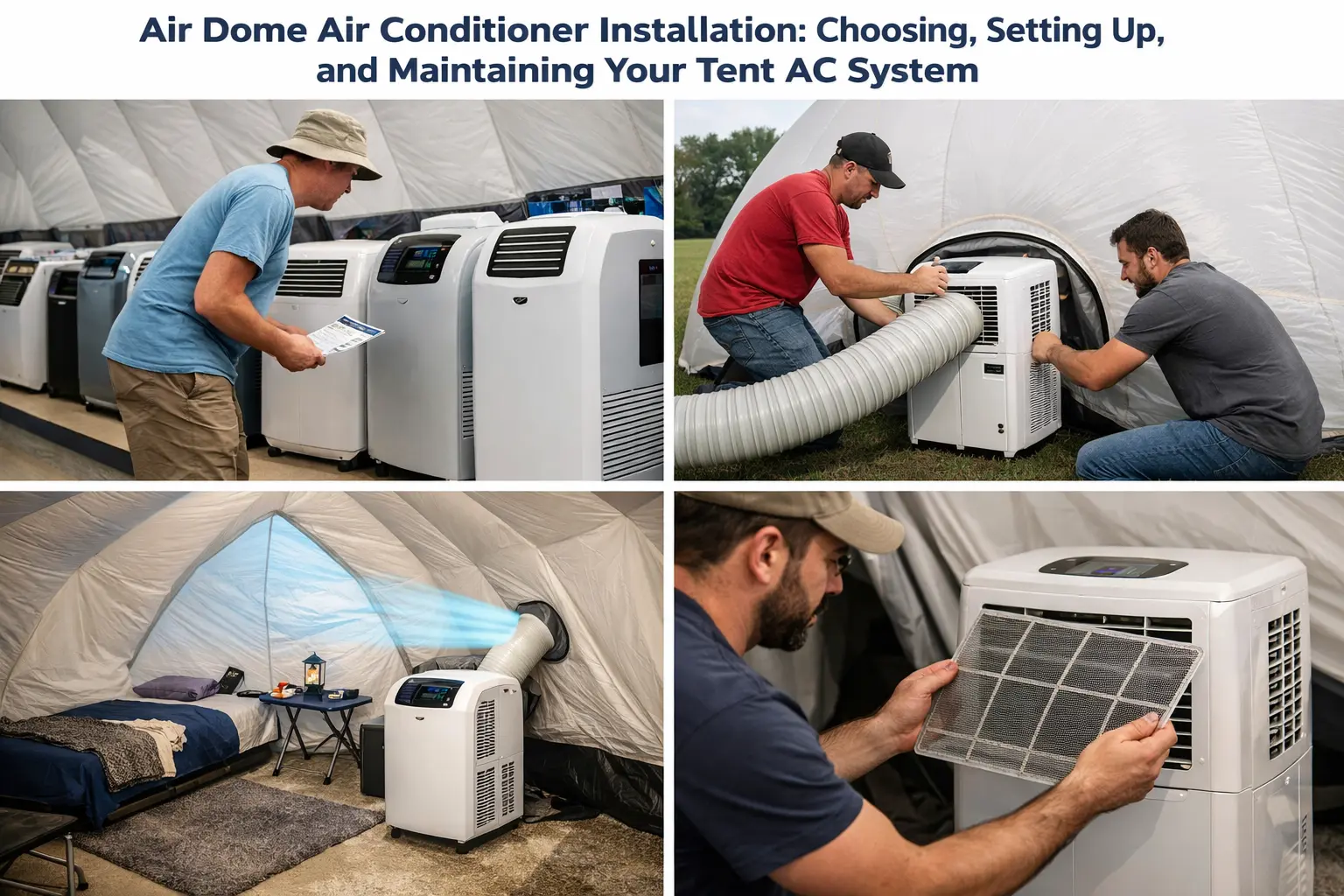
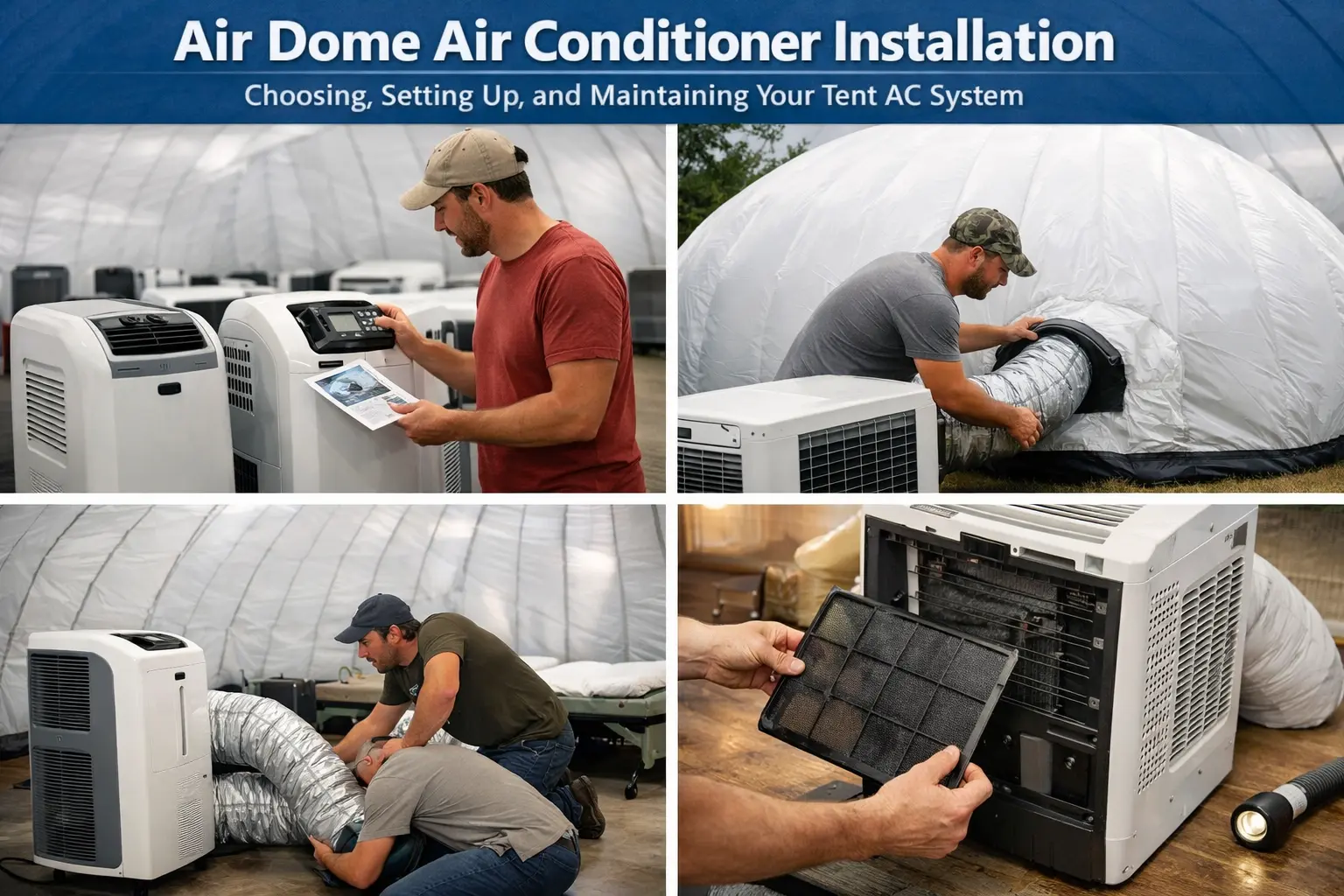
Air Dome Air Conditioner Installation: Choosing, Setting Up, and Maintaining Your Tent AC System
In this guide, we will explain how to choose, set up, and maintain your tent AC system effectively, ensuring consistent comfort and reliable performance for any dome or tent space.
1. Introduction: Why Air Dome Air Conditioner Installation Matters
Air domes, large tents, and temporary structures are increasingly used for events, exhibitions, weddings, and industrial purposes. Proper air dome air conditioner installation is critical to ensure these spaces remain comfortable, safe, and energy-efficient. Poor installation can lead to uneven cooling, equipment failure, and high operational costs.
For businesses and event organizers, using professionally designed HVAC systems ensures consistent temperature control, even in extreme weather conditions. Drez Aircon specializes in industrial and portable air dome AC systems, providing turnkey solutions for temporary structures worldwide. This blog will guide you through choosing, installing, and maintaining an air dome AC system for maximum performance.
2. Choosing the Right Air Dome Air Conditioner
Selecting the right unit is the foundation of a successful installation. Several factors determine which system best fits your dome or tent structure.
2.1 Assessing Dome Size and Cooling Capacity
Cooling capacity, often measured in BTUs (British Thermal Units), must match the volume of the air dome. For example, a 500 m² wedding tent typically requires a 20-ton air conditioner, while larger exhibition domes of 1000 m² or more may require multiple units to maintain uniform airflow.
Incorrect sizing can lead to:
- Overworking the AC unit
- Uneven cooling and hot spots
- Increased energy costs
Case Study: A European exhibition company installed a 25-ton portable AC in a 600 m² dome but underestimated the heat load from lighting and equipment. This resulted in inconsistent cooling. Drez Aircon’s solution involved a multi-unit system with properly calculated BTU capacity for even airflow.
2.2 Portable vs. Trailer-Mounted vs. Packaged Units
- Portable Units: Ideal for short-term events or small domes. Easy to move and install, but capacity is limited.
- Trailer-Mounted AC: Suitable for larger domes or multi-day events. High capacity, modular, and easier to integrate with ducting.
- Packaged Units: Best for industrial and commercial applications. Fixed installation, high efficiency, and robust design.
Tip: Always match the unit type with dome size, expected duration, and accessibility.
2.3 Energy Efficiency and Refrigerant Options
Modern air dome AC systems often use R410A refrigerant, providing high efficiency and environmentally friendly operation. Energy efficiency is critical for temporary structures where high operating hours can significantly impact costs.
- Units with variable speed compressors adjust output according to real-time demand.
- Look for SEER ratings or equivalent efficiency indicators for energy-conscious projects.
2.4 Key Features to Look For
When choosing a unit, consider:
- Ventilation design for optimal airflow distribution
- Noise levels for events
- Maintenance access points
- Modular connectivity for multi-unit setups
3. Preparing Your Dome for Installation
Preparation ensures a smooth air dome air conditioner installation and long-term efficiency.
3.1 Site Preparation and Placement
- Ensure the dome has level ground for unit stability.
- Consider sun exposure and prevailing wind direction for optimal performance.
- Keep units at a safe distance from foot traffic and obstructions.
3.2 Electrical and Safety Requirements
- Verify power supply meets the unit’s voltage and amperage requirements.
- Install proper circuit breakers and surge protection.
- Maintain safety clearances around compressors and electrical panels.
3.3 Tips for Temporary Event Setups
- Use ducting and vents strategically to avoid cold spots.
- Plan unit placement for minimal disruption during events.
- Ensure units are accessible for routine maintenance during multi-day events.
4. Step-by-Step Air Dome Air Conditioner Installation
Proper installation ensures the system operates efficiently, reduces downtime, and prevents future maintenance issues.
4.1 Mounting and Setup Process
- Secure units on level surfaces.
- Connect ducting to ensure even airflow across the dome.
- Install condensate drainage and insulation to prevent water damage.
4.2 Connecting Power and Refrigerant Lines
- Verify refrigerant lines are leak-free and properly insulated.
- Connect electrical supply according to manufacturer specifications.
- Ensure safety grounding and proper phase connections.
4.3 Testing Airflow and Temperature Distribution
- Run the system on low and high settings to test coverage.
- Use thermometers or digital sensors to check for hot/cold spots.
- Adjust ducting or airflow direction to optimize temperature uniformity.
5. Maintaining Your Tent AC System
Proper maintenance extends the life of the air dome AC system and reduces operational costs.
5.1 Routine Maintenance Checklist
- Clean filters regularly to maintain airflow.
- Inspect refrigerant levels monthly.
- Check fan belts, motors, and condensate lines for wear.
5.2 Troubleshooting Common Issues
- Uneven cooling → check ducting and unit placement
- Excessive noise → inspect fan and compressor bearings
- Water leakage → verify condensate drainage
5.3 Extending the Life of Units
- Use protective covers when units are not in use.
- Schedule professional servicing annually.
- Avoid overloading units beyond recommended capacity.
6. Professional Installation vs. DIY
While small portable units can be installed by users, professional installation ensures:
- Correct sizing and placement
- Compliance with electrical and safety standards
- Warranty validity and long-term reliability
7. Real-World Use Cases
- Wedding Tents: A 600 m² wedding dome in Dubai required a 20-ton trailer-mounted AC unit. Professional installation by Drez Aircon ensured even cooling and silent operation, keeping guests comfortable throughout the event.
- Exhibition Spaces: A 1000 m² exhibition hall in Germany used modular portable AC units to maintain a stable temperature despite heavy lighting and electronic displays. Proper placement and ducting minimized hotspots.
- Industrial Temporary Structures: A factory in Europe needed temporary storage cooling. Drez Aircon installed packaged units with R410A refrigerant, reducing energy consumption by 15% compared to generic units.
FAQs – Air Dome Air Conditioner Installation
1. What is an air dome air conditioner?
An air dome air conditioner is a specialized HVAC system designed to provide cooling for large tents, domes, and temporary structures. Unlike standard AC units, these systems handle higher heat loads and maintain uniform temperature across spacious areas.
2. How do I choose the right AC for my dome?
Selecting the right unit depends on dome size, expected occupancy, heat sources, and duration of use. Cooling capacity (BTU or tonnage), energy efficiency, and unit type—portable, trailer-mounted, or packaged—should all be considered.
3. Can I install an air dome AC myself?
While small portable units can be set up by users, professional installation ensures correct placement, proper ducting, safety compliance, and optimal cooling performance.
4. How long does the installation process take?
Installation time varies with dome size and system type. Portable units may take a few hours, while trailer-mounted or packaged units for large domes may require one or two days including setup, ducting, and testing.
5. What maintenance is required for tent AC systems?
Routine maintenance includes cleaning filters, checking refrigerant levels, inspecting fans and motors, and ensuring proper drainage. Regular servicing extends unit life and maintains consistent cooling.
6. What types of AC units are used for air domes?
Common types include portable units for small spaces, trailer-mounted systems for medium to large domes, and packaged industrial units for permanent or high-capacity cooling needs.
7. How do I ensure even airflow inside the dome?
Proper ducting, unit placement, and adjustable vents are critical. Professionals often use airflow sensors to identify and correct cold or hot spots.
8. Can these units operate in extreme weather?
Yes, high-quality air dome ACs are designed to perform in extreme heat or humidity, provided they are correctly sized and installed for the environment.
9. How energy-efficient are air dome AC systems?
Modern units with R410A refrigerant and variable-speed compressors are highly efficient. Energy consumption depends on system size, dome insulation, and operating hours.
10. Why should I hire a professional for installation?
Professional installation guarantees correct sizing, placement, electrical safety, and warranty compliance. It prevents common issues like uneven cooling, overworked units, and downtime during events.
Summary & Key Takeaways
Air dome air conditioner installation is a critical step for ensuring comfort, safety, and efficiency in tents, domes, and temporary structures. Key takeaways:
- Choose the right unit based on dome size, capacity, and energy efficiency.
- Prepare the site carefully for installation, including power, placement, and airflow planning.
- Follow proper installation steps to ensure uniform cooling and system longevity.
- Maintain your system regularly to prevent downtime and optimize performance.
- Professional installation guarantees reliability and avoids common pitfalls.
For businesses, event planners, and industrial clients, Drez Aircon provides turnkey solutions for all types of temporary and permanent dome cooling needs. Contact Drez Aircon for tailored guidance, installation, and maintenance support to ensure your air dome AC system delivers consistent, reliable performance.