Airplane Pre-Conditioning Air Unit Installation is a critical process that ensures aircraft cabins are maintained at optimal temperature, humidity, and air quality while on the ground. These units, often referred to as PCA (Pre-Conditioned Air) systems, provide reliable ground-based air conditioning for airplanes, reducing the need to operate the aircraft’s Auxiliary Power Unit (APU) and thereby saving fuel, lowering emissions, and minimizing engine wear.
Airports and airlines rely on these systems not only to enhance passenger comfort but also to maintain operational efficiency and compliance with environmental standards. Modern PCA units are designed to integrate seamlessly with aircraft Environmental Control Units (ECUs), offering precise airflow, temperature control, and ease of operation.
Proper installation is essential to ensure safety, energy efficiency, and long-term reliability of the system. It involves careful site preparation, electrical or fuel connection setup, and integration with airport ground support infrastructure.
Airplane Pre-Conditioning Air Unit Installation: Expert Solutions for Airports & Airlines
In this guide, we will explain the complete process, technical requirements, benefits, cost factors, and professional considerations involved in airplane pre-conditioning air unit installation.
Introduction: What is an Airplane Pre-Conditioning Air Unit (PCA)?
Airplane pre-conditioning air units, commonly known as PCA units, are specialized ground support equipment designed to provide conditioned air to aircraft cabins while the airplane is on the ground. These systems regulate temperature, humidity, and air quality, ensuring that passengers and crew board a comfortable and safe cabin environment.
PCA units are an essential component for airports and airlines, particularly for commercial and cargo fleets operating in diverse climates. They support operations by reducing aircraft engine use for cabin conditioning, thereby lowering fuel consumption and greenhouse gas emissions.
Airports and airlines worldwide increasingly rely on PCA systems for efficient turnaround times, passenger comfort, and compliance with environmental standards. Modern PCA units integrate with aircraft environmental control units (ECUs) to deliver precise cooling or heating as per aircraft specifications.
Technical Features of Airplane Pre-Conditioning Air Units
Aircraft Environmental Control Unit (ECU) Integration
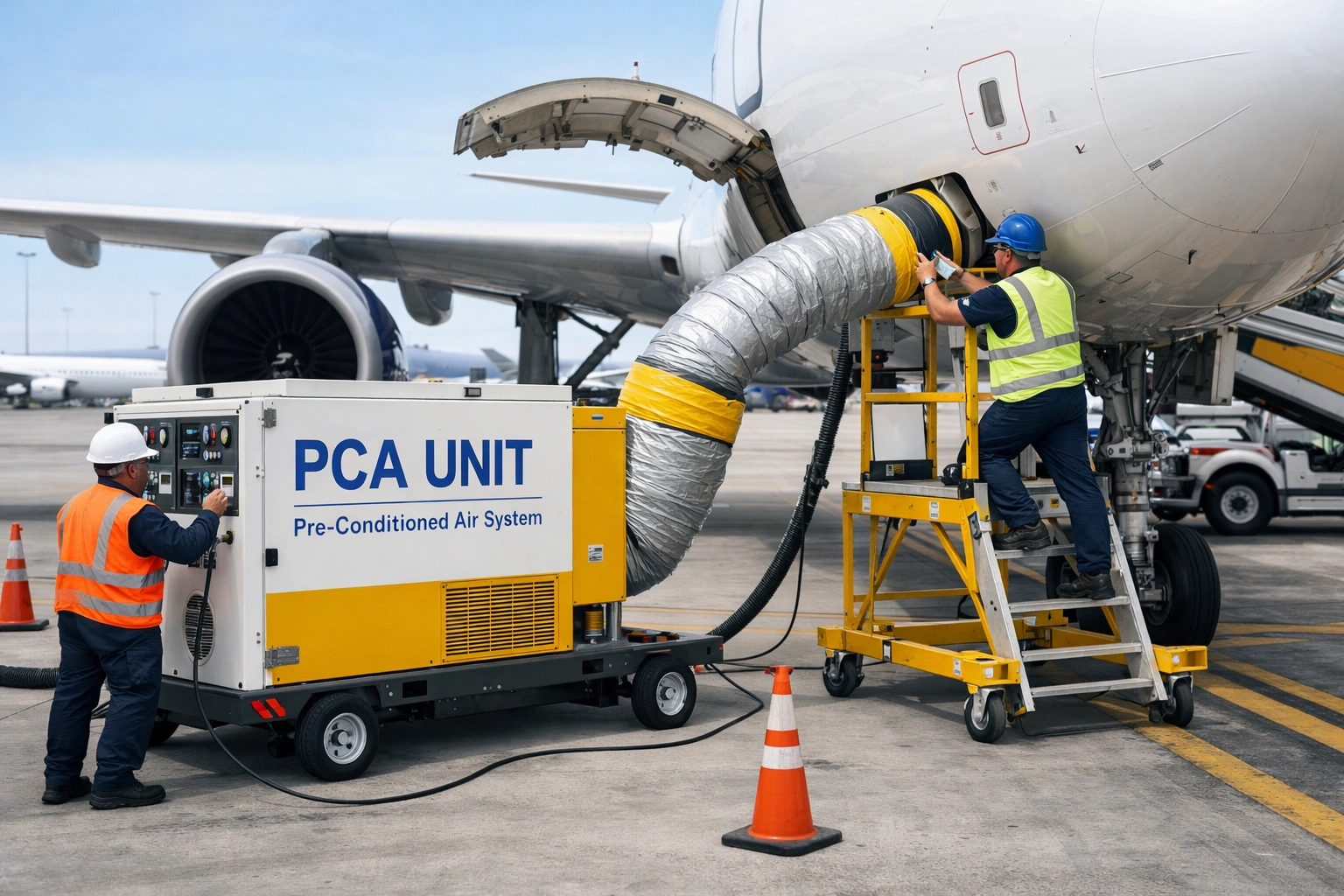
The primary function of a PCA unit is to work alongside the aircraft’s ECU. This ensures a consistent airflow, proper temperature, and balanced cabin pressure during ground operations. PCA units typically connect to the aircraft via standardized pre-conditioned air hoses and adapters compatible with most commercial airplanes.
Ground Support Air Conditioning System
A PCA unit functions as airport ground support equipment (GSE). These units can be diesel-powered, electric, or hybrid, providing flexibility depending on airport infrastructure. Key technical features include:
- Cooling capacity: 5,000–30,000 CFM (cubic feet per minute) depending on aircraft size
- Heating capacity: 50–250 kW, sufficient for cold-weather operations
- Temperature control range: -20°C to +30°C, adjustable for specific aircraft needs
- Noise reduction: Enclosures are designed for low operational noise to comply with airport regulations
Power and Operational Requirements
Installation of a PCA unit requires adequate electrical supply, often three-phase 400V for electric units, or sufficient fuel storage for diesel-powered systems. Proper grounding and safety protocols must be followed to ensure safe operation.
Installation Process of PCA Units
Step-by-Step PCA Unit Installation
- Site Preparation: The area must be level and close to aircraft parking zones. Access for maintenance and service trucks should also be considered.
- Electrical / Fuel Connections: Depending on the type of PCA unit, power supply and fuel lines are installed according to airport regulations.
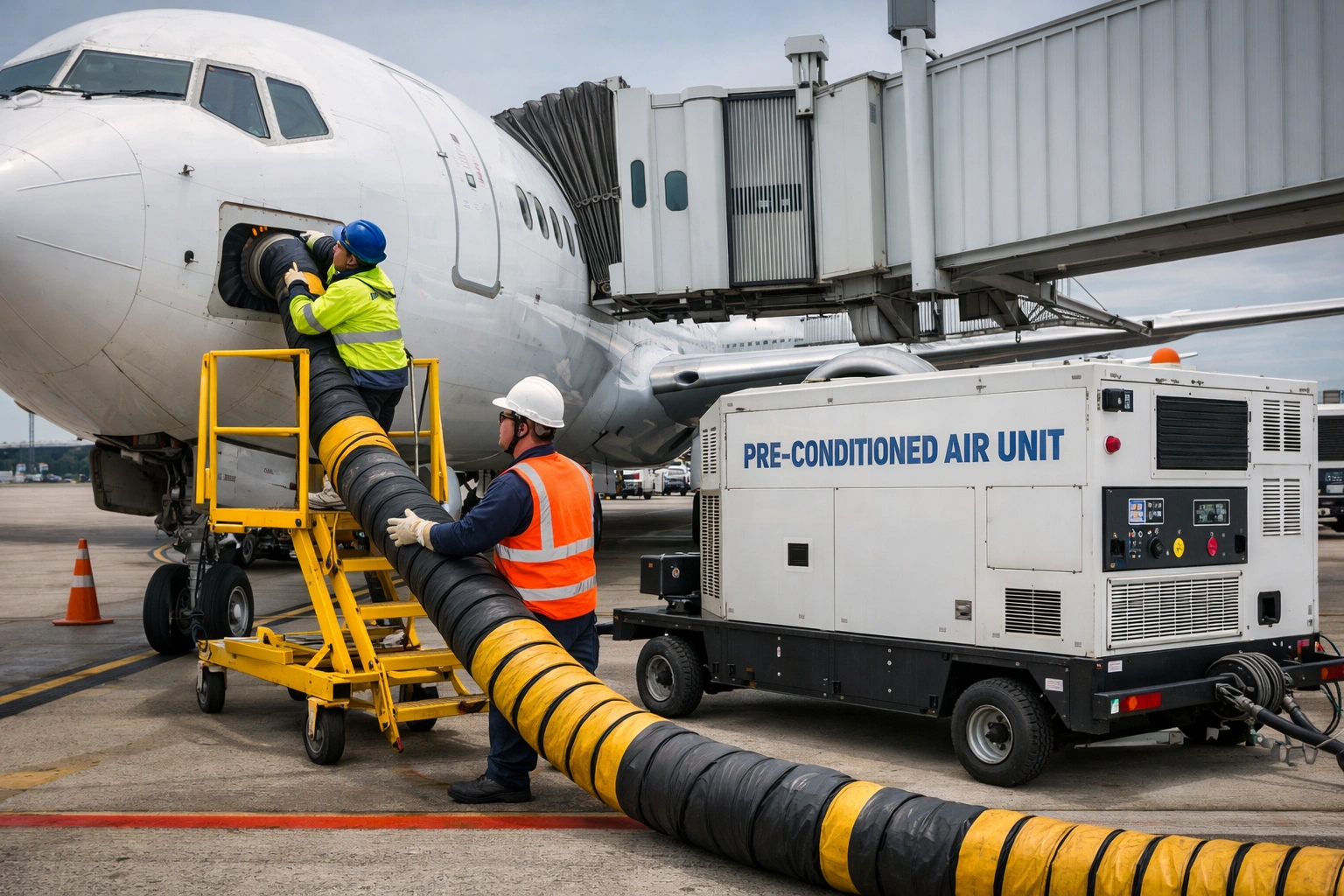
- Integration with Aircraft Systems: PCA units are connected via air ducts and standardized adapters. Compatibility checks with the aircraft’s ECU are performed.
- Testing and Commissioning: Units undergo a functionality test, measuring airflow, temperature stability, and noise levels. Any operational issues are addressed before the unit is cleared for service.
- Staff Training: Airport ground crew is trained on operation, safety protocols, and maintenance procedures.
Airport and Airline Operational Requirements
- Proximity to gates and taxiways: Ensures PCA units can reach aircraft efficiently.
- Compliance with local safety codes: Fire safety, electrical regulations, and noise control must be met.
- Accessibility for routine maintenance: Scheduled inspections for filters, fans, and motors are critical.
Benefits of Professional Installation
Optimizing Aircraft Cabin Comfort
Proper PCA unit installation ensures consistent cabin temperature, humidity control, and air quality. This is especially important in regions with extreme temperatures, where improper pre-conditioning can impact passenger comfort and aircraft readiness.
Minimizing Aircraft Engine Use
By providing ground-based air conditioning, PCA units reduce the need to run the aircraft Auxiliary Power Unit (APU). This leads to fuel savings, reduced emissions, and less engine wear, enhancing operational efficiency.
Ensuring Energy Efficiency and Reliability
Professionally installed PCA units are calibrated to provide optimal airflow and temperature, minimizing energy wastage and ensuring long-term reliability. Proper installation prevents mechanical issues, overheating, and airflow loss, which can disrupt airport operations.
Factors Affecting PCA Installation
Airport Infrastructure and Space Considerations
- Units require flat, ventilated areas to operate efficiently.
- Adequate clearance for hoses and adapters is necessary.
- Space for maintenance access and potential expansion must be considered.
Electrical and HVAC Integration Requirements
- Electrical supply must meet unit specifications (voltage, amperage).
- For diesel units, fuel storage and refueling logistics are essential.
- Integration with existing airport HVAC or ground support systems improves operational efficiency.
Ground Support Equipment Coordination
- PCA units must be compatible with aircraft types and existing GSE.
- Coordinating multiple units for simultaneous aircraft servicing can reduce turnaround time.
PCA Unit Model and Capacity Considerations
- Larger aircraft require higher CFM and heating capacity.
- Mobile units offer flexibility for airports with multiple gate layouts or remote stands.
Maintenance & Post-Installation Support
Routine maintenance is critical to ensure PCA units operate efficiently. This includes:
- Filter replacement to maintain air quality
- Fan and motor inspection for smooth operation
- Hose and connector checks to prevent air leaks
- Software calibration for precise temperature control
Manufacturers often provide warranty support and service contracts to handle repairs and replacements, ensuring minimal downtime for airport operations.
Cost Considerations
While installation cost varies based on unit type, capacity, and airport infrastructure, several factors influence the overall expense:
- Unit type: Electric units may have higher initial costs but lower operational costs than diesel units
- Capacity requirements: Larger aircraft require more powerful units
- Installation complexity: Airports with limited space or infrastructure may need additional site preparation
- Maintenance and support contracts: Long-term service agreements affect overall cost
Investing in professional installation ensures efficient performance, energy savings, and longer unit lifespan, providing value for airports and airlines.
FAQs: Airplane Pre-Conditioning Air Unit Installation
Q1: How long does airplane PCA unit installation take?
A: Installation typically takes 3–7 days, depending on site preparation, unit type, aircraft compatibility, and airport infrastructure. Proper planning ensures minimal disruption to airline operations.
Q2: Who provides professional PCA installation services?
A: Reputable aircraft HVAC manufacturers and ground support equipment suppliers, such as Drez Aircon, offer turnkey installation, commissioning, and ongoing support for PCA units.
Q3: What are the key requirements for aircraft PCA setup?
A: Adequate electrical supply, site clearance, safety compliance, proper ducting, and seamless integration with aircraft Environmental Control Units (ECUs) are essential.
Q4: What factors affect PCA installation cost?
A: Unit capacity, type (electric vs. diesel), site complexity, integration requirements, and additional infrastructure modifications influence the overall cost.
Q5: Can PCA units improve airline operational efficiency?
A: Yes. Properly installed PCA units reduce APU usage, lower fuel consumption, decrease emissions, and maintain consistent cabin comfort, enhancing airline turnaround times.
Q6: What is the difference between PCA units and aircraft environmental control systems?
A: PCA units provide ground-based pre-conditioned air, while aircraft ECUs control airflow and temperature during flight. Together, they ensure seamless cabin conditioning.
Q7: Are PCA units compatible with all aircraft types?
A: Modern PCA units are designed with standard adapters to connect with most commercial aircraft, but capacity and airflow requirements must be matched to each aircraft model.
Q8: What safety measures are needed during PCA installation?
A: Safety includes electrical grounding, fire safety compliance, secure hose connections, proper training for ground staff, and adherence to airport regulations.
Q9: How often should a PCA unit be maintained after installation?
A: Routine inspections, including filter replacements, fan checks, duct integrity, and calibration, are typically performed monthly or per operational schedule to ensure efficiency.
Q10: Can PCA installation be done during ongoing airport operations?
A: Yes. With proper planning, PCA units can be installed without disrupting normal airport operations, using designated staging areas and coordination with ground support teams.
Make Decision : Expert PCA Installation Solutions
For airports and airlines seeking reliable PCA unit installation, professional support ensures:
- Accurate integration with aircraft ECUs
- Compliance with airport safety and operational standards
- Long-term energy efficiency and maintenance support
Drez Aircon offers complete PCA installation solutions, combining manufacturing expertise with installation services to optimize aircraft comfort and operational efficiency.
Request a quote or contact our experts for turnkey PCA unit installation solutions today.