Global Industrial Air Conditioner systems are essential for businesses and industrial facilities that require reliable, high-capacity cooling solutions. Unlike standard commercial air conditioners, these systems are specifically designed to handle large spaces such as factories, warehouses, exhibition halls, and event tents, where heat generation from machinery, electrical equipment, or large groups of people can impact productivity and operational safety.
With proper installation and regular maintenance, global industrial air conditioners not only regulate temperature effectively but also improve energy efficiency, reduce equipment wear, and enhance the comfort of employees and clients.
Modern industrial AC units combine advanced technology with durable construction, offering features such as high cooling capacity, portable and permanent configurations, and energy-saving modes that meet the demands of diverse industrial environments.
For businesses operating across multiple regions, investing in global-grade solutions ensures consistency, reliability, and long-term operational benefits. Proper selection, installation, and maintenance of these systems are critical to achieving optimal performance and avoiding downtime.
Global Industrial Air Conditioner Installation and Maintenance: Best Practices for Businesses
Industrial air conditioning is essential for maintaining productivity, safety, and comfort in commercial and industrial environments. For businesses operating factories, warehouses, exhibition halls, or large event tents, global industrial air conditioners provide the large-scale cooling necessary for efficient operations. However, simply installing a unit is not enough. Proper installation, routine maintenance, and operational best practices ensure the system performs at its peak, extends its service life, and reduces energy costs.
This guide covers best practices for installation and maintenance of industrial AC systems, incorporating insights from Drez Aircon’s global solutions.
Introduction: The Importance of Global Industrial Air Conditioners for Businesses
Industrial environments generate significant heat from machinery, electronics, and large groups of people. Poorly cooled spaces can:
- Reduce workforce productivity
- Increase equipment wear
- Cause unsafe temperature levels
- Lead to spoilage in storage facilities
Global industrial air conditioners are engineered for high-capacity cooling, addressing these challenges in factories, warehouses, exhibition centers, and outdoor events. Businesses using proper AC systems not only maintain comfort but also ensure operational efficiency.
Case studies show that factories using high-capacity industrial AC units reduced equipment downtime by 20% while improving energy efficiency by 15% after installing properly maintained systems.
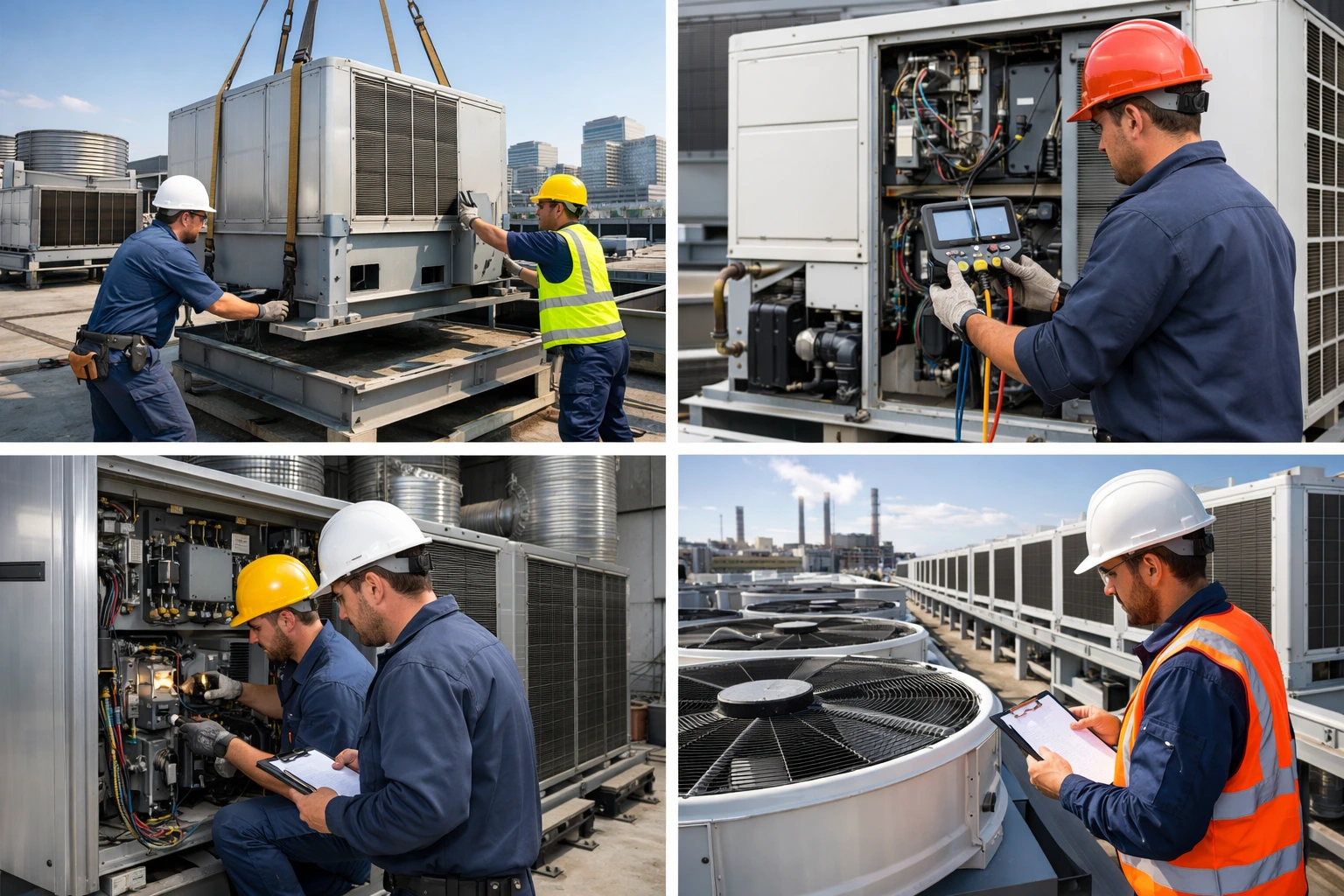
Types of Global Industrial Air Conditioners
Selecting the right system is critical. Industrial ACs can be categorized as follows:
Large-Scale Cooling Solutions for Factories and Warehouses
These units handle large air volumes for permanent spaces. Examples include:
- Trailer-mounted industrial AC units for flexible deployment
- Roof-mounted or floor-standing AC systems for warehouses
These systems provide stable, consistent cooling and can handle heavy-duty operations.
Portable vs. Permanent Industrial Air Conditioning Units
- Portable units: Ideal for temporary spaces, tents, or areas with variable cooling needs. Example: Drez’s DCGN and DCTN series.
- Permanent installations: Fixed solutions for factories, exhibition halls, or permanent commercial buildings.
Energy-Efficient and High-Capacity AC Systems
Modern industrial ACs focus on energy efficiency while maintaining cooling power. Features include variable speed compressors, automated controls, and low-noise operation. Drez Aircon provides integrated tent AC systems with capacities from 10–70+ tons, ensuring high performance with minimal energy use.
Key Considerations Before Installation
Before installing an industrial AC system, businesses must analyze several factors:
Assess Cooling Requirements
- Calculate the heat load from machinery, lighting, and occupants.
- Consider seasonal variations and peak operating conditions.
- Determine the required cooling capacity (tons or kW).
Understand Layout, Airflow, and Ducting Needs
- Proper airflow ensures uniform cooling.
- Factor in ceiling height, room shape, and duct placement.
- For tents or temporary setups, flexible ducting systems ensure effective temperature control.
Choosing the Right Unit
- Match capacity and features with environmental needs.
- Evaluate portability, energy efficiency, and noise levels.
- Choose a trusted global supplier for after-sales support and reliability.
Step-by-Step Installation Best Practices
Correct installation is critical to prevent inefficiencies and early equipment failure.
Site Preparation
- Inspect the installation site for accessibility, power supply, and load-bearing capacity.
- Remove obstructions and ensure proper ventilation paths.
Positioning and Mounting
- Floor-standing units should be placed on stable, level surfaces.
- Trailer or portable ACs must have secure mounting to avoid vibrations.
- Ensure units are accessible for maintenance.
Electrical and Ventilation Requirements
- Verify voltage and amperage requirements.
- Connect units to dedicated circuits to avoid overload.
- Install proper ventilation and exhaust pathways for efficient cooling.
Safety and Compliance Considerations
- Adhere to local electrical and safety codes.
- Use protective equipment during installation.
- Ensure refrigerants comply with environmental regulations.
Case studies show that companies that followed manufacturer installation guidelines saw a 30% reduction in service calls during the first year.
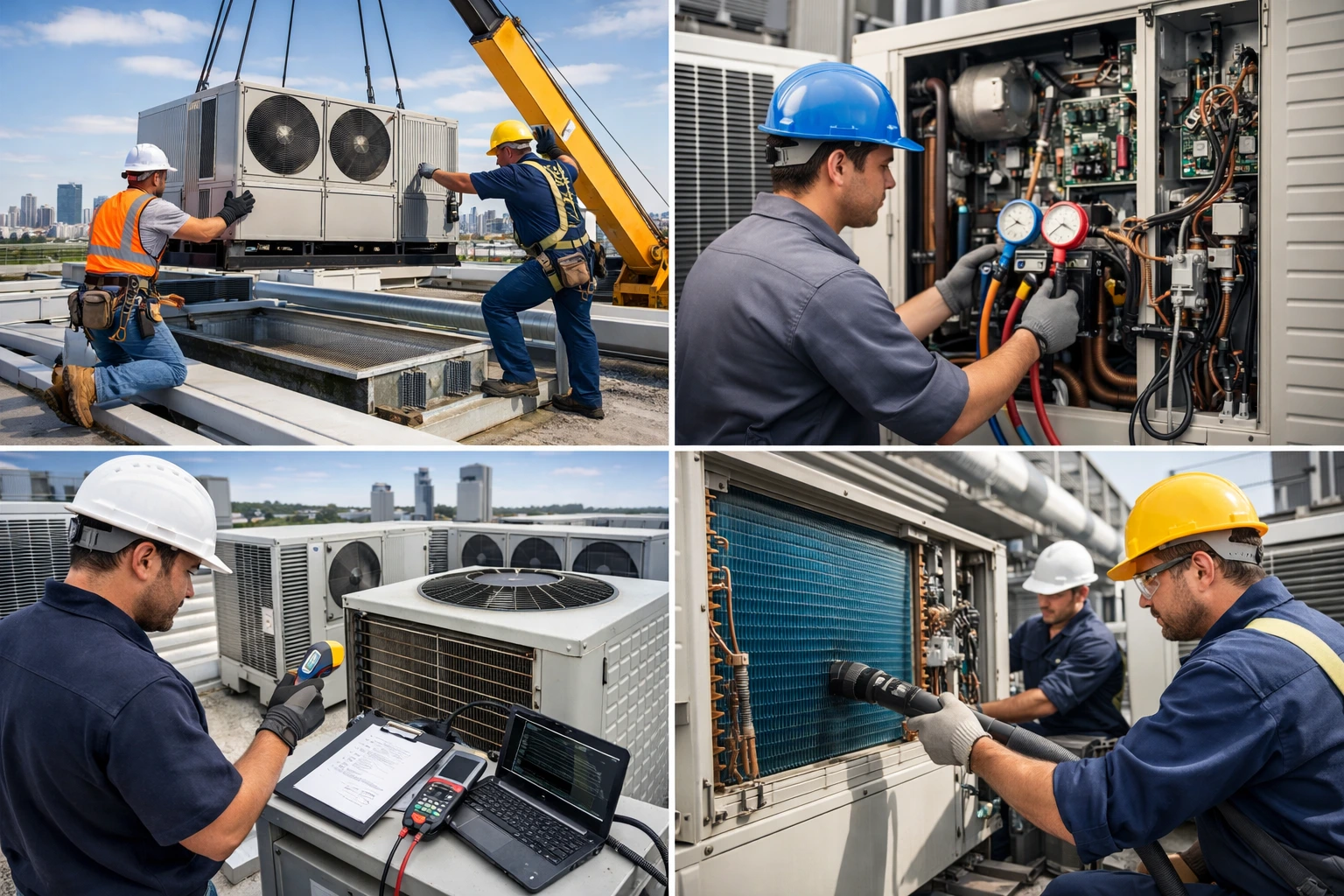
Maintenance Guidelines for Global Industrial Air Conditioners
Routine maintenance ensures longevity and optimal performance.
Routine Inspection and Cleaning
- Inspect filters, coils, and fans monthly.
- Remove dust and debris to maintain airflow.
- Check refrigerant levels and electrical connections.
Filter Replacement and Airflow Management
- Replace filters as per manufacturer instructions.
- Ensure ducting is free from leaks or obstructions.
- Maintain balanced airflow to avoid hotspots.
Troubleshooting Common Problems
- Unusual noise or vibration → inspect fan mounts and bearings.
- Poor cooling → check refrigerant levels or coil cleanliness.
- Intermittent operation → test control circuits and thermostats.
Ensuring Long-Term Energy Efficiency
- Use programmable thermostats for off-peak cooling.
- Conduct annual preventive maintenance with certified technicians.
- Track energy consumption trends to identify inefficiencies.
Benefits of Proper Installation and Maintenance
Properly installed and maintained industrial AC systems provide measurable benefits:
- Reduced Downtime: Continuous, reliable cooling prevents equipment overheating.
- Cost Savings: Efficient systems reduce energy consumption and repair costs.
- Improved Air Quality: Clean filters and well-maintained units reduce dust and contaminants.
- Extended Equipment Lifespan: Routine servicing minimizes wear and tear on compressors and fans.
A Drez Aircon client case study in a 5,000 m² exhibition hall showed consistent cooling performance for three years with quarterly maintenance, avoiding unplanned downtime.
Choosing a Reliable Global Industrial Air Conditioner Supplier
Selecting a trusted supplier is crucial for long-term success:
- Technical Expertise: Suppliers like Drez Aircon provide engineering support for industrial and tent AC systems.
- Custom Solutions: Tailored systems for factories, exhibition tents, or temporary event spaces.
- After-Sales Support: Warranty, spare parts availability, and maintenance contracts ensure continuous performance.
Partnering with an experienced manufacturer reduces installation risks, improves efficiency, and ensures compliance with international standards.
FAQs: Global Industrial Air Conditioner Installation and Maintenance
- What is a global industrial air conditioner, and how is it different from a standard commercial AC?
- A global industrial air conditioner is designed for large-scale applications such as factories, warehouses, exhibition halls, and outdoor events. Unlike standard AC units, these systems have high cooling capacity, durable components, and can handle continuous operation in heavy-duty environments.
- How do I determine the right cooling capacity for my industrial space?
- Cooling capacity depends on the size of the space, number of occupants, machinery heat output, and ventilation needs. Businesses often calculate BTU or tonnage requirements to select the appropriate industrial AC.
- What are the main types of industrial air conditioners?
- Industrial ACs include portable units, permanent rooftop systems, and trailer-mounted units. Portable ACs are suitable for temporary spaces like tents, while permanent systems are ideal for factories and warehouses.
- Why is proper installation critical for industrial AC systems?
- Correct installation ensures optimal airflow, efficient cooling, and longer equipment lifespan. Improper installation can lead to energy inefficiency, frequent breakdowns, and reduced performance.
- How often should industrial air conditioners be maintained?
- Routine inspections should be conducted monthly, with comprehensive maintenance performed quarterly or biannually depending on usage and environmental conditions.
- What are common maintenance tasks for global industrial air conditioners?
- Tasks include cleaning or replacing filters, inspecting fans and coils, checking refrigerant levels, verifying electrical connections, and ensuring proper airflow through ducts.
- Can industrial AC units be energy-efficient?
- Yes. Modern industrial AC systems use variable-speed compressors, programmable thermostats, and energy-saving modes to minimize electricity consumption without compromising cooling performance.
- What are the risks of ignoring maintenance for industrial air conditioners?
- Lack of maintenance can result in reduced cooling efficiency, equipment failures, higher energy bills, increased downtime, and shorter system lifespan.
- How do I choose a reliable industrial AC supplier?
- Look for suppliers with global reach, engineering support, customized solutions, and after-sales service. Trusted brands like Drez Aircon provide technical guidance and service contracts for long-term reliability.
- Can industrial air conditioners be used for temporary events like exhibitions or weddings?
- Absolutely. Portable and trailer-mounted industrial AC units are ideal for temporary installations. They provide large-scale cooling solutions while being easy to deploy and maintain.
Summary: Optimizing Industrial Cooling for Business Success
Industrial air conditioning is more than just comfort it is critical for operational efficiency, equipment safety, and employee productivity. Businesses investing in global industrial air conditioners should:
- Conduct detailed heat-load assessments.
- Choose the right unit for the specific environment.
- Follow installation best practices.
- Implement routine maintenance schedules.
- Partner with reliable suppliers for custom solutions.
By adhering to these guidelines, businesses can maximize performance, reduce energy costs, and extend equipment lifespan, ensuring a safe and productive industrial environment.
Call to Action: For professional advice on selecting, installing, and maintaining industrial air conditioners, contact Drez Aircon to explore solutions tailored to your business needs. Their global expertise ensures high-capacity, energy-efficient cooling for factories, warehouses, exhibitions, and large event spaces.