Heat Pump HVAC Cooling System technology has emerged as a leading solution for businesses and event planners seeking energy-efficient and reliable cooling for large commercial spaces, temporary structures, and industrial environments.
Unlike traditional air conditioning systems that rely solely on electricity to generate cold air, heat pumps transfer heat from one location to another, allowing them to provide both cooling and heating efficiently. This dual-function capability makes them particularly valuable for temporary event venues, exhibition halls, tents, domes, and warehouses, where maintaining consistent temperature is critical for comfort, safety, and operational efficiency.
Commercial-grade heat pumps are designed to handle high-capacity spaces with minimal energy consumption, often reducing electricity use by 30–50% compared to conventional AC units. With features like ducted or ductless options, portable and trailer-mounted units, and advanced control systems, these systems offer the flexibility needed for diverse project requirements.
Additionally, modern heat pumps incorporate environmentally friendly refrigerants and smart monitoring technologies, supporting sustainability goals and reducing carbon footprints.
Heat Pump HVAC Cooling System: Energy-Efficient Solutions for Commercial & Event Spaces
For organizations looking to optimize indoor climate control while keeping energy costs low, understanding the capabilities, applications, and selection criteria of heat pump HVAC cooling systems is essential.
In this guide, we will explain how these systems work, their benefits, types, and practical considerations for commercial and event spaces.
1. Why Heat Pump HVAC Cooling Systems Are the Future of Commercial & Event Cooling
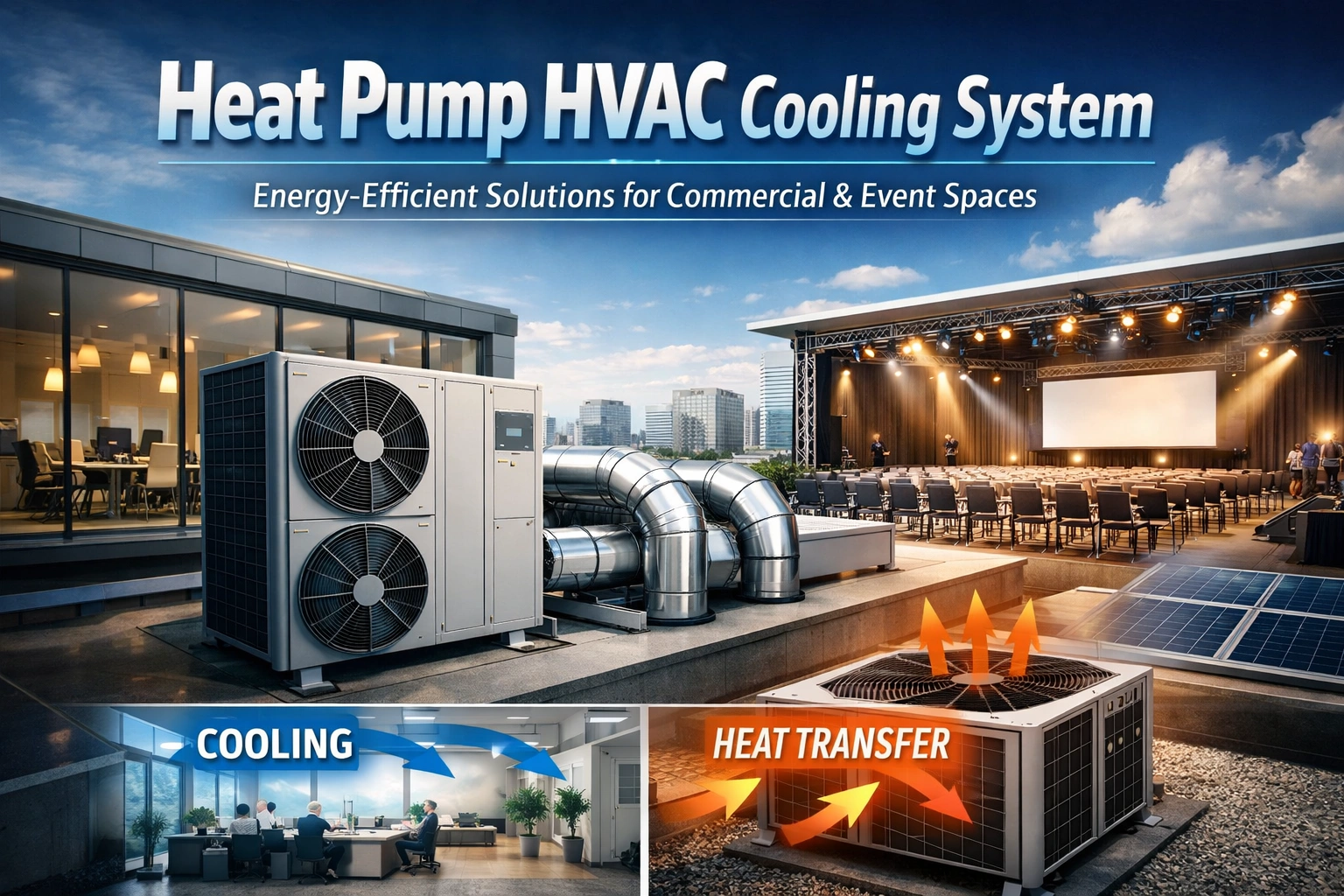
Heat pump HVAC systems are rapidly gaining popularity in commercial and event spaces due to their energy efficiency, flexibility, and dual heating/cooling functionality. Unlike conventional air conditioning systems, heat pumps can transfer heat rather than generate it, which reduces energy consumption and operational costs.
For large-scale venues, tents, exhibition halls, and industrial buildings, heat pumps provide a scalable solution capable of maintaining comfort in diverse environments. Brands like Drez Aircon have developed integrated solutions tailored for temporary structures and large venues, ensuring consistent cooling without overloading electrical systems.
2. What Is a Heat Pump HVAC Cooling System?
A heat pump HVAC system is a device that transfers heat from one area to another, providing both heating and cooling in a single unit. It works on the principle of the refrigeration cycle, which includes:
- Compressor – pressurizes the refrigerant to raise its temperature
- Condenser – releases heat from the refrigerant to the environment
- Evaporator – absorbs heat from the interior space
- Reversing Valve – switches the system between heating and cooling modes
2.1 Heat Pump vs. Traditional AC Systems
Unlike traditional air conditioners, which consume electricity to generate cool air, heat pumps move heat efficiently. This provides energy savings of 30–50% in commercial installations. For temporary event setups like tents or domes, this reduces both fuel consumption and operational downtime.
3. Types of Heat Pump HVAC Systems for Commercial & Event Applications
3.1 Ducted vs Ductless Systems
- Ducted heat pumps distribute air through fixed ductwork. Ideal for large, permanent venues like conference halls and industrial spaces.
- Ductless heat pumps (mini-splits) are flexible, suitable for temporary event spaces such as tents or exhibition halls. They reduce installation complexity and allow zone-based cooling, which is highly efficient.
3.2 Portable and Trailer-Mounted Heat Pump ACs
Brands like Drez Aircon offer portable and trailer-mounted heat pump units with capacities ranging from 10 Ton to over 30 Ton. These units are perfect for large tents, festivals, or exhibitions. Key benefits include:
- Quick deployment and plug-and-play operation
- High air volume for rapid cooling of large areas
- Low noise levels to maintain event comfort
3.3 Mini-Split and Multi-Split Systems
Mini-split systems allow multiple indoor units to connect to a single outdoor compressor, enabling targeted cooling across multiple zones. This is particularly effective for multi-room exhibition tents or dome structures.
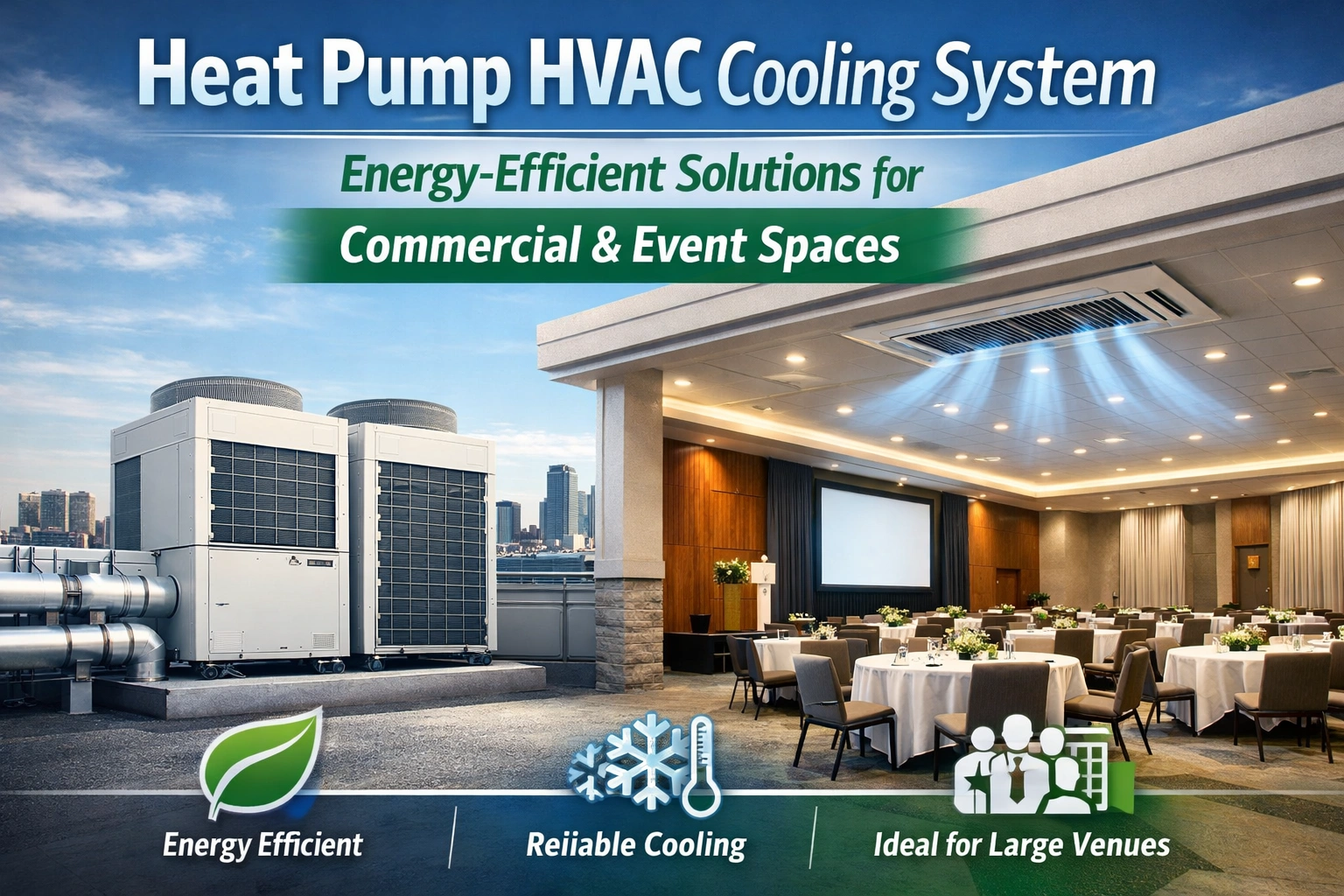
4. Key Benefits of Using Heat Pump HVAC Cooling Systems
4.1 Energy Efficiency and Cost Savings
Heat pumps are recognized for their high energy efficiency. Air source heat pumps achieve SEER ratings up to 20, while geothermal systems can reach COP (Coefficient of Performance) of 4–5, meaning for every 1 kW of electricity used, 4–5 kW of cooling or heating is delivered.
4.2 Environmental Advantages
Reduced electricity usage directly translates to lower greenhouse gas emissions, aligning with corporate sustainability goals. For temporary events and industrial spaces, this ensures compliance with environmental regulations without sacrificing comfort.
4.3 Consistent Cooling for Large Venues
Units like Drez DCG and DCX series are designed to maintain uniform temperature distribution in large tents and exhibition halls. Their high-capacity fans ensure even airflow, preventing hot or cold spots.
4.4 Dual Functionality
Heat pumps provide both cooling and heating, which is crucial for year-round events or industrial facilities that require temperature control across seasons.
5. Applications in Commercial & Event Spaces
5.1 Tents, Domes, and Outdoor Event Structures
For events such as weddings, exhibitions, or sports activities, heat pump systems maintain a comfortable environment despite extreme outdoor temperatures. Drez Aircon’s integrated tent AC units demonstrate the ability to cool spaces up to 32 Ton capacity, offering consistent comfort in large-scale temporary structures.
5.2 Industrial and Warehouse HVAC Solutions
Industrial spaces like factories, storage facilities, and conference centers benefit from high-volume heat pump AC systems, providing reliable temperature regulation for equipment and personnel, while improving energy efficiency.
5.3 Case Example
A 32 Ton Drez Aircon DCG system was deployed for a major exhibition tent in Guangzhou. The system maintained an even 22–24°C temperature across 1,500 m², while consuming 40% less energy than conventional AC units, demonstrating its scalability and efficiency.
6. Factors to Consider When Choosing a Heat Pump HVAC System
6.1 Cooling Capacity
Select units based on space size and expected occupancy. Event tents and exhibition halls often require high-tonnage units (10–30 Ton), while small modular tents can rely on 3–5 Ton mini-splits.
6.2 Indoor vs Outdoor Installation
Heat pumps can be indoor-mounted, outdoor-mounted, or trailer-mounted. The choice depends on:
- Venue type (permanent vs temporary)
- Space accessibility
- Noise restrictions
6.3 Maintenance and Service Considerations
Regular cleaning of filters and coils, refrigerant checks, and system inspections are necessary for efficient performance and longevity. Brands like Drez provide support and service guidance for commercial clients.
6.4 Energy Performance Metrics
Focus on SEER, HSPF, and COP ratings to ensure high efficiency. Selecting the right refrigerant type also impacts performance and environmental compliance.
7. Installation, Maintenance, and Troubleshooting Tips
7.1 Proper Installation Practices
- Level outdoor units to prevent compressor strain
- Ensure unobstructed airflow for maximum efficiency
- Position units away from direct sunlight or heat sources
7.2 Preventive Maintenance
- Monthly filter inspection
- Annual refrigerant level check
- Fan and blower lubrication
7.3 Common Troubleshooting
- Inconsistent cooling → Check refrigerant and airflow
- No power → Verify electrical connections
- Excess noise → Inspect fan blades and vibration mounts
8. Heat Pump HVAC vs Traditional Air Conditioning Systems
| Feature | Heat Pump HVAC | Traditional AC |
|---|---|---|
| Energy Efficiency | High (COP 4–5) | Moderate (COP 2–3) |
| Dual Function | Cooling & Heating | Cooling only |
| Installation | Flexible (ducted, ductless, portable) | Usually fixed, ducted |
| Environmental Impact | Low | Moderate–High |
| Cost | Moderate–High initial, low operating | Low initial, high operating |
Conclusion: For commercial and event spaces, heat pumps offer greater energy savings, operational flexibility, and environmental benefits compared to traditional AC units.
9. Future Trends in Heat Pump HVAC Cooling Systems
- IoT and Smart Controls: Real-time monitoring and optimization for large venues
- Eco-Friendly Refrigerants: R32 and natural refrigerants for lower GWP
- Hybrid Systems: Combination of heat pumps and conventional AC for peak loads
- Sustainability Initiatives: Growing adoption in commercial and industrial projects to meet environmental regulations
10. Why Heat Pump HVAC Systems Are Ideal for Your Next Commercial or Event Project
Heat pump HVAC cooling systems provide energy-efficient, flexible, and environmentally friendly solutions for large commercial spaces, industrial facilities, and temporary event structures.
For businesses planning exhibitions, conferences, or large outdoor events, selecting a high-capacity heat pump system from providers like Drez Aircon ensures consistent temperature control, reduced energy costs, and seamless operation.
Next Step: Evaluate your space requirements and consult with a trusted heat pump HVAC provider to design a customized cooling solution that meets both comfort and sustainability goals.
Frequently Asked Questions
1. What is a heat pump HVAC cooling system?
A heat pump HVAC cooling system is a device that transfers heat from one space to another, providing both cooling and heating. Unlike traditional AC units, it moves heat rather than generating it, resulting in higher energy efficiency and lower operational costs.
2. How does a heat pump differ from a traditional air conditioner?
Traditional AC units only cool spaces, whereas heat pumps can cool and heat. They use a refrigerant cycle and reversing valve to provide year-round climate control, making them ideal for commercial, industrial, and event spaces.
3. What types of heat pump HVAC systems are available for commercial and event spaces?
Common types include ducted, ductless (mini-split), portable, and trailer-mounted heat pump AC units. Each type suits different applications — from permanent industrial spaces to temporary tents or domes.
4. Are heat pump systems energy-efficient?
Yes. Modern heat pumps can reduce electricity consumption by 30–50% compared to conventional AC systems. Efficiency metrics include SEER (Seasonal Energy Efficiency Ratio) and COP (Coefficient of Performance) ratings.
5. Can heat pumps be used in temporary event structures?
Absolutely. Portable and trailer-mounted heat pump units are specifically designed for tents, exhibition halls, and domes, providing rapid and even cooling for large areas.
6. What maintenance is required for heat pump HVAC systems?
Regular maintenance includes cleaning air filters, inspecting refrigerant levels, checking fans and blowers, and scheduling professional inspections to maintain high efficiency and system longevity.
7. Are ductless heat pumps suitable for multi-zone cooling?
Yes. Mini-split and multi-split systems allow multiple indoor units to connect to one outdoor compressor, enabling targeted cooling in different zones — ideal for multi-room exhibition tents or event spaces.
8. What are the environmental benefits of heat pump HVAC systems?
Heat pumps reduce electricity consumption and can use eco-friendly refrigerants, which lowers greenhouse gas emissions, supporting corporate sustainability and compliance with environmental standards.
9. How do I choose the right heat pump HVAC system for my space?
Factors include space size, expected occupancy, cooling capacity (tonnage), installation type, and energy efficiency ratings. Consultation with experienced providers like Drez Aircon helps select the optimal solution.
10. Can heat pumps handle both indoor and outdoor conditions?
Yes. Heat pump HVAC systems are designed for flexible installation, including indoor, outdoor, or trailer-mounted setups, ensuring consistent cooling even in large, open, or temporary structures.
Final Thoughts
Heat pump HVAC cooling systems represent a practical and energy-efficient solution for commercial, industrial, and event spaces that require reliable climate control. By leveraging advanced heat transfer technology, these systems provide consistent cooling and heating, lower operational costs, and reduce environmental impact compared to traditional air conditioners.
For large venues such as exhibition halls, wedding tents, domes, and industrial facilities, high-capacity systems including ducted, ductless, portable, and trailer-mounted units ensure even temperature distribution, flexibility in installation, and easy scalability. The use of energy-efficient refrigerants, high SEER ratings, and smart controls further enhances performance while meeting sustainability objectives.
When planning a new installation or upgrading existing HVAC systems, it is important to consider space size, cooling capacity, installation requirements, and ongoing maintenance to maximize efficiency and longevity. Brands like Drez Aircon offer tailored solutions designed specifically for large-scale and temporary structures, providing both reliability and operational efficiency.
By choosing the right heat pump HVAC cooling system, businesses and event planners can create comfortable, energy-efficient environments that protect both occupants and operational budgets.
Investing in a heat pump HVAC system today ensures smarter, more sustainable cooling solutions for your commercial and event spaces.