HVAC Cooling Systems for Data Centers are essential for ensuring that critical IT infrastructure operates reliably, efficiently, and without interruption. Data centers house server racks, networking equipment, and storage devices that generate substantial heat, making precise climate control a non-negotiable requirement.
A failure in cooling can lead to equipment malfunction, downtime, and significant financial losses. Modern data centers demand specialized HVAC solutions capable of delivering consistent airflow, temperature control, and humidity management to maintain optimal operating conditions.
These cooling systems are more than just large air conditioners; they are complex, mission-critical installations designed to provide precision cooling, energy efficiency, and redundancy. High-density server environments require systems that can respond dynamically to changing thermal loads, distribute air evenly, and incorporate fail-safes to ensure continuous operation.
Additionally, with growing focus on sustainability and operational cost reduction, energy-efficient HVAC solutions that integrate advanced controls, IoT monitoring, and predictive maintenance are becoming standard.
Implementing such systems requires not only advanced technology but also a deep understanding of airflow management, cooling load calculation, and mission-critical redundancy. Organizations investing in reliable HVAC infrastructure protect their assets and enhance the lifespan of their IT equipment.
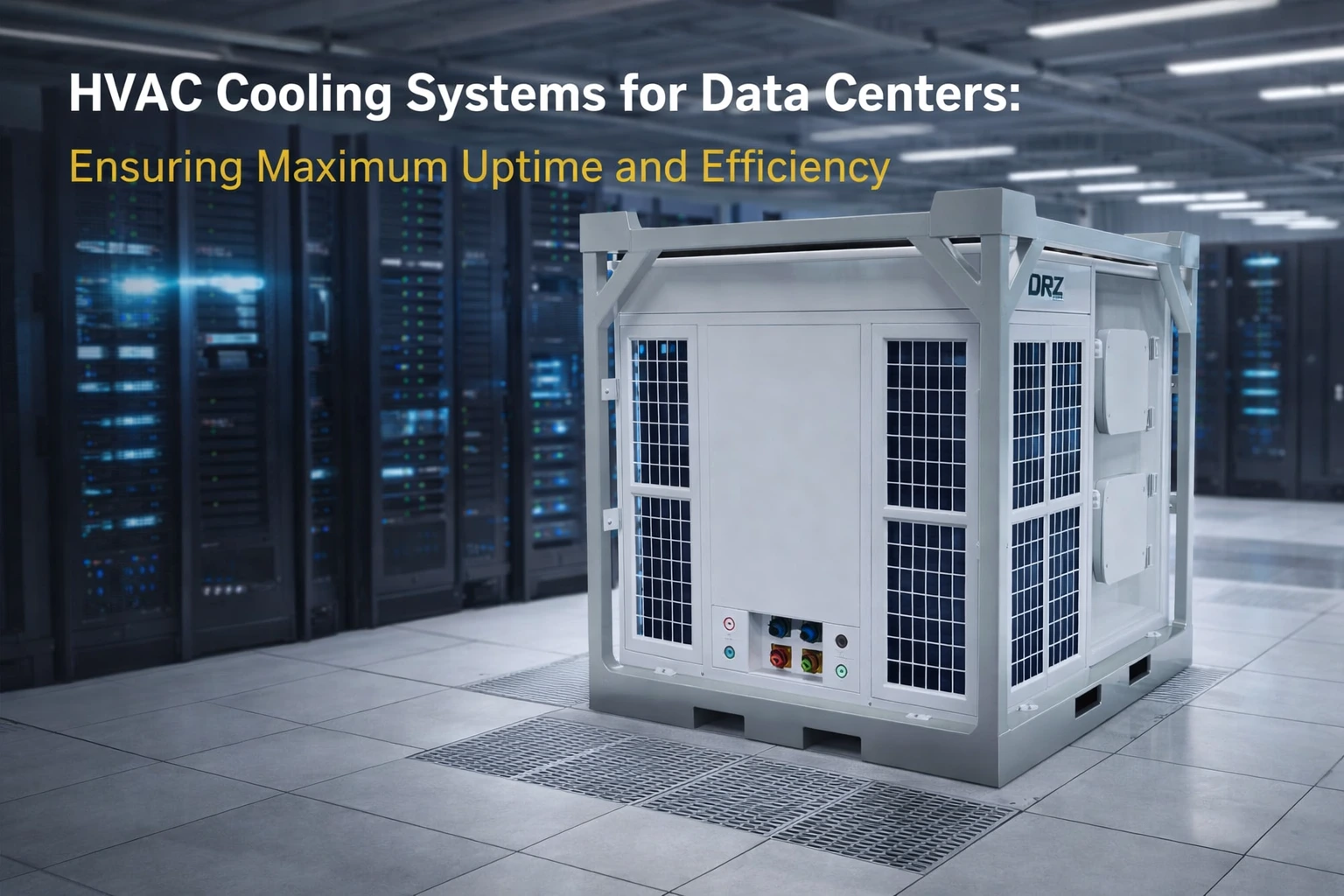
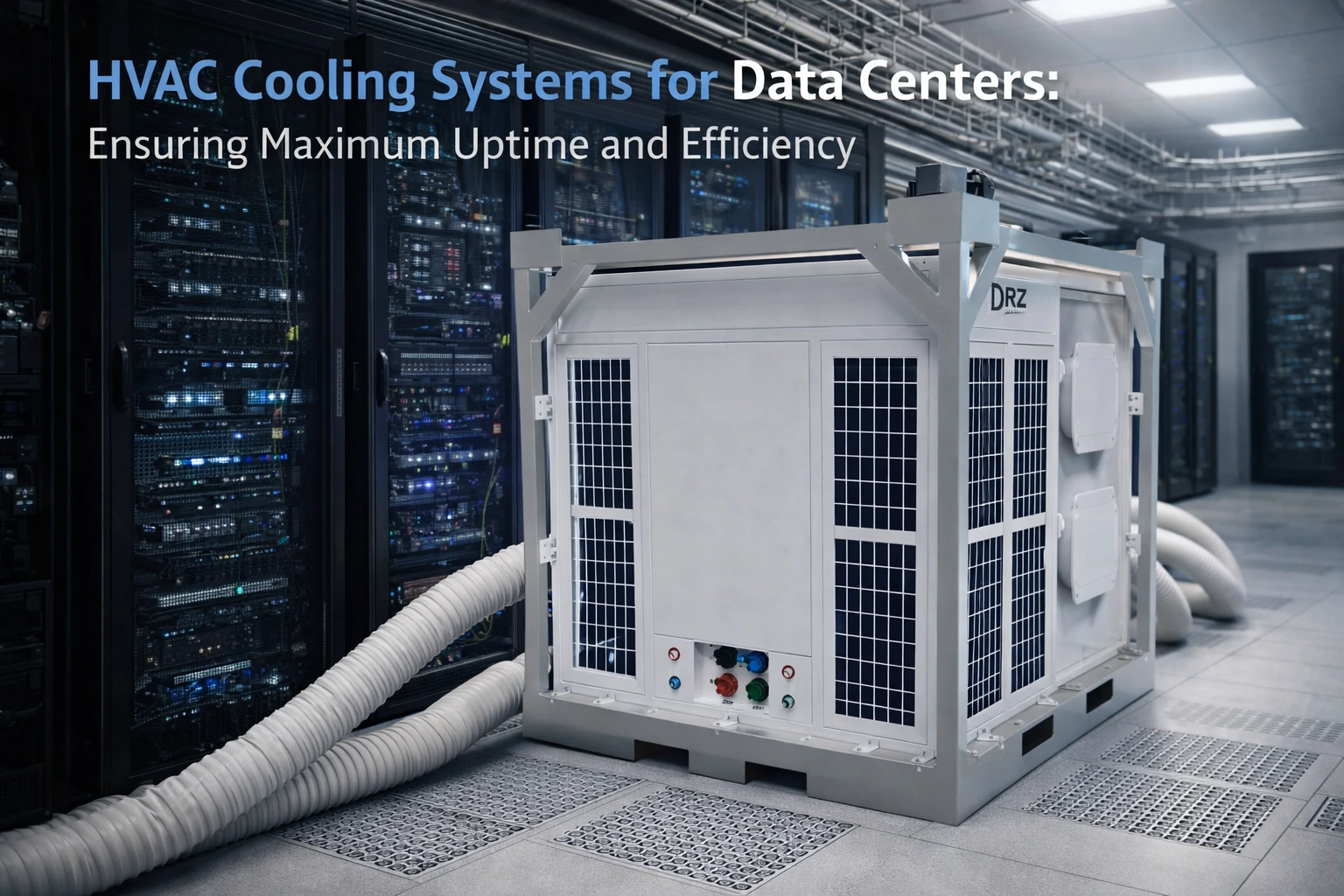
HVAC Cooling Systems for Data Centers: Ensuring Maximum Uptime and Efficiency
In this guide, we will explain one complete approach to designing and maintaining HVAC cooling systems for data centers to maximize uptime and efficiency.
1. Introduction: The Critical Role of HVAC in Data Centers
Data centers are the backbone of modern digital infrastructure, hosting servers and networking equipment that power everything from cloud computing to enterprise applications. Maintaining optimal temperature and humidity levels is critical, as even a minor deviation can lead to equipment failure, reduced efficiency, and downtime. HVAC cooling systems in data centers are designed not just to maintain comfort but to ensure maximum uptime and operational efficiency.
Data centers require precise climate control because high-density server racks generate significant heat. A well-designed HVAC system mitigates these risks by providing consistent airflow, efficient heat dissipation, and reliable environmental monitoring.
2. Understanding Data Center HVAC Cooling Systems
Data center HVAC systems are specialized compared to traditional commercial systems. Their design prioritizes precision, redundancy, and energy efficiency.
2.1 Types of HVAC Systems Used in Data Centers
- CRAC (Computer Room Air Conditioner) Units: CRAC units are essential for maintaining server room temperature and humidity. They typically circulate chilled air directly to server racks and monitor environmental parameters in real time.
- CRAH (Computer Room Air Handler) Systems: CRAH systems use chilled water in combination with air handling units to manage large-scale data center cooling. They are suited for high-density setups and offer scalability.
2.2 Precision Cooling Systems
Precision cooling systems provide tightly controlled temperature and humidity, crucial for preventing hardware degradation. These systems use sensors and automated controls to maintain environmental conditions within a narrow range.
3. Key Factors for Choosing the Right Data Center HVAC Solution
Selecting the appropriate cooling system requires understanding both the facility’s current requirements and projected growth.
3.1 Cooling Load Calculation and Capacity Planning
Accurate cooling load calculations are essential. Data centers require an assessment of server heat output (measured in BTUs or tons of cooling) and airflow patterns to avoid hot spots. Overestimating capacity can lead to wasted energy, while underestimating increases the risk of overheating.
3.2 Airflow Management and Temperature Zoning
Efficient airflow is achieved using hot aisle/cold aisle configurations, containment systems, and optimized ductwork. Proper zoning allows for differentiated cooling, focusing energy on high-density racks and reducing unnecessary cooling in less critical areas.
3.3 Redundant and Mission-Critical HVAC Requirements
Data centers often employ N+1 or 2N redundancy in HVAC systems. This ensures that if a unit fails, backup systems maintain environmental control without interruption. Redundancy is a critical factor in achieving high uptime and meeting service-level agreements (SLAs).
4. Energy Efficiency in Data Center Cooling
Energy costs can represent up to 40% of a data center’s operational expenses. Implementing energy-efficient HVAC solutions is essential for reducing costs and environmental impact.
4.1 Energy-Saving HVAC Technologies
Variable frequency drives (VFDs) in fans and pumps, economizers that use outside air, and advanced control algorithms optimize energy use. These technologies reduce power consumption while maintaining precise environmental control.
4.2 Optimizing Operational Costs with High-Efficiency Systems
High-efficiency chillers, free cooling techniques, and modular air handlers allow facilities to scale cooling according to demand, preventing wasted energy during low-load periods.
4.3 Sustainable Cooling Solutions for Modern IT Facilities
Green cooling methods, including liquid cooling and heat recovery systems, can further reduce the carbon footprint of data centers while maintaining optimal performance.
5. Maintenance Best Practices for Maximum Uptime
Maintenance is critical to ensure long-term reliability and efficiency of HVAC systems in data centers.
5.1 Routine Inspections and Preventive Maintenance
Regular inspections of compressors, chillers, air filters, and ductwork prevent unexpected failures. Maintenance schedules should align with manufacturer recommendations and industry best practices.
5.2 Monitoring Temperature, Humidity, and Airflow
Continuous monitoring using sensors and building management systems (BMS) ensures that deviations are detected and corrected promptly. Automated alerts for temperature spikes or airflow restrictions reduce response time to potential issues.
5.3 Reducing Downtime Risks with Proactive Servicing
Proactive servicing, including predictive maintenance based on operational data, can prevent equipment degradation and minimize downtime, contributing to overall uptime guarantees.
6. Common Challenges in Data Center Cooling and How to Overcome Them
Data centers face unique cooling challenges that require targeted strategies.
6.1 Hot Spots and Uneven Airflow
Uneven distribution of cooled air can create hot spots. Solutions include cold aisle containment, improved duct design, and precise placement of CRAC/CRAH units.
6.2 Overheating Risks in High-Density Server Rooms
High-density racks generate significant heat. Liquid cooling, direct-to-chip cooling, or high-capacity CRAH units are effective solutions to manage thermal loads.
6.3 Scalability for Growing Data Center Infrastructure
Future-proofing the HVAC system is essential. Modular systems that allow incremental capacity addition enable data centers to scale without overhauling the entire cooling infrastructure.
7. Advanced Technologies and Trends in Data Center HVAC
Emerging technologies are enhancing data center cooling performance and efficiency.
7.1 Intelligent HVAC Control Systems
Advanced control systems use machine learning algorithms to predict cooling demand and optimize operations dynamically.
7.2 IoT and Smart Monitoring for Server Rooms
IoT-enabled sensors provide real-time data on temperature, humidity, airflow, and energy usage, enabling proactive adjustments and predictive maintenance.
7.3 Future-Ready Solutions for Energy-Efficient Cooling
Liquid cooling, immersion cooling, and integration with renewable energy sources are emerging trends that reduce energy consumption while maintaining precise control.
8. Why Choose Professional Industrial HVAC Solutions
Professional providers like DrezAircon deliver tailored solutions that meet commercial and industrial standards.
8.1 Benefits of Working with Experienced Providers
Expertise ensures proper system design, installation, and calibration. Providers can assess facility requirements, recommend scalable solutions, and implement energy-efficient strategies.
8.2 Case Studies of High-Capacity Cooling Deployments
Case studies from industrial events, large tents, or server room setups illustrate real-world reliability, highlighting uptime, reduced maintenance costs, and energy savings.
8.3 Ensuring Reliability, Uptime, and Efficiency
Customized HVAC solutions, professional installation, and ongoing service support maximize operational uptime and energy efficiency.
Frequently Asked Questions (FAQs)
- What is a data center HVAC system?
- A specialized cooling system designed to maintain optimal temperature, humidity, and airflow in server rooms and data centers, ensuring equipment reliability and uptime.
- Why is precise cooling important in data centers?
- Servers generate high heat; even small temperature fluctuations can cause hardware failures, downtime, or reduced efficiency. Precision cooling prevents hot spots and ensures consistent operation.
- What types of HVAC systems are used in data centers?
- Common systems include CRAC (Computer Room Air Conditioner) units, CRAH (Computer Room Air Handler) systems, and precision cooling systems for high-density racks.
- How do I calculate the cooling load for a data center?
- Cooling load is determined by the total heat output of servers, networking equipment, lighting, and other heat sources. Accurate calculations prevent under- or over-cooling.
- What is the difference between CRAC and CRAH units?
- CRAC units use direct expansion cooling and are ideal for smaller or medium data centers. CRAH units use chilled water and are better for large, high-density facilities.
- What are energy-efficient HVAC options for data centers?
- Options include variable frequency drives (VFDs), free cooling systems, economizers, high-efficiency chillers, and liquid cooling methods to reduce power consumption.
- Why is redundancy important in data center cooling?
- Redundant systems (N+1, 2N) ensure that a backup is available if one unit fails, maintaining uptime and preventing critical failures.
- How often should data center HVAC systems be maintained?
- Routine maintenance, including inspections of compressors, air filters, chillers, and airflow monitoring, should follow manufacturer guidelines and industry best practices.
- Can modern HVAC systems integrate IoT and smart monitoring?
- Yes. IoT sensors and building management systems allow real-time monitoring of temperature, humidity, airflow, and energy use, enabling predictive maintenance and optimization.
- What are common challenges in data center cooling and how can they be solved?
- Challenges include hot spots, high-density heat loads, and uneven airflow. Solutions include aisle containment, precision cooling, modular scaling, and advanced airflow management.
Conclusion: Optimizing Data Center Performance with the Right HVAC System
Selecting the right HVAC cooling system is essential for data center reliability, efficiency, and longevity. By considering precision cooling, redundancy, energy efficiency, and proactive maintenance, facilities can minimize risks and operational costs.
Professional, industrial-grade solutions ensure that critical infrastructure remains functional even under high load or failure conditions. Partnering with experienced providers guarantees that data centers maintain optimal temperature control, support high-density server operations, and achieve maximum uptime.