HVAC duct cooling system solutions have become essential for factories, offices, and temporary structures that require reliable, efficient, and uniform cooling. Unlike traditional standalone air conditioning units, a ducted system distributes conditioned air through a network of ducts, ensuring that every part of the space maintains a consistent temperature.
In industrial environments, these systems not only enhance comfort for employees but also protect sensitive machinery and equipment from overheating. In office spaces, they contribute to a productive and comfortable work environment while enabling energy-efficient operations.
Temporary structures, such as event tents or exhibition halls, face unique challenges with heat and airflow; a properly designed duct cooling system ensures a controlled climate, even in large, open, or modular spaces. Modern systems incorporate components like fan coil units, dampers, thermostats, and insulated ducts to optimize airflow, energy consumption, and indoor air quality.
By leveraging these advanced technologies, businesses can achieve both operational efficiency and occupant comfort.
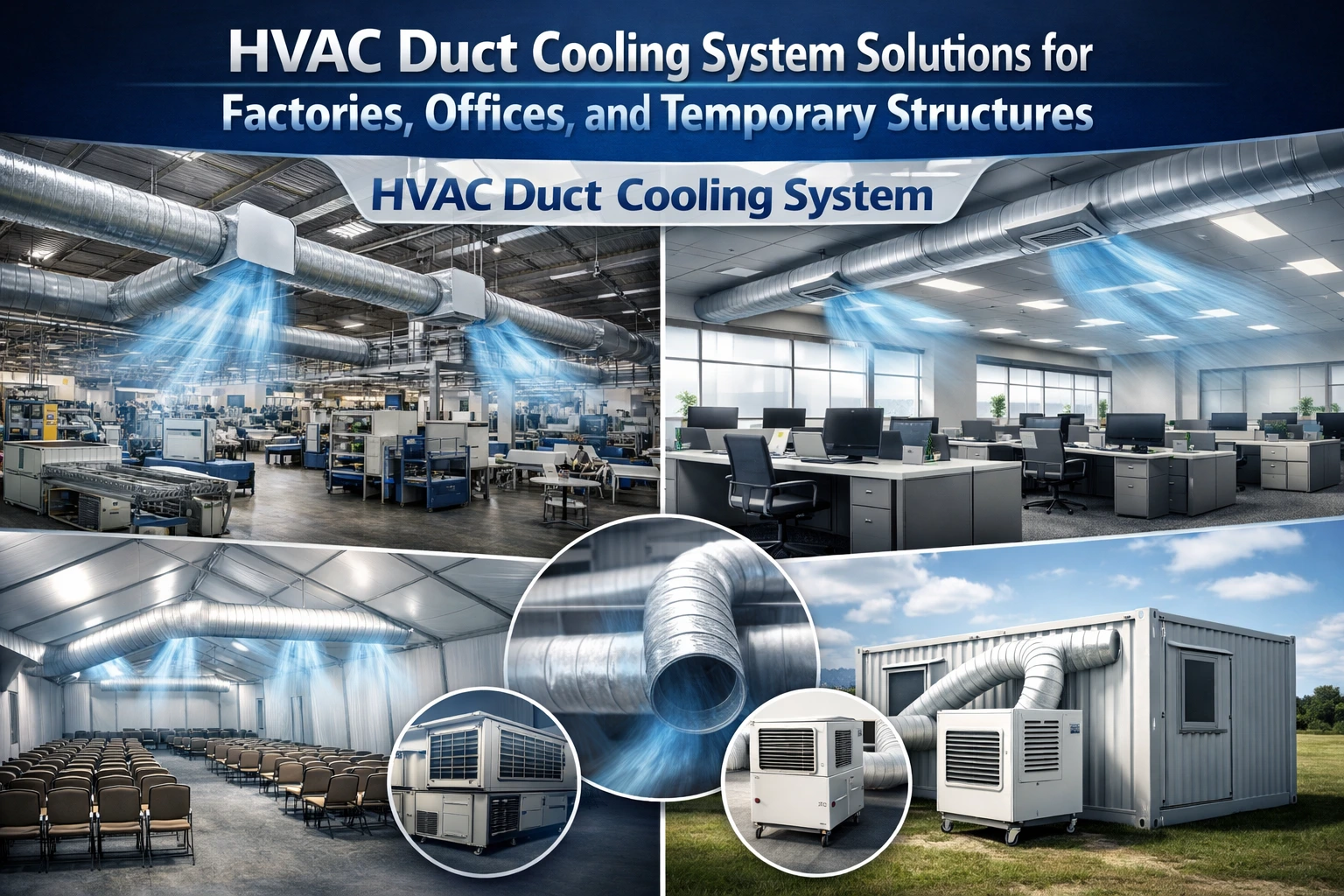
HVAC Duct Cooling System Solutions for Factories, Offices, and Temporary Structures
In this guide, we will explain how HVAC duct cooling systems work, their key components, and the benefits they offer for factories, offices, and temporary structures. We will also cover design, installation, maintenance, and applications to help you choose the right solution for your space.
1. Introduction
Efficient climate control is essential for factories, offices, and temporary structures such as event tents and exhibition halls. A well-designed HVAC duct cooling system ensures consistent airflow, maintains optimal temperatures, and improves indoor air quality, creating productive, safe, and comfortable environments.
For industrial and commercial operations, these systems are not just about comfort they are critical to maintaining equipment efficiency, product quality, and energy efficiency. Companies like Drez Aircon specialize in providing tailored solutions, ranging from portable and trailer-mounted AC units to integrated tent air conditioning systems.
2. What is an HVAC Duct Cooling System?
An HVAC duct cooling system is a network of air ducts connected to a central air conditioning unit. It distributes cooled air to different zones of a building or temporary structure. The system typically consists of supply ducts, which deliver conditioned air, and return ducts, which carry air back to the unit for reconditioning.
Key advantages of ducted systems include:
- Uniform cooling across large spaces
- Centralized control for multiple zones
- Flexibility for temporary or permanent installations
Unlike portable air conditioners, ducted systems use air distribution ducts and diffusers to ensure efficient airflow and reduce energy losses. In industrial setups, this approach is critical for maintaining stable conditions in areas with heavy machinery or heat-generating processes.
3. Key Components of a Ducted HVAC Cooling System
A typical ducted system comprises several components working together to deliver consistent cooling:
- Air Distribution Ducts and Ductwork Design
Properly designed ducts ensure optimal airflow and reduce energy waste. Rectangular or round ducts may be used depending on the space. Industrial setups often require larger ducts for higher volume airflow. - Fan Coil Units
These units circulate conditioned air through ducts, ensuring temperature control for each zone. They can be connected to central chillers or portable HVAC units. - Thermostats and Sensors
Accurate temperature monitoring allows for precise control over cooling zones, avoiding overcooling or energy waste. - Plenum Boxes, Vents, and Diffusers
Plenum boxes help balance air distribution, while diffusers ensure uniform airflow without creating drafts. - Dampers and Actuators
These components regulate airflow to different zones, supporting multi-zone or variable air volume (VAV) systems.
4. Types of HVAC Duct Cooling Systems
Depending on the application, ducted HVAC systems can be categorized as:
4.1 Commercial Ducted Systems for Offices
- Designed for large office spaces with multiple rooms or floors
- Features include centralized air handling units, variable airflow dampers, and energy-efficient chillers
- Example: Drez Aircon’s DCGN series provides efficient air distribution with low noise levels for office environments
4.2 Industrial Ducted Cooling Systems for Factories and Warehouses
- Industrial cooling must handle heat loads from machinery, production lines, and storage areas
- Systems are designed for high air volume and robust performance
- Case Study: A textile factory in Guangzhou installed a Drez DCX series ducted system, achieving 18% energy savings while maintaining stable temperature across 5,000 m² of production floor
4.3 Temporary and Portable Ducted Solutions
- Ideal for tents, exhibitions, and temporary event structures
- Trailer-mounted or mobile units allow plug-and-play installation
- Example: Drez DCG integrated tent air conditioners provide 30-ton cooling capacity with flexible ducts for quick setup at outdoor festivals
5. Benefits of HVAC Duct Cooling Systems
Implementing ducted systems brings measurable advantages across industries:
5.1 Efficient Temperature Control
- Even distribution of cooled air ensures every corner of the space maintains the desired temperature
- Reduces hot and cold spots common in non-ducted solutions
5.2 Energy Efficiency and Cost Savings
- Properly insulated ducts reduce heat gain/loss
- Centralized control allows optimization of cooling schedules
- Industrial case study: A food processing plant reduced peak energy usage by 12% after retrofitting ducted AC
5.3 Improved Indoor Air Quality (IAQ)
- Duct systems can include filters and purifiers to remove dust, allergens, and other pollutants
- Particularly beneficial in offices and factories where air quality impacts productivity
5.4 Scalability and Flexibility
- Temporary structures like exhibition tents benefit from modular duct systems
- Systems can be adjusted for seasonal or event-specific requirements
6. Design and Installation Considerations
Designing and installing an HVAC duct cooling system requires careful planning:
6.1 Cooling Load Calculation
- Determine total BTU requirements based on space size, occupancy, equipment heat load, and insulation
- Example: For a 10,000 ft² warehouse, approximately 120,000 Btu/h is required for effective cooling
6.2 Duct Layout Optimization
- Shorter duct runs minimize friction and energy loss
- Properly sized supply and return ducts maintain balanced airflow
6.3 Insulation and Minimizing Air Leakage
- Use insulated ducts to prevent energy loss
- Seal duct joints to reduce leaks that can decrease system efficiency by up to 20%
6.4 Professional Installation
- Industrial installations require experienced technicians for proper balancing and commissioning
- Brands like Drez Aircon offer installation support for complex setups
7. Maintenance and Troubleshooting
Regular maintenance ensures long-term performance and prevents costly downtime:
- Duct Cleaning: Accumulated dust reduces airflow and efficiency
- Filter Replacement: Maintains air quality and system efficiency
- Checking Dampers and Actuators: Ensures airflow regulation remains precise
- Leak Detection: Identify air leaks that can increase energy costs
Case Example: A convention center using Drez trailer-mounted AC units reduced downtime from 8 hours/month to 1 hour/month after implementing quarterly maintenance schedules
8. Applications Across Industries
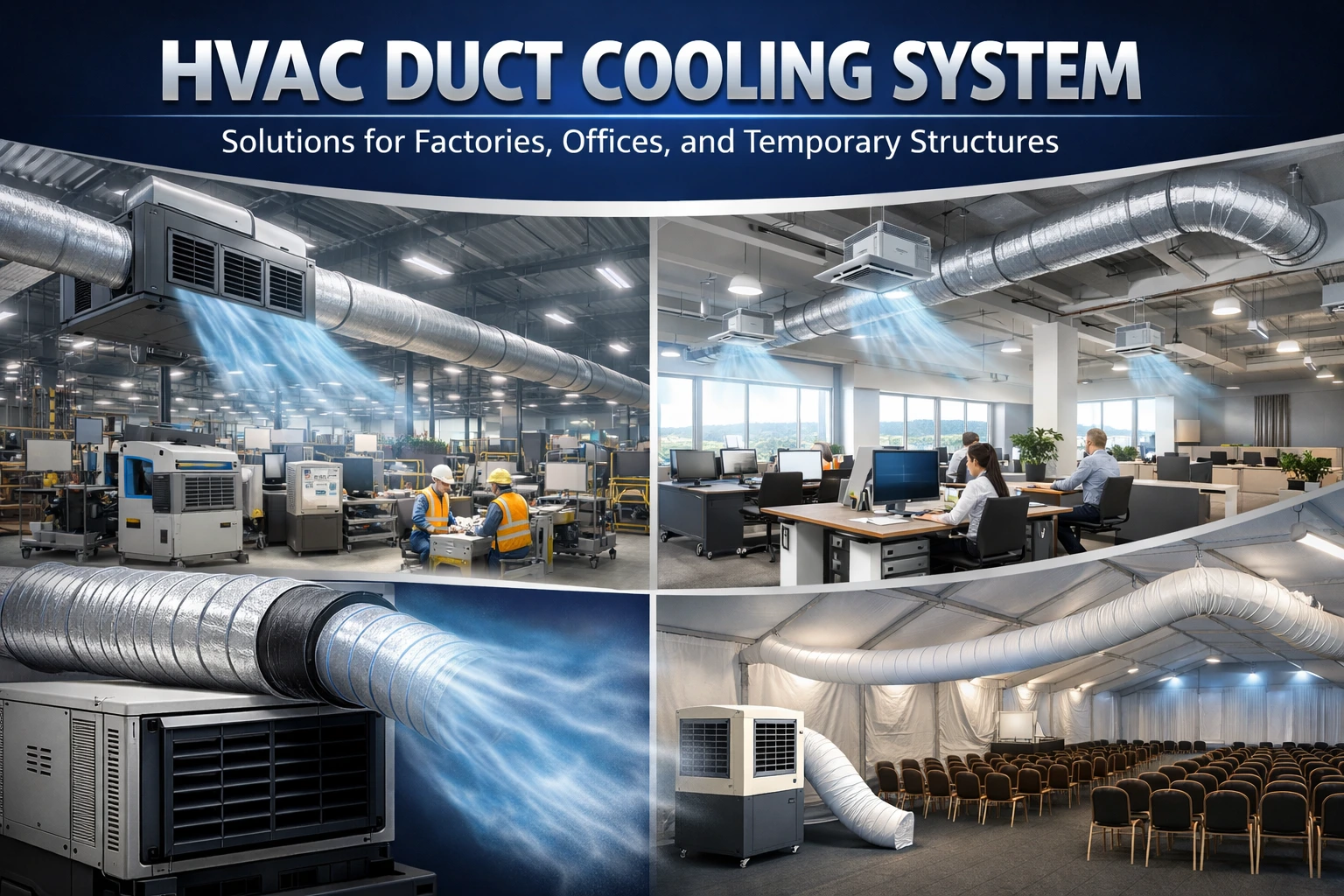
8.1 Factories and Industrial Facilities
- Factories benefit from stable temperatures for worker safety and equipment reliability
- Example: Electronics assembly plants require precise cooling to prevent overheating of sensitive components
8.2 Office Buildings and Commercial Spaces
- Centralized ducted systems provide quiet and comfortable environments
- Multi-zone control ensures different floors or departments can maintain ideal conditions
8.3 Event Tents, Exhibitions, and Temporary Structures
- Large outdoor or indoor tents require high-volume air circulation
- Flexible duct solutions allow quick deployment and relocation
- Drez Aircon’s DCG series has supported large-scale events with over 30-ton cooling capacity per unit
9. Choosing the Right HVAC Duct Cooling System
Selecting the right system depends on multiple factors:
- Space Size and Load Requirements: Calculate BTU and airflow needs
- Permanent vs Temporary Installation: Trailer-mounted or integrated systems for events, floor-mounted for factories/offices
- Energy Efficiency Goals: Opt for units with variable speed fans and insulated ductwork
- Professional Support: Brands offering turnkey solutions simplify design, installation, and maintenance
Drez Aircon provides end-to-end solutions from consultation to installation, ensuring each project meets performance and efficiency standards.
FAQs on HVAC Duct Cooling Systems
1. What is an HVAC duct cooling system?
An HVAC duct cooling system is a network of ducts connected to a central air conditioning unit that distributes cooled air throughout a building or temporary structure, ensuring consistent temperature and airflow.
2. How does a ducted air conditioning system differ from a portable AC unit?
Unlike portable units, ducted systems use supply and return air ducts, diffusers, and dampers to deliver uniform cooling across large spaces with higher energy efficiency.
3. What are the main components of a ducted HVAC cooling system?
Key components include air distribution ducts, fan coil units, thermostats and sensors, plenum boxes, diffusers, and dampers to regulate airflow.
4. Can HVAC duct cooling systems be used in temporary structures like event tents?
Yes. Portable or trailer-mounted ducted systems are designed for quick deployment in tents, exhibition halls, and outdoor events, providing flexible and reliable cooling.
5. How do I calculate the right cooling load for my space?
Cooling load depends on space size, occupancy, equipment heat, insulation, and ventilation. Consulting with a professional ensures the system is correctly sized for efficiency.
6. What are the energy efficiency benefits of ducted cooling systems?
Ducted systems minimize energy loss through insulated ducts, balanced airflow, and centralized control, which reduces electricity consumption and operational costs.
7. How often should ducted HVAC systems be maintained?
Regular maintenance, including filter replacement, duct cleaning, and inspection of dampers and actuators, should be performed quarterly or semi-annually depending on usage.
8. Are ducted systems suitable for factories and industrial facilities?
Yes. They provide high-volume airflow to control temperature in large production areas, protect machinery, and improve indoor air quality for workers.
9. Can ducted systems support multi-zone cooling?
Yes. Systems with variable air volume (VAV) capabilities allow different zones or rooms to maintain separate temperature settings efficiently.
10. Why should I choose a professional brand like Drez Aircon for HVAC duct cooling solutions?
Professional providers like Drez Aircon offer tailored design, installation, and maintenance services, ensuring the system meets space-specific requirements and operates efficiently for years.
Summary
A well-planned HVAC duct cooling system improves comfort, efficiency, and productivity across factories, offices, and temporary structures. From industrial facilities to event tents, ducted systems provide reliable cooling with controllable airflow, energy savings, and improved indoor air quality.
Professional solutions, such as those offered by Drez Aircon, deliver tailored systems for diverse applications—portable, trailer-mounted, or integrated units ensuring every environment stays optimally cooled.
Whether you are managing a factory, office complex, or planning a large event, investing in the right ducted cooling system is essential for operational efficiency and comfort.
Call to Action: For customized HVAC duct cooling solutions, request a quote from Drez Aircon today to find the perfect system for your space.