Industrial air conditioner compressor units are essential for maintaining efficient, reliable cooling in large-scale industrial environments, including factories, warehouses, exhibition halls, temporary domes, and event tents. Unlike standard residential systems, these compressors are designed for high-capacity operation, extended runtime, and extreme environmental conditions, ensuring that industrial processes and large-scale events remain unaffected by temperature fluctuations.
The performance of an industrial AC compressor directly affects energy consumption, operational costs, and overall system reliability. Malfunctioning or outdated compressors can lead to uneven cooling, higher maintenance needs, and unexpected downtime, which can disrupt production schedules or compromise event comfort. Understanding the different types scroll, screw, centrifugal, and reciprocating compressors and their suitability for specific applications is critical for maintaining optimal system performance.
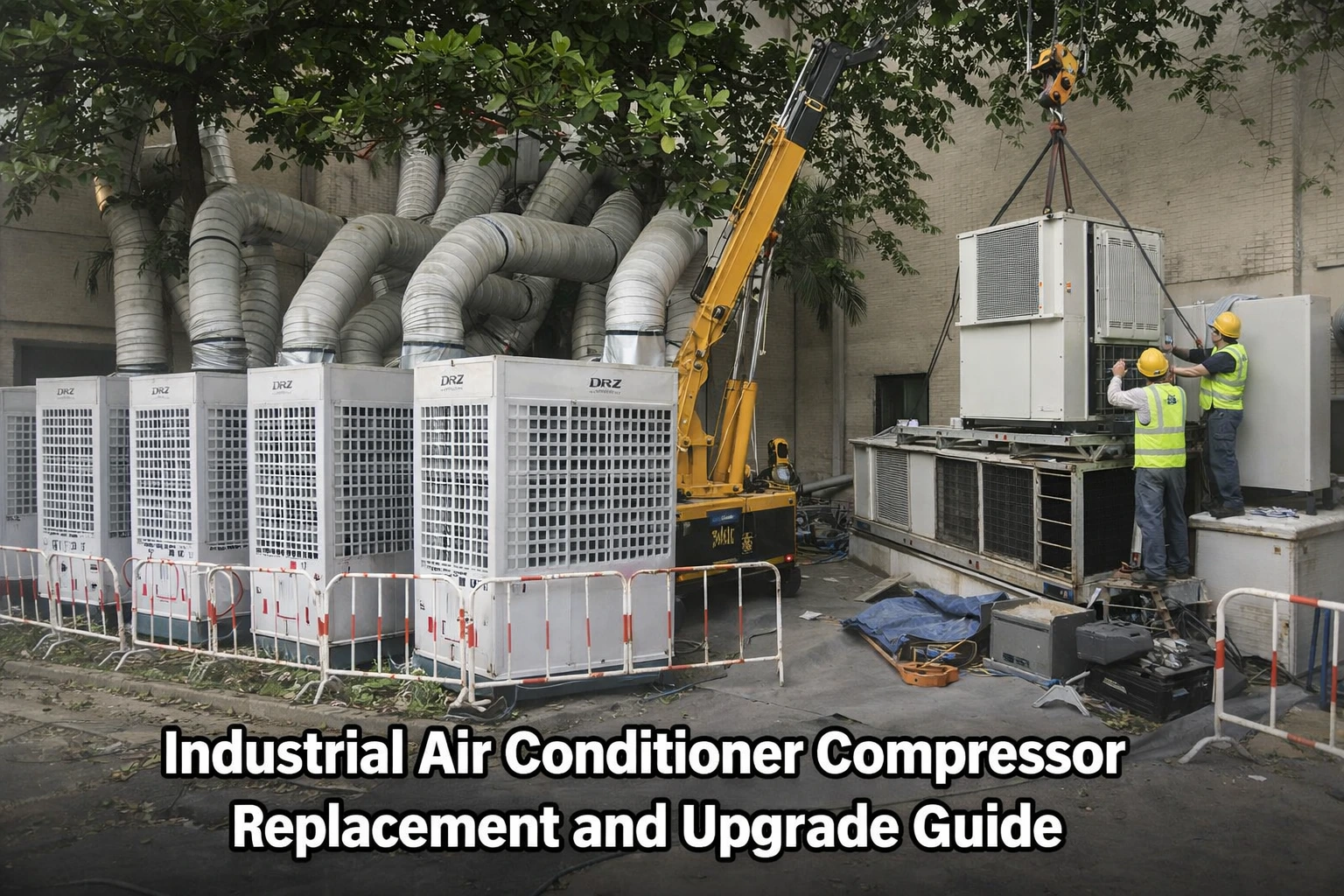
Industrial Air Conditioner Compressor Replacement and Upgrade Guide
In this guide, we will explain how to effectively perform industrial air conditioner compressor replacement and upgrades to maximize efficiency, longevity, and reliability.
1. Introduction: Why Industrial AC Compressors Are Critical for Large-Scale Cooling
Industrial air conditioner compressors are the heart of any large-scale cooling system. For industrial facilities, event tents, exhibition halls, and temporary domes, the compressor determines the system’s efficiency, cooling capacity, and reliability. Without a properly functioning compressor, the entire HVAC system can underperform, leading to higher energy costs and potential operational disruptions.
Industrial AC compressors are designed to handle higher capacities and longer operational hours than residential units. At DrezAircon, our systems integrate high-capacity compressors capable of cooling spaces ranging from 500 square feet to several thousand square feet, ensuring stable and consistent temperature control for industrial and commercial applications.
2. Signs It’s Time for a Compressor Replacement
Identifying the right time to replace an industrial AC compressor can prevent costly downtime. Common indicators include:
- Reduced Cooling Efficiency: A noticeable drop in cooling performance or uneven temperature distribution.
- Unusual Noises: Grinding, rattling, or hissing sounds from the compressor unit.
- Increased Energy Consumption: Sudden spikes in power usage indicating the compressor is overworking.
- Frequent System Shutdowns: Protective mechanisms triggering due to overheat or pressure issues.
- Refrigerant Leakage: Visible oil stains or refrigerant puddles near the compressor.
Replacing the compressor promptly ensures that industrial AC systems maintain operational efficiency and reliability, which is crucial for high-demand applications like large event spaces and factory floors.
3. Types of Industrial AC Compressors and Their Applications
Choosing the right compressor type is essential for system performance. Common types include:
- Scroll Compressors: Efficient for medium-capacity industrial AC systems; ideal for tents and domes with consistent cooling needs.
- Screw Compressors: Suitable for high-capacity commercial applications such as warehouses and factories, providing reliable continuous operation.
- Centrifugal Compressors: Used in large-scale cooling plants; capable of handling very high capacities with smooth operation.
- Reciprocating Compressors: Typically applied in portable industrial AC units; effective for smaller event spaces or temporary setups.
Each type has specific advantages depending on the cooling load, operational hours, and energy efficiency requirements. DrezAircon’s solutions integrate these compressors according to the scale and application of the industrial AC system.
4. Factors to Consider Before Upgrading Your Industrial AC Compressor
Before replacing or upgrading an industrial AC compressor, consider the following factors:
- Cooling Capacity (Tons/BTU): Ensure the compressor can handle the required cooling load. For large tents or exhibition halls, higher tonnage compressors are necessary.
- Energy Efficiency: Upgrading to energy-efficient compressors reduces operational costs and supports sustainability goals.
- Refrigerant Type: Verify compatibility with R410A, R134A, or other industrial-grade refrigerants.
- System Compatibility: Ensure the new compressor aligns with existing ducting, piping, and control systems.
- Noise and Vibration Levels: Essential for event spaces or indoor facilities to maintain comfort.
DrezAircon evaluates each installation scenario and recommends compressors that optimize energy consumption while maintaining required cooling performance.
5. Step-by-Step Guide to Industrial AC Compressor Replacement
Replacing an industrial AC compressor involves technical precision to ensure system longevity and performance:
- Pre-Replacement Inspection: Assess the existing compressor, check refrigerant levels, and inspect associated components.
- Power Shutdown and Safety Measures: Disconnect electrical supply and follow lockout/tagout procedures.
- Removal: Safely extract the old compressor without damaging surrounding components.
- Installation: Position the new compressor, secure mounting points, and connect refrigerant lines and electrical wiring.
- Calibration and Testing: Check pressure levels, run the system for initial testing, and verify cooling output.
- Final Inspection: Ensure vibration isolation, noise suppression, and energy efficiency standards are met.
Following this structured approach minimizes system downtime and maximizes operational efficiency.
6. Maintenance Tips to Extend the Life of Your Compressor
Proper maintenance enhances reliability and reduces unexpected failures:
- Regular Inspections: Monitor temperature, pressure, and electrical parameters.
- Lubrication: Ensure proper oil levels to minimize wear and tear.
- Filter Replacement: Keep air and refrigerant filters clean to prevent clogging and strain.
- Vibration Control: Use isolation mounts to reduce stress on the compressor.
- Scheduled Professional Service: Regular servicing from certified providers like DrezAircon ensures long-term system performance.
Maintenance protocols directly impact energy efficiency and the operational life of industrial compressors.
7. Benefits of Upgrading Your Industrial AC Compressor
Upgrading an existing compressor can deliver multiple operational advantages:
- Improved Energy Efficiency: Newer compressors consume less electricity while delivering higher cooling output.
- Enhanced Reliability: Modern compressors reduce the risk of unexpected downtime.
- Better Cooling Performance: Consistent temperature control, essential for sensitive environments like event spaces and industrial production areas.
- Lower Operational Costs: Reduced maintenance frequency and longer life span translate to savings over time.
DrezAircon upgrades focus on integrating components that enhance both performance and sustainability, ensuring clients achieve maximum ROI.
8. Choosing the Right Supplier for Industrial AC Compressors
Selecting a trusted supplier is crucial for acquiring quality industrial AC compressors:
- Experience in Industrial Applications: Choose providers who understand large-scale and temporary cooling solutions.
- Technical Support and Service: Suppliers should offer installation guidance, troubleshooting, and maintenance support.
- Custom Solutions: Ability to recommend compressors based on application-specific requirements.
- Product Reliability: High-quality, certified compressors that meet industrial standards.
DrezAircon is a leading supplier offering tailored industrial AC solutions, providing installation, replacement, and upgrade services for event, industrial, and commercial environments.
Frequently Asked Questions (FAQs)
1. What are the common types of industrial AC compressors?
- Scroll, screw, centrifugal, and reciprocating compressors are commonly used depending on the system’s capacity and application.
2. How do I know if my industrial AC compressor needs replacement?
- Signs include decreased cooling efficiency, unusual noises, frequent shutdowns, and increased energy consumption.
3. Can I upgrade my existing industrial AC compressor to a more energy-efficient model?
- Yes, modern compressors can be retrofitted to improve energy efficiency and system performance.
4. What factors should I consider before replacing a compressor?
- Cooling capacity, refrigerant type, system compatibility, energy efficiency, and noise levels.
5. How long does an industrial AC compressor typically last?
- With proper maintenance, most industrial compressors last 10–15 years depending on usage and operating conditions.
6. Can a failing compressor affect other components of the AC system?
- Yes, it can cause strain on fans, coils, and other system components, leading to further failures.
7. What maintenance practices extend the life of an industrial AC compressor?
- Regular inspections, lubrication, filter replacement, vibration control, and professional servicing.
8. Are all compressors compatible with portable AC units for events?
- Not all; portable systems typically use reciprocating or scroll compressors suitable for temporary cooling.
9. How do I select a reliable supplier for industrial AC compressors?
- Choose suppliers with industrial experience, technical support, and a track record of quality products, like DrezAircon.
10. Does upgrading a compressor reduce operational costs?
- Yes, energy-efficient upgrades reduce electricity consumption and maintenance expenses over time.
Conclusion: Maximizing Performance and Reliability in Industrial AC Systems
Industrial air conditioner compressors play a vital role in the performance of large-scale cooling systems. Timely replacement and strategic upgrades enhance energy efficiency, reliability, and overall cooling performance. By understanding compressor types, recognizing replacement signs, and choosing the right supplier, industrial and commercial facilities can ensure consistent comfort and operational efficiency.
DrezAircon’s expertise in industrial HVAC solutions ensures that every compressor replacement or upgrade is executed with precision, reducing downtime and enhancing system performance. For event planners, facility managers, and industrial engineers, choosing the right compressor is a critical step in achieving effective large-scale cooling.