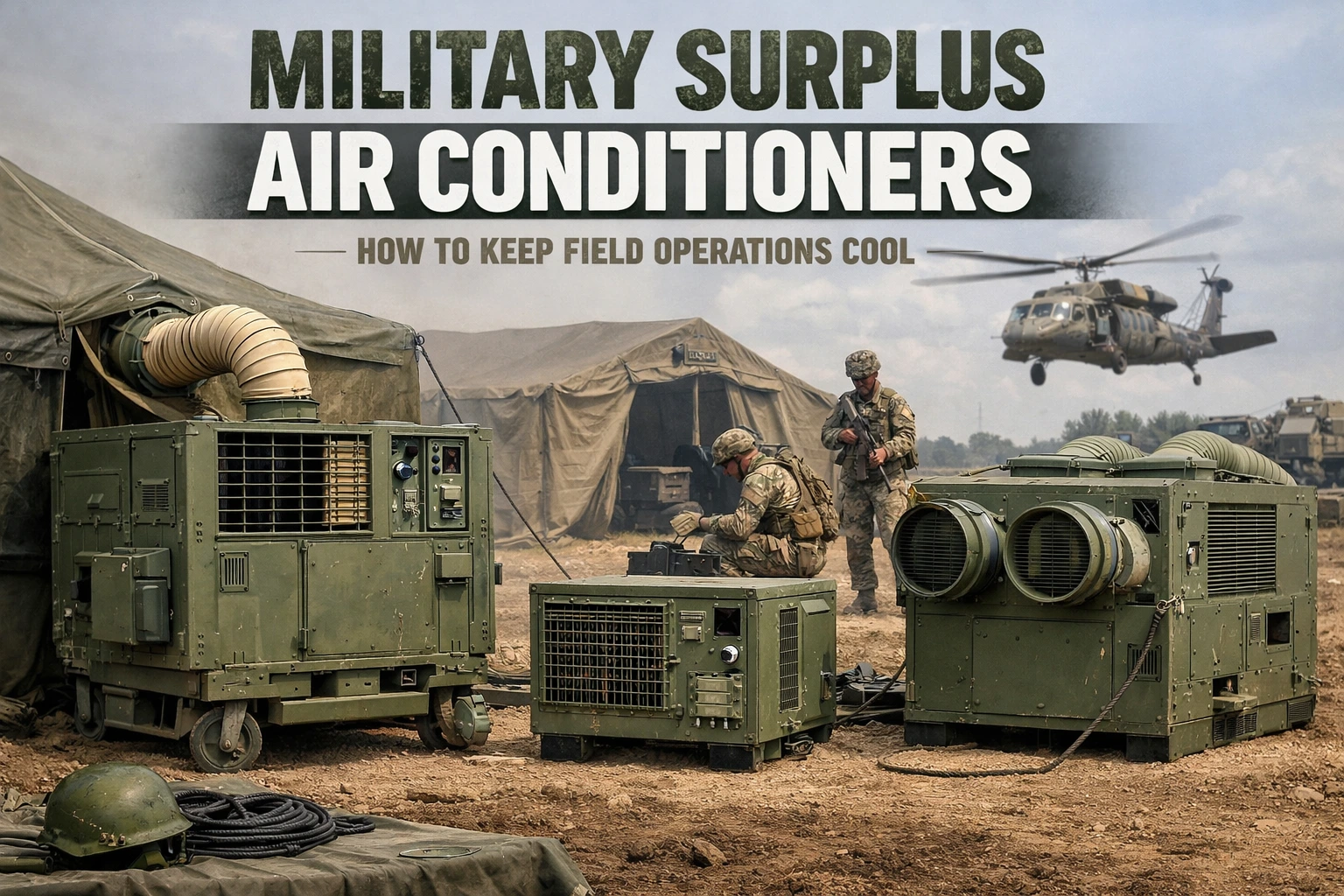
Military Surplus Air Conditioners How to Keep Field Operations Cool. Field operations demand solutions that work under pressure: extreme heat, dust, rough handling, and unreliable power. Military surplus air conditioners are engineered to meet those demands robust housings, high-capacity compressors, and flexible power options let teams set up reliable climate control quickly.
Whether cooling medical tents, command posts, or equipment shelters, these units protect sensitive electronics, preserve supplies, and reduce heat-related fatigue among personnel. Their proven track record in deployments and disaster responses shows they’re not just durable but practical: easy to transport, straightforward to maintain in the field, and compatible with generator-based power systems.
This introduction previews technical features, operational benefits, and real-world use cases, and it’s written to help procurement officers, logistics planners, and facility managers make informed choices. Expect clear guidance on selecting capacity, matching power sources, maintenance routines, and deployment tips grounded in field-tested practices. References to rugged design and portability will be tied to practical outcomes rather than abstract claims.
Military Surplus Air Conditioners: How to Keep Field Operations Cool:
Maintaining comfort and operational efficiency in field operations requires more than just planning it demands reliable cooling solutions. Military surplus air conditioners provide rugged, portable, and efficient cooling options that have been proven to perform in extreme conditions. In this guide, we explore how these specialized units help keep field operations running smoothly, drawing on real-world applications, practical insights, and technical knowledge.
Introduction
Field operations, whether military deployments, disaster response missions, or temporary industrial setups, often take place in environments where standard commercial air conditioners simply cannot perform. Extreme heat, dust, and humidity can impact equipment and personnel alike. Military surplus air conditioners, designed for durability and mobility, are engineered to meet these challenges.
This blog explains their functionality, features, applications, and practical considerations. It is intended for facility managers, logistics teams, and decision-makers looking for reliable, field-ready cooling solutions.
What Are Military Surplus Air Conditioners?
Military surplus air conditioners are retired or unused units from military inventory designed for tactical field deployment. Unlike commercial AC units, these systems are:
- Rugged: Built to withstand harsh environments including high temperatures, dust, and vibration.
- Portable: Many units are trailer-mounted or compact for rapid deployment.
- High-capacity: Capable of cooling large tents, temporary shelters, and mobile command centers.
For instance, surplus units from military supply chains often include field deployable ACs used in army bases or forward operating posts, offering reliable performance in extreme conditions.
Why Field Operations Need Specialized Cooling
Field operations present unique challenges:
- Extreme Weather Conditions – Soldiers or field workers often operate in areas with temperatures exceeding 40°C (104°F). Standard ACs can fail under such heat.
- Equipment Protection – Electronics, medical equipment, and sensitive instruments require stable temperatures to function properly.
- Human Performance – Heat stress can reduce efficiency, slow decision-making, and increase fatigue.
- Temporary Structures – Tents, inflatable shelters, and temporary warehouses are poorly insulated, requiring powerful cooling solutions.
Military surplus air conditioners are specifically engineered to meet these challenges, making them ideal for field-based operations.
Key Features That Keep Field Operations Cool
1. Rugged and Weather-Resistant Construction
Military ACs are built to handle dust, rain, and high heat. They often feature reinforced steel housings and corrosion-resistant components. This durability ensures long-term operation without frequent repairs, even in harsh environments.
2. High-Capacity Cooling
These units can handle large spaces. For example, a 32-ton integrated AC system can cool large tents, command centers, or emergency shelters, maintaining temperatures that protect both personnel and equipment.
3. Portability and Rapid Deployment
Military surplus ACs can be trailer-mounted, floor-standing, or modular, allowing quick relocation. Deployment is often measured in hours rather than days, a critical advantage for temporary field operations.
4. Energy Efficiency
While designed for toughness, these units also prioritize efficient power use, often compatible with field generators. This ensures sustained operation without overloading power sources, crucial in remote deployments.
Practical Applications in the Field
1. Military Camps and Forward Operating Bases
- Tactical tents, medical units, and command centers rely on these AC units.
- Example: A forward operating base in a desert environment used surplus AC units to reduce internal tent temperatures from 45°C to a comfortable 24°C, improving soldier efficiency.
2. Emergency Relief and Disaster Response
- During hurricane or flood relief, surplus military ACs help cool temporary shelters and medical facilities.
- Example: In the 2022 flood response in Southeast Asia, field deployable AC units maintained critical cooling in relief tents, ensuring patient comfort and preventing heat-related illnesses.
3. Outdoor Events and Industrial Sites
- Surplus military ACs are sometimes repurposed for industrial projects, construction camps, or large outdoor events.
- Their robust construction allows operation in dusty, high-traffic areas without breakdowns.
Maintenance Tips for Military Surplus AC Units
Proper maintenance ensures reliability:
- Filter Cleaning and Replacement: Clogged filters reduce efficiency and airflow.
- Check Refrigerant Levels: Low refrigerant can compromise cooling capacity.
- Inspect Electrical Components: Ensure power sources and wiring meet operational standards.
- Seasonal Servicing: Before peak heat seasons, perform full checks for corrosion, leaks, and operational integrity.
Maintenance records from military deployments indicate that routine care extends operational lifespan by 30–40%, critical for field reliability.
Advantages Over Standard Commercial AC Units
| Feature | Military Surplus AC | Standard Commercial AC |
|---|---|---|
| Durability | Built for harsh environments | Limited to controlled indoor environments |
| Deployment | Portable, modular, quick setup | Fixed installation, not easily moved |
| Cooling Capacity | High, suitable for large tents | Moderate, designed for rooms/offices |
| Energy Source | Compatible with generators or field power | Requires stable grid power |
| Maintenance | Field-serviceable, robust | Sensitive to rough handling |
This table highlights why surplus units outperform standard ACs in temporary or extreme deployments.
Buyer’s Guide: Choosing the Right Military Surplus AC
Factors to Consider
- Cooling Capacity: Match unit capacity to the tent size or shelter volume.
- Portability Needs: Trailer-mounted vs. floor-standing units.
- Power Requirements: Generator compatibility and fuel efficiency.
- Operational Environment: Desert, tropical, or mountainous terrains may demand specific unit designs.
- Availability of Spare Parts: Ensure long-term serviceability.
Selecting the right unit ensures optimal cooling, energy efficiency, and longevity, minimizing downtime in critical operations.
FAQs: Military Surplus Air Conditioners
1. What is a military surplus air conditioner?
A military surplus air conditioner is a unit originally designed for military deployments and later made available for civilian or commercial use. These ACs are rugged, portable, and capable of operating in extreme conditions such as high heat, dust, or temporary shelters.
2. How do military surplus AC units differ from standard commercial ACs?
Unlike commercial units, military surplus ACs are built to be field-deployable, durable, and high-capacity, with weather-resistant components and compatibility with generator power sources. They are designed to cool large tents, shelters, or mobile command centers efficiently.
3. Can these units be used outside of military applications?
Yes, they are commonly used in industrial camps, disaster relief shelters, outdoor events, and temporary warehouses, wherever portable, high-capacity cooling is needed.
4. How portable are military surplus air conditioners?
Many units are trailer-mounted or modular, allowing quick relocation. Smaller units can be moved with forklifts or manually, making them adaptable to changing field conditions.
5. What kind of environments can these AC units operate in?
They can handle deserts, tropical regions, mountainous terrains, and temporary structures, tolerating dust, heat, and rough handling without failure.
6. What power sources do military surplus AC units use?
They typically operate on AC mains, diesel or gas generators, and some models are compatible with hybrid power setups, making them ideal for remote deployments.
7. How do I choose the right unit for my field operation?
Consider cooling capacity, portability, operational environment, power compatibility, and maintenance availability. Match the unit to the space size and duration of deployment for optimal performance.
8. Are spare parts and maintenance easy to access?
Yes. Many suppliers provide refurbished components, and maintenance is designed to be field-serviceable. Regular care, like cleaning filters and checking refrigerant levels, extends operational lifespan.
9. How long can these units operate continuously?
With proper maintenance, military surplus ACs can operate 24/7 for months, even in extreme conditions, without major performance degradation.
10. Do these units improve human performance and equipment safety in field operations?
Absolutely. By reducing heat stress, protecting sensitive electronics, and stabilizing temperatures in tents or shelters, they enhance both personnel efficiency and equipment reliability, which is critical in high-stakes operations.
Conclusion
Military surplus air conditioners provide a reliable, durable, and efficient solution for cooling field operations. From military deployments to disaster relief and industrial applications, these units keep personnel comfortable, protect equipment, and maintain operational efficiency.
For organizations seeking rugged, field-ready cooling solutions, exploring modern portable AC systems inspired by military surplus designs can deliver unmatched performance.
Drez Aircon offers a range of portable, trailer-mounted, and tent-integrated AC systems suitable for extreme environments. Contact Drez Aircon today to customize your field cooling solutions and ensure mission-critical comfort.