Military Vehicle Air Conditioner systems are a critical component in modern defense operations, designed to maintain optimal cabin temperatures and ensure mission readiness under extreme conditions. Military vehicles, including armored personnel carriers, tactical trucks, and mobile command units, often operate in harsh environments such as deserts, jungles, or urban conflict zones.
In these settings, standard automotive air conditioning units are insufficient, as they cannot withstand prolonged exposure to high heat, dust, vibration, and heavy-duty operational demands. A robust military-grade air conditioner not only protects the crew from heat-related fatigue but also safeguards sensitive electronics and communication equipment from thermal damage, ensuring operational efficiency.
Beyond performance, these systems are engineered for durability, reliability, and ease of maintenance, allowing rapid deployment and minimal downtime in the field. For military and defense organizations, selecting the right air conditioning solution is a matter of both safety and operational effectiveness.
Military Vehicle Air Conditioner: Durable & Reliable Cooling Solutions for Defense Vehicles
Introduction
Military vehicles operate in extreme conditions – desert heat, tropical humidity, or cold climates. A reliable air conditioning system ensures crew comfort, equipment protection, and mission readiness. Unlike standard automotive AC, military vehicle air conditioners are engineered to withstand vibration, dust, and continuous operation.
This article explores the features, applications, and best practices for military vehicle air conditioners, highlighting solutions that defense and tactical operators can trust.
Why Military Vehicles Require Specialized Air Conditioning
Standard vehicle AC units fail under harsh conditions. Military vehicles demand robust, high-capacity cooling solutions to:
- Maintain optimal cabin temperature for crew alertness.
- Protect sensitive electronics and communication devices.
- Operate reliably in deserts, high humidity, or battlefields.
Example: Armored Personnel Carriers (APCs) in Middle Eastern deployments require cooling systems that sustain 40–50°C ambient temperatures, a task that conventional AC units cannot handle.
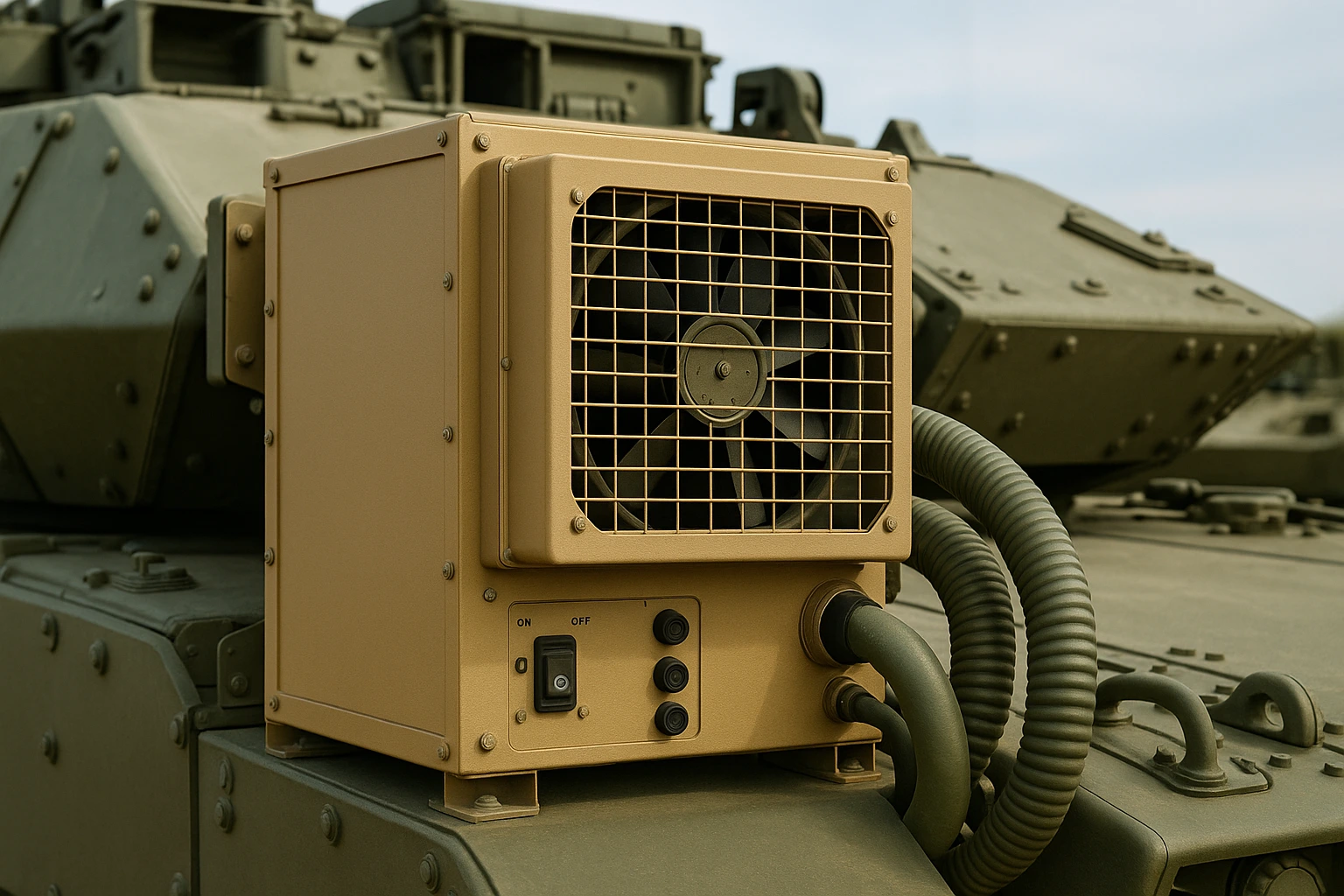
Key Features of Military Vehicle Air Conditioners
Durability & Rugged Design
- Constructed with shock-resistant components to withstand vibrations and rough terrain.
- Corrosion-resistant materials to resist exposure to sand, water, and salt.
Reliable Performance in Extreme Environments
- Continuous operation without overheating.
- Advanced compressors and heat exchangers designed for high thermal loads.
Energy Efficiency & Compactness
- Optimized for limited vehicle space.
- Power-efficient systems to reduce load on the vehicle engine or auxiliary power units.
Easy Maintenance and Longevity
- Modular design allows rapid replacement of components.
- Simplified servicing reduces downtime in field conditions.
Types of Military Vehicle Air Conditioning Solutions
Armored Personnel Carrier (APC) AC Units
- Cooling capacities between 5–15 kW, adapted for enclosed armored cabins.
- Uses reinforced ducting for uniform air distribution.
Tactical Truck & Mobile Unit AC Systems
- Designed for field deployment in supply, communication, and command vehicles.
- Portable and easy to install on different vehicle platforms.
Portable & Modular Military Air Conditioners
- Compact, removable units for temporary mission setups.
- Can be mounted on trailers or vehicle racks, supporting flexibility.
Trailer-Mounted & Heavy-Duty Cooling Solutions
- Supports command centers or medical units in hot zones.
- Cooling capacity up to 70 kW, enabling temperature control in large enclosed areas.
How Military Vehicle AC Enhances Operational Efficiency
- Maintains Crew Comfort: Fatigue reduction improves alertness in critical operations.
- Protects Sensitive Equipment: Communication gear and computing systems require stable temperatures to operate reliably.
- Improves Mission Readiness: Vehicles can operate longer without overheating, reducing maintenance delays.
Case Study: In a Middle East deployment, Drez portable military AC units maintained 26–28°C cabin temperatures in a 45°C external environment, enabling continuous 8-hour operations.
Installation and Maintenance Best Practices
- Installation Guidelines: Ensure proper ventilation paths and avoid obstructing airflow.
- Preventive Maintenance: Regular inspection of compressors, filters, and coolant levels.
- Troubleshooting Tips: Address abnormal vibrations or uneven cooling early to prevent system failure.
Choosing the Right Military Vehicle Air Conditioner
When selecting a unit, consider:
- Vehicle type: APC, truck, mobile command unit.
- Environment: Desert, jungle, or urban deployment.
- Cooling capacity: Measured in kW or BTU, based on cabin size and equipment heat load.
- Power source: Vehicle engine-driven vs auxiliary power unit (APU).
Example: Drez mobile AC units provide modular solutions for different vehicle classes, ensuring customizable cooling capacity.
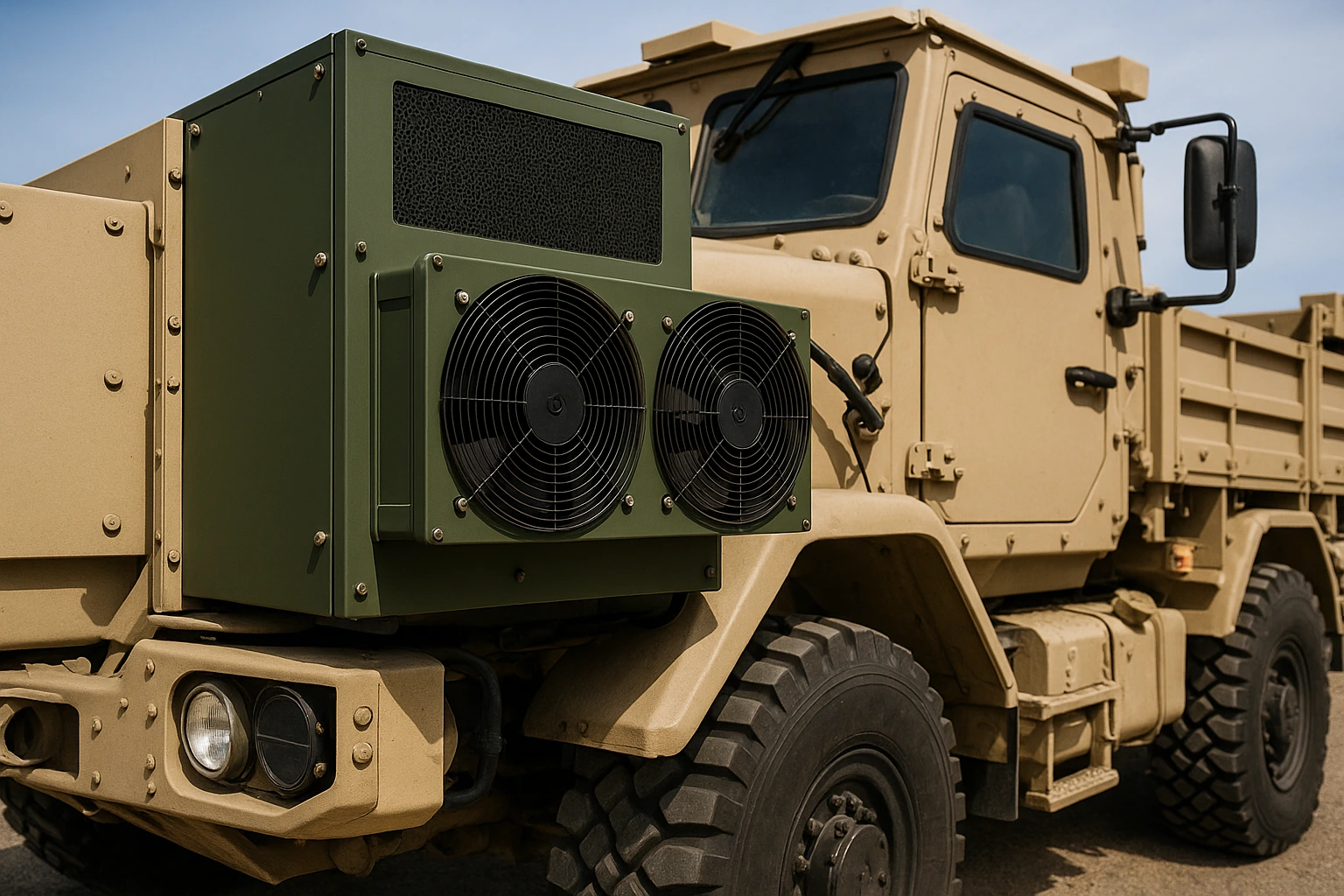
Case Studies & Real-World Applications
- APC Desert Operations:
- Drez mobile AC units maintained crew comfort in high-heat desert conditions.
- Tactical Truck Convoys:
- Modular systems installed on rapid-deployment trucks, allowing for flexible climate control.
- Field Command Centers:
- Trailer-mounted AC provided sustained 25–27°C indoor temperatures, enabling uninterrupted operations.
These cases demonstrate reliable cooling performance in extreme operational scenarios.
FAQs: Military Vehicle Air Conditioner
Q1: Why do military vehicles need specialized air conditioners?
Military vehicles operate in extreme environments – deserts, jungles, or urban conflict zones. Standard AC systems cannot withstand high heat, dust, vibration, or continuous operation. Military vehicle air conditioners ensure crew comfort, protect sensitive electronics, and maintain mission readiness.
Q2: What are the main features of a military-grade vehicle AC system?
Rugged construction, reliable performance in extreme conditions, energy efficiency, compact design for vehicle space constraints, and modular components for easy maintenance.
Q3: What types of military vehicle air conditioners are available?
- Armored Personnel Carrier (APC) AC units
- Tactical truck and mobile unit AC systems
- Portable and modular military air conditioners
- Trailer-mounted and heavy-duty cooling solutions
Q4: How does a military vehicle AC improve operational efficiency?
It maintains stable cabin temperatures, reduces crew fatigue, protects sensitive electronics, and ensures vehicles can operate longer without overheating, improving mission effectiveness.
Q5: What are the key considerations when choosing a military vehicle air conditioner?
Vehicle type, operational environment (heat, humidity, dust), cooling capacity (kW or BTU), power source (engine-driven or auxiliary), and reliability of the manufacturer.
Q6: Can portable AC units be used across multiple military vehicles?
Yes, modular portable units can be installed on different vehicle platforms or even mounted on trailers for flexible deployment in field operations.
Q7: How is the cooling capacity determined for military vehicles?
It depends on cabin size, number of personnel, heat generated by onboard electronics, and environmental temperature. Systems are often rated in kW or BTU to match operational requirements.
Q8: How often should military vehicle air conditioners be maintained?
Regular preventive maintenance is essential, including inspection of compressors, filters, coolant levels, and ducting. This ensures uninterrupted performance and reduces field downtime.
Q9: What makes Drez Aircon solutions suitable for military vehicles?
Drez offers durable, rugged, and reliable military-grade AC units designed for harsh environments. Their solutions provide custom cooling capacities, modular installation, and minimal maintenance, ensuring operational readiness.
Q10: Are there examples of successful military vehicle AC deployments?
Yes, Drez portable and modular AC units have maintained stable internal temperatures in APCs and tactical trucks during desert and high-heat operations, enabling continuous 8-hour missions while protecting crew and electronics.
Conclusion
Military vehicles demand air conditioning systems that combine durability, reliability, and efficiency. Proper selection, installation, and maintenance of AC units enhance crew comfort, operational readiness, and equipment longevity.
For defense vehicles operating in challenging environments, investing in specialized military-grade air conditioners — like Drezaircon solutions — ensures consistent performance under extreme conditions.