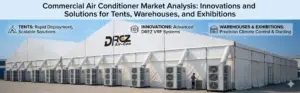
Portable Air Conditioner Commercial units have become an essential solution for businesses, industrial facilities, and event organizers looking to maintain optimal temperature in large or temporary spaces. Unlike residential AC systems, these units are specifically designed to meet the demanding requirements of commercial environments, offering high cooling capacity, mobility, and rapid deployment.
With growing demand for flexible and energy-efficient cooling solutions, portable commercial air conditioners are now widely used in offices, warehouses, exhibition halls, outdoor tents, and temporary event venues. These units provide targeted cooling, easy installation, and cost-effective solutions, especially when permanent HVAC infrastructure is either impractical or unavailable.
Businesses can benefit from quick setup, adjustable airflow, and the ability to relocate units as needed, making them ideal for multi-use or seasonal applications. At the same time, understanding how portable systems compare to traditional fixed commercial AC systems is critical for making informed decisions regarding performance, energy consumption, and long-term costs.
In this guide, we will explain the pros and cons of portable air conditioner commercial units versus fixed systems to help businesses choose the right cooling solution.
Portable Air Conditioner Commercial Units vs Fixed Systems: Pros and Cons
In commercial and industrial settings, maintaining optimal temperature is critical for comfort, safety, and productivity. Businesses, event organizers, and facility managers often face a choice between portable air conditioner commercial units and fixed commercial AC systems. This article explores the pros and cons of both, helping you make an informed decision for your space.
Introduction
Temperature control in commercial spaces can impact employee productivity, customer comfort, and operational efficiency. From warehouses and offices to event tents and exhibition halls, selecting the right cooling system is essential.
Businesses increasingly rely on portable air conditioner commercial units for flexibility and rapid deployment, while fixed systems offer long-term reliability for permanent installations. Choosing the right solution requires evaluating cooling capacity, mobility, installation complexity, cost, and energy efficiency.
In this guide, we compare portable AC units vs fixed systems, highlighting advantages, limitations, and real-world applications.
What Are Portable Air Conditioner Commercial Units?
Portable air conditioner commercial units are self-contained systems designed to provide temporary or mobile cooling in commercial spaces. Unlike fixed systems, these units do not require permanent installation, making them ideal for temporary events, warehouses, or spaces where permanent ductwork is impractical.
Key Features
- Mobility: Units come with casters or trailer-mounted options, allowing repositioning.
- Cooling Capacity: High-capacity commercial models range from 10,000 to 60,000 BTUs, sufficient for large spaces like tents, workshops, and event halls.
- Plug-and-Play Setup: Minimal installation; often just requiring an electrical connection and exhaust ventilation.
- Applications: Tents, temporary event halls, warehouses, industrial workshops, exhibition spaces.
Case Study:
A large outdoor wedding in Dubai required rapid cooling for a 1000-person tent. Portable AC commercial units were deployed to maintain temperatures around 22°C throughout the event, demonstrating flexibility, fast setup, and even air distribution.
What Are Fixed Commercial AC Systems?
Fixed commercial AC systems are permanent installations, typically integrated into a building’s HVAC infrastructure. They are designed for consistent, long-term cooling of offices, warehouses, and industrial facilities.
Key Features
- Ducted or Split Systems: Cooling is distributed through ducts or dedicated units for larger buildings.
- High Efficiency: Fixed units often provide higher energy efficiency compared to portable units.
- Applications: Offices, factories, large warehouses, commercial buildings.
- Durability: Designed for long-term operation with regular maintenance.
Case Study:
A manufacturing facility in Germany installed a fixed HVAC system to maintain controlled temperatures for sensitive equipment. The system consistently maintained 24°C throughout the facility, ensuring both employee comfort and equipment performance.
Pros of Portable Air Conditioner Commercial Units
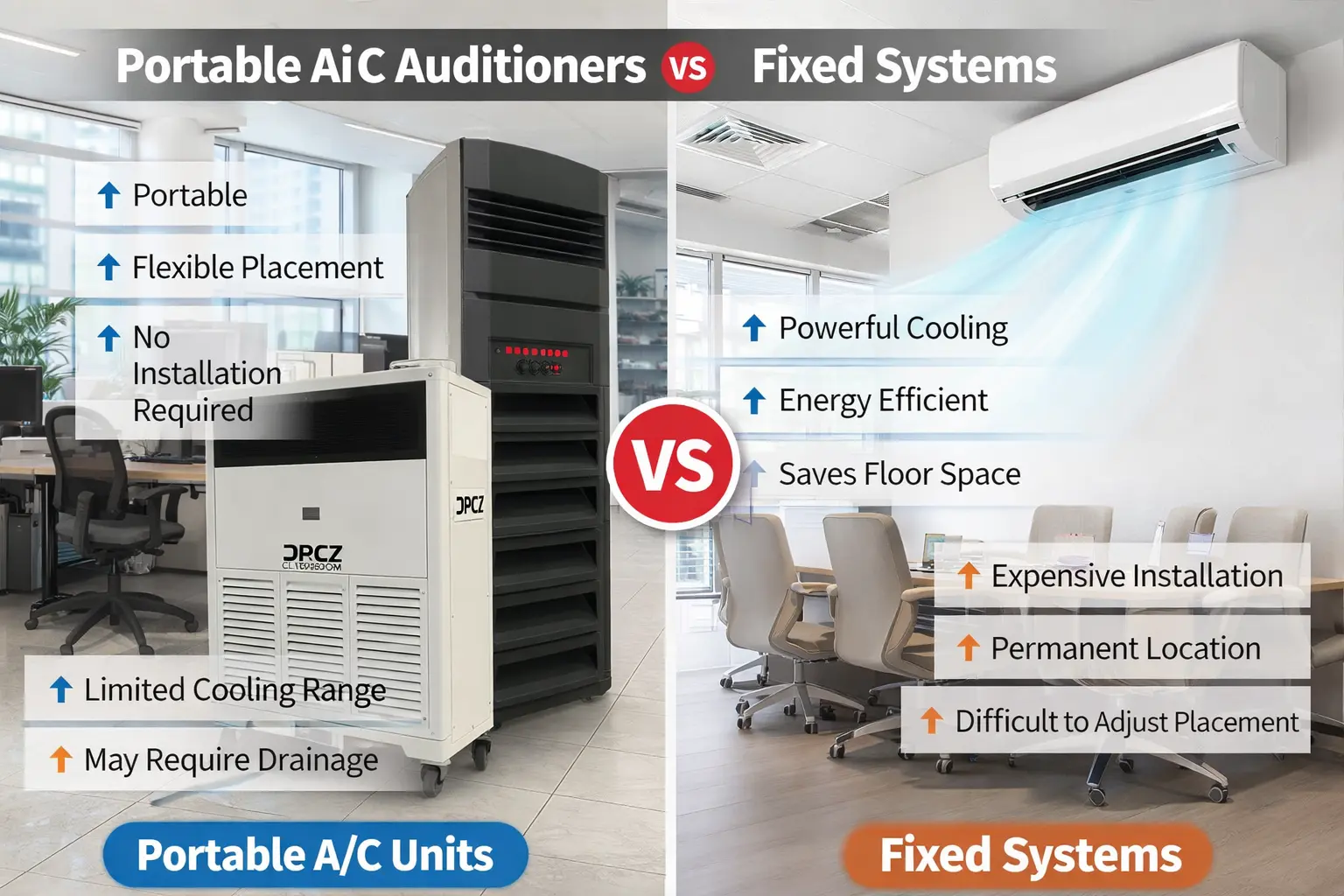
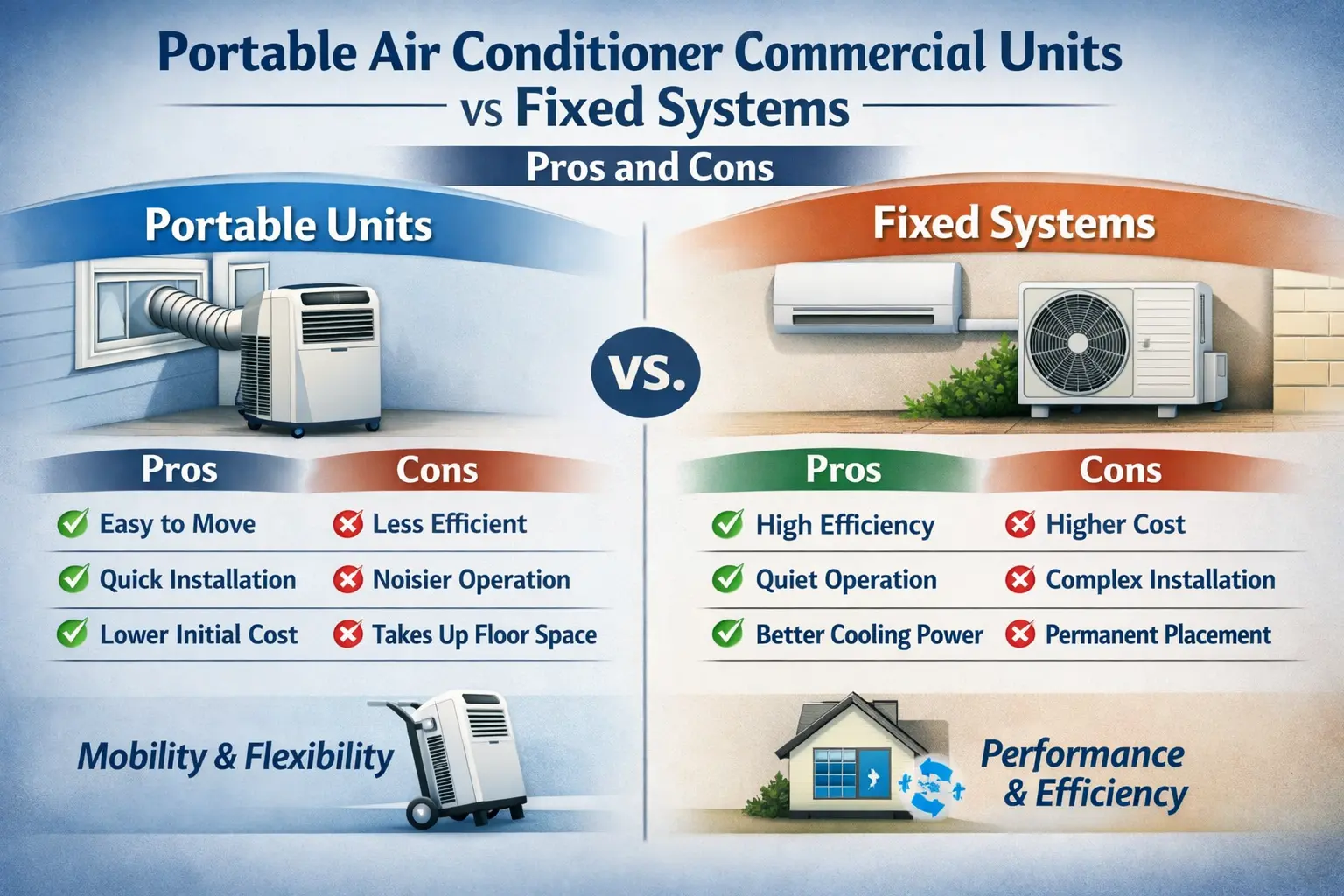
- Flexibility & Mobility
Portable units can be moved between locations without requiring structural changes, making them ideal for temporary setups or multiple-use areas. - Quick Deployment
No major installation is needed. Units can be operational within hours, reducing downtime. - Cost-Effective for Short-Term Use
Purchasing or renting portable units can be less expensive than installing fixed systems, particularly for temporary events. - Targeted Cooling
Portable ACs can focus on specific zones, allowing for localized temperature control without affecting the entire building.
Case Example:
A trade show in Singapore needed rapid cooling for a large 2000m² tent. Portable commercial AC units provided targeted cooling for exhibition zones, preventing hotspots and ensuring attendee comfort.
Cons of Portable Air Conditioner Commercial Units
- Limited Cooling Capacity
Although modern units are powerful, extremely large spaces may require multiple units or supplemental cooling. - Noise Levels
Portable units tend to produce more operational noise compared to fixed systems. This may be a consideration in office or conference environments. - Maintenance & Handling
Regular maintenance, such as cleaning filters and checking exhaust hoses, is necessary. Units must be handled carefully during relocation to avoid damage.
Pros of Fixed Commercial AC Systems
- Consistent, Long-Term Cooling
Fixed systems provide stable temperature control throughout a building, ideal for offices, factories, or warehouses with constant occupancy. - Higher Efficiency & Lower Noise
These systems are often more energy-efficient and quieter than portable units due to optimized ductwork and design. - Durable & Reliable
Built for long-term operation with professional installation, fixed systems require less frequent repositioning or adjustments.
Cons of Fixed Commercial AC Systems
- Higher Upfront Cost
Installation costs, including ductwork and infrastructure modifications, can be significant. - Lack of Mobility
Once installed, fixed systems are not portable, limiting flexibility for temporary spaces or events. - Installation Downtime
Installation can require extended downtime, especially in operational facilities.
Key Factors to Consider When Choosing Between Portable and Fixed Systems
When deciding between portable air conditioner commercial units and fixed systems, consider:
- Space Size and Cooling Requirements
- Small to medium temporary spaces: portable units
- Large permanent facilities: fixed systems
- Mobility vs Permanence
- Temporary or multi-use spaces benefit from portable units.
- Long-term operations benefit from fixed systems.
- Energy Efficiency and Operational Cost
- Fixed units generally offer better long-term efficiency.
- Portable units are energy-efficient for targeted short-term use.
- Installation Complexity and Budget
- Portable units: low installation cost, minimal disruption
- Fixed systems: higher initial investment, long-term cost efficiency
10 FAQs – Portable Air Conditioner Commercial Units
1. What is a portable air conditioner commercial unit?
A portable air conditioner commercial unit is a self-contained cooling system designed for temporary or mobile cooling in large commercial spaces, such as offices, warehouses, event tents, and industrial workshops. These units do not require permanent installation and can be moved as needed.
2. How do portable commercial AC units differ from fixed systems?
Portable units are mobile, easy to deploy, and ideal for temporary spaces, whereas fixed systems are permanently installed, more energy-efficient, and designed for long-term, consistent cooling.
3. What size commercial spaces can portable AC units cool?
Depending on capacity, commercial portable AC units can cool spaces ranging from 200 to over 2,000 square meters. High-capacity models (up to 60,000 BTU) are suitable for tents, warehouses, and large event halls.
4. Are portable commercial AC units energy-efficient?
Yes, modern commercial portable AC units are designed to balance mobility with energy efficiency. Efficiency depends on unit size, space volume, insulation, and usage duration.
5. Can portable AC units be used outdoors?
Yes, many portable commercial AC units are specifically designed for temporary outdoor setups, including tents, exhibition halls, and events, with proper venting and exhaust management.
6. Do portable commercial AC units require installation?
Minimal installation is required. Units typically need a power source and an exhaust vent for hot air. Unlike fixed systems, no ductwork or structural changes are necessary.
7. What maintenance is required for portable commercial AC units?
Routine maintenance includes cleaning air filters, checking coolant levels, and inspecting exhaust hoses. Proper maintenance ensures efficiency and prolongs unit life.
8. Can portable AC units replace fixed commercial systems?
They can be used as temporary or supplementary solutions but may not replace fixed systems for large permanent spaces, where fixed units provide more consistent long-term cooling.
9. Are portable commercial AC units noisy?
Noise levels vary by model. Industrial and event-grade units are designed to minimize noise while delivering high cooling capacity, but portable units are generally louder than fixed HVAC systems.
10. How do I choose the right portable commercial AC unit?
Consider space size, cooling capacity (BTU), mobility, energy efficiency, noise levels, and duration of use. For large events or industrial applications, consult a professional HVAC provider like Drez Aircon for tailored recommendations.
Summary : Which System Is Right for Your Commercial Space?
Choosing between portable air conditioner commercial units and fixed systems depends on your specific needs:
- Portable AC Units: Best for temporary events, multi-use spaces, or short-term cooling projects. Offers flexibility, fast deployment, and cost efficiency.
- Fixed Commercial Systems: Best for permanent installations where consistent temperature control, efficiency, and reliability are priorities.
For businesses, events, or industrial facilities requiring commercial-grade cooling, working with a specialized provider ensures optimized system selection, installation, and maintenance.
Drez Aircon offers tailored commercial portable AC solutions and fixed HVAC systems to meet diverse industrial and event cooling requirements. Whether you need temporary tent cooling or a permanent office system, professional guidance ensures your space remains comfortable, productive, and efficient.