Warehouse Portable Air Conditioner units have become an essential solution for industrial and commercial facilities looking to maintain optimal temperature, protect inventory, and ensure worker comfort. Unlike fixed HVAC systems, these industrial portable air conditioners offer flexibility, mobility, and rapid deployment, making them ideal for large warehouses, storage facilities, and manufacturing plants. With the growing demand for temporary warehouse cooling solutions, businesses are seeking units that deliver high-capacity cooling, energy efficiency, and low-maintenance operation.
These mobile AC systems for warehouses allow targeted cooling in areas with high heat loads or seasonal temperature variations, eliminating the need for expensive centralized systems. Their ductless designs, adjustable airflow, and easy installation features make them a practical choice for facilities with changing layouts or short-term cooling needs. Additionally, energy-efficient warehouse AC units help reduce operational costs while ensuring consistent climate control across large indoor spaces.
Warehouse Portable Air Conditioner Buying Guide: Features, Capacity, and Installation Tips
In this guide, we will explain the key features, capacity considerations, and installation tips to help you choose the right warehouse portable air conditioner for your facility.
Why Warehouse Portable Air Conditioners Are Essential
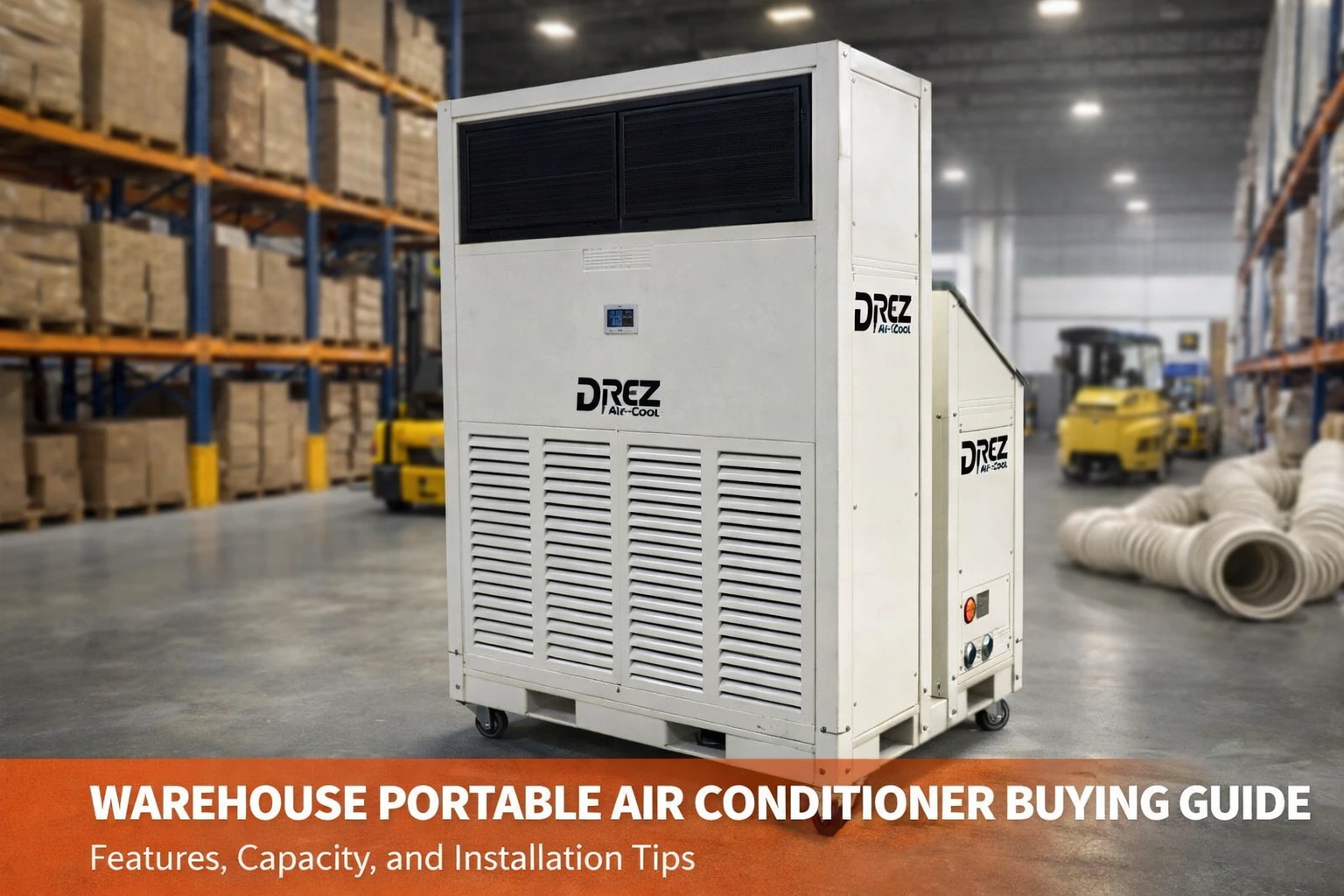
Warehouse Portable Air Conditioner units have become an essential solution for industrial and commercial facilities aiming to maintain optimal temperature, protect inventory, and ensure worker comfort. Unlike fixed HVAC systems, these industrial portable air conditioners provide flexibility, mobility, and rapid deployment, making them ideal for large warehouses, storage facilities, and manufacturing plants.
Businesses increasingly require temporary warehouse cooling solutions to meet seasonal or short-term needs. Mobile AC systems can deliver high-capacity cooling to specific zones, reducing energy consumption while avoiding the high cost of permanent installation. These units often feature ductless designs, adjustable airflow, and easy maintenance, making them practical for warehouses with dynamic layouts or multiple zones.
Understanding Warehouse Portable Air Conditioners
What is a Warehouse Portable Air Conditioner?
A warehouse portable air conditioner is a standalone cooling unit designed to provide efficient and flexible temperature control in large indoor spaces. Unlike traditional fixed AC systems, these units can be moved easily across the facility, enabling targeted cooling wherever it is needed most.
Key benefits include:
- Mobility: Equipped with wheels and handles for quick relocation.
- Scalable cooling: Multiple units can be deployed for larger areas.
- Rapid deployment: Immediate setup without requiring ductwork.
These industrial portable air conditioners are especially useful in warehouses with temporary storage zones, seasonal heat spikes, or operational changes that require flexible climate control.
Types of Portable Air Conditioners for Industrial Use
- Ductless Portable AC Units: Ideal for focused cooling without extensive installation.
- Ducted Portable AC Units: Suitable for larger areas that require channeling air to specific zones.
- Evaporative Portable AC Units: Low-energy options for dry climates, though less effective in humid environments.
Each type offers different cooling efficiency and application suitability depending on the warehouse layout and operational requirements.
Key Features to Look For in a Warehouse Portable Air Conditioner
When selecting a warehouse portable air conditioner, consider features that impact performance, efficiency, and long-term usability.
1. Cooling Capacity and Coverage Area
- Measured in BTU (British Thermal Units) or tonnage.
- Determine the cooling capacity based on warehouse size, ceiling height, and heat load.
- Industrial warehouses often require units with 20,000–50,000 BTU or higher, depending on square footage.
2. Portability and Mobility Features
- Check for wheels, handles, and compact design for easy movement.
- Ensure the unit can reach critical zones without disrupting warehouse operations.
3. Energy Efficiency
- Look for units with high energy efficiency ratios (EER).
- Energy-efficient units reduce electricity costs, especially in large warehouses or 24/7 operations.
4. Adjustable Airflow and Fan Speed
- Multiple fan speed settings allow targeted cooling in different zones.
- Adjustable airflow ensures consistent temperature control throughout the space.
5. Maintenance Ease
- Choose units with easily removable filters and simple drainage options.
- Low-maintenance units reduce downtime and operational disruption.
6. Noise Levels
- Units designed for warehouses should minimize noise, especially in areas with workers or sensitive machinery.
Determining the Right Capacity for Your Warehouse
How to Calculate Cooling Needs
To select the correct warehouse portable air conditioner, consider:
- Square footage of the space
- Ceiling height and warehouse volume
- Number of heat-generating machines
- Occupancy levels
Example: A 5,000 sq. ft. warehouse with a 20-ft ceiling and machinery generating heat may require 3–4 units of 25,000–30,000 BTU each for adequate cooling.
Recommended Portable AC Capacity Chart for Warehouses
| Warehouse Size | Ceiling Height | Cooling Capacity Needed | Suggested Units |
|---|---|---|---|
| 1,000 – 2,500 sq.ft | Up to 15 ft | 10,000 – 15,000 BTU | 1–2 Units |
| 2,500 – 5,000 sq.ft | Up to 20 ft | 25,000 – 30,000 BTU | 2–3 Units |
| 5,000 – 10,000 sq.ft | 20–25 ft | 40,000 – 50,000 BTU | 3–5 Units |
This approach ensures consistent cooling and avoids underpowered or overworked AC units.
Installation Tips for Warehouse Portable Air Conditioners
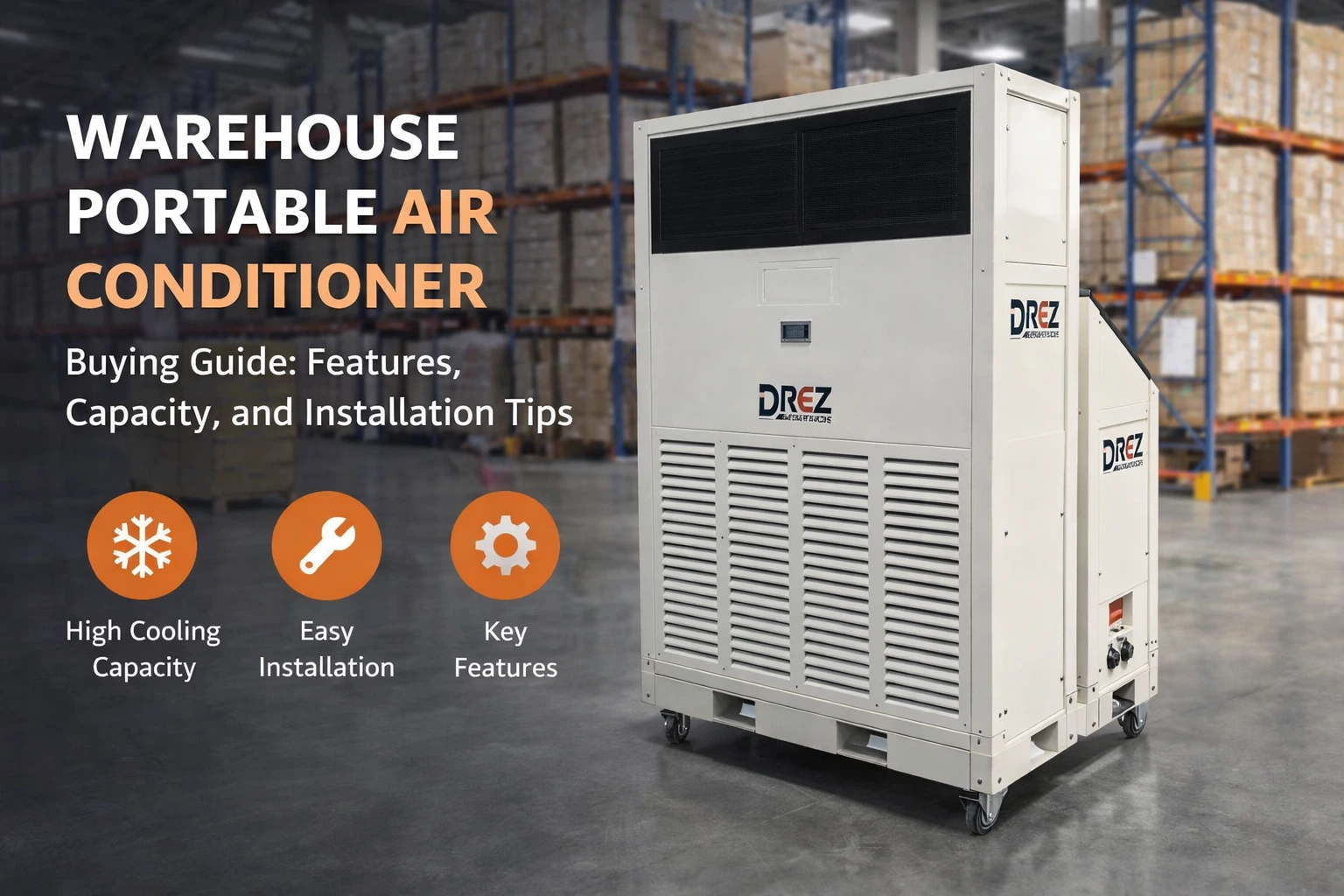
1. Proper Placement for Optimal Cooling
- Place units near high-heat zones or areas with heavy inventory.
- Avoid blocking airflow with racks or machinery.
2. Electrical Requirements
- Verify voltage compatibility and amperage rating for each unit.
- Ensure circuits can handle multiple units if deploying several ACs.
3. Ducting or Venting Options
- Ducted units may require flexible hoses to distribute air.
- Ductless portable AC units can be positioned without venting, ideal for temporary setups.
4. Safety Precautions and Clearance
- Maintain minimum clearance around the unit for airflow.
- Avoid placing units near flammable materials or water exposure.
5. Temporary vs Permanent Installations
- Temporary setups: quick deployment for seasonal or short-term cooling.
- Permanent setups: semi-fixed positions to maintain optimal temperature throughout the year.
Advantages of Using Warehouse Portable Air Conditioners
- Flexibility and Quick Deployment
- Can be moved to meet changing operational requirements.
- Ideal for temporary warehouses or storage expansions.
- Cost-Effective Cooling Solution
- Lower upfront investment compared to fixed HVAC systems.
- Scalable by adding units as required.
- Energy Savings
- Targeted cooling avoids wasting energy on unoccupied areas.
- Modern units offer high EER ratings, reducing electricity bills.
- Reduced Downtime and Maintenance Costs
- Easier to service individual units without affecting the entire warehouse.
Maintenance and Troubleshooting Tips
- Routine Maintenance: Clean filters weekly or monthly depending on dust levels.
- Drainage: Ensure water tanks or condensate lines are regularly emptied.
- Troubleshooting Common Issues:
- Insufficient cooling → Check for clogged filters or blocked airflow
- Excessive noise → Inspect fan blades and mounting
- Unit not starting → Verify power supply and voltage
Regular maintenance extends the lifespan of portable AC units and maintains consistent warehouse temperature control.
Frequently Asked Questions
1. What is a warehouse portable air conditioner?
A warehouse portable air conditioner is a standalone cooling unit designed for large industrial or commercial spaces. Unlike fixed AC systems, it can be moved easily to target specific areas, making it ideal for warehouses, storage facilities, and manufacturing plants.
2. How do I determine the right cooling capacity for my warehouse?
Capacity is determined by warehouse size, ceiling height, heat sources, and occupancy. Generally, larger warehouses require multiple units with higher BTU ratings to ensure uniform cooling. Using a capacity chart helps choose the right unit.
3. What are the advantages of portable AC units over fixed HVAC systems?
Portable AC units offer flexibility, lower upfront costs, quick deployment, and targeted cooling. They are ideal for temporary warehouses, seasonal cooling needs, or areas with dynamic layouts.
4. Can warehouse portable air conditioners be used in high-ceiling warehouses?
Yes. Many industrial portable AC units are designed for high-ceiling spaces with powerful fans and adjustable airflow to ensure consistent cooling throughout the warehouse.
5. Are portable AC units energy-efficient?
Modern warehouse portable AC units often feature high energy efficiency ratios (EER) and allow targeted cooling, reducing overall energy consumption compared to cooling the entire facility with a centralized HVAC system.
6. How difficult is it to install a warehouse portable air conditioner?
Installation is generally quick and straightforward. Ductless units require minimal setup, while ducted units may need flexible hoses for targeted air distribution. No extensive construction or permanent ductwork is usually needed.
7. Can multiple portable AC units be used in one warehouse?
Yes. Large warehouses often require multiple units to maintain uniform temperature. Units can be deployed strategically based on hotspots, high-traffic areas, or machinery-intensive zones.
8. What maintenance is required for a warehouse portable air conditioner?
Regular maintenance includes cleaning or replacing filters, checking drainage, and inspecting fans and coils. Proper maintenance ensures long-term performance and energy efficiency.
9. Are portable AC units noisy?
Industrial-grade units are designed to minimize operational noise, but noise levels vary depending on the cooling capacity and fan speed. Positioning units strategically can reduce impact on workers.
10. Why should I choose Drez Aircon for warehouse portable AC solutions?
Drez Aircon provides high-capacity, energy-efficient, and mobile AC units specifically designed for warehouse and industrial cooling needs. With professional support and scalable solutions, Drez Aircon ensures efficient and reliable temperature control for any warehouse size.
Take Next Step
Selecting the right warehouse portable air conditioner requires careful evaluation of features, capacity, and installation requirements. By understanding cooling needs, mobility requirements, and energy efficiency, businesses can deploy reliable and flexible cooling solutions for warehouses, storage facilities, and manufacturing plants.
Drez Aircon provides industrial-grade warehouse portable AC units designed for easy deployment, scalable cooling, and long-term efficiency. Contact us today to select the right AC solution for your warehouse and ensure optimal temperature control year-round.