Airplane pre-conditioning air unit functionality plays a critical role in modern aviation ground operations by ensuring that aircraft cabins remain at a controlled and comfortable temperature while parked at airport gates. These systems, commonly known as PCA (Pre-Conditioned Air) units, are essential components of aircraft ground support equipment (GSE) and are widely used across commercial airports, military bases, and private aviation terminals. The primary purpose of these units is to deliver cooled or heated air directly into the aircraft cabin without relying on the aircraft’s internal auxiliary power unit (APU), which consumes fuel and produces emissions.
By maintaining optimal cabin conditions before passenger boarding or during maintenance, these systems significantly improve operational efficiency, reduce fuel consumption, and support sustainable airport operations. The airplane pre-conditioning air unit functionality is based on advanced HVAC principles, including air compression, temperature regulation, filtration, and controlled airflow distribution through specialized ducts connected to the aircraft.
As airports continue to modernize and focus on energy-efficient infrastructure, PCA systems have become a standard requirement for efficient turnaround operations. They not only enhance passenger comfort but also contribute to environmental compliance and cost savings for airlines and airport operators.
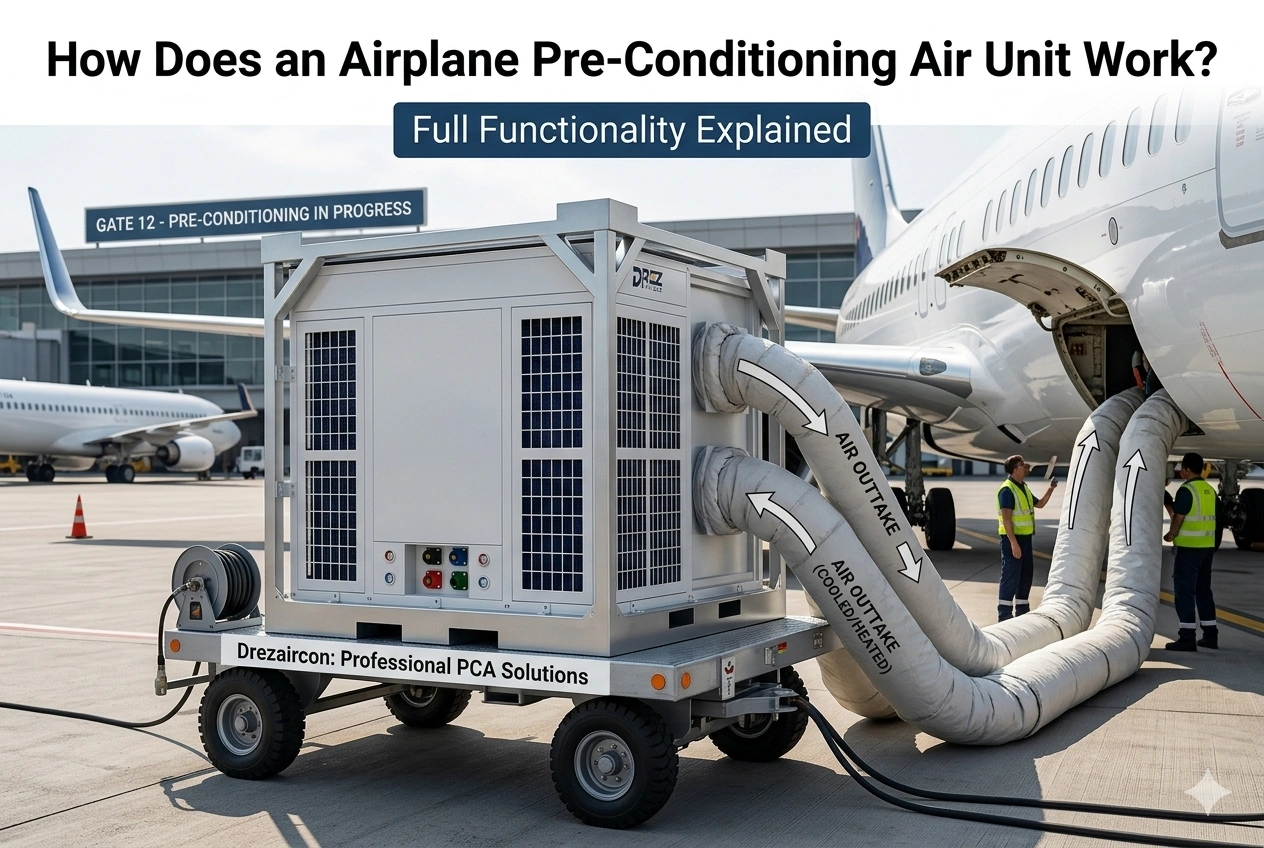
How Does an Airplane Pre-Conditioning Air Unit Work? Full Functionality Explained
In this guide we will explain how airplane pre-conditioning air unit functionality works in detail, including its working principle and key components.
We will also explore its role in aircraft ground support systems and its importance in modern aviation operations.
Introduction to Airplane Pre-Conditioning Air Unit Functionality
Airports are complex engineering environments where aircraft require continuous environmental control even when engines are off. One of the most important systems that enables this is the airplane pre-conditioning air unit, also known as a PCA (Pre-Conditioned Air) unit.
The airplane pre-conditioning air unit functionality is designed to deliver temperature-controlled air into an aircraft cabin while it is parked at the gate. This system ensures passengers and crew experience a comfortable environment before takeoff without relying on the aircraft’s Auxiliary Power Unit (APU).
In modern aviation, efficiency, sustainability, and ground safety are critical. PCA units play a key role in reducing fuel consumption, minimizing emissions, and improving airport operational efficiency.
This article explains the working principle, components, and real-world functionality of airplane pre-conditioning air units in a structured and technical yet easy-to-understand format.
What Is an Airplane Pre-Conditioning Air Unit?
An airplane pre-conditioning air unit is a ground-based HVAC system used in airports to supply cooled or heated air directly into an aircraft cabin while it is parked at the terminal.
It is a part of aircraft ground support equipment (GSE) and is commonly installed near jet bridges or airport gates.
Key Purpose:
- Maintain cabin temperature before passenger boarding
- Reduce dependency on aircraft APU systems
- Provide stable airflow during maintenance or turnaround operations
Difference from APU:
Unlike the aircraft’s internal Auxiliary Power Unit (APU), which burns fuel, PCA units operate from external electrical or mechanical systems located at the airport, making them far more energy-efficient.
Airplane Pre-Conditioning Air Unit Functionality Explained
The core airplane pre-conditioning air unit functionality revolves around controlled air delivery from a ground system into the aircraft cabin.
Step-by-Step Functionality:
- Air Intake from Ambient Environment
The system draws external air from the surrounding environment. - Compression and Temperature Adjustment
Air passes through compressors and heat exchangers where it is cooled or heated depending on requirements. - Air Filtration Process
Filters remove dust, pollutants, and moisture to ensure clean air delivery. - Controlled Air Distribution
Conditioned air is sent through insulated ducts connected to the aircraft. - Cabin Air Regulation
Air enters the aircraft cabin through onboard vents, maintaining desired temperature levels.
Key Output:
- Stable cabin temperature (cooling or heating)
- Controlled humidity levels
- Continuous airflow during ground operations
This functionality is critical for passenger comfort and operational efficiency in aviation.
Working Principle of Aircraft Pre-Conditioning Air Systems
The working principle of airplane pre-conditioning air units is based on thermodynamic air treatment and controlled air circulation.
1. Compressor-Based Cooling System
Air is compressed to increase pressure, then passed through a cooling coil where heat is removed.
2. Heat Exchange Mechanism
Heat exchangers regulate temperature by transferring heat between air streams.
3. Air Distribution System
Flexible ducts carry conditioned air directly into aircraft environmental control systems.
4. Temperature Feedback Control
Sensors monitor cabin temperature and adjust output automatically.
5. Energy Optimization System
Modern PCA units use variable-speed fans and smart controls to reduce energy consumption.
This process ensures that aircraft cabins remain at optimal temperature without engine usage.
Key Components of an Airplane Pre-Conditioning Air Unit
Understanding airplane pre-conditioning air unit functionality requires knowledge of its main components:
1. Air Handling Unit (AHU)
Responsible for filtering, cooling, and circulating air.
2. Compressor System
Generates pressure required for air movement and temperature control.
3. Condenser & Heat Exchanger
Regulates thermal energy exchange for cooling or heating air.
4. Flexible Air Ducts
Connect ground unit to aircraft cabin intake points.
5. Control Panel System
Monitors temperature, airflow, and system performance.
6. Sensors & Automation System
Ensures real-time adjustment based on cabin conditions.
These components work together to maintain consistent airflow and temperature stability.
Role in Aircraft Ground Support Equipment (GSE)
The PCA unit is a critical part of aircraft ground support equipment (GSE) systems used during aircraft turnaround operations.
Integration Points:
- Connected to jet bridges or gate systems
- Used during boarding and disembarkation
- Supports maintenance operations when aircraft engines are off
Operational Importance:
- Reduces aircraft engine idle time
- Improves airport gate efficiency
- Enhances passenger boarding experience
Without PCA systems, aircraft would rely heavily on fuel-burning APUs, increasing operational costs and emissions.
Benefits of Airplane Pre-Conditioning Air Unit Functionality
The airplane pre-conditioning air unit functionality provides multiple operational and environmental benefits.
1. Fuel Efficiency
Reduces dependency on APU systems, saving aviation fuel.
2. Lower Emissions
Helps airports meet environmental sustainability targets.
3. Passenger Comfort
Ensures cabin is comfortable before boarding begins.
4. Noise Reduction
Eliminates APU noise at airport gates.
5. Cost Savings
Reduces maintenance and fuel costs for airlines.
6. Operational Efficiency
Speeds up aircraft turnaround processes.
These benefits make PCA systems essential in modern aviation infrastructure.
Airplane Pre-Conditioning Air Unit vs APU System
| Feature | PCA Unit | APU System |
|---|---|---|
| Energy Source | Ground-based electricity | Aircraft fuel |
| Emissions | Low | High |
| Noise Level | Low | High |
| Efficiency | High | Moderate |
| Operational Cost | Low | High |
Key Insight:
PCA systems are increasingly replacing APU usage in modern airports due to environmental regulations and cost efficiency requirements.
Applications in Aviation and Airport HVAC Systems
The use of PCA units extends across multiple aviation environments:
1. Commercial Airports
Used at passenger boarding gates for cabin conditioning.
2. Aircraft Maintenance Hangars
Maintains temperature during servicing operations.
3. Military Aviation Bases
Supports aircraft readiness in controlled environments.
4. Private Jet Terminals
Ensures luxury-level cabin comfort before boarding.
5. Emergency & Temporary Airports
Used in mobile aviation infrastructure setups.
Companies like DrezAircon are expanding industrial HVAC solutions into such temporary and large-scale cooling systems, aligning with aviation-grade environmental control technologies.
Importance in Sustainable Aviation Systems
Modern aviation is shifting toward sustainability, and PCA systems play a major role.
Sustainability Contributions:
- Reduction in jet fuel consumption
- Lower greenhouse gas emissions
- Support for green airport certification programs
- Compliance with international aviation environmental standards
As airports move toward net-zero targets, airplane pre-conditioning air unit functionality becomes a core infrastructure requirement.
Future Trends in Aircraft Ground Cooling Technology
The future of PCA systems is evolving rapidly:
1. Smart Automation Systems
AI-based control for temperature optimization.
2. Electric Ground Support Equipment
Fully electric PCA units replacing diesel-based systems.
3. IoT-Based Monitoring
Real-time performance tracking and predictive maintenance.
4. Hybrid HVAC Systems
Integration of renewable energy sources.
5. Modular Portable Cooling Units
Flexible systems for temporary aviation setups.
These innovations are shaping the next generation of airport HVAC infrastructure.
Summary
The airplane pre-conditioning air unit functionality is a vital part of modern aviation ground operations. It ensures aircraft cabins remain at optimal temperature while reducing fuel consumption, emissions, and operational costs.
From compressors and heat exchangers to airflow regulation and smart controls, PCA units represent a highly engineered solution in aircraft ground support equipment systems.
As aviation moves toward sustainability and efficiency, technologies like PCA systems will continue to play a central role in airport infrastructure development.
For industries exploring advanced HVAC solutions, companies like DrezAircon are aligned with similar engineering principles in large-scale cooling systems, offering expertise in portable and industrial air conditioning technologies.