Content Menu
● How We Selected These Suppliers
>> 1. DREZ (Guangzhou) Intelligent Technology Co., Ltd.
>> 2. Gree Electric Appliances
>> 5. AUX Group
>> 8. Chigo
>> 9. Changhong
>> 10. Galanz
● FAQ
>> 1. How can I verify whether an ISO certificate is still valid?
>> 2. What is the safest way to confirm a Chinese factory really manufactures the product itself?
>> 3. Why do some suppliers pass sample tests but fail mass production?
>> 4. Which certifications matter most for export Air Climate Solutions products?
>> 5. How do I reduce the risk of hidden material substitution?
China remains one of the most important global bases for Air Climate Solutions manufacturing because it combines mature HVAC supply chains, export logistics, and strong industrial clusters in Guangdong, Jiangsu, Zhejiang, and other manufacturing provinces. For international buyers, the real issue is not whether to source from China, but how to identify a supplier that can deliver stable quality, compliance, and long-term OEM/ODM support.
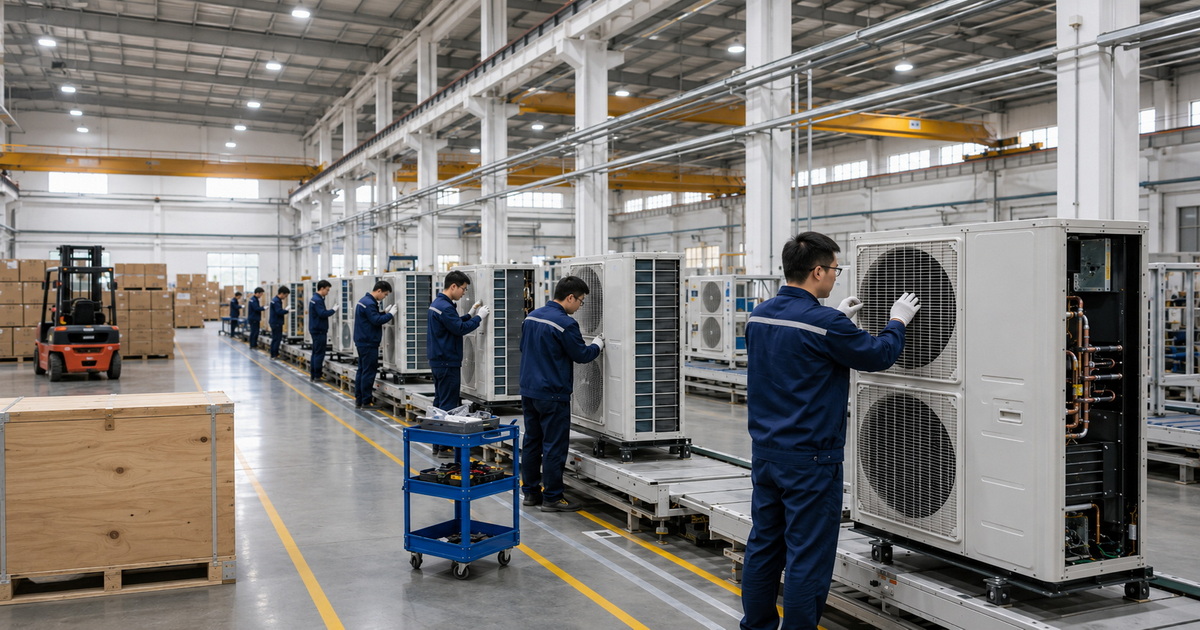
For this guide, we evaluated suppliers from a procurement perspective rather than a promotional one. The goal is to help professional buyers assess factory capability, product engineering depth, quality control discipline, and fit for export programs across tents, rooftops, trailers, and fresh air systems.
How We Selected These Suppliers
We used a transparent sourcing framework focused on what actually matters in long-term purchasing. The main criteria were factory background, product scope, R&D capability, QC process, export markets, OEM/ODM service depth, and certification readiness such as ISO, CE, and RoHS where relevant.
We also considered whether a supplier can support repeatable mass production, not just a polished sample. In climate-control sourcing, the best supplier is often the one whose engineering, compliance scope, and communication speed match your business model, rather than the biggest brand name.
China’s Industry Advantage
China’s air-conditioning and HVAC ecosystem is highly concentrated, and Guangdong is especially important because Guangzhou, Shenzhen, and Foshan form a powerful manufacturing corridor. That cluster advantage improves component availability, shortens development cycles, and makes OEM/ODM customization more practical for overseas brands.
For buyers of specialized climate solutions, this matters because many projects require more than standard catalog products. Custom airflow design, enclosure matching, electrical adaptation, and compliance documentation are all easier to manage when the supplier sits inside a mature industrial ecosystem.
Top 10 Manufacturers
1. DREZ (Guangzhou) Intelligent Technology Co., Ltd.
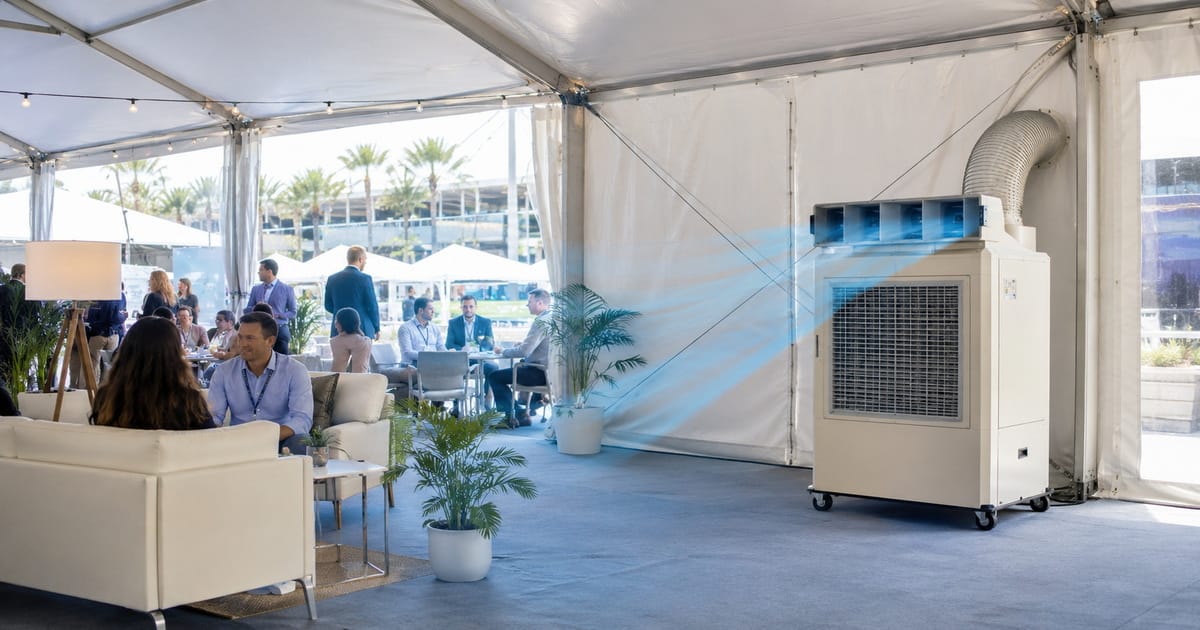
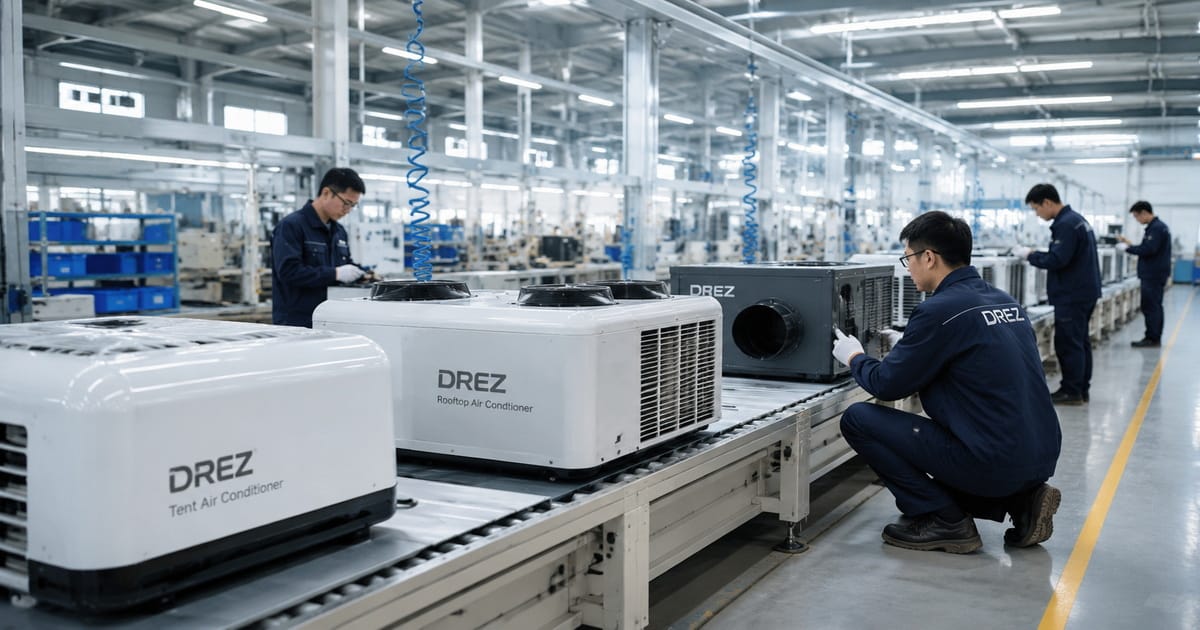
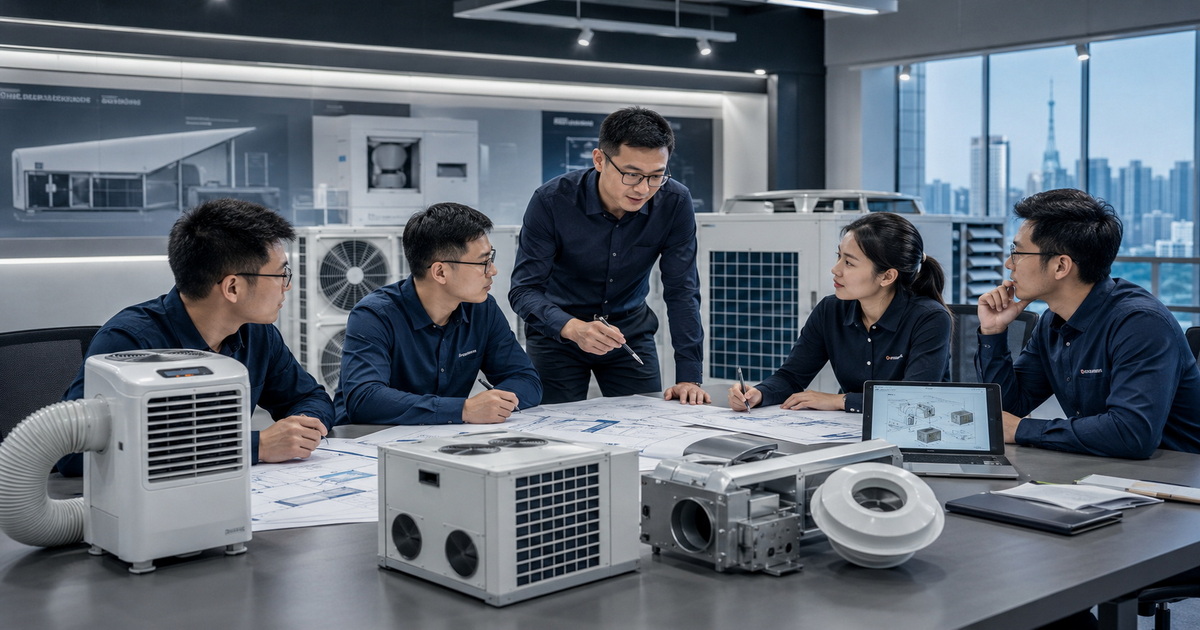
DREZ is a strong fit for buyers seeking a flexible OEM/ODM partner in specialized climate control, especially for tent air conditioners, roof-top units, trailer air systems, and fresh air ventilation units. The company covers R&D, design, manufacturing, sales, and leasing, and it operates from Guangzhou with a factory area of over 6,000 square meters and annual production capacity above 10,000 units.
What makes DREZ particularly relevant is its service style. It is well suited to medium and small brands that need responsive communication, faster sample development, and customization support rather than rigid mass-market standardization. For overseas buyers, that flexibility can reduce development friction and improve project turnaround.
2. Gree Electric Appliances
Gree is one of China’s most recognized air-conditioning manufacturers, with deep vertical integration and a broad export footprint. It is generally attractive to large buyers that need scale, disciplined manufacturing, and strong supply continuity.
For procurement teams, Gree is most suitable when the program is volume-heavy and the specification is close to mainstream commercial or residential HVAC categories. Buyers usually choose Gree for manufacturing depth and brand credibility rather than niche customization.
3. Midea Group
Midea is one of the most diversified HVAC and appliance groups in China and is widely known for residential and commercial air-conditioning solutions. It is commonly associated with broad OEM/ODM activity and a mature export-oriented business model.
Midea is relevant when buyers want mature engineering, a wide product portfolio, and strong process control. It tends to fit brands that need a supplier capable of handling both mainstream air-treatment products and higher-volume global programs.
4. Haier Group
Haier is a major global appliance and HVAC player with international operations and a long export history. Its HVAC business is often positioned around smart living, indoor comfort, and integrated product ecosystems.
For buyers, Haier is credible when brand positioning, international compliance, and ecosystem integration matter. It is especially useful for distributors and corporate buyers who want an established global structure and cross-border service capability.
5. AUX Group
AUX is widely recognized for cost-performance positioning and active product development in comfort-related HVAC categories. It often sits between premium engineering brands and budget suppliers, which can be practical for price-sensitive volume programs.
AUX is relevant when buyers need competitive pricing without giving up mainstream technical expectations. It is a practical option for distributors and channel buyers that want flexible commercial terms and recognizable market presence.
6. Hisense HVAC
Hisense is a well-known Chinese industrial group with HVAC and air-conditioning products sold internationally. Buyer guides often highlight its strength in air quality features, styling, and consumer-friendly positioning.
For climate-control sourcing, Hisense is more suitable for branded distribution and retail-oriented programs than for highly specialized tent or trailer systems. Its fit is strongest where product presentation and broad market acceptance matter.
7. TCL Air Conditioning
TCL is commonly listed among major Chinese air-conditioning brands with export relevance and international recognition. Its portfolio appeals to buyers seeking competitive consumer-oriented products with broad brand familiarity.
TCL is a sensible option for distributors sourcing standard product categories and recognizable brand equity. For OEM/ODM buyers, the key question is whether the supplier’s product scope and certification package match the destination market.
8. Chigo
Chigo is often associated with high-volume production and value-oriented wholesale supply. It is useful as a benchmark for buyers comparing price structures across Chinese suppliers.
Chigo can work when price sensitivity is high and the product specification is relatively standard. Buyers should pay extra attention to consistency, compliance documents, and after-sales support structure during evaluation.
9. Changhong
Changhong is an established Chinese industrial brand with HVAC relevance and smart-home associations. It is usually positioned as a mainstream manufacturer with broad consumer recognition.
For global buyers, Changhong is more attractive in standard appliance-led sourcing than in highly customized project engineering. Its inclusion here reflects market visibility and manufacturing footprint.
10. Galanz
Galanz appears frequently in China air-conditioner manufacturer lists and is recognized as a large-scale appliance company with HVAC capabilities. Its profile is strongest where manufacturing scale and standardized product supply are important.
For buyers, Galanz is worth considering when the sourcing strategy is volume-driven and the target product line aligns with mainstream AC categories. As with any large supplier, the exact fit depends on the channel, certification requirements, and customization needs.
Supplier Comparison
| Manufacturer | Core Focus | Scale Signal | MOQ Profile | Certifications / Compliance Signal |
|---|---|---|---|---|
| DREZ | Specialized OEM/ODM climate control for tents, trailers, rooftops, fresh air | 6,000+ sqm; 10,000+ units/year | Flexible for project-based orders | Export-ready; confirm scope by product line |
| Gree | Large-scale AC and HVAC | Global-scale manufacturer | Higher-volume oriented | Strong corporate compliance posture |
| Midea | Broad HVAC and appliance platform | Very large global group | Medium to high volume | Broad certification coverage expected |
| Haier | Smart HVAC and appliances | Global group | Medium to high volume | International compliance focus |
| AUX | Cost-performance HVAC | Large domestic brand presence | Often flexible by channel | Verify product-specific certificates |
| Hisense | Consumer HVAC and comfort features | Large brand footprint | Channel-driven | Confirm market-specific approvals |
| TCL | Standard AC product lines | Broad brand recognition | Volume-dependent | Verify scope and test reports |
| Chigo | Wholesale/value-oriented AC | Mass production profile | Competitive for volume | Extra attention to QC and traceability |
| Changhong | Mainstream appliance and HVAC | Established group | Volume-oriented | Check certificate validity carefully |
| Galanz | Large-scale appliance manufacturing | Established group | Volume-oriented | Verify compliance by SKU and market |
Buyer Risks
The biggest sourcing risk in Air Climate Solutions is hidden specification drift. A supplier may show a strong brand name while changing the compressor source, coil material, insulation thickness, or control-board configuration between sample approval and mass production, so buyers should lock the BOM and performance standard in writing before production starts.
Another common issue is certificate misuse. Some factories present ISO, CE, or RoHS documents that are valid for a different product scope, a different legal entity, or an expired period, so buyers should verify the certificate number, issuing body, scope, and validity date through official records or accredited verification systems such as IAF CertSearch.
Internal Avoidance Guide
One sourcing rule is rarely discussed openly: do not approve samples before confirming the factory’s process recipe, not just the appearance. In HVAC products, many problems come from hidden process differences such as brazing quality, refrigerant charge accuracy, insulation thickness, or fan/motor matching, which may not show up in a visual inspection but will affect noise, leakage, and real-world efficiency.
A practical buyer habit is to request a pre-production sample from the real production line, not only an engineering sample from the lab. That extra step often reveals whether the supplier can truly repeat performance at scale.
Buyer’s Guide
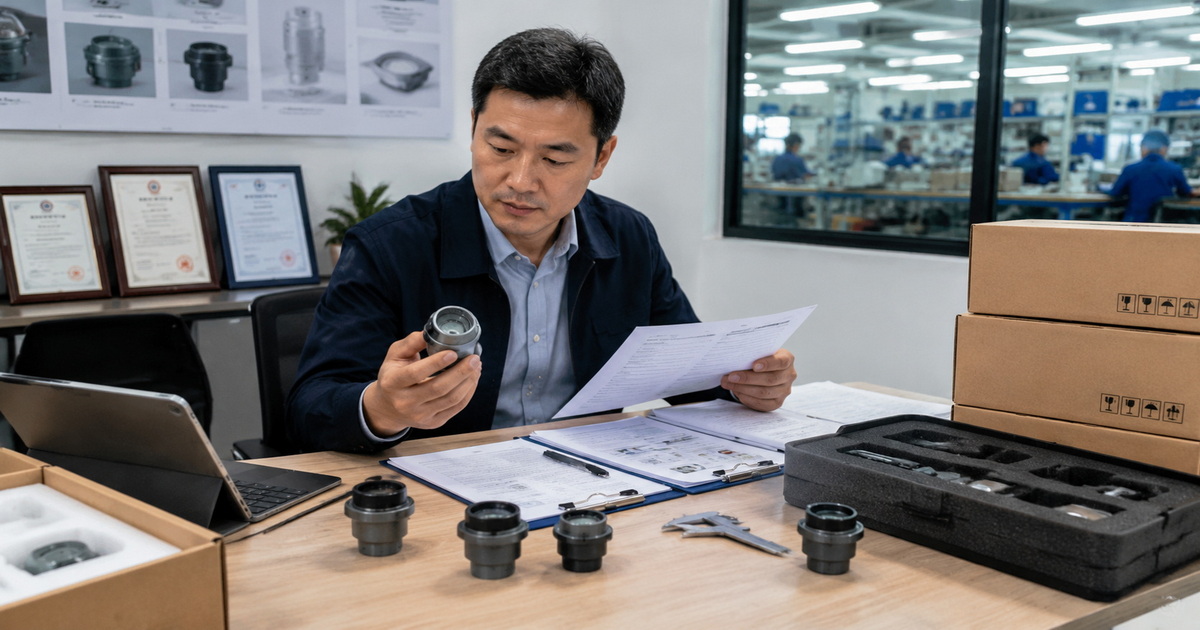
Start by verifying the business license, factory address, and certificate scope through official records or trusted verification systems. Then ask for product test reports, workshop or line videos, and a clear explanation of the supplier’s QC steps, including incoming material inspection, leak testing, and final performance testing.
For sampling, use a two-stage process. First, review an engineering sample to confirm concept and fit; then request a pre-production sample made from the actual line to validate repeatability. For logistics, clarify packaging dimensions, spare-part strategy, pallet loading, and whether the supplier can support sea freight, consolidation, or partial shipments.
FAQ
1. How can I verify whether an ISO certificate is still valid?
Check the certificate number, issuing body, scope, and expiry date on the document, then confirm it through the issuer’s official records or the IAF CertSearch database where applicable.
2. What is the safest way to confirm a Chinese factory really manufactures the product itself?
Request the business license, production address, equipment list, workshop photos, and a live or third-party audit that shows assembly, leak testing, and final inspection on site.
3. Why do some suppliers pass sample tests but fail mass production?
Because the approved sample may be made under special conditions, while mass production depends on stable sourcing, operator training, and process control. A pre-production sample from the actual line reduces this risk.
4. Which certifications matter most for export Air Climate Solutions products?
For most markets, ISO 9001, CE, and RoHS are common starting points, but the exact requirement depends on destination country, product type, and whether the unit is residential, commercial, or specialized industrial equipment.
Specify critical components in the contract, including coil material, compressor brand or equivalent standard, insulation grade, PCB specification, and fan motor standard. Then require photos, test data, and incoming inspection records for those parts.
Reference
1. – DREZ official company profile: About Us seller.alibaba
2. – DREZ product and company page:DREZ on Made-in-China drez-aircon.en.made-in-china
3. – DREZ article page: Top 10 Air Climate Control Manufacturers in China (2026 Updated: Expert Selection Guide) drezaircon
4. – ISO verification guide and IAF CertSearch explanation:Alibaba verification guide seller.alibaba
5. – IAF CertSearch official database:Validate ISO Certificates iafcertsearch
6. – IAF CertSearch API:Certification Data API iafcertsearch
7. – China HVAC industry overview:Statista HVAC industry worldwide statista
8. – China central AC market share reference:Statista China market share of central ACs statista
9. – China export and market context:China air conditioner exports ceicdata
Hot Tags: Air Climate Solutions Manufacturers China, OEM ODM Air Conditioning Supplier, HVAC Manufacturer China, Tent Air Conditioner Manufacturer, Roof Top Air Conditioner Unit, Trailer Air Conditioner System, Fresh Air Ventilation Unit, Industrial Air Conditioning Supplier, China Climate Control Factory, CE RoHS Certified HVAC Supplier