Content Menu
● Why This Comparison Matters for Temporary Structures
● What Each System Really Means
● Where Split Units Make Sense
● Decision Factors That Matter Most
● FAQs
>> 1. Is a mobile air conditioning system better than a split unit for temporary structures?
>> 2. When is a split unit the better option?
>> 3. Can temporary structures use both systems together?
>> 4. What types of temporary spaces need cooling most?
>> 5. What should buyers check before choosing a cooling system?
Temporary structures need cooling that is fast, flexible, and easy to deploy, which is why the debate between a mobile air conditioning system and a split unit matters so much. In most temporary applications, mobile air conditioning is the more practical choice because it is designed for rapid installation, relocation, and short-term or seasonal use, while split units are better suited to semi-permanent spaces with stable layouts and more predictable operating conditions.
Why This Comparison Matters for Temporary Structures
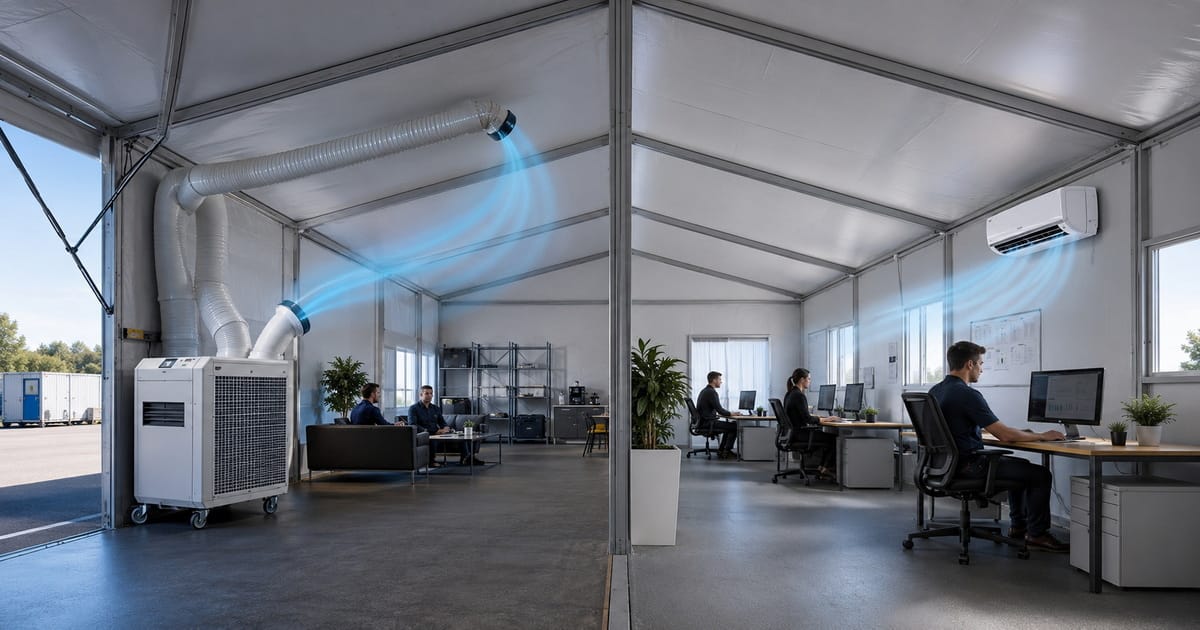
Temporary structures include tents, event halls, construction trailers, pop-up showrooms, exhibition pavilions, and modular workspaces. These spaces often change shape, occupancy, and usage patterns faster than permanent buildings, so the cooling strategy must adapt just as quickly. That is why selecting the wrong system can lead to uncomfortable guests, disrupted operations, poor humidity control, and avoidable energy waste.
From a user-experience perspective, the best cooling system is not simply the one with the lowest price or highest capacity. It is the system that delivers the right comfort level with the least installation friction and the greatest flexibility for changing site conditions. For OEM and ODM buyers, that also means thinking about portability, serviceability, and how easily the equipment can be branded or customized for different markets.
What Each System Really Means
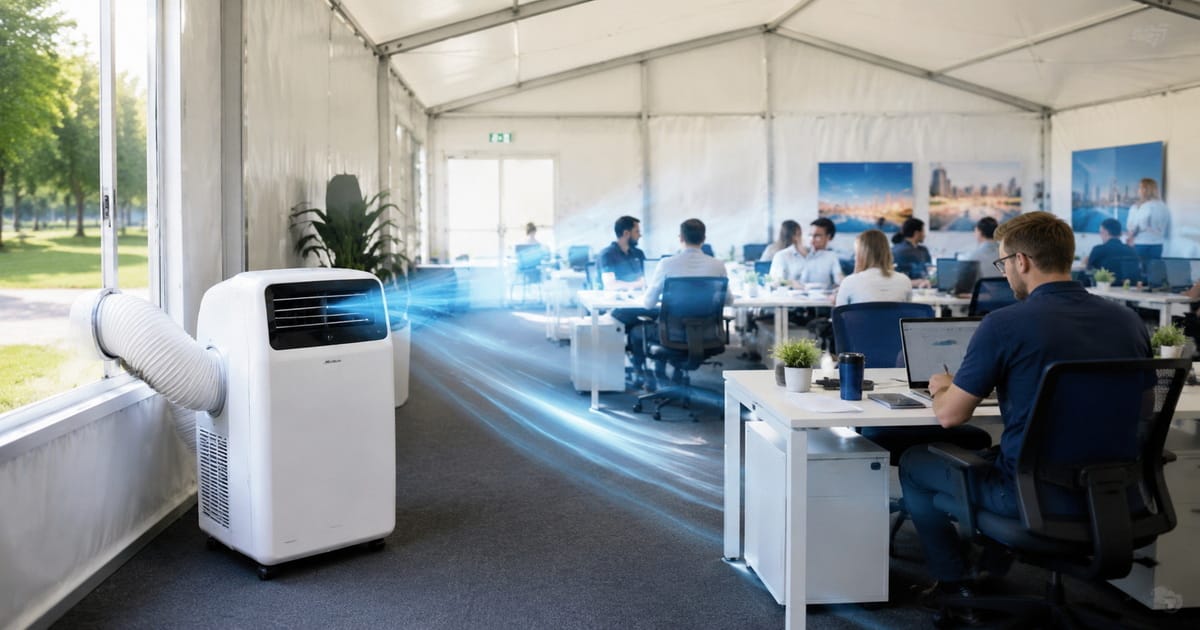
A mobile air conditioning system is a portable or relocatable cooling solution designed to be transported, installed, and removed without major construction work. Common use cases include events, temporary structures, warehouses, manufacturing support areas, and construction trailers. In practice, this category often includes portable air conditioners, spot coolers, and temporary HVAC setups.
A split unit uses an indoor unit and an outdoor unit connected by refrigerant lines, and it cools a defined space more cleanly than many older portable systems. Its biggest advantage is efficient zoned comfort in a more stable environment, which is why it works well in homes, offices, and some semi-permanent rooms. However, when a site changes often or lacks the time and infrastructure for a more fixed install, the split unit becomes less convenient.
Side-by-Side Comparison
| Factor | Mobile Air Conditioning System | Split Unit |
|---|---|---|
| Deployment speed | Fast setup and removal | Slower, requires more fixed installation |
| Flexibility | High; can move with layout changes | Moderate; best for stable zones |
| Best fit | Temporary structures, events, trailers, pop-ups | Semi-permanent rooms, additions, fixed zones |
| Installation complexity | Lower, usually less invasive | Higher, requires lines and mounting |
| Comfort control | Strong for targeted spots and critical zones | Strong for consistent zoned comfort |
| Infrastructure dependence | More forgiving in changing sites | More dependent on layout and mounting constraints |
| Ideal business model | Rentals, temporary projects, OEM/ODM portable products | Fixed-location comfort systems |
Why Mobile AC Usually Wins
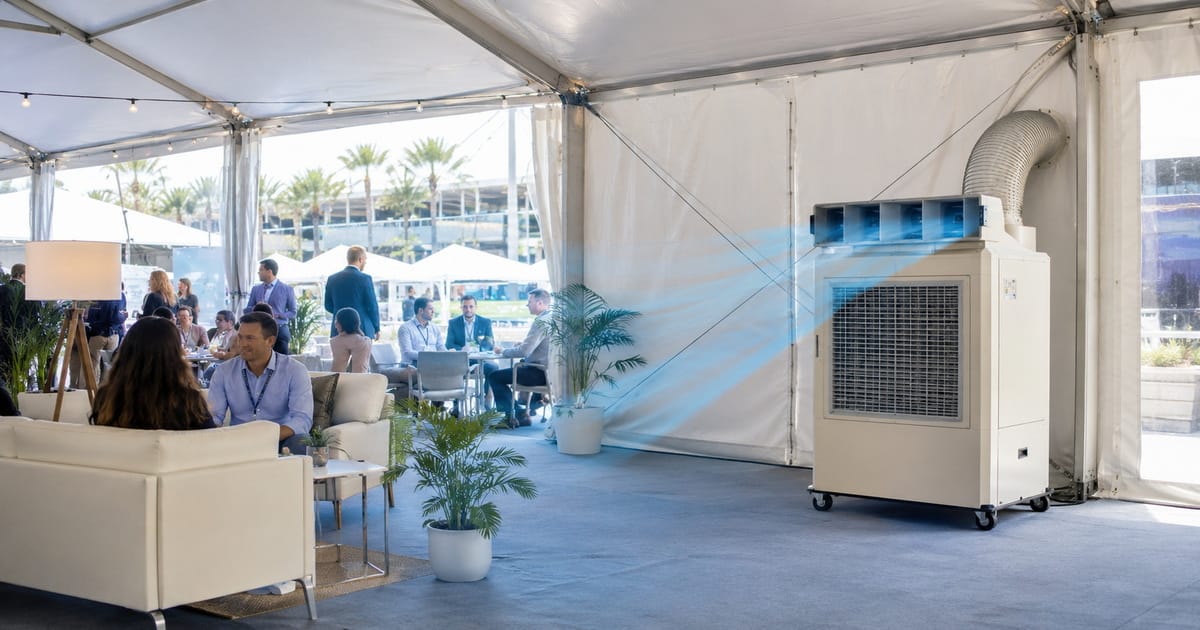
For temporary structures, speed matters. Event planners, contractors, and operators often need cooling in hours, not days, and mobile systems are built around that requirement. They are also easier to reposition when crowd flow changes, a tent expands, or a work area shifts during a project.
Mobile cooling is also better aligned with the real operating conditions of temporary spaces. These spaces can face direct sun, uneven insulation, fluctuating occupancy, and inconsistent ventilation, so a flexible cooling strategy often performs better than a fixed one. In many cases, the real goal is not just cooling the whole structure equally, but protecting key comfort zones such as entrances, registration desks, production stations, VIP areas, or equipment rooms.
Where Split Units Make Sense
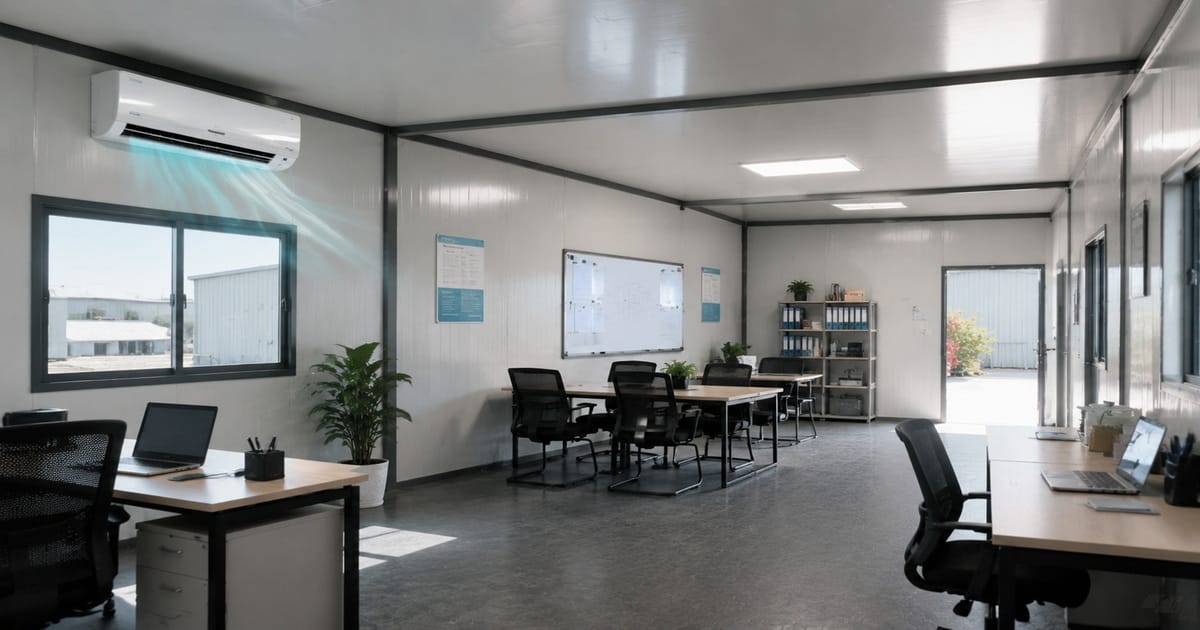
Split units can still be a smart option when the temporary structure behaves more like a semi-permanent space. Examples include modular offices, long-running site cabins, exhibition rooms that stay assembled for weeks, or converted spaces where wall mounting and refrigerant routing are feasible. In these situations, the cleaner appearance and stronger zoned control can justify the extra installation effort.
They are also a good fit when the owner wants a more integrated comfort solution and expects relatively stable occupancy and layout. If the structure will be reused in the same configuration for a long period, split units may offer better long-term value than continuously renting or moving portable equipment. Still, that advantage weakens when the site is truly temporary or the floor plan changes frequently.
Decision Factors That Matter Most
Use the following checklist to choose the right system:
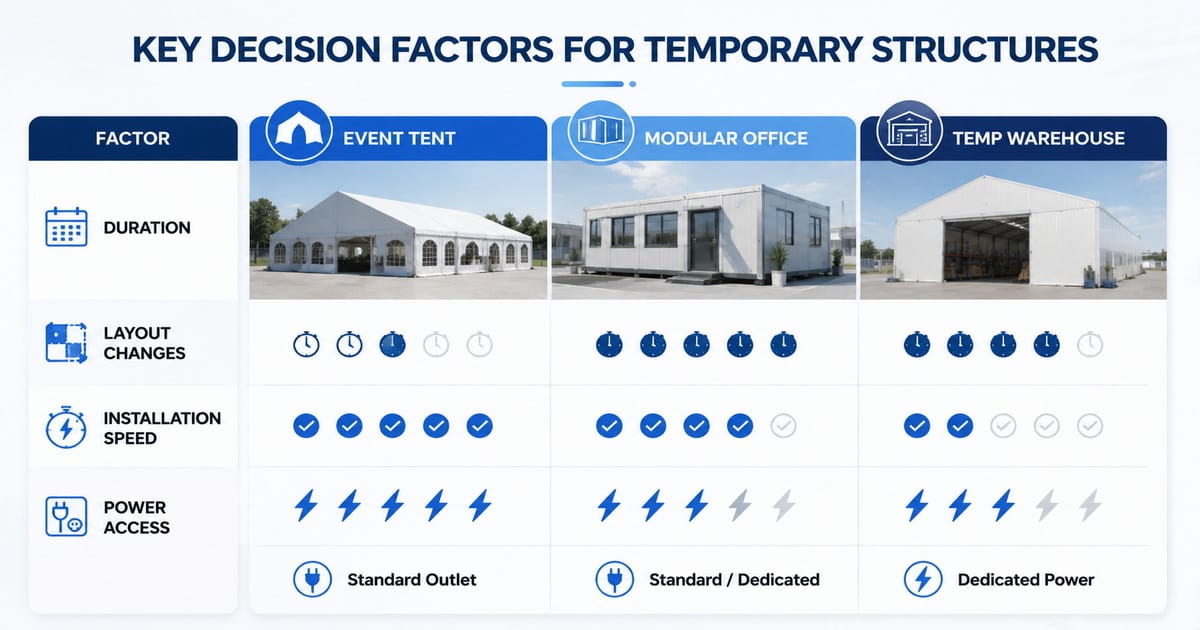
1. How long will the structure stay in place?
Short-term use usually favors mobile cooling, while longer-term repeated use may justify split units.
2. How often will the layout change?
Frequent layout changes strongly favor mobile systems because they can be repositioned quickly.
3. How critical is installation speed?
If downtime is costly, mobile air conditioning is usually the safer choice.
4. What is the humidity profile?
Enclosed, humid, or crowded spaces need refrigeration-based cooling and careful airflow planning.
5. What is the power and access situation?
Temporary sites often have limited electrical capacity, limited mounting options, and tight logistics windows.
Expert Insight for Buyers
From a manufacturer and solution-provider perspective, the best product is often the one that solves the broadest range of temporary use cases with the fewest installation barriers. That is why OEM and ODM buyers should look beyond cooling capacity alone and evaluate portability, service access, noise, footprint, and brand customization potential. For DREZ, this aligns well with a climate-control portfolio designed for international buyers who need adaptable, export-ready solutions.
A practical rule I recommend is this: if the space changes, the cooling should change with it. That is the core reason mobile air conditioning tends to outperform split units in temporary structures. Split units become more attractive only when the structure stops behaving like a temporary site and starts behaving like a fixed space.
Industry Use Cases
Temporary cooling is used across multiple industries, especially events, construction, manufacturing support, and logistics. Event operators use portable AC systems for tents, trade shows, and guest zones where comfort directly affects attendance and satisfaction. Construction and industrial teams use temporary cooling to protect staff and equipment in trailers, workshops, and production support areas.
A useful real-world pattern is the hybrid model. Permanent areas may use installed HVAC, while temporary extensions rely on mobile cooling units. This blended approach is often the most cost-effective and operationally resilient option when a project combines fixed and flexible zones.
Practical Setup Steps
If you are choosing mobile cooling for a temporary structure, use this process:
1. Map the space into comfort zones.
2. Identify heat sources such as lighting, equipment, people, or sunlight.
3. Estimate occupancy peaks, not just average occupancy.
4. Match the cooling type to the enclosure level and ventilation path.
5. Leave headroom for sudden weather or crowd changes.
6. Position equipment to support airflow, not just raw capacity.
This step-by-step method reduces the risk of under-sizing or placing equipment in the wrong part of the structure. It also improves comfort in the zones that matter most, which is more important than trying to over-cool every square meter equally. For temporary operations, that usually means better results with fewer units and less wasted energy.
Strong CTA Placement
A strong CTA works best after the expert insight or the practical setup section. Use a direct offer such as: “Need a temporary cooling solution for your next project? Contact DREZ for OEM and ODM mobile air conditioning systems designed for events, modular structures, and industrial temporary spaces.” This keeps the CTA relevant, specific, and aligned with buyer intent.
FAQs
1. Is a mobile air conditioning system better than a split unit for temporary structures?
Yes, in most temporary structures, mobile air conditioning is the better choice because it is faster to deploy, easier to relocate, and better suited to changing layouts.
2. When is a split unit the better option?
A split unit is better when the structure is semi-permanent, the layout is stable, and the owner wants fixed zoned comfort with a cleaner appearance.
3. Can temporary structures use both systems together?
Yes, hybrid cooling is common. Permanent zones can use installed HVAC, while extensions or high-traffic areas use mobile systems.
4. What types of temporary spaces need cooling most?
Common examples include event tents, trade show halls, construction trailers, modular offices, and temporary industrial work areas.
5. What should buyers check before choosing a cooling system?
They should review structure type, occupancy, humidity, power supply, installation time, and whether the layout will change over time.
References
1. Carrier. “Comparing Ductless Mini Split vs Central Air.”https://www.carrier.com/us/en/residential/hvac-resources/ductless-mini-splits/mini-split-vs-central-air/
2. United Rentals. “Temporary Cooling That Won’t Break the Budget.”https://www.unitedrentals.com/project-uptime/equipment/temporary-cooling-wont-break-budget/ unitedrentals
3. TCR Solutions. “Temporary Structure Cooling & Heating.” https://www.tcrentalsolutions.com/application-content/temporary-structure-cooling-amp-heating
4. Global Industrial. “Industrial Portable Air Conditioner Guide.” https://www.globalindustrial.com/knowledge-center/article/industrial-portable-air-conditioners-how-to-choose-the-right-cooling-s…
5. MobileAir. “Preparing for Summer Events with Temporary Cooling Solutions.”MobileAir. “Preparing for Summer Events with Temporary Cooling Solutions.” https://mobileair.com/preparing-for-summer-events-with-temporary-cooling-solutions/ mobileair
6. ASHRAE/USGBC thermal comfort reference materials.https://www.usgbc.org/node/2767375
7. DREZ (Guangzhou) Intelligent Technology Co., Ltd. About Us.https://www.drezaircon.com/about-us/
8. DREZ knowledge article. “Top 10 Fresh Air Conditioning Manufacturers In China (2026 Updated).”https://www.drezaircon.com/knowledge/top-10-fresh-air-conditioning-manufacturers-in-china-2026-updated-expert-selection-guide/
Hot Tags: Temporary Cooling Solutions, Mobile Air Conditioning System, Split Unit Air Conditioner, Temporary Structures Cooling, Portable Air Conditioner, Industrial Portable Air Conditioner, Event Cooling Solutions, Modular Office Cooling, OEM Air Conditioning Manufacturer, ODM Air Conditioning Supplier