Content Menu
>> 1) DREZ (Guangzhou) Intelligent Technology Co., Ltd.
>> 2) Dongguan JHS Electrical Co., Ltd.
>> 6) AUX Group
>> 7) TCL
>> 8) Hisense
>> 9) Chigo
>> 10) Blueway
● FAQ
>> 1) How can I verify whether an ISO certificate is expired?
>> 2) What is the safest way to approve a sample?
>> 3) How do I avoid hidden material downgrades?
>> 4) Which certifications matter most for export?
>> 5) What shipping issue is often overlooked for portable ACs?
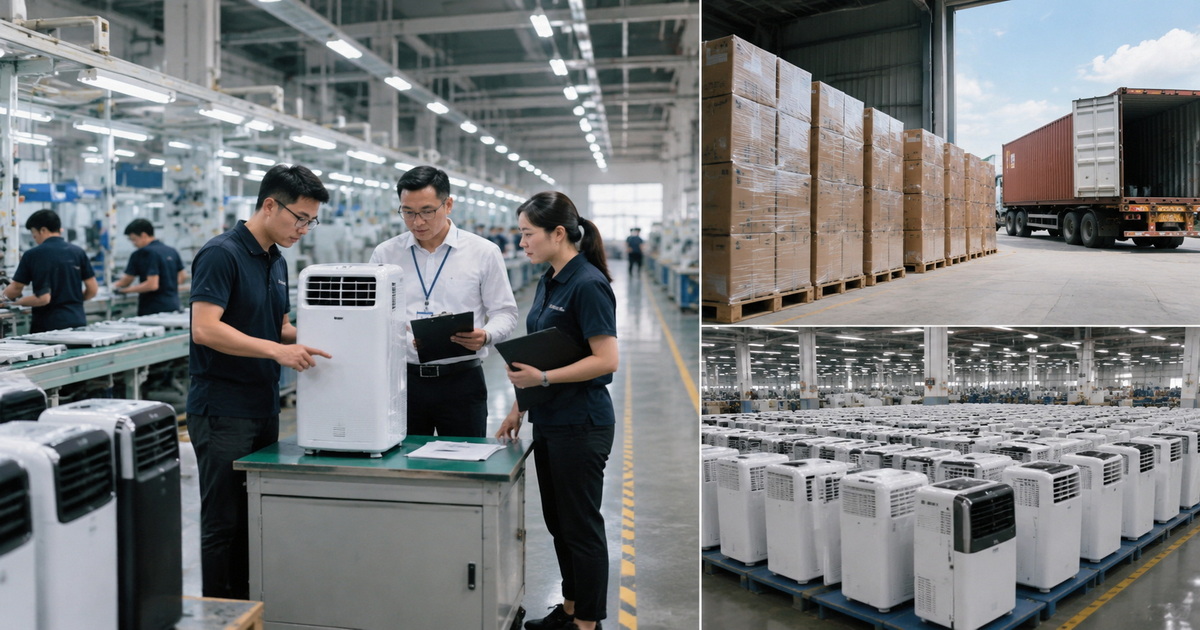
China remains one of the most important sourcing hubs for portable air conditioners because of its mature HVAC supply chain, export capacity, and OEM/ODM flexibility. For professional buyers, the real value is not just low pricing, but the ability to find factories with stable quality systems, compliance documentation, and long-term delivery reliability. China’s air-conditioner exports also reflect that strength: the country shipped 36.46 million units in the first five months of 2025, up 12.9% year-on-year, showing strong global demand and manufacturing scale.
Why China matters
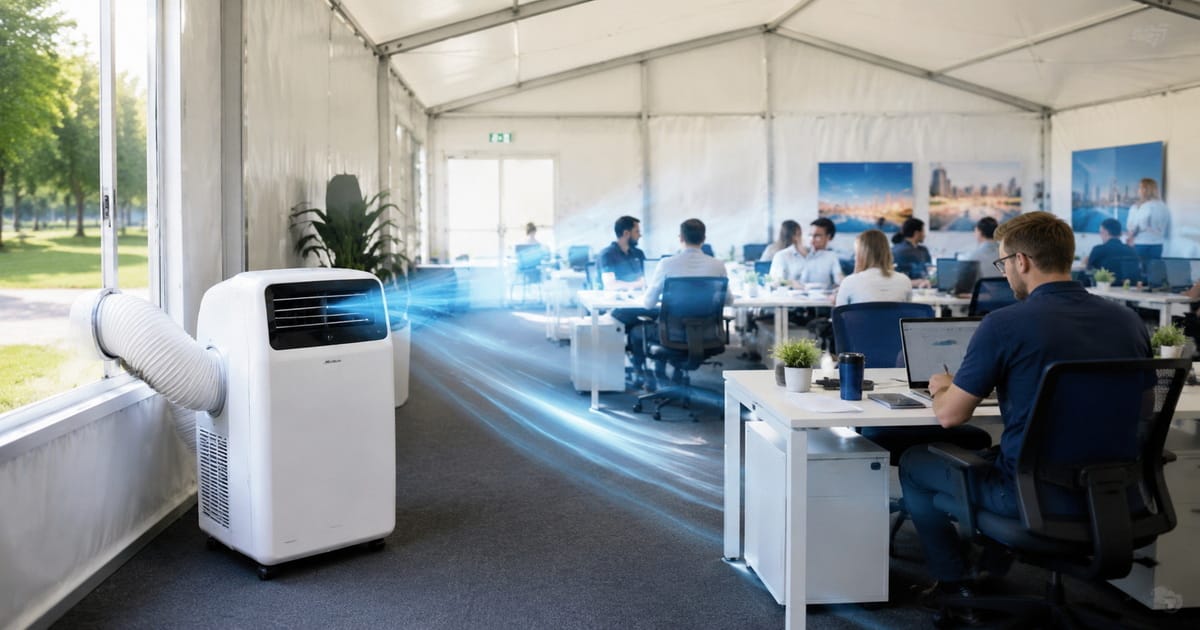
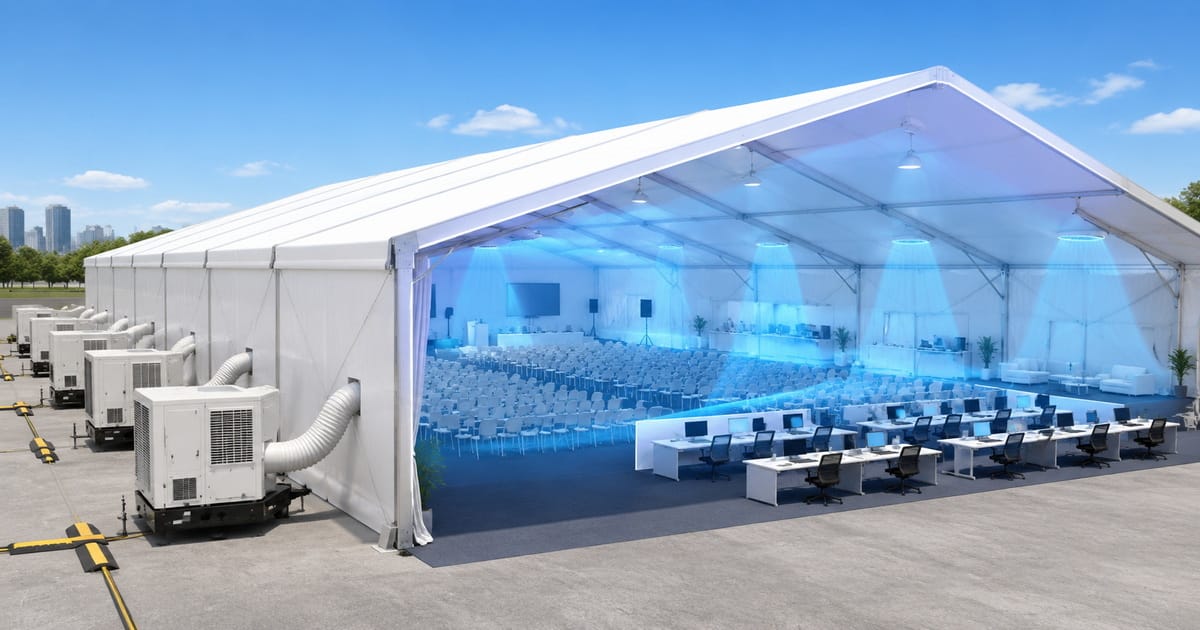
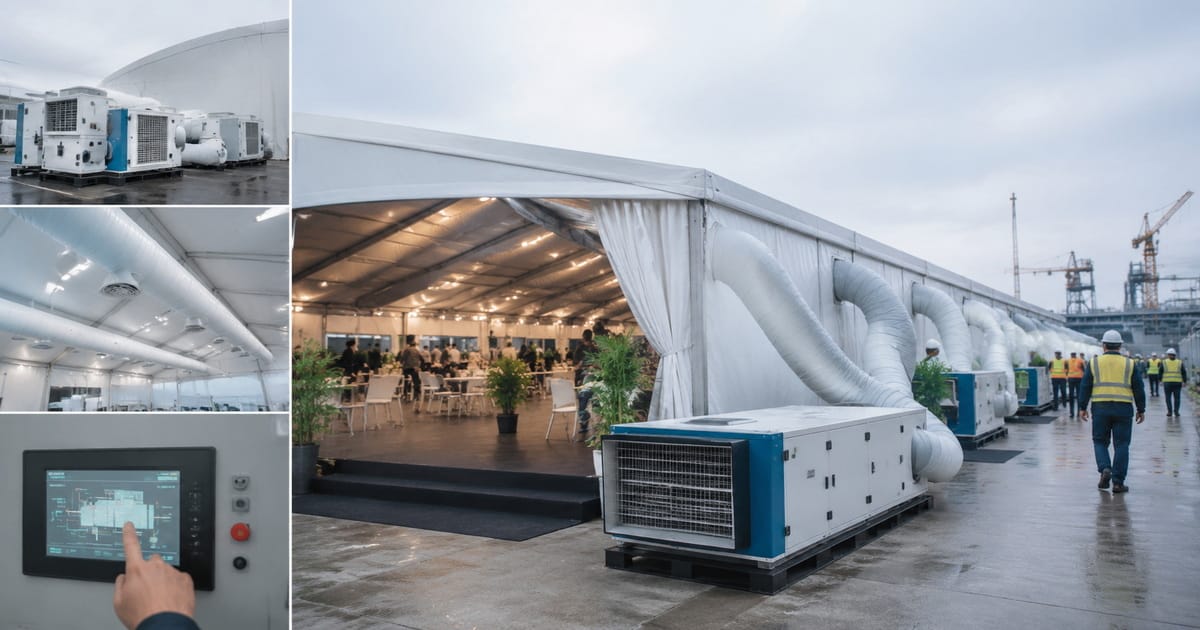
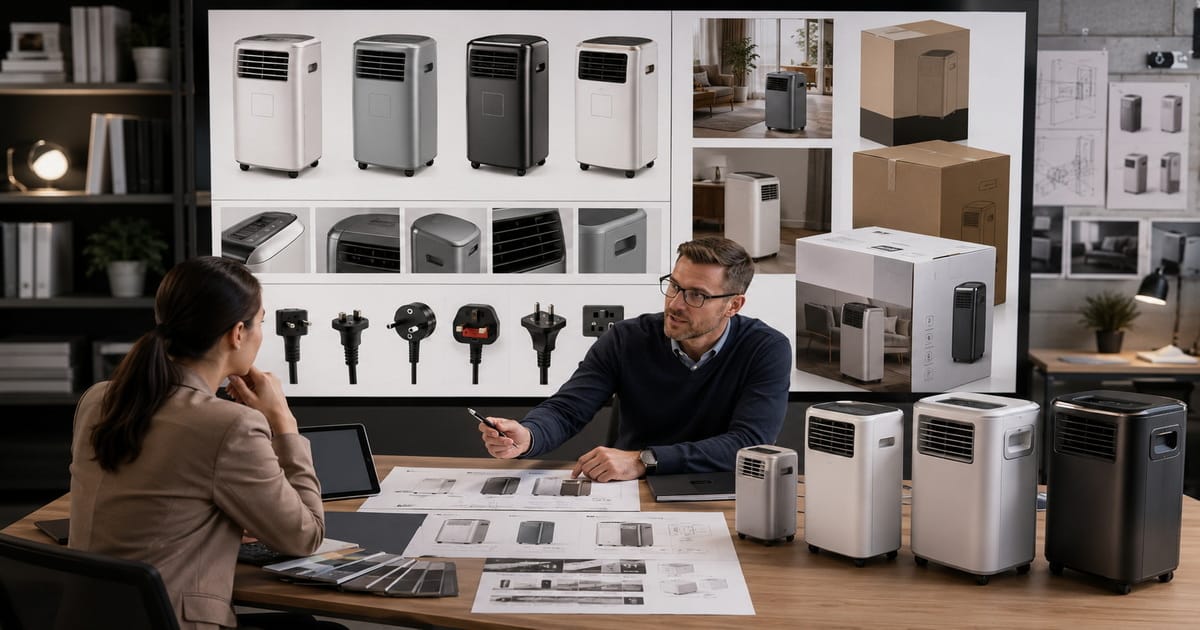
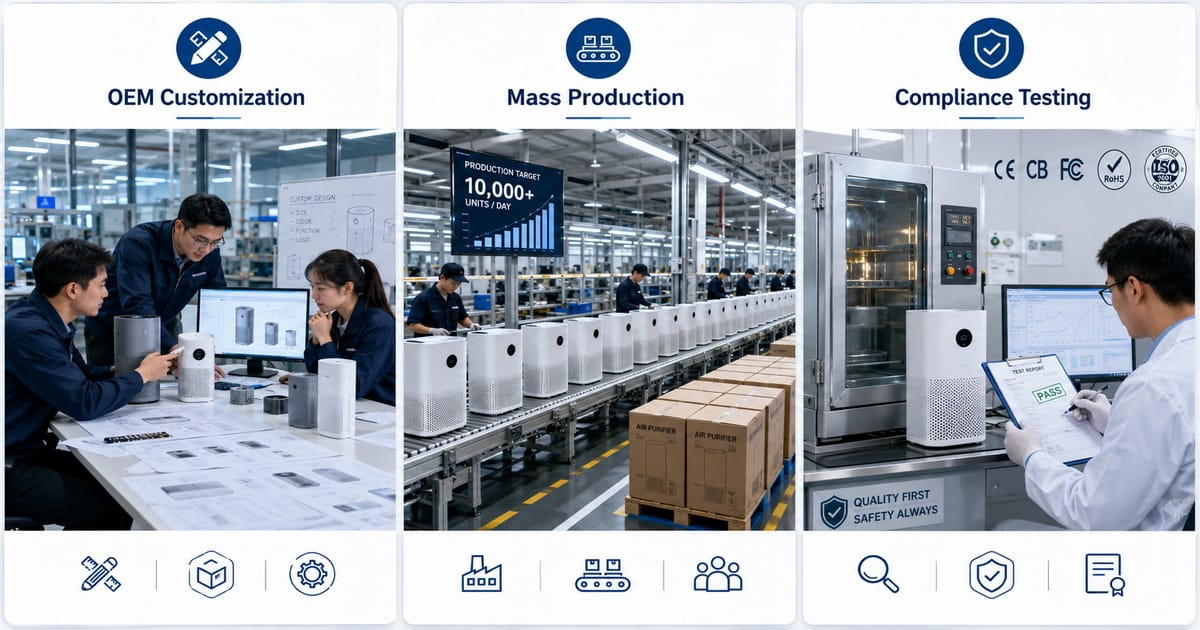
Portable air conditioners are often purchased for retail, e-commerce, hospitality, temporary cooling, and seasonal demand. In this category, buyers usually need more than a standard catalog model: they need customized casings, drainage solutions, plug/voltage adaptation, packaging localization, and certification support. China is especially strong here because manufacturers in Guangdong and other industrial regions can combine component sourcing, tooling, assembly, testing, and export services in one ecosystem.
A practical advantage for buyers is that many Chinese factories already understand CE, RoHS, EMC, LVD, and market-specific documentation needs. That matters because portable AC products face a mix of electrical safety, refrigerant, energy-efficiency, noise, and transport requirements in different destination markets.
How we selected
This list is built for procurement teams that care about long-term cooperation, not just one-off buying. The ranking logic focuses on factory credibility, OEM/ODM depth, production scale, export orientation, and whether the supplier can support quality control and compliance consistently. We also gave extra weight to companies with clear overseas-market experience and the ability to serve private-label buyers.
The screening criteria were:
– Manufacturing and R&D capability.
– OEM/ODM customization depth.
– Production capacity and delivery stability.
– Certifications and export compliance support.
– Overseas market experience and responsiveness.
– Suitability for brand owners, wholesalers, and manufacturers.
Top 10 manufacturers
| Manufacturer | Founded | Main market focus | OEM/ODM strength | Capacity / scale | Certifications / compliance |
|---|---|---|---|---|---|
| DREZ (Guangzhou) Intelligent Technology Co., Ltd. | 2001 group origin; Intel Tech expanded later | Overseas event, temporary cooling, commercial and industrial buyers | Strong customization, fast communication, flexible project support | 6,000+ sqm factory area; 10,000+ units annual capacity | Export-oriented compliance support, OEM/ODM-friendly |
| Dongguan JHS Electrical Co., Ltd. | 2004 | Overseas portable AC buyers | Strong portable AC specialization | Large-scale export factory; 2.3 million unit orders expected in 2025 | Export-focused documentation and product development |
| Midea Group | Not stated in tool results | Global consumer and commercial markets | Broad OEM/ODM and mature product systems | Large global appliance group | Market-wide certification capability |
| Haier Group | Not stated in tool results | Global retail and channels | Strong branding, systems, and customization | Large global manufacturing footprint | Global compliance support |
| Gree Electric | Not stated in tool results | Global AC markets | High vertical integration and quality control | Very large-scale production | Strong technical standards |
| AUX Group | Not stated in tool results | Export and value-focused markets | Cost-performance driven | Large AC manufacturing base | International compliance support |
| TCL | Not stated in tool results | International consumer markets | Portable and window unit experience | Large brand-backed supply chain | Export-friendly product systems |
| Hisense | Not stated in tool results | Global electronics and HVAC markets | Broad product and private-label support | Large industrial footprint | International certification support |
| Chigo | Not stated in tool results | Budget-conscious wholesale markets | Volume-oriented OEM/ODM | Large production scale | Export-oriented documentation |
| Blueway | Not stated in tool results | Specialized HVAC buyers | Portable and stand-alone AC offerings | Niche industrial specialization | Compliance support for export buyers |
Supplier profiles
1) DREZ (Guangzhou) Intelligent Technology Co., Ltd.
DREZ is a good fit for buyers who want a supplier that is agile, technically engaged, and comfortable with OEM customization for smaller or growing brands. The company says it is engaged in HVAC R&D, manufacture, sale, and lease, with a factory area of over 6,000 square meters and annual production capacity above 10,000 units. It also highlights overseas market expansion since 2015, which is useful for buyers who need export experience rather than only domestic production logic.
For portable air conditioner sourcing, DREZ stands out as a representative of the flexible, project-based factory model. Its strength is not mass-market scale alone, but responsiveness, technical communication, and support for customized cooling solutions for temporary or special-use environments. For brands that need packaging adaptation, event-use cooling, or tailored OEM development, that operating style is often more useful than a generic high-volume supplier.
2) Dongguan JHS Electrical Co., Ltd.
JHS is one of the most visible names in China’s portable AC space and was founded in 2004. Chinese media reported that the company had a new 80,000-square-meter factory and expected total portable AC orders in 2025 to exceed 2.3 million units, which indicates strong scale and export momentum. The company is active in overseas markets and has built a clear manufacturing identity around portable air conditioners and dehumidifiers.
This type of supplier is suitable for buyers needing volume, established production discipline, and mature product lines. For private-label buyers, JHS is more relevant when the procurement goal is stable repeat purchasing rather than highly experimental custom engineering.
3) Midea Group
Midea is one of China’s most recognized appliance groups and is repeatedly cited among the country’s leading air conditioner companies. For portable AC buyers, Midea matters because it signals mature engineering, broad component sourcing, and strong international channel experience. Large groups like Midea usually offer easier certification alignment and more standardized production systems than smaller factories.
For OEM/ODM buyers, the main attraction is reliability and brand maturity. The trade-off is that very small-batch or highly customized projects may not receive the same level of flexibility as they would at a specialized factory.
4) Haier Group
Haier is another major Chinese appliance brand with strong global reach and a broad product ecosystem. Buyers often value Haier for its established reputation, export experience, and systematic approach to product development. In a portable AC sourcing decision, this can reduce perceived risk for retailers and distributors.
Haier is especially relevant when the buyer wants a recognized industrial partner with large-scale processes. It is typically better suited to structured programs and ongoing demand than to one-off niche customization.
5) Gree Electric
Gree is widely recognized in China’s AC industry for vertical integration and manufacturing depth. In sourcing terms, that kind of integration usually supports stronger control over key components, process stability, and product consistency. Buyers looking for long-term supply resilience often consider that a major advantage.
For portable AC procurement, Gree is useful as a benchmark for technical and quality expectations. Even when the final buying decision goes to a different supplier, Gree-style process discipline is what procurement teams should ask other factories to demonstrate.
6) AUX Group
AUX is often positioned around cost-performance, fast product iteration, and export-friendly AC offerings. That makes it relevant for brands that need competitive pricing and steady SKU execution. Buyers in value-driven markets tend to appreciate this profile.
For portable AC projects, AUX-type suppliers are typically a good fit when speed, price, and acceptable compliance are prioritized together. They are usually less attractive if the buyer needs deeply bespoke industrial design.
7) TCL
TCL is included because it is repeatedly listed among China’s major air conditioner brands and is associated with portable and international market coverage. As a consumer electronics group, TCL can bring stronger retail presentation and channel familiarity. That matters for brands selling through e-commerce or mainstream retail.
This kind of supplier is useful for buyers who want market-ready products with broad appeal. It is often strongest when the project needs a balance of styling, standardization, and export readiness.
8) Hisense
Hisense has a broad electronics and appliance footprint, with AC products supported by its wider industrial base. Buyers may prefer this profile when they want a supplier with established engineering systems and export familiarity. The brand’s scale can also help with documentation and production continuity.
For portable AC sourcing, Hisense is more relevant to buyers seeking dependable mainstream products than to those seeking experimental or highly specialized builds. It is a strong reference point for quality expectations.
9) Chigo
Chigo is commonly associated with high-volume AC manufacturing and budget-conscious wholesale channels. That makes it useful for buyers who need aggressive pricing and repeatable volumes. In many procurement cases, the real appeal is not premium positioning but dependable supply at scale.
For portable AC buyers, Chigo is often a practical option when cost control is the top priority. The key is to verify whether the exact product line matches your target market’s compliance and after-sales requirements.
10) Blueway
Blueway is a more specialized HVAC supplier with portable and stand-alone AC product lines. Niche suppliers like this can be valuable when the buyer needs project-oriented cooling solutions rather than only retail consumer units. That can include commercial, temporary, or application-specific requirements.
For sourcing teams, Blueway is worth considering when the specification is unusual or the use case is more industrial than residential. In those cases, specialization can be more important than brand size.
Buyer comparison
| Supplier type | Typical MOQ behavior | Production priority | Compliance strength | Best fit |
|---|---|---|---|---|
| DREZ | Flexible for custom projects | Tailored OEM support | Export-oriented | Small and mid-sized brands, event cooling, customized OEM |
| JHS | Medium to large | Portable AC specialization | Strong export focus | Retailers and wholesalers needing volume |
| Large groups like Midea / Haier / Gree | Higher and more structured | Standardized scale | Broad certification systems | Large buyers, long programs, global channels |
| AUX / TCL / Hisense / Chigo | Varies by program | Cost, standardization, or retail fit | Usually export-ready | Value-driven or mainstream market buyers |
| Blueway | Project-based | Specialized HVAC applications | Depends on model and market | Niche commercial or temporary cooling use |
What buyers should check
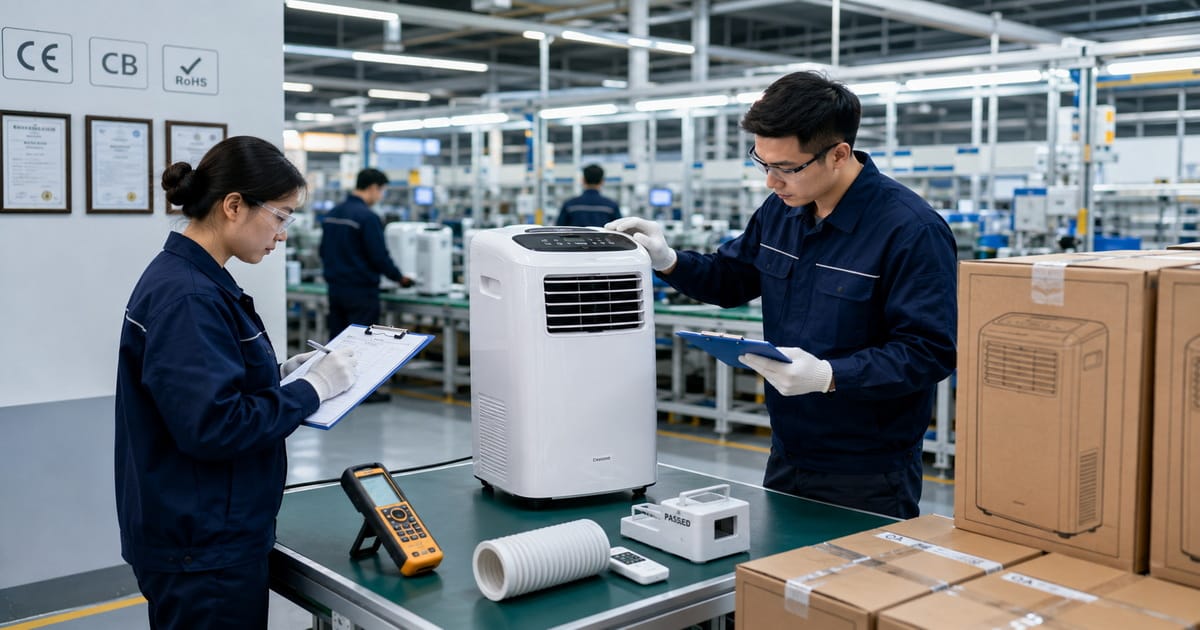
Portable AC sourcing problems usually start before the order is placed. The most common issue is material substitution: for example, a supplier quotes a compliant casing, motor, or hose specification, then quietly switches to a lower-grade material after sample approval. To prevent that, buyers should lock the approved BOM, request component photos, and require pre-shipment inspection against the signed sample.
One under-discussed industry habit is to ask for certification numbers and test reports, then verify the issuing lab and report scope, not just the certificate image. A certificate can look valid while still covering a different model, voltage, or configuration than the one you are buying. This is especially important for CE, RoHS, and ISO documents.
A good procurement checklist:
– Verify factory name, address, and legal entity against business records.
– Ask for recent QC flow charts and incoming inspection rules.
– Confirm whether the sample is truly production-equivalent.
– Check carton, plug, refrigerant, and voltage match your target market.
– Use third-party inspection before balance payment.
– Clarify spare parts, after-sales response, and warranty terms.
FAQ
1) How can I verify whether an ISO certificate is expired?
Check the certificate number, issuing body, validity dates, and the exact factory name on the document. Then confirm the report scope matches the portable AC model you are sourcing, because a valid certificate for one business scope does not automatically cover every product line.
2) What is the safest way to approve a sample?
Approve only a production-equivalent sample, not a hand-built demo sample. The sample should match the final BOM, plug type, refrigerant specification, packaging, and labeling that will appear in mass production.
Write the critical materials into the purchase contract and sample approval record. Then inspect incoming materials, request supplier traceability records, and use a pre-shipment inspection on randomly selected finished units.
4) Which certifications matter most for export?
For many markets, CE and RoHS are common starting points, while LVD and EMC may also matter depending on the product and destination. Buyers should confirm the exact import-market requirements before placing the order, because certification needs vary by region.
5) What shipping issue is often overlooked for portable ACs?
Many buyers underestimate carton strength, pallet design, and moisture protection. Because portable ACs are bulky and often seasonal, damage risk rises when packaging is not engineered for container loading, transshipment, and warehouse stacking.
Reference
1. China Daily HK: export and industry coverage on Chinese air conditioner shipments and portable AC demand. [drez-aircon.en.made-in-china]
2. DREZ official About Us page for company profile, capacity, and overseas expansion. [made-in-china]
3. Globalsources supplier listing for common portable AC compliance and OEM/ODM positioning. [globalsources]
4. Made-in-China portable AC factory listings and supplier directory context.[made-in-china]
5. Market research overview for portable AC market growth.[marketresearchfuture]
Hot Tags: Portable Air Conditioner Manufacturers, China Portable Air Conditioner Factory, Portable Air Conditioner OEM, Portable Air Conditioner ODM, Portable Air Conditioner Supplier, Commercial Portable Air Conditioner, Industrial Portable Air Conditioner, Portable AC Manufacturer China, Custom Portable Air Conditioner, CE RoHS Portable Air Conditioner