Content Menu
● Why Cooling Strategy Matters in Temporary Venues
● Mobile Air Conditioning vs Fixed HVAC
>> 3. Leakage and Infiltration
● Why Mobile Air Conditioning Wins
● Operational Insights from the Field
● How to Plan Cooling for an Exhibition Hall
● Why This Matters for Exhibitors
● FAQ
>> 1. What is the main advantage of mobile air conditioning for exhibition halls?
>> 2. Why do fixed HVAC systems struggle in temporary venues?
>> 3. Is mobile air conditioning suitable for large exhibition halls?
>> 4. When does a fixed HVAC system make sense?
>> 5. Can mobile and fixed systems be used together?
Exhibition halls are not always as “permanent” as they look. For temporary venues, seasonal events, and fast-changing layouts, mobile air conditioning often outperforms fixed HVAC systems because it is faster to deploy, easier to reposition, and more practical for fluctuating crowd loads and incomplete infrastructure.
Why Cooling Strategy Matters in Temporary Venues
As an strategist and a climate-control buyer would both agree, the real issue is not just “can the venue be cooled,” but how reliably and quickly it can be cooled when the event clock is ticking. Temporary venues such as exhibition halls, trade show pavilions, modular structures, and pop-up event spaces create unique thermal challenges that fixed systems often struggle to solve efficiently.
In my experience working with industrial buyers, the winning solution is rarely the most “permanent” one. It is the one that best matches the venue’s actual usage pattern, structural limits, and comfort requirements.
Mobile Air Conditioning vs Fixed HVAC
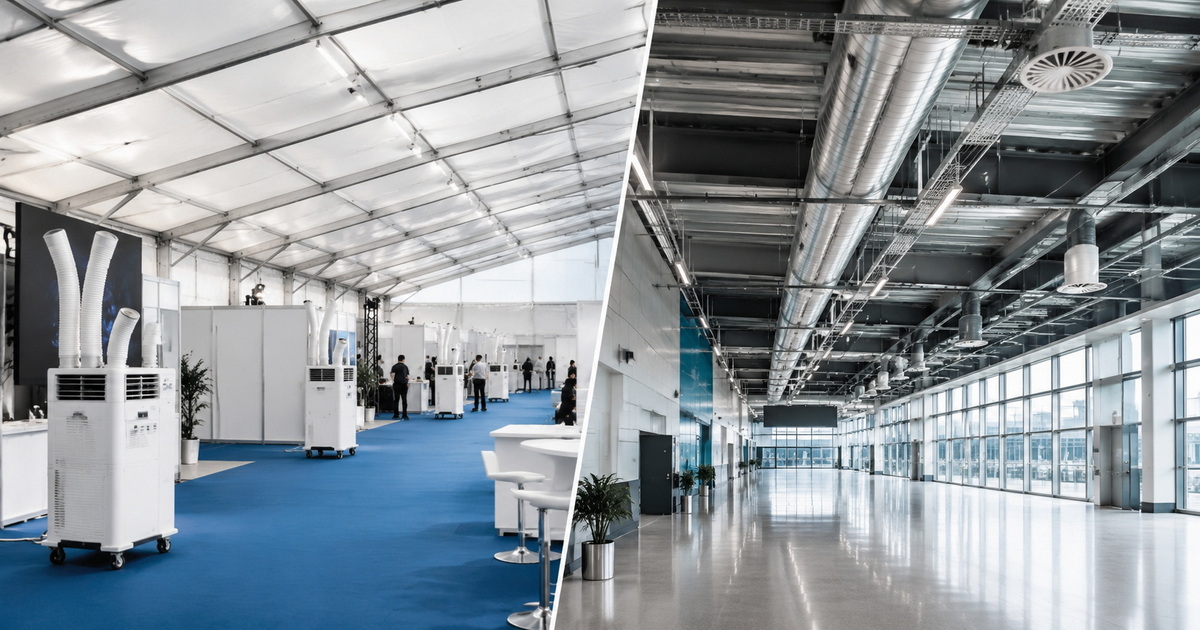
The best way to understand this topic is to compare the two systems by deployment speed, flexibility, operating logic, and fit for temporary venues. Fixed HVAC systems are designed for stable buildings and long-term occupancy, while mobile air conditioning is designed to solve immediate cooling problems in spaces that change often or lack permanent infrastructure.
How Fixed Systems Work
Fixed systems make sense in sealed, permanent buildings where the floor plan, load profile, and occupancy patterns are predictable. They usually require structural work, installation time, and a more complex design process before they become operational.
How Mobile Systems Work
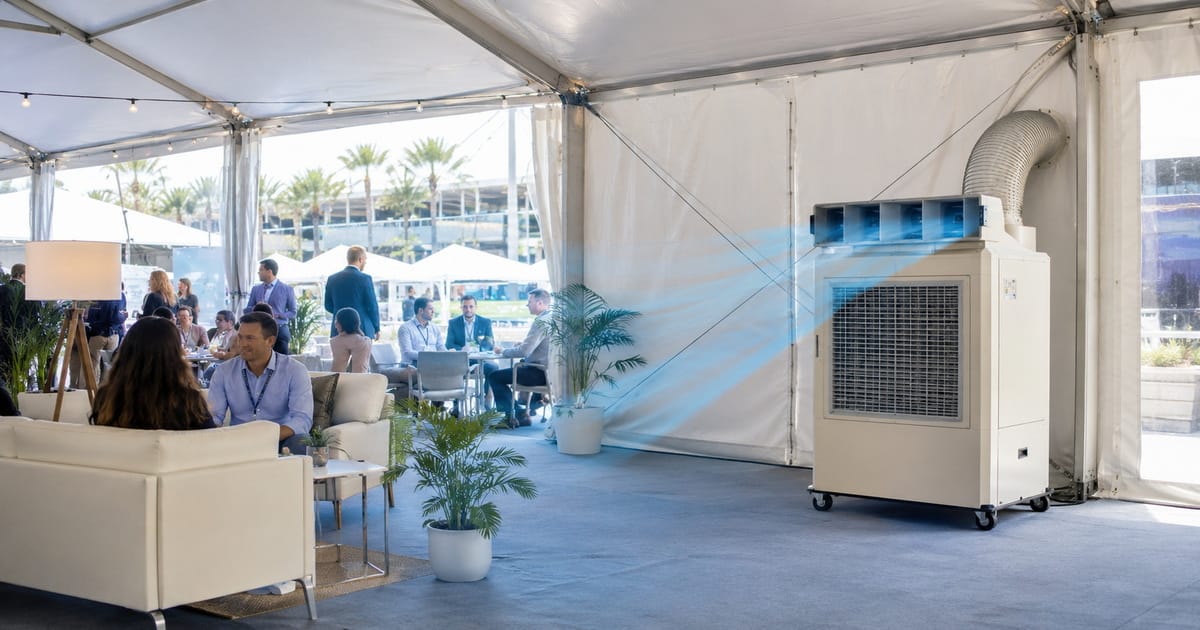
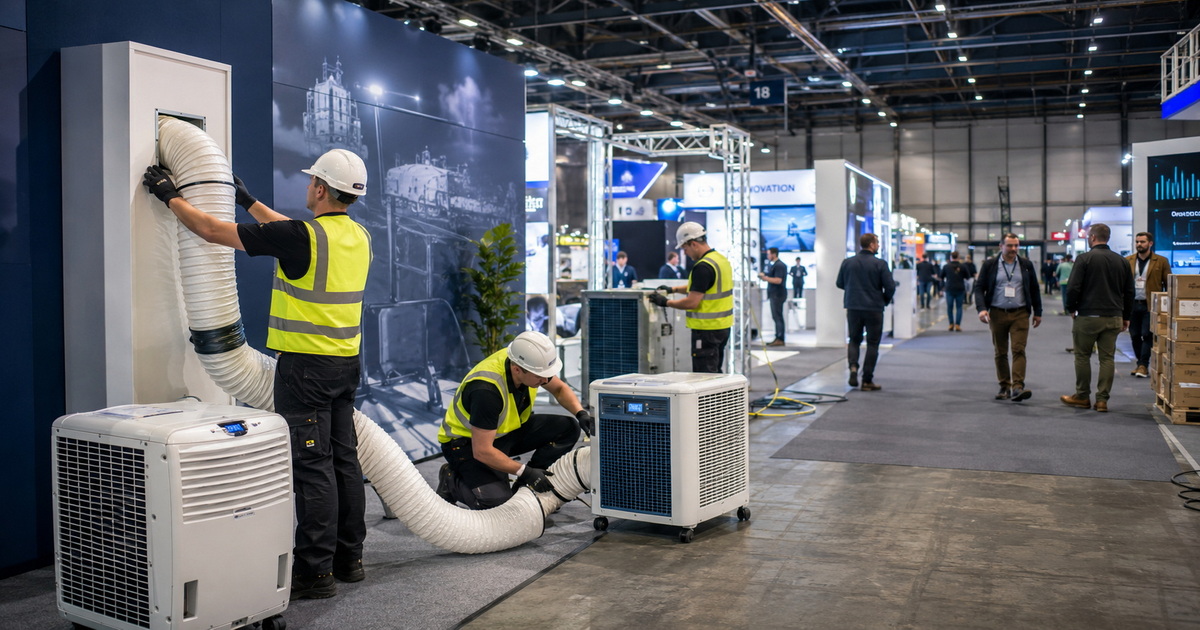
Mobile air conditioning is built for rapid setup and targeted cooling. In exhibition environments, that means units can be placed where heat is highest, moved when the booth layout changes, and scaled up or down according to attendance or weather shifts.
Why Fixed Systems Fail
Fixed HVAC systems are not “bad,” but they are often the wrong tool for temporary venues. Their limitations become obvious when a hall is only partly enclosed, doors stay open, exhibits generate heat, or event planners need quick changes without construction delays.
1. Slow Deployment
A fixed system can take weeks to plan and install, which is a poor fit for temporary exhibitions with short lead times. Mobile units can be positioned and running much faster, which is critical when the event schedule leaves no room for building work or permits.
2. Poor Flexibility
Exhibition halls rarely stay static. Booth sizes change, VIP zones shift, and crowds move throughout the day. A fixed system cannot easily follow these changes, but mobile cooling can be redirected to high-traffic zones, registration counters, demo areas, and hospitality spaces.
3. Leakage and Infiltration
Temporary venues often have more air leakage than permanent buildings. Open entrances, tent-like structures, loading doors, and modular seams allow conditioned air to escape, which reduces the effectiveness of fixed systems and increases wasted energy.
4. Uneven Comfort
In large halls, comfort is not uniform. Some zones become crowded and hot, while others remain underused. Fixed HVAC may cool the whole space inefficiently, but mobile systems allow more precise spot cooling where visitor comfort actually matters.
Why Mobile Air Conditioning Wins
For temporary venues, mobile air conditioning is usually the more practical and commercially rational choice. It supports fast setup, targeted comfort, and adaptability, which are exactly the qualities event operators need when venue conditions change hour by hour.
Fast Installation
Time is a major cost in exhibitions. Mobile units reduce downtime because they can be delivered, placed, and activated with minimal disruption, helping organizers stay on schedule and avoid last-minute cooling failures.
Targeted Cooling
A trade show hall does not need identical cooling everywhere. It needs the right temperature in the right places. Mobile units can focus on booths with LED lighting, machinery demos, catering areas, or dense visitor flow, where heat builds up fastest.
Better Scalability
Attendance can change unexpectedly. Mobile cooling lets organizers increase capacity during peak hours and reduce usage when conditions improve, creating a more cost-efficient operating model than overbuilding a fixed system for a temporary need.
Decision Factors for Buyers
Choosing between mobile air conditioning and fixed HVAC should not be based on price alone. A better buying framework looks at the venue’s structure, event duration, usage frequency, and operational constraints.
| Decision Factor | Mobile Air Conditioning | Fixed HVAC System |
|---|---|---|
| Setup speed | Fast; suitable for urgent event timelines | Slower; requires planning and installation |
| Flexibility | Easy to move and reposition | Limited; tied to infrastructure |
| Temporary venue fit | Strong | Weak unless the site is truly permanent |
| Comfort control | Targeted and zone-based | Broad, but less adaptive |
| Infrastructure demand | Lower | Higher; depends on building readiness |
Operational Insights from the Field
From a manufacturer’s perspective, the most successful exhibition cooling projects are the ones designed around real usage patterns, not theoretical room capacity. A hall with open entrances, high foot traffic, and heat-producing equipment often benefits more from temporary climate control than from a fixed system that was not designed for event volatility.
One practical pattern shows up repeatedly: when the venue is used for short-term shows, touring exhibitions, product launches, or seasonal fairs, buyers value speed, portability, and predictable performance more than permanent infrastructure investment.
How to Plan Cooling for an Exhibition Hall
If you are evaluating cooling for a temporary venue, use a simple field-ready process. This approach is easier to explain to clients, easier to document in proposals, and easier to align with technical teams.
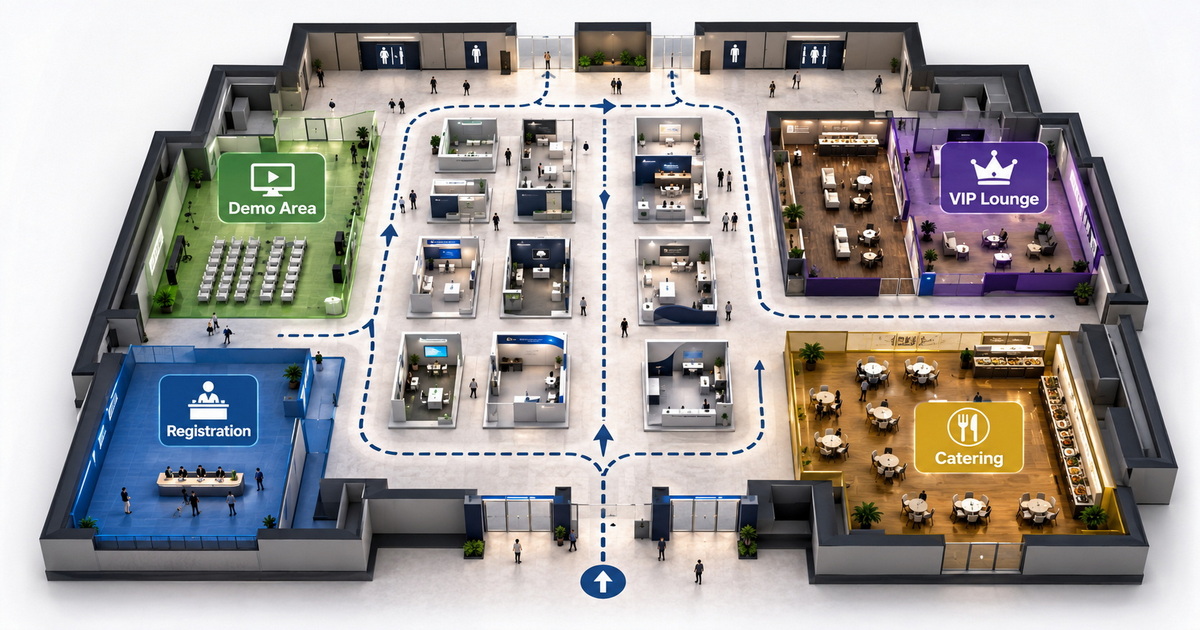
1. Map the venue zones.
Identify registration, demo areas, VIP rooms, booth rows, catering corners, and storage zones.
2. Measure heat sources.
Look at lighting, machinery, visitor density, sun exposure, and open-door exposure.
3. Check infrastructure limits.
Confirm power availability, floor loading, exhaust routing, and access for installation.
4. Prioritize comfort-critical areas.
Focus on spaces where discomfort would damage visitor experience, lead quality, or brand perception.
5. Choose a cooling model.
Use mobile air conditioning for temporary, changing, or partially open venues; consider fixed systems only when the venue is truly permanent and the usage pattern is stable.
Why This Matters for Exhibitors
In exhibitions, climate control affects more than temperature. It influences visitor dwell time, staff productivity, product presentation, and brand perception. If a booth feels hot and stuffy, visitors leave faster and conversations shorten.
For international brands, wholesalers, and manufacturers, this is especially important because an exhibition hall is not just a venue. It is a sales environment. Cooling quality directly affects how premium your products look and how professional your presence feels.
Built for Temporary Venues
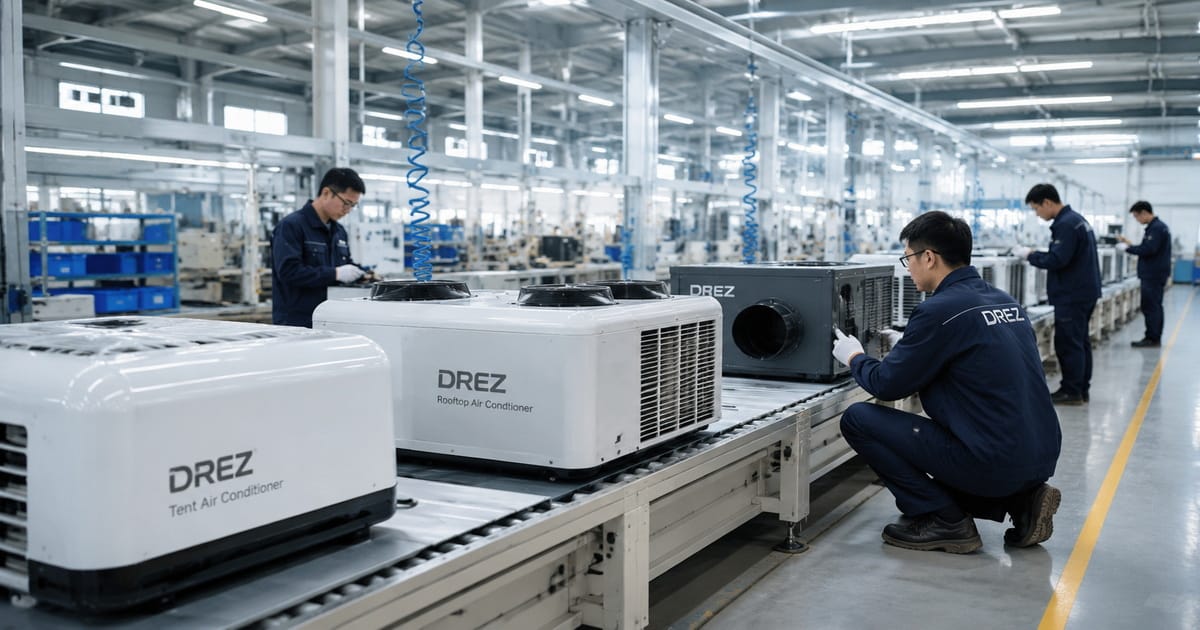
DREZ (Guangzhou) Intelligent Technology Co., Ltd. develops HVAC solutions for tents, exhibitions, event venues, and other temporary structures, with OEM and ODM support for overseas brands, wholesalers, and manufacturers. That matters because temporary venues need systems designed around portability, fast installation, and real-world event conditions—not just standard building assumptions.
Our exhibition-focused products are positioned for large temporary spaces where comfort, efficiency, and reliable operation must work together. For buyers sourcing from China, this also means working with a supplier that understands the practical demands of export projects, custom configuration, and event-driven cooling requirements.
CTA for Buyers
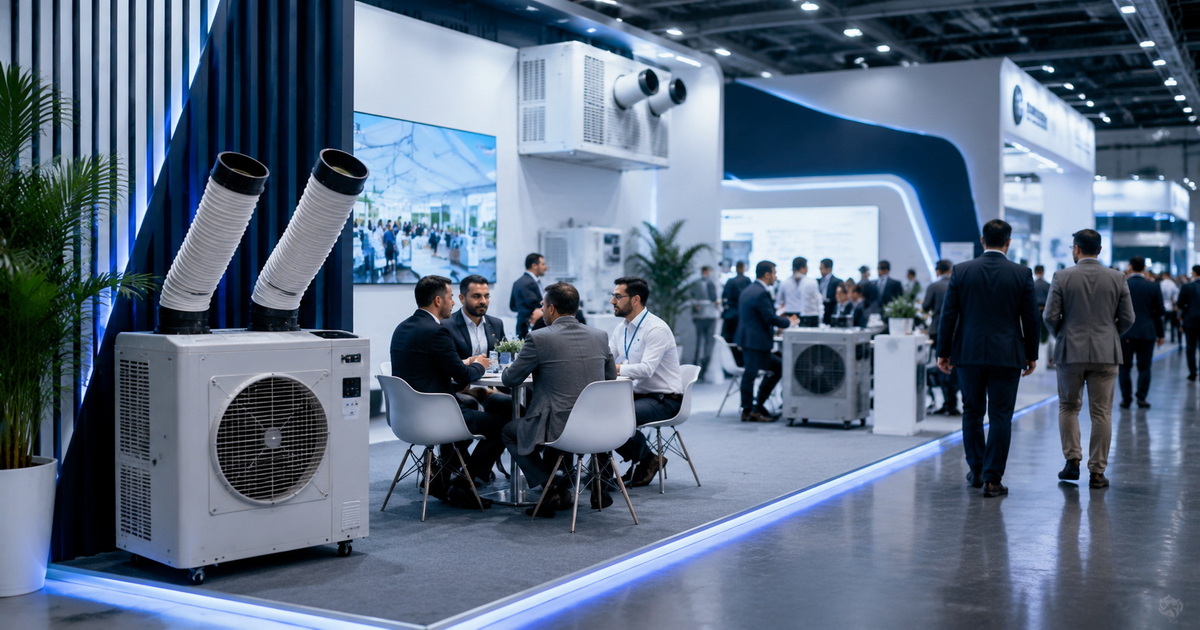
If your exhibition hall, trade show, or temporary venue needs fast, flexible, and professionally engineered cooling, mobile air conditioning is usually the smarter choice. For OEM/ODM buyers and project teams, the next step is to request a venue review, cooling capacity recommendation, and custom solution proposal tailored to your space.
FAQ
1. What is the main advantage of mobile air conditioning for exhibition halls?
The main advantage is flexibility. Mobile units can be installed quickly, moved as layouts change, and focused on the areas that matter most.
2. Why do fixed HVAC systems struggle in temporary venues?
They struggle because temporary venues often have air leakage, changing layouts, and short timelines that do not match the assumptions behind permanent HVAC design.
3. Is mobile air conditioning suitable for large exhibition halls?
Yes, especially when the hall is temporary, partially open, or divided into zones with different cooling needs. The key is proper sizing and placement.
4. When does a fixed HVAC system make sense?
A fixed system makes sense when the venue is permanent, sealed, and used regularly with predictable occupancy and load patterns.
5. Can mobile and fixed systems be used together?
Yes. In many projects, fixed HVAC handles the permanent core space while mobile units cover temporary extensions, hot spots, or high-traffic areas.
References
1. Drez Aircon, “Mobile Air Conditioning vs Central HVAC System – Drez Aircon.” [https://www.drezaircon.com/knowledge/mobile-air-conditioning-vs-central-hvac-system-which-is-better-for-temporary-event-cooling/] [drezaircon]
2. Blizzcool, “Portable vs Fixed Air Conditioning in Industrial Warehouses.” [https://blizzcool.es/en/blog/air-conditioning/portable-vs-fixed-air-conditioning-in-industrial-warehouses-which-to-choose-and-wh] [blizzcool]
3. REIC Rentals, “Temporary Climate Control for Controlling Interior Conditions.” [https://reic.com/temporary-climate-control-for-controlling-interior-conditions/] [reic]
4. Cooling Power Corp, “How Temporary Climate Control Supports Large Event Venues and Outdoor Gatherings.” [https://coolingpowercorp.com/news/how-temporary-climate-control-supports-large-event-venues-and-outdoor-gatherings/] [coolingpowercorp]
5. Broughton EAP, “Hvac Exhibition.” [https://www.broughtoneap.co.uk/hvac/applications/exhibitions/] [broughtoneap.co]
6. InTents Magazine, “The principles of tent heating and cooling.” [https://intentsmag.com/2007/08/01/the-principles-of-tent-heating-and-cooling/] [intentsmag]
7. Hitachi Aircon, “Creating the Perfect Atmosphere for an Event.” [https://www.hitachiaircon.com/newsroom/en/news/creating-the-perfect-atmosphere-for-an-event] [hitachiaircon]
8. SimScale, “Indoor Thermal Environment Guide for Designers.” [https://www.simscale.com/blog/thermal-environment/] [simscale]
9. DREZ, “Exhibition Air Conditioning.” [https://www.drezaircon.com/knowledge/exhibition-air-conditioning/] [drezaircon]
10. DREZ, “Custom Industrial Air Conditioner Manufacturer & Factory.” [https://www.drezaircon.com/] [drezaircon]
11. DREZ Made-in-China profile. [https://drez-aircon.en.made-in-china.com/] [drez-aircon.en.made-in-china]
12. DREZ, “Commercial Exhibition Tent Air Conditioning.” [https://www.drezaircon.com/knowledge/commercial-exhibition-tent-air-conditioning/] [drezaircon]
13. DREZ, “Exhibition Air Conditioner for Ultimate Climate Control at Events.” [https://www.drezaircon.com/news/exhibition-air-conditioner-for-ultimate-climate-control-at-events/] [drezaircon]
Hot Tags: Mobile Air Conditioning, Exhibition Hall Cooling, Temporary Climate Control, Portable HVAC System, Event Cooling Solutions, Portable Air Conditioner, Industrial Air Conditioner, Exhibition Air Conditioner, Temporary Venue Cooling, OEM ODM Air Conditioner