Content Menu
● What Mobile Air Conditioning Means in Industrial Use
● What Portable Air Conditioner Usually Refers To
● Main Differences At A Glance
● When Industrial Buyers Choose Mobile Air Conditioning
● When Portable Air Conditioners Make Sense
● Why Site Conditions Change The Decision
● Energy Use And Operating Efficiency
● Practical Selection Checklist
>> Emergency And Backup Cooling
● What Buyers Should Ask Suppliers
● The Business Value Of Choosing Correctly
● FAQ
>> 1. Are mobile air conditioning and portable air conditioner the same thing?
>> 2. Which one is better for a warehouse?
>> 3. Can a portable air conditioner work in a tent?
>> 4. Is mobile air conditioning more expensive?
>> 5. What should OEM and ODM buyers focus on?
>> 6. How do I decide between the two?
Industrial buyers often face a practical question when planning temporary or flexible cooling: should they choose mobile air conditioning or a portable air conditioner? Although the two terms are sometimes used interchangeably, they do not always mean the same thing in commercial and industrial procurement.
The difference matters because the right choice affects installation speed, cooling performance, energy use, operational flexibility, and long-term value. For manufacturers, distributors, rental companies, and project buyers, understanding these distinctions can improve purchasing decisions and reduce mismatches between equipment and actual site conditions.
What Mobile Air Conditioning Means in Industrial Use
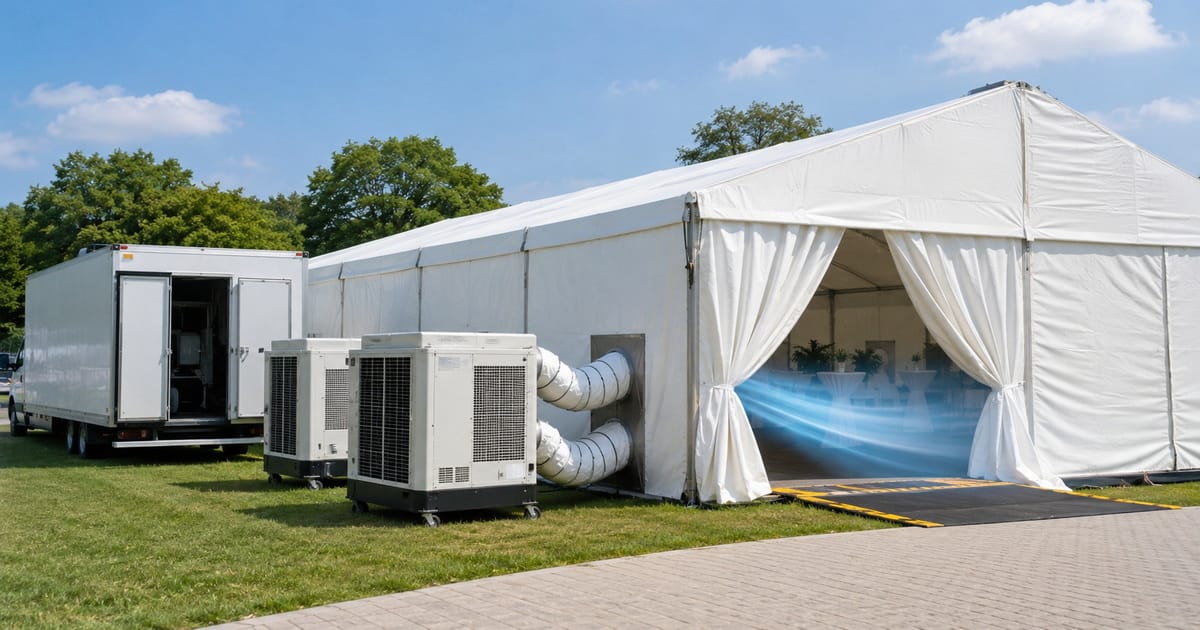
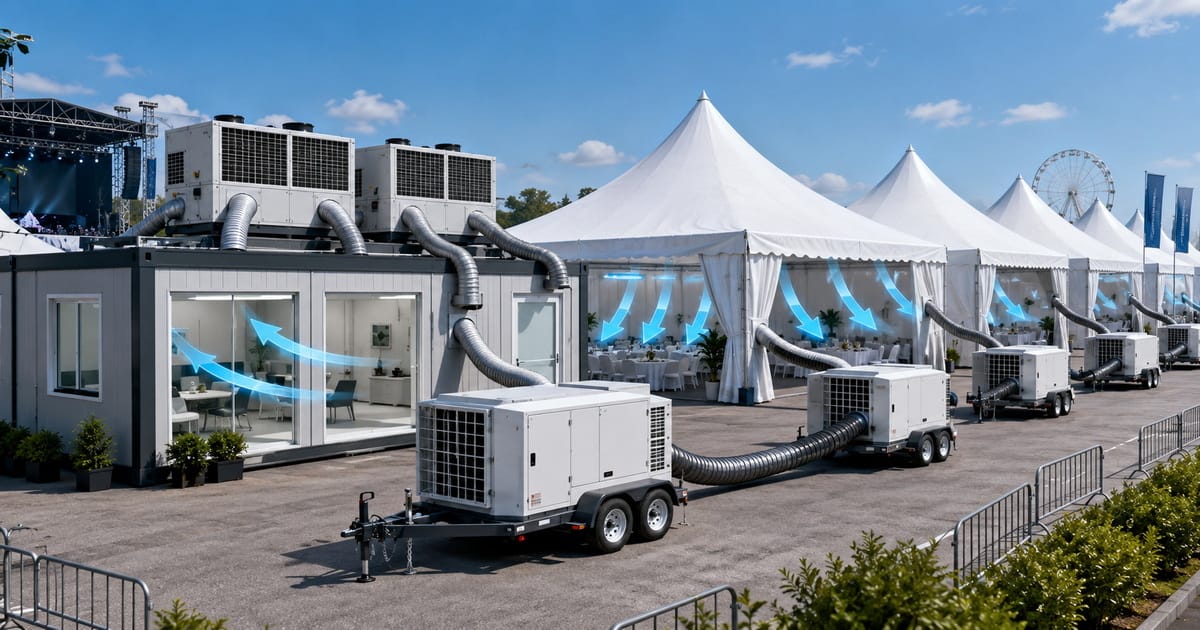
Mobile air conditioning usually refers to a transportable cooling system designed for industrial, commercial, or temporary environments. It is often used in tents, exhibition halls, emergency response sites, rental projects, warehouses, workshops, and outdoor event spaces.
In this context, “mobile” emphasizes deployment flexibility. These systems are built to move between sites or to different zones within the same site. They are often selected when cooling requirements change frequently or when fixed HVAC installation is not practical.
Mobile air conditioning is especially valuable in projects that need fast setup and immediate cooling support. For example, a seasonal tent venue, a temporary production line, or a backup cooling project may require a solution that can be delivered, installed, and started quickly.
What Portable Air Conditioner Usually Refers To
A portable air conditioner is generally a self-contained cooling unit designed for localized indoor cooling. It can be moved from room to room, but it is usually intended for enclosed spaces rather than large industrial environments.
Portable air conditioners are most effective when the cooling area is relatively small and sealed. They are often used for offices, small rooms, temporary indoor spaces, or personal comfort applications. In industrial settings, they may also be used for spot cooling or for limited zones where central HVAC is unavailable.
The key point is that portability does not automatically mean industrial suitability. A portable air conditioner may be easy to move, but it may not be powerful enough for open, semi-open, or high-load environments.
Main Differences At A Glance
Cooling Scope
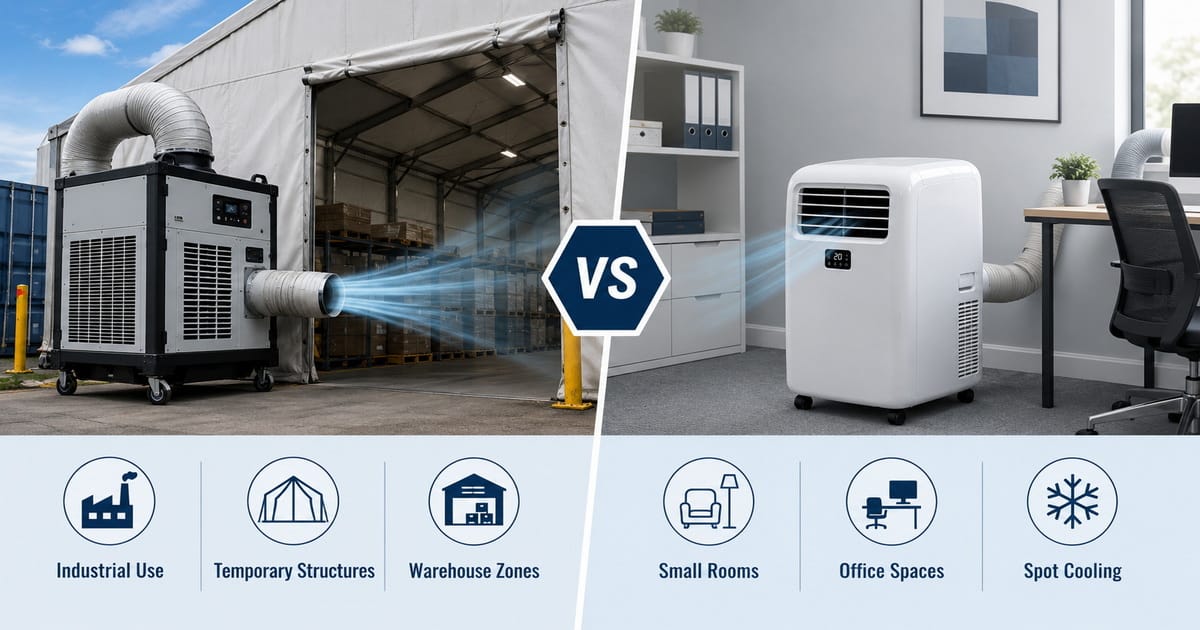
Mobile air conditioning is typically designed for broader or more demanding applications. It may support tent structures, exhibition areas, warehouse zones, or temporary commercial spaces.
Portable air conditioners are more suitable for compact, enclosed spaces. They are usually used to cool one room or one localized area rather than an entire industrial zone.
Installation And Setup
Mobile air conditioning systems are often built for faster deployment in changing environments. Many industrial models are designed with ducting, flexible airflow delivery, and site-friendly installation.
Portable air conditioners are also relatively easy to set up, but they often depend on exhaust routing and a proper window or vent solution. Their performance can decline if the exhaust is poorly handled or the space is not well sealed.
Mobility And Application
Mobile air conditioning is intended for repeat use across different sites or different areas of the same operation. It is useful for rental businesses, event operators, and manufacturers who need adaptable cooling.
Portable air conditioners are mobile in a smaller sense. They can be rolled from one place to another, but they are usually not designed for industrial relocation, repeated transport, or rougher operating conditions.
Performance Expectations
Industrial buyers usually care about practical cooling capacity, not just model labels. Mobile air conditioning units are often selected when real-world output, airflow volume, and site adaptability matter more than compact size.
Portable air conditioners are more limited in output. They are suitable when the cooling target is modest and the environment allows heat to be exhausted efficiently. In demanding industrial settings, that limitation becomes important.
Comparison Table
| Factor | Mobile Air Conditioning | Portable Air Conditioner |
|---|---|---|
| Typical use | Industrial, commercial, temporary, outdoor, tent, warehouse | Small indoor, localized, room-level cooling |
| Mobility | Built for transport between sites or zones | Easy to move, but mainly for indoor repositioning |
| Cooling strength | Better suited to larger or more demanding spaces | Better suited to smaller enclosed spaces |
| Setup | Often more flexible for industrial deployment | Simple, but depends on exhaust and sealing |
| Best fit | Rental, event, emergency, temporary operations | Offices, small rooms, spot cooling |
When Industrial Buyers Choose Mobile Air Conditioning
Mobile air conditioning is often the better choice when the project requires flexibility and stronger operational support. This is especially true for temporary buildings, exhibition halls, construction support spaces, warehouse overflow zones, and tent-based events.
Industrial buyers also choose mobile systems when they need to cool large volumes of air or when the site layout changes often. In these cases, a fixed system may be too slow to install, too expensive to justify, or too rigid for the job.
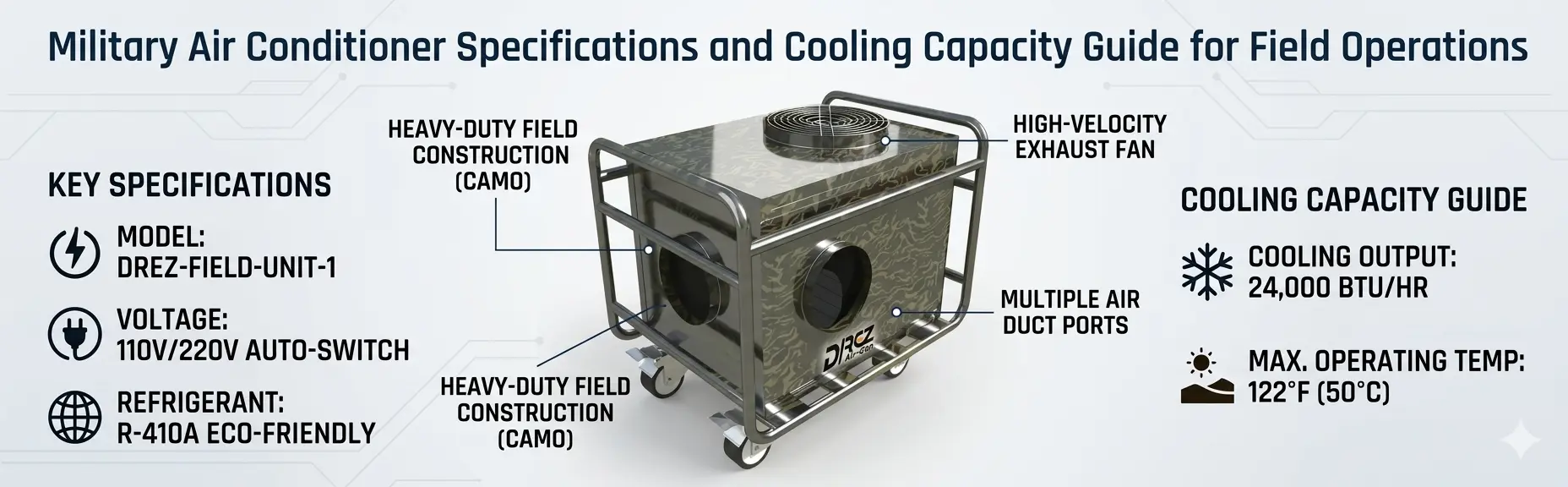
For OEM and ODM buyers, mobile air conditioning can also be a better product category for customized market applications. That is because the system can be adapted for different voltages, airflow requirements, duct structures, and outdoor or semi-outdoor operating environments.
When Portable Air Conditioners Make Sense
Portable air conditioners make sense when the cooling need is smaller, simpler, and more contained. They are useful for compact offices, service rooms, temporary indoor work areas, and situations where only one zone needs cooling.
They are also attractive when buyers want a lower barrier to entry. The equipment is generally easier to understand, easier to install, and easier to move from one room to another.
However, portable units are not always the best match for industrial realities. If the space is hot, open, heavily occupied, or frequently accessed, the cooling performance may be weaker than expected.
Why Site Conditions Change The Decision
Site conditions often matter more than product category names. A portable air conditioner that works well in a sealed room may struggle in a semi-open warehouse or tent structure.
Industrial environments usually involve higher heat loads, more airflow disturbance, and more frequent door openings than residential spaces. That means the cooling system must be chosen based on how the site actually operates, not only on the nominal BTU rating.
If the environment allows heat to escape quickly or cool air to leak out, even a good portable unit may underperform. In those situations, a mobile industrial air conditioning solution is often more practical.
Energy Use And Operating Efficiency
Energy use should be judged by outcome, not just by input power. If a system struggles to reach the target zone or loses cooled air too quickly, it may consume energy inefficiently even if the unit itself is compact.
Portable air conditioners are commonly compared by cooling capacity and efficiency ratings. These ratings are useful, but they do not fully capture how the unit performs in real industrial conditions.
Mobile air conditioning systems are often selected because they can deliver more useful cooling in the actual working space. For industrial buyers, that can mean fewer lost hours, better comfort, and more stable operation during peak demand.
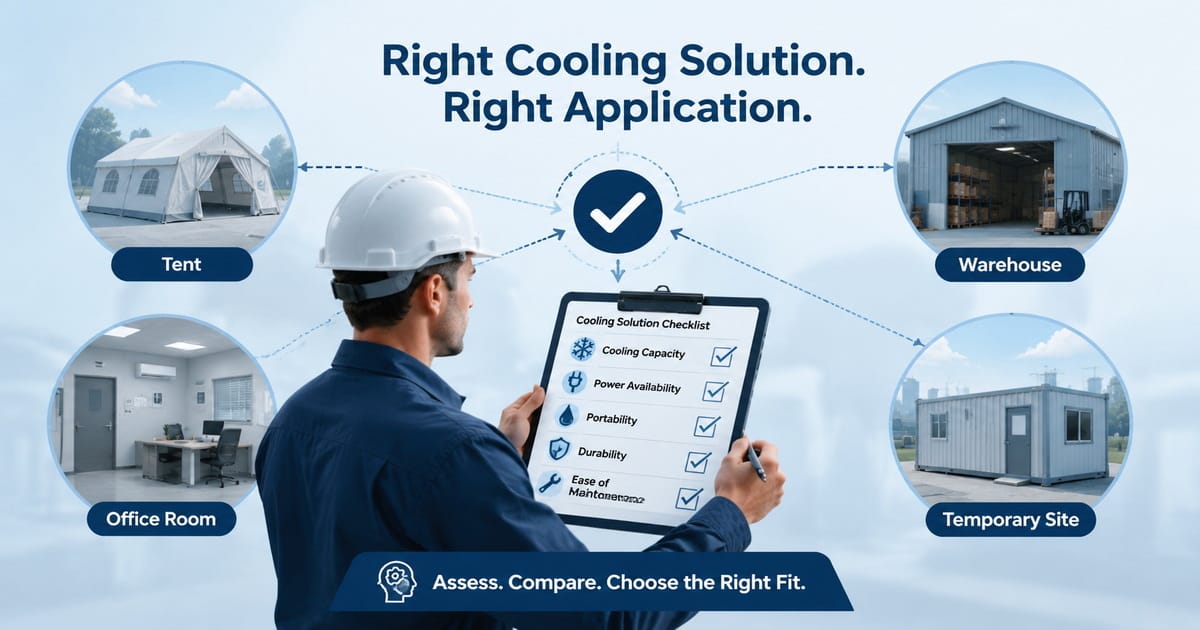
Practical Selection Checklist
Before choosing between the two, buyers should answer the following questions:
1. Is the target space fully enclosed or partially open?
2. Is the cooling need temporary, seasonal, or permanent?
3. Will the unit stay in one place or move between sites?
4. Is the goal whole-space cooling or zone cooling?
5. How much installation time is available?
6. What voltage, ventilation, and drainage conditions are available?
7. Is the buyer serving end users, rental projects, or direct industrial operations?
If most answers point toward flexibility, mobility, and stronger site adaptability, mobile air conditioning is usually the better fit. If the answers point toward a small indoor space with limited cooling demand, a portable air conditioner may be enough.
Industry Use Cases
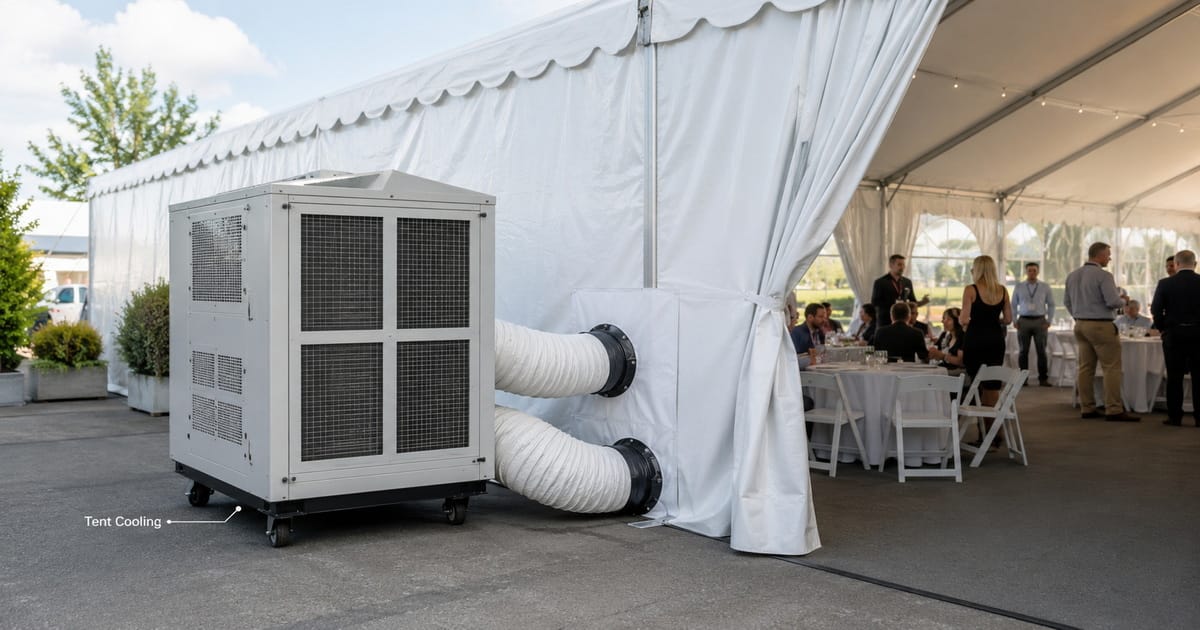
Tent And Event Cooling
Tent cooling is one of the clearest use cases for mobile air conditioning. Event structures often have changing loads, opening and closing activity, and temporary installation requirements.
Portable units usually cannot handle these conditions as effectively. A mobile industrial solution is often preferred because it can be matched to tent size, occupancy level, and runtime needs.
Warehouse Overflow Areas
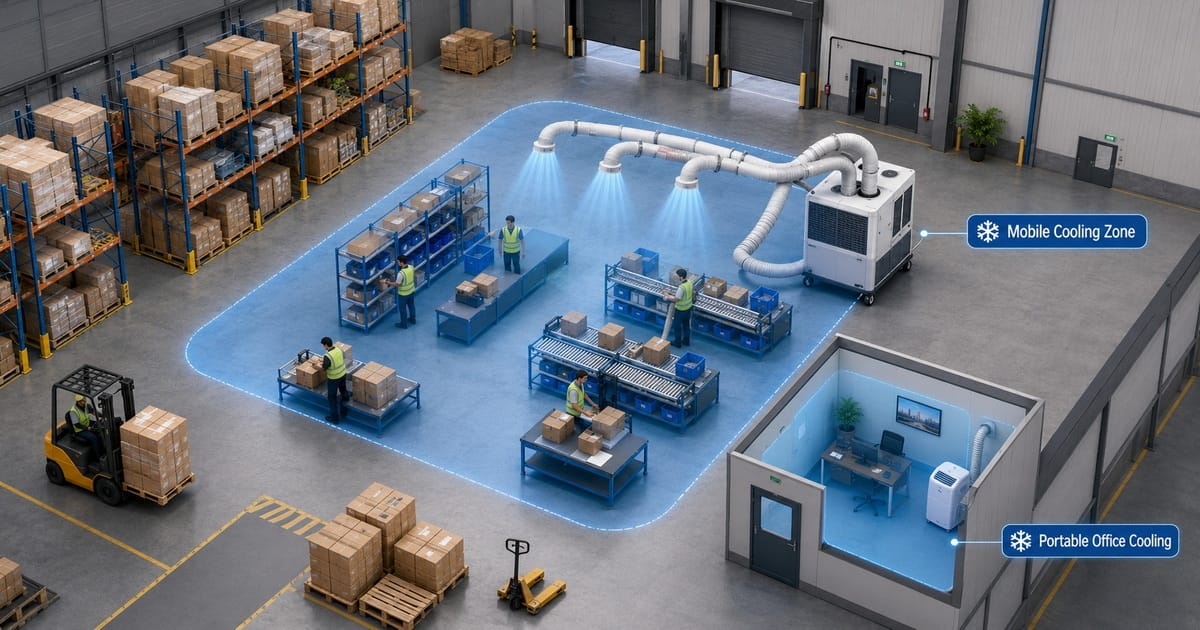
Warehouses often need cooling in specific zones rather than across the entire building. This makes mobile air conditioning highly useful for temporary work areas, packing zones, or staff rest points.
Portable air conditioners may help in small enclosed rooms inside the warehouse, but they are usually not ideal for open loading areas or large mixed-use spaces.
Emergency And Backup Cooling
Emergency cooling is another strong application for mobile systems. When a project needs immediate cooling support due to equipment heat, worker comfort, or temporary HVAC failure, mobile deployment speed becomes critical.
Portable air conditioners can offer short-term support, but their limited scope may not be enough for urgent industrial environments.
What Buyers Should Ask Suppliers
Industrial buyers should ask suppliers practical, site-specific questions before making a decision:
– What is the recommended application environment?
– What space size or cooling load is the unit designed for?
– Does the product support ducting or zone-based air delivery?
– How quickly can the system be deployed?
– Is the model intended for indoor, semi-open, or outdoor use?
– Can the specification be customized for OEM or ODM projects?
These questions help buyers avoid generic purchasing decisions and focus on actual performance needs.
The Business Value Of Choosing Correctly
Choosing the right cooling system is not only a technical decision. It also affects customer satisfaction, project efficiency, and operating cost.
For distributors and brand owners, the wrong choice can lead to returns, complaints, and weak product positioning. For industrial operators, it can mean higher energy waste, uncomfortable working conditions, and poor cooling coverage.
That is why the distinction between mobile air conditioning and portable air conditioner should be treated as a business decision, not just a product comparison. The more precisely the cooling system matches the site, the better the outcome.
Conclusion
Mobile air conditioning and portable air conditioners both provide flexible cooling, but they are built for different needs. Mobile systems are generally stronger for industrial, temporary, and semi-open applications, while portable units are better for smaller enclosed spaces.
For industrial buyers, the best choice depends on site conditions, cooling load, installation speed, and operational flexibility. A careful match between equipment and application will always deliver better results than choosing based on size alone.
FAQ
1. Are mobile air conditioning and portable air conditioner the same thing?
Not exactly. They are both flexible cooling options, but mobile air conditioning usually refers to industrial or commercial systems, while portable air conditioners usually refer to smaller indoor units.
2. Which one is better for a warehouse?
Mobile air conditioning is usually better for large, open, or changing warehouse spaces. Portable air conditioners are better for small enclosed rooms or isolated zones.
3. Can a portable air conditioner work in a tent?
It can work in a small enclosed tent, but it is often not the best choice for larger or more demanding tent environments. Mobile cooling systems are usually more suitable.
4. Is mobile air conditioning more expensive?
It can be, depending on capacity and customization. However, the better question is whether it delivers better value for the site and application.
5. What should OEM and ODM buyers focus on?
They should focus on application fit, customization options, power requirements, airflow design, and the operating environment. These factors matter more than label wording alone.
6. How do I decide between the two?
Start with the space type, cooling load, installation time, and mobility requirement. If the project is temporary, industrial, or semi-open, mobile air conditioning is often the stronger choice.
References
1. Drez Air Conditioner Manufacturer — About Us
https://www.drezaircon.com/about-us
2. Drez (Guangzhou) Intelligent Technology Co., Ltd. — Company Profile
https://m.made-in-china.com/company-drez-aircon/info.html
3. Industrial Portable Air Conditioners: How to Choose the Right Cooling Solution
4. Portable vs Fixed Air Conditioning in Industrial Warehouses
5. 10 CFR § 429.62 — Portable air conditioners
https://www.law.cornell.edu/cfr/text/10/429.62
6. Portable Air Conditioner ASHRAE and SACC BTU Ratings
https://support.tcl.com/en_US/portable-air-conditioner-ashrae-and-sacc-btu-ratings
Hot Tags: Mobile Air Conditioning, Portable Air Conditioner, Industrial Tent Air Conditioner, Commercial Event Cooling, Warehouse Climate Control, Temporary Structure Cooling, Industrial HVAC Solutions, OEM ODM Air Conditioning, Outdoor Event Air Conditioner, Industrial Cooling Equipment