Content Menu
● Flexibility In Real Projects
● FAQs
>> 1. Which is faster to deploy: mobile air conditioning or rooftop HVAC units?
>> 2. Which system is more flexible for changing layouts?
>> 3. Are rooftop HVAC units only for large buildings?
>> 4. Can mobile air conditioning replace rooftop HVAC permanently?
>> 5. Which option is better for OEM and ODM buyers?
>> 6. What is the main buying mistake to avoid?
Mobile air conditioning and rooftop HVAC units solve different cooling problems. Mobile AC wins on speed and flexibility, while rooftop HVAC units win on permanent building integration, capacity scaling, and long-term climate control.
Introduction
For OEM/ODM buyers, distributors, and project planners, the real question is not just “which unit cools better?” It is which system can be deployed faster, adapted more easily, and matched to the site with less operational risk. In temporary, changing, or high-pressure environments, deployment speed can determine whether a project stays on schedule or loses revenue.
As a climate-control supplier serving overseas brands and industrial buyers, this comparison is especially relevant for event spaces, emergency cooling, warehouses, manufacturing areas, and temporary facilities. Rooftop HVAC units are often a stronger long-term fit for permanent commercial buildings, while mobile air conditioning is the more agile option when time, access, or flexibility matters most.
What Each System Is
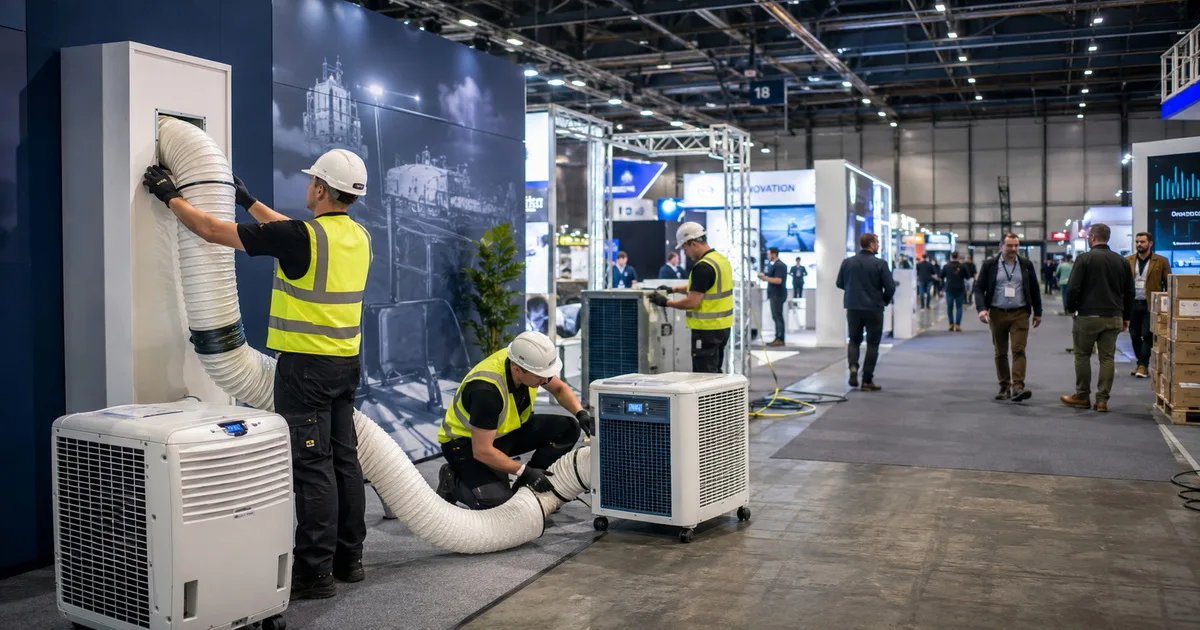
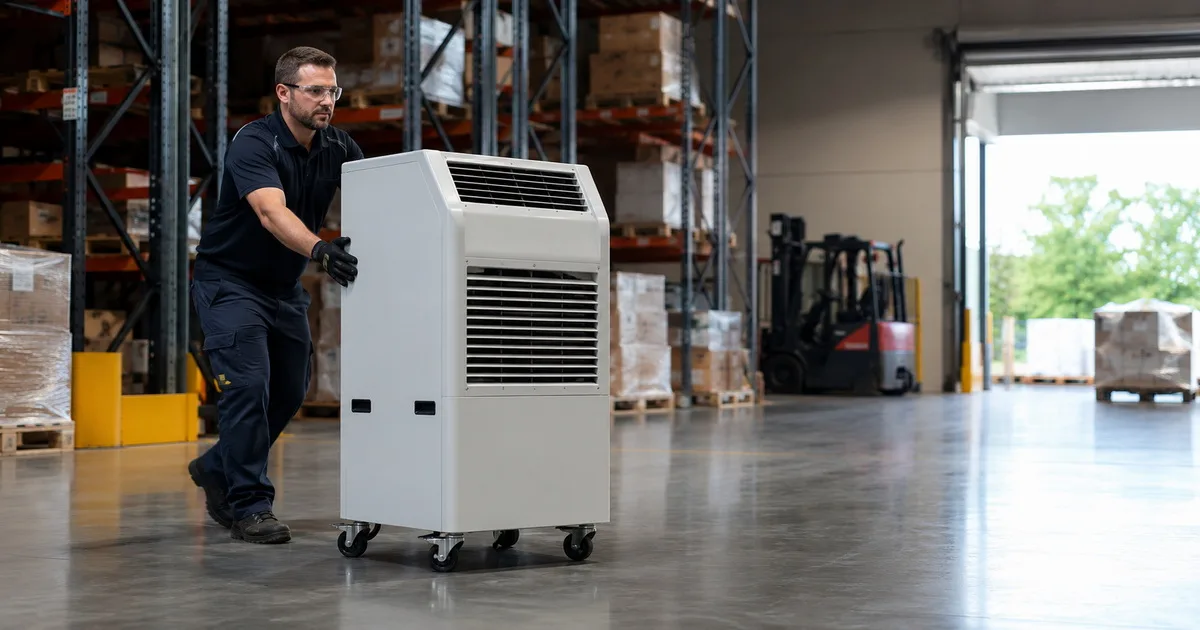
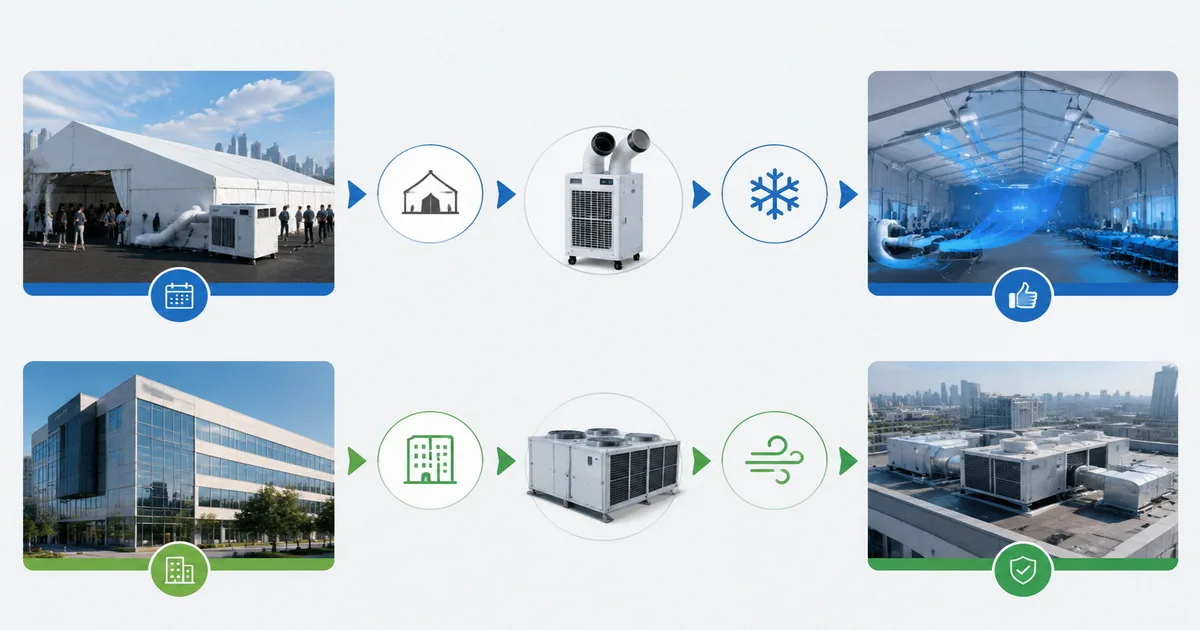
Mobile air conditioning refers to self-contained cooling equipment designed to be moved and installed without major construction, which makes it ideal for temporary and emergency use. These systems are commonly used for quick cooling, spot cooling, and spaces where a fixed outdoor condenser is impractical.
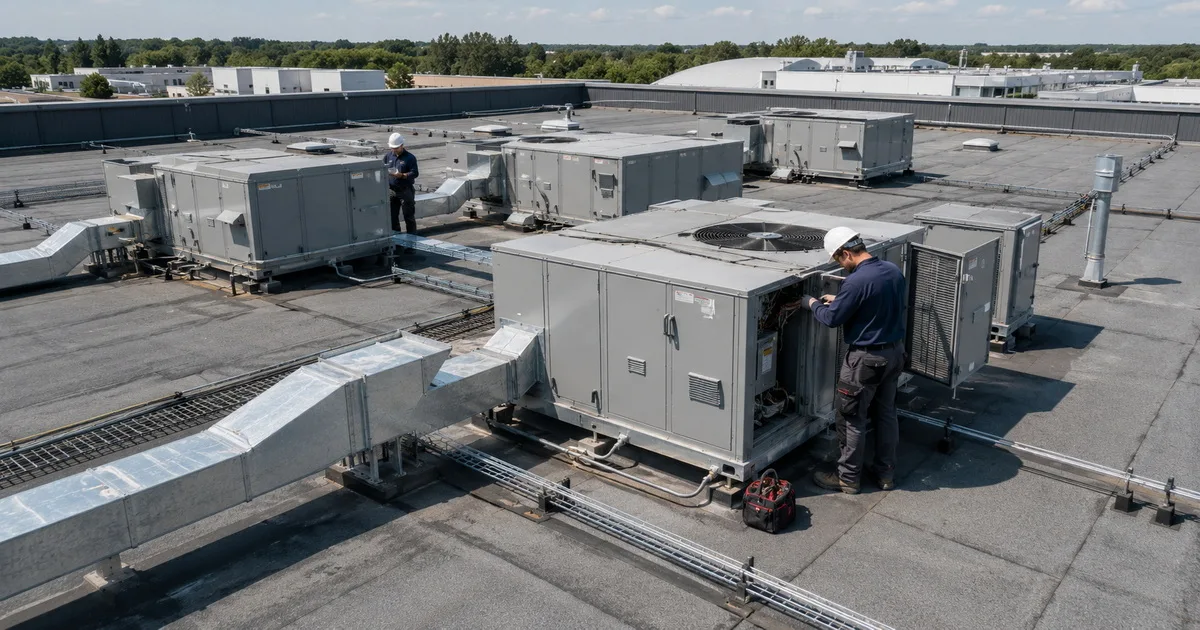
Rooftop HVAC units are packaged systems installed on the roof of a commercial building, where they provide heating, ventilation, and cooling while preserving indoor floor space. They are widely used in commercial and industrial facilities because they support building-wide comfort control and can be configured for broader applications.
Speed Of Deployment
On deployment speed, mobile air conditioning has the clearest advantage. Many portable or temporary AC solutions are promoted as quick to install, self-contained, and suitable for emergency or short-term cooling without costly permanent installation. In practical terms, this means the unit can be moved into position, connected, and put to work far faster than a roof-mounted system that may require lifting equipment, roof access planning, and commissioning.
Rooftop HVAC units are also designed to simplify installation compared with many traditional systems, and modern packaged units often emphasize faster start-up and wiring efficiency. Even so, they still belong to a permanent infrastructure model, which usually requires structural coordination and planned installation windows. That makes them faster than many complex HVAC builds, but still slower and less immediate than mobile air conditioning in temporary scenarios.
Flexibility In Real Projects
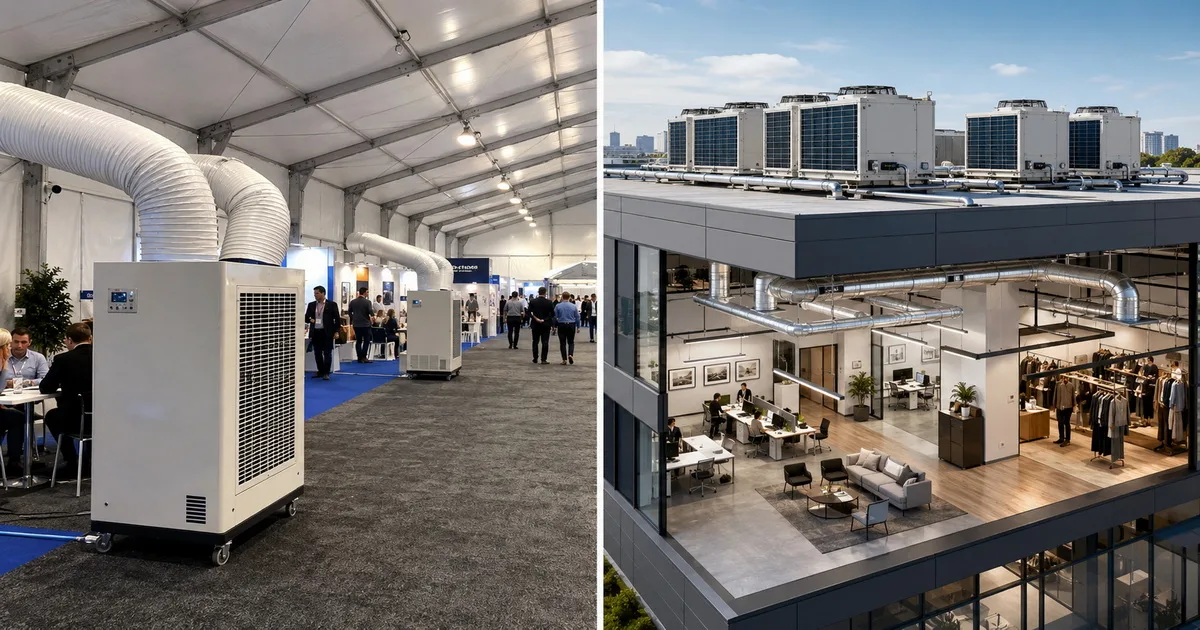
Flexibility is where mobile air conditioning stands out most clearly. It can be repositioned as layouts change, moved between rooms or zones, and used to target hot spots instead of cooling the entire building. This makes it especially useful for manufacturing lines, server rooms, temporary offices, events, and emergency backup situations.
Rooftop HVAC units are flexible in a different way. They are flexible at the system-design level, with options for airflow, control logic, and capacity expansion, but they are not flexible in day-to-day placement or rapid repositioning. In other words, rooftop units support business growth and building-wide efficiency, while mobile AC supports operational agility.
Side-By-Side Comparison
| actor | Mobile Air Conditioning | Rooftop HVAC Units |
|---|---|---|
| Deployment speed | Faster, often quick to position and operate | Slower, because of roof access, installation, and commissioning |
| Flexibility | High, can move between zones and applications | Moderate, flexible in design but fixed after installation |
| Best use case | Temporary, emergency, spot, and supplemental cooling | Permanent commercial and industrial building cooling |
| Space impact | Uses floor or ground space, but avoids roof work | Saves indoor space by moving equipment to the roof |
| Scalability | Good for targeted or temporary coverage | Strong for long-term building-level scaling |
Where Mobile AC Wins
Mobile air conditioning is usually the better choice when the project has one or more of these conditions:
– The cooling need is urgent.
– The site is temporary or changing.
– Only a specific zone needs cooling.
– The building cannot support roof work.
– The operation needs backup cooling during maintenance or failure.
For many buyers, the value is not just convenience. It is business continuity. When a warehouse, production line, or event area overheats, a fast-deploying mobile unit can reduce downtime and keep staff, customers, and equipment protected.
Where Rooftop Units Win
Rooftop HVAC units are the better choice when the building is permanent and the cooling strategy must serve the whole property over many years. They preserve usable indoor space, support broad airflow strategies, and can be integrated into a long-term mechanical plan.
They also make sense when the owner wants a scalable commercial HVAC asset rather than a temporary solution. In many commercial buildings, rooftop units are favored because they balance efficiency, easier maintenance access, and long-term operational stability. For developers and facility managers, that combination often outweighs the slower initial deployment.
Expert View For OEM Buyers
From an OEM/ODM perspective, the most important insight is this: deployment speed and flexibility are product-positioning advantages, not just technical features. If a buyer serves rental firms, emergency service providers, event contractors, or industrial operations with frequent layout changes, mobile air conditioning is easier to commercialize as a fast-response solution. If a buyer serves commercial property owners, rooftop HVAC units are more aligned with long-cycle capital investment and building infrastructure.
For DREZ (Guangzhou) Intelligent Technology Co., Ltd., this distinction can guide product messaging, catalog structure, and landing page strategy. Mobile AC should be positioned around rapid deployment, portability, emergency resilience, and flexible site coverage, while rooftop products should emphasize efficiency, architectural integration, and long-term value.
Practical Selection Steps
Use this simple decision process:
1. Define the cooling duration.
2. Check whether the site is temporary or permanent.
3. Measure whether the need is whole-building or zone-based.
4. Review access constraints, electrical capacity, and installation time.
5. Choose mobile AC for speed and movement, or rooftop HVAC for permanent infrastructure.
This framework helps avoid overbuying or under-specifying the system. It also improves buyer confidence because the recommendation is based on actual site conditions rather than product preference alone.
Conclusion
If your priority is fast deployment and flexible use, mobile air conditioning is the stronger choice. If your priority is permanent building performance and long-term HVAC integration, rooftop units are the better investment. For many industrial buyers, the smartest strategy is not choosing one forever, but matching each system to the job it is built to solve.
Contact DREZ to discuss OEM/ODM mobile air conditioning and rooftop HVAC solutions tailored to your market, project type, and deployment timeline.
FAQs
1. Which is faster to deploy: mobile air conditioning or rooftop HVAC units?
Mobile air conditioning is usually faster because it is self-contained and designed for quick setup without major installation work.
2. Which system is more flexible for changing layouts?
Mobile air conditioning is more flexible because it can be moved to different rooms or zones as needs change.
3. Are rooftop HVAC units only for large buildings?
Not only large buildings, but they are best suited to permanent commercial properties where roof installation makes sense.
4. Can mobile air conditioning replace rooftop HVAC permanently?
In most cases, mobile AC is better as a temporary, supplemental, or emergency solution rather than a full permanent building system.
5. Which option is better for OEM and ODM buyers?
It depends on the target market: mobile AC is stronger for rental, emergency, and temporary applications, while rooftop HVAC is better for commercial building owners.
6. What is the main buying mistake to avoid?
The main mistake is choosing based only on cooling capacity and ignoring deployment time, site access, and whether the system needs to move or stay fixed.
References
1. Daikin Applied. “Commercial Rooftop HVAC Systems” [https://www.daikinapplied.com/products/rooftop-systems]
2. Trane. “Commercial Air Conditioner Rentals” [https://www.trane.com/commercial/north-america/us/en/services/rentals/rental-equipment/air-conditioners.html]
3. Champion. “Commercial Packaged Rooftop Units” [https://www.championhomecomfort.com/commercial-equipment/packaged-split-dx/packaged-rooftop-units]
4. AmeriCool. “Portable Air Conditioners For Commercial and Industrial Use” [https://www.americoolllc.com/portable-air-conditioners-for-commercial-and-industrial-use/]
5. Coolworld Rentals. “Rooftop airco rental” [https://www.coolworld-rentals.com/solutions/climate-control/airco/rooftop-aircos]
Hot Tags: Mobile Air Conditioning, Rooftop HVAC Units, Commercial Air Conditioner Rentals, Temporary Cooling Solutions, Portable Air Conditioning, Packaged Rooftop Units, Quick Deployment Cooling, Industrial Cooling Systems, OEM Air Conditioner Manufacturer, ODM Air Conditioner Supplier