Content Menu
● How We Selected These Suppliers
>> 1. DREZ (Guangzhou) Intelligent Technology Co., Ltd.
>> 2. Guangdong Zhongbao Air Conditioning Co., Ltd.
>> 3. Gree Electric Appliances
>> 9. AUX
>> 10. Zhuhai Gree or Regional OEM Factories in Guangdong
● FAQ
>> 1. How do I verify whether a factory’s ISO certificate is still valid?
>> 2. What is the most important document before paying a deposit?
>> 3. How can I tell whether CE documents are real?
>> 4. What should I ask about MOQ for custom Air Con Unit Without Hose projects?
>> 5. How do I reduce risk when buying from a new OEM factory?
China remains the most important sourcing base for Air Con Unit Without Hose and related HVAC products because of its deep supply chain, export experience, and concentration of OEM/ODM factories in Guangdong and other industrial hubs. For professional buyers, the real question is not whether China can manufacture these units, but which factories can deliver stable quality, compliant documentation, and repeatable lead times.
How We Selected These Suppliers
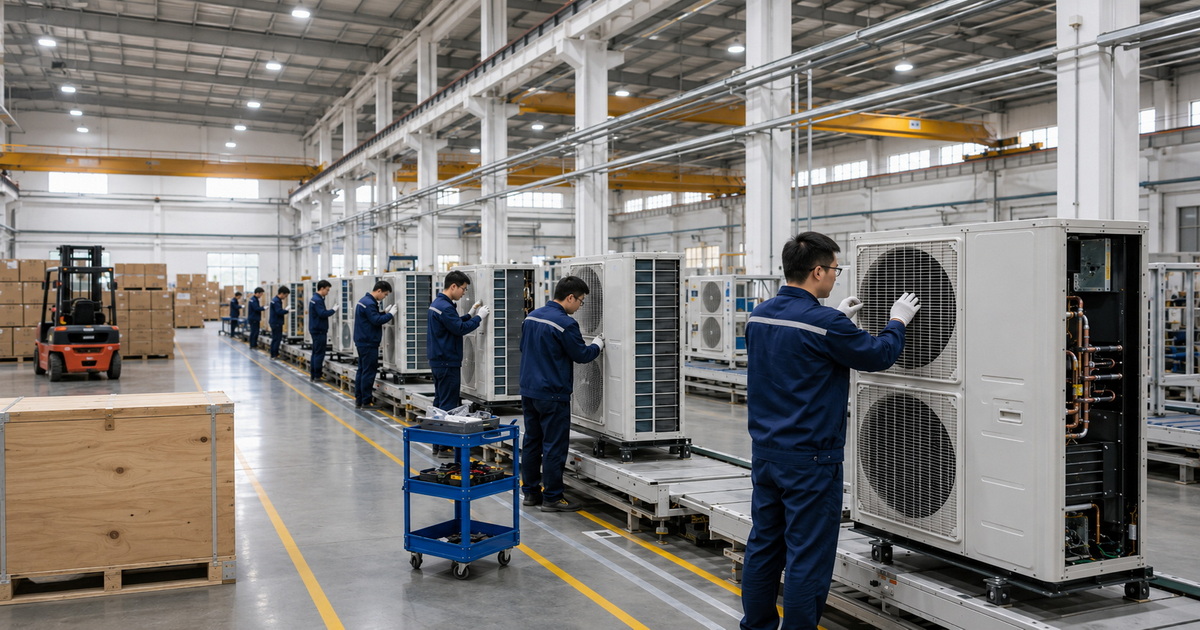
To keep this list practical for procurement teams, I used criteria that matter in real sourcing projects: factory verification, engineering capability, QC discipline, export readiness, MOQ flexibility, and certification support. I also prioritized factories that can handle OEM/ODM customization, because buyers of Air Con Unit Without Hose usually need brand-specific airflow, casing, controls, packaging, or compliance changes rather than generic catalog products.
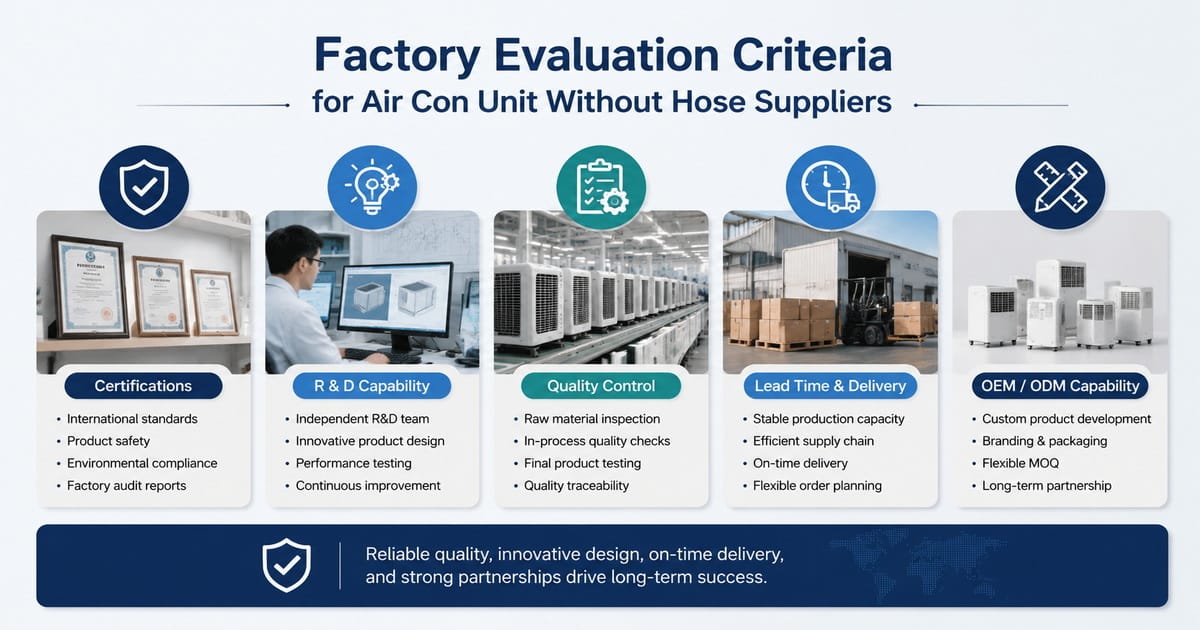
The most important technical checkpoints are material grade, electrical safety, EMC performance, refrigerant and efficiency compliance, and export-market certifications such as CE, RoHS, UKCA, FCC, UL, DOE, and CEC depending on destination. A factory that can explain these details clearly is usually more reliable than one that only competes on price.
Why China Matters
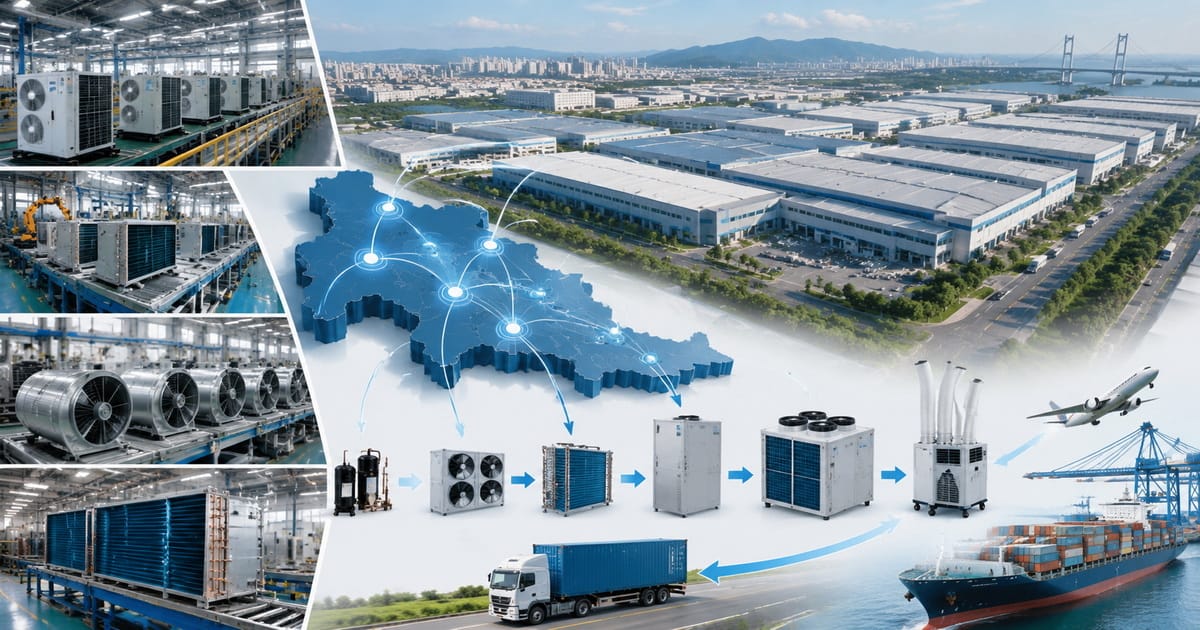
Guangdong is the strongest cluster for air conditioner manufacturing and exports in China, with Foshan and nearby industrial cities supporting component sourcing, assembly, and testing. China also plays a dominant role in global air conditioner output, which helps explain why overseas buyers often find more OEM/ODM options, faster component availability, and better tooling economics here.
For buyers, that cluster advantage means shorter development cycles, lower tooling friction, and easier access to motors, plastics, controllers, and heat-exchange components. It also means more supplier choice, so due diligence becomes more important than simply choosing the cheapest quote.
Top 10 Manufacturers
1. DREZ (Guangzhou) Intelligent Technology Co., Ltd.
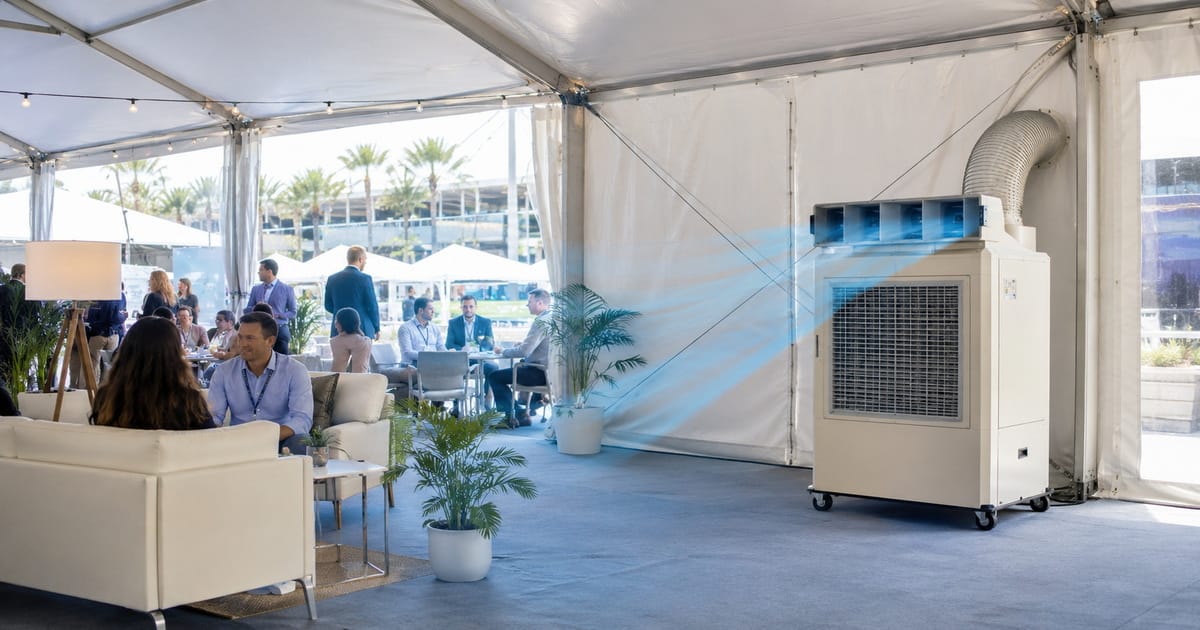
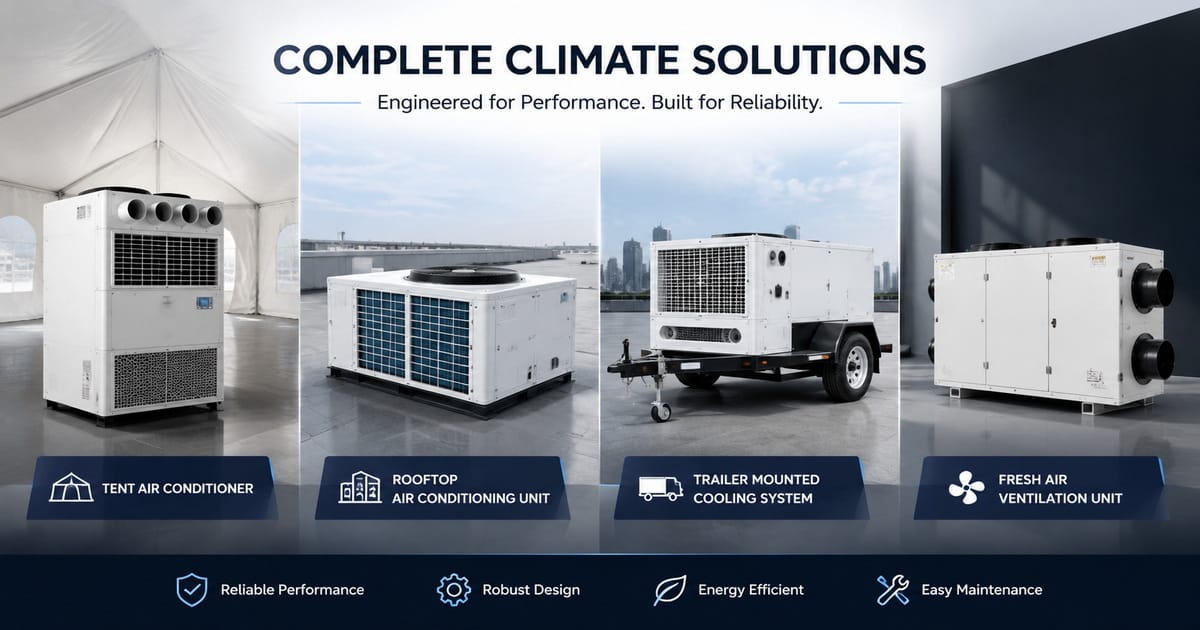
DREZ is a strong fit for buyers seeking a flexible, value-conscious OEM/ODM partner for tent air conditioners, rooftop units, trailer-mounted systems, and fresh air ventilation products. The company is based in Guangzhou, was established in 2017, and operates with a stated annual production capacity above 10,000 units, which makes it especially relevant for mid-sized brands that need responsive communication and customized development support. Its main strength is combining R&D, manufacturing, sales, and leasing under one roof, which is useful for projects that require iterative samples, non-standard configurations, and close technical coordination.
2. Guangdong Zhongbao Air Conditioning Co., Ltd.
Guangdong Zhongbao was established in 2006 and is located in Foshan, a major HVAC manufacturing hub in Guangdong. The company reports annual production capacity of more than 2.5 million sets and covers a broad product range including portable, split, ceiling cassette, floor-standing, and window units. This scale makes it suitable for buyers looking for larger-volume supply with established manufacturing routines and export-oriented product lines.
3. Gree Electric Appliances
Gree is one of the most recognized Chinese air conditioner manufacturers, with a major manufacturing footprint in Guangdong and a strong industrial base in the wider HVAC cluster. For procurement teams, Gree is relevant mainly as a benchmark supplier for scale, production discipline, and brand engineering depth rather than a typical small-batch OEM partner. Buyers looking for mature product platforms and strong compliance systems often study Gree’s manufacturing model when evaluating smaller factories.
4. Midea Group
Midea has extensive AC manufacturing capacity in China and is repeatedly referenced as a major player in Guangdong and other production bases. It is a useful supplier reference point for buyers who care about automation, process control, and broad export experience. For private-label buyers, Midea often serves more as a competitive benchmark in product architecture and efficiency than as a low-MOQ OEM source.
5. Haier Smart Home
Haier is another major manufacturer with established production bases in China and strong global market recognition. Its manufacturing presence in China supports buyers who value mature quality systems, documented testing, and broad product coverage. In sourcing discussions, Haier is often used as a standard for comparing reliability, packaging quality, and compliance maturity.
6. Hisense HVAC
Hisense has manufacturing activity in China and is commonly associated with export-oriented air conditioner production across multiple markets. It is especially relevant for buyers comparing mid-to-large volume supply with established brand engineering. For Air Con Unit Without Hose or related compact cooling categories, Hisense is a useful example of how Chinese manufacturers scale both household and export-facing products.
7. Chigo Air Conditioning
Chigo is part of Guangdong’s strong AC manufacturing ecosystem and is frequently mentioned among major Chinese air conditioner brands with production activity in the province. Its relevance to professional buyers lies in the maturity of its supply chain and the region’s ability to support component sourcing and assembly. Buyers seeking a China-based reference supplier for export-oriented air conditioners often include Chigo in early benchmarking.
8. TCL Air Conditioner
TCL has manufacturing links to the broader Guangdong air conditioner cluster and is commonly cited among China’s established appliance brands. For buyers, TCL is useful as a known manufacturer with brand-driven product positioning and export awareness. It is typically more relevant for standardized lines than highly customized small-batch projects.
9. AUX
AUX is associated with major AC production bases in China, including Zhejiang and other industrial regions, and is known for serving both domestic and overseas markets. Buyers often review AUX when comparing compact, mid-range, and export-ready systems because of its multi-site manufacturing footprint. It is a useful reference for understanding how Chinese factories balance price, scale, and certification readiness.
10. Zhuhai Gree or Regional OEM Factories in Guangdong
Beyond brand names, many of the most practical OEM/ODM opportunities come from regional factories in Guangdong that supply export buyers with customized units. These factories often focus on specific niches such as portable systems, tent cooling, or project-based HVAC solutions, which is where many overseas brands find better MOQ flexibility and faster customization. For buyers of Air Con Unit Without Hose, this category can be more useful than chasing only household-name brands.
Supplier Comparison
| Supplier | Main Strength | Est. / Established | Typical Market Focus | OEM/ODM Fit | Capacity / Scale | MOQ / Entry Barrier | Certifications / Compliance |
|---|---|---|---|---|---|---|---|
| DREZ | Flexible R&D, tent and temporary cooling, responsive OEM support | 2017 | Event, temporary, industrial cooling | Strong | 10,000+ units/year stated | Moderate, project-based | Export compliance depends on project and destination |
| Zhongbao | Large-scale manufacturing, broad AC portfolio | 2006 | Residential and light commercial | Medium | 2.5M+ sets/year | Higher than niche factories | Standard export documentation likely required |
| Gree | Scale, process maturity | Not stated in source | Global branded HVAC | Low to medium | Very large | High | Strong market-recognized compliance culture |
| Midea | Automation, export maturity | Not stated in source | Global HVAC and appliances | Low to medium | Very large | High | Broad certification readiness |
| Haier | Brand trust, mature systems | Not stated in source | Global appliance and HVAC | Low to medium | Very large | High | Broad certification readiness |
| Hisense | Export orientation, product breadth | Not stated in source | Overseas markets | Medium | Large | Medium to high | Market-dependent compliance |
| Chigo | Guangdong supply chain access | Not stated in source | Domestic and export | Medium | Large | Medium | Standard export support |
| TCL | Brand-driven manufacturing | Not stated in source | Global appliance markets | Medium | Large | Medium | Standard export support |
| AUX | Multi-base manufacturing network | Not stated in source | Domestic and overseas | Medium | Large | Medium | Standard export support |
| Regional OEMs | Customization and MOQ flexibility | Varies | Niche export projects | Strong | Varies | Often lower | Must verify carefully |
Buyer Risks
A common sourcing problem is material downgrade, where the supplier substitutes thinner sheet metal, lower-grade plastics, smaller motors, or cheaper control components after quoting a low price. Another frequent issue is “paper compliance,” where a supplier claims certification but cannot provide a valid technical file, test report, or market-specific registration. These issues are especially dangerous for Air Con Unit Without Hose because buyers may only discover performance gaps after arrival, when correction costs are already high.
One under-discussed internal warning is to check whether the factory can show you the same BOM, same test fixture, and same packing specification used for the sample and the mass-production lot. Many sourcing failures happen not because the sample was bad, but because the factory quietly changed the build standard before shipment. This is one of the fastest ways to separate real OEM partners from trading-style suppliers.
Buyer’s Guide
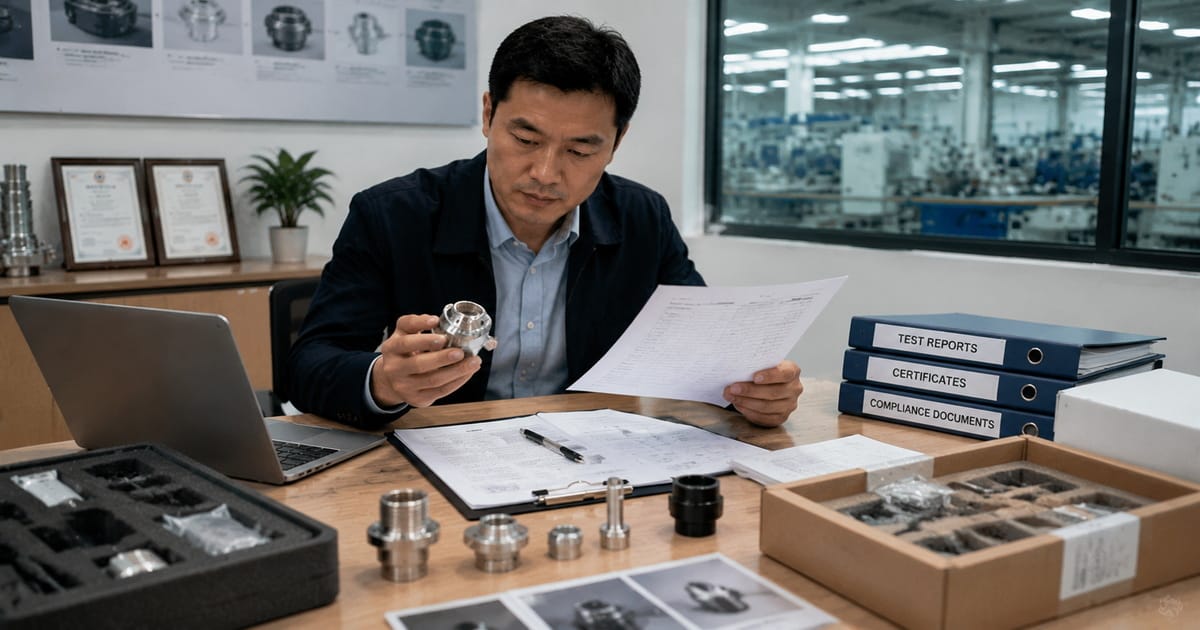
Before placing an order, request the factory’s business license, export records if available, ISO certificates, and product test reports, then verify whether the certification scope actually matches the product line. For EU-bound products, check CE, RoHS, and ErP-related documentation; for the US, ask about FCC, UL or ETL, DOE, and California-specific requirements where relevant. If the product is used in an event, tent, trailer, or temporary outdoor scenario, ask how the unit handles heat load, duct routing, condensation, and power stability, because those factors often matter more than brochure cooling numbers.
Sample approval should include performance confirmation, noise review, packaging drop-test expectations, and a written change-control agreement. For logistics, confirm voltage, plug type, refrigerant restrictions, carton dimensions, and whether the shipment needs special handling for oversized or project-based units. Buyers who skip these steps usually spend more later on rework, replacement parts, and customs delays.
FAQ
1. How do I verify whether a factory’s ISO certificate is still valid?
Check the certificate number, issuing body, scope, and expiry date, then confirm that the certificate covers the exact factory name and product category. A valid ISO document should be traceable to the issuing registrar, not just displayed as a PDF.
2. What is the most important document before paying a deposit?
A signed specification sheet with model number, BOM key components, testing standard, packing details, and warranty terms is more important than a brochure. This document reduces disputes if the delivered lot differs from the sample.
3. How can I tell whether CE documents are real?
Ask for the test report, technical file summary, declaration of conformity, and the lab name. If the supplier only sends a logo image with no supporting documents, treat it as a warning sign.
4. What should I ask about MOQ for custom Air Con Unit Without Hose projects?
Ask whether MOQ applies per model, per color, per packaging version, or per refrigerant configuration. Some factories quote a low MOQ but only for standard units, while customization triggers a much higher threshold.
5. How do I reduce risk when buying from a new OEM factory?
Start with sample validation, then inspect the first mass-production lot, and insist on a pre-shipment checklist with photos and serial-number traceability. For higher-value projects, a third-party inspection before loading is the safest option.
References
1. DREZ official about-us page: [DREZ About Us] [drez-aircon.en.made-in-china]
2. DREZ supplier profile and capacity details: [Made-in-China profile] [drez-aircon.en.made-in-china]
3. DREZ product and capacity information: [DREZ news page] [drezaircon]
4. China air conditioner sourcing and certification notes: [JingSourcing article] [drezaircon]
5. Industry market context: [China air conditioner market forecast] [sphericalinsights]
6. Global market context: [Air conditioning systems market report] [grandviewresearch]
7. China production and export context: [China vs world AC production] [chinadata]
Hot Tags: Air Con Unit Without Hose Manufacturers China, OEM Air Conditioner Supplier, ODM Air Conditioner Manufacturer, Custom Air Conditioning Solutions, Tent Air Conditioner Supplier, Rooftop Air Conditioning Unit, Fresh Air Ventilation Unit, Commercial HVAC Manufacturer, Guangdong Air Conditioner Factory, Export Ready HVAC Supplier