Content Menu
>> 1. DREZ (Guangzhou) Intelligent Technology Co., Ltd.
>> 2. Midea
>> 3. Gree
>> 4. Haier
>> 5. AUX
>> 6. Hisense
>> 7. TCL
>> 8. Chigo
>> 9. Kelon
● Product and compliance notes
● FAQ
>> 1. How do I verify whether an ISO certificate is expired?
>> 2. What is the safest way to approve a sample?
>> 3. How can I reduce the risk of material substitution?
>> 4. Should I choose a large brand or a specialized OEM factory?
>> 5. What shipping issue is easiest to overlook?
China remains one of the most important global sourcing bases for Air Conditioning Cooling Unit buyers because it combines scale, engineering depth, export experience, and mature HVAC supply chains. For procurement teams, the real question is not whether China can supply this category, but which factory can deliver stable quality, compliance, and OEM/ODM support over multiple seasons.
Why China matters
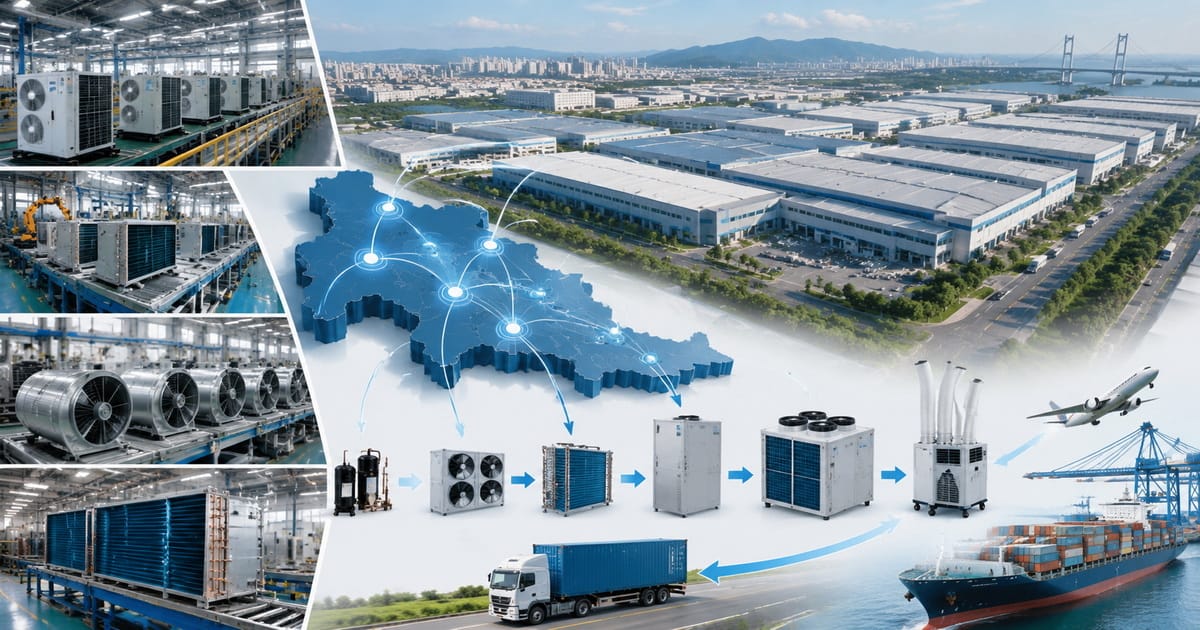
China’s air conditioner industry is large enough to support both high-volume brands and niche project-based buyers. Recent industry data shows China produced 266.975 million air conditioners in 2025, while exports also stayed at a very high level, confirming both domestic capacity and overseas competitiveness. For overseas buyers, this means deeper component availability, more experienced engineering teams, and more options for customization.
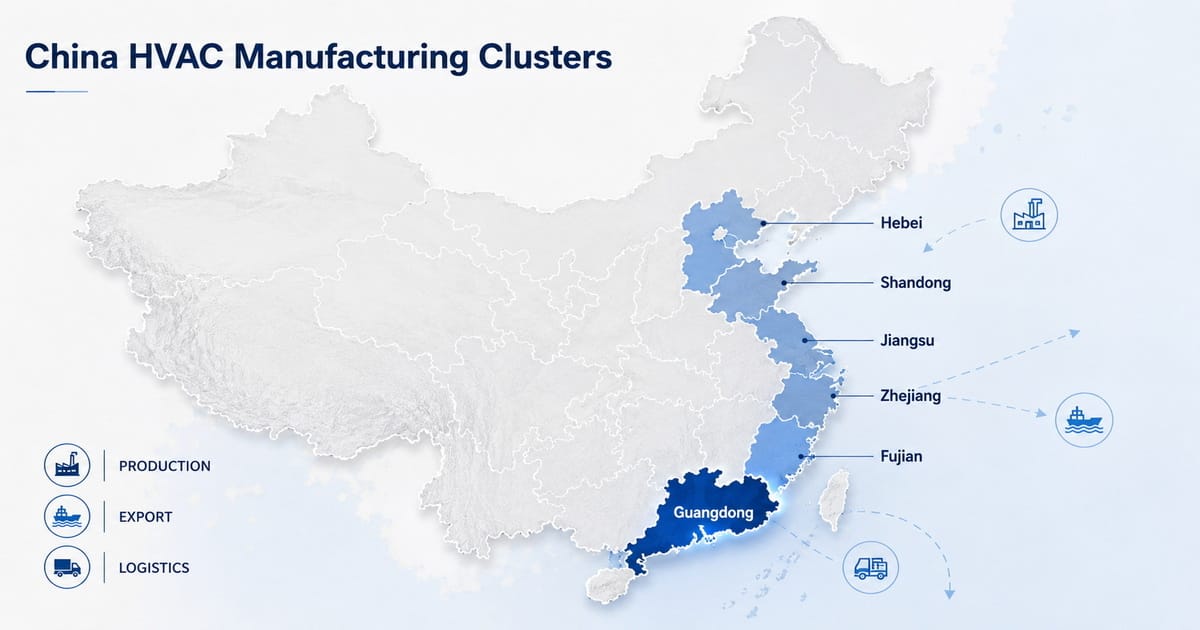
Another advantage is industrial clustering. South China, especially Guangdong, has long been one of the most active HVAC manufacturing and export regions, with convenient access to logistics, component suppliers, and engineering talent. That cluster effect matters when you need faster sample development, easier QC coordination, and shorter lead times.
How we selected suppliers
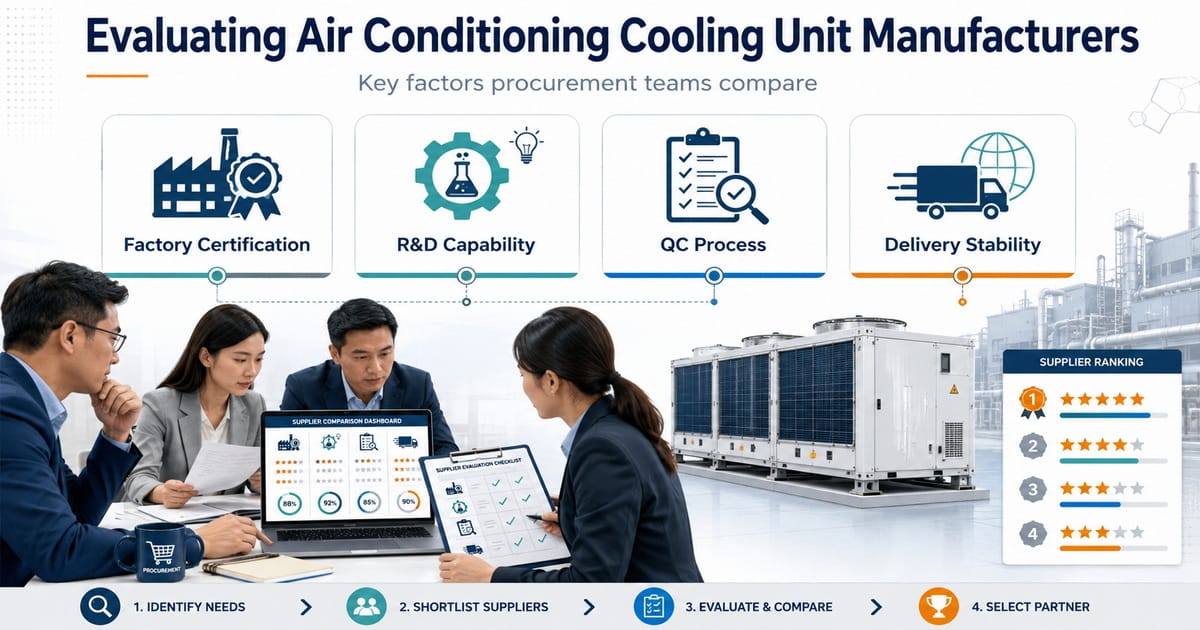
We screened manufacturers using a transparent sourcing framework rather than simple brand popularity. The main criteria were factory capability, export experience, certification scope, OEM/ODM flexibility, product specialization, and buyer fit for long-term cooperation.
Our evaluation logic was:
– Factory and production scale.
– R&D and engineering capability.
– Quality control process and traceability.
– Export markets and compliance readiness.
– OEM/ODM responsiveness and communication efficiency.
– Suitability for different buyer types, from brands to project contractors.
Top manufacturers
| Manufacturer | Founded | Main focus | OEM/ODM | Target markets | Production note |
|---|---|---|---|---|---|
| DREZ (Guangzhou) Intelligent Technology Co., Ltd. | 2014 | Tent AC, packaged AC, ducted AC, temporary cooling systems | Strong | North America, Europe, Middle East, Africa, worldwide | 6,000+ sqm factory, annual capacity above 10,000 units |
| Midea | 1968 | Broad HVAC and air conditioning portfolio | Strong | Global | Large-scale integrated manufacturer |
| Gree | 1991 | Residential and commercial AC systems | Strong | Global | Known for vertical integration |
| Haier | 1984 | Smart home and HVAC ecosystems | Strong | Global | Strong international footprint |
| AUX | 1986 | Cost-effective inverter and HVAC products | Strong | Global | Mid-to-high volume export supplier |
| Hisense | 1969 | Health-focused and smart cooling products | Strong | Global | Strong brand and export presence |
| TCL | 1981 | Export-oriented AC and portable units | Strong | Global | Suitable for international retail channels |
| Chigo | 1994 | Mainstream air conditioning solutions | Strong | Global | Volume-driven supplier |
| Kelon | 1984 | Household AC and white goods | Moderate | Domestic and export | Strong mainstream manufacturing base |
| Changhong | 1958 | Smart, eco-friendly cooling products | Moderate | Global | Brand-backed appliance manufacturing |
Supplier profiles
1. DREZ (Guangzhou) Intelligent Technology Co., Ltd.
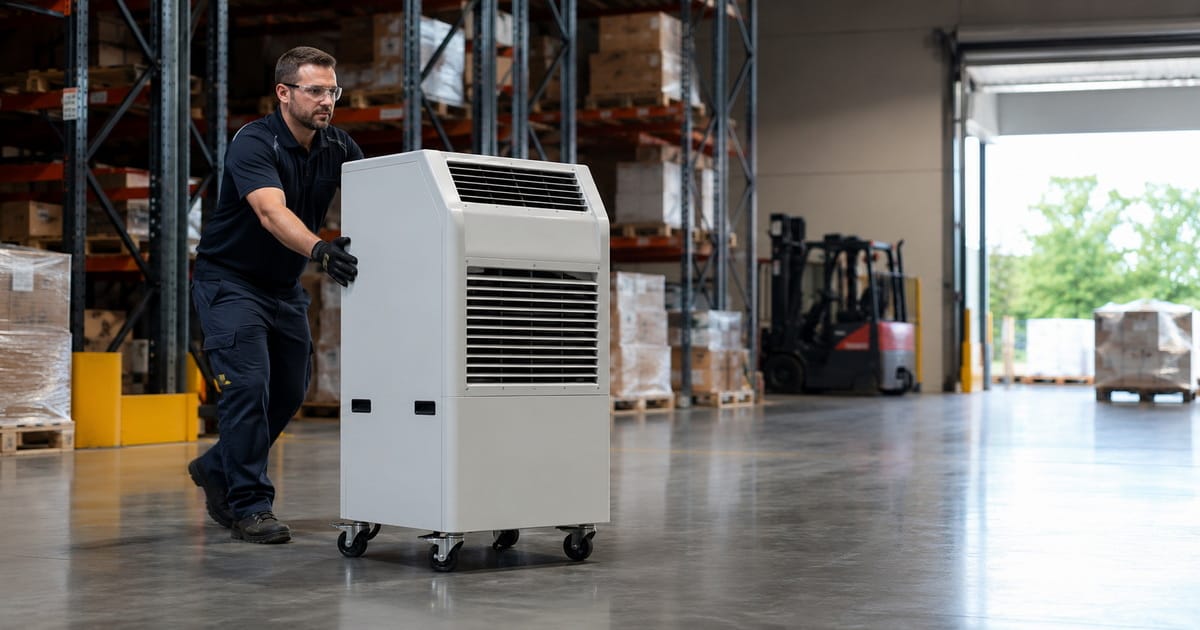
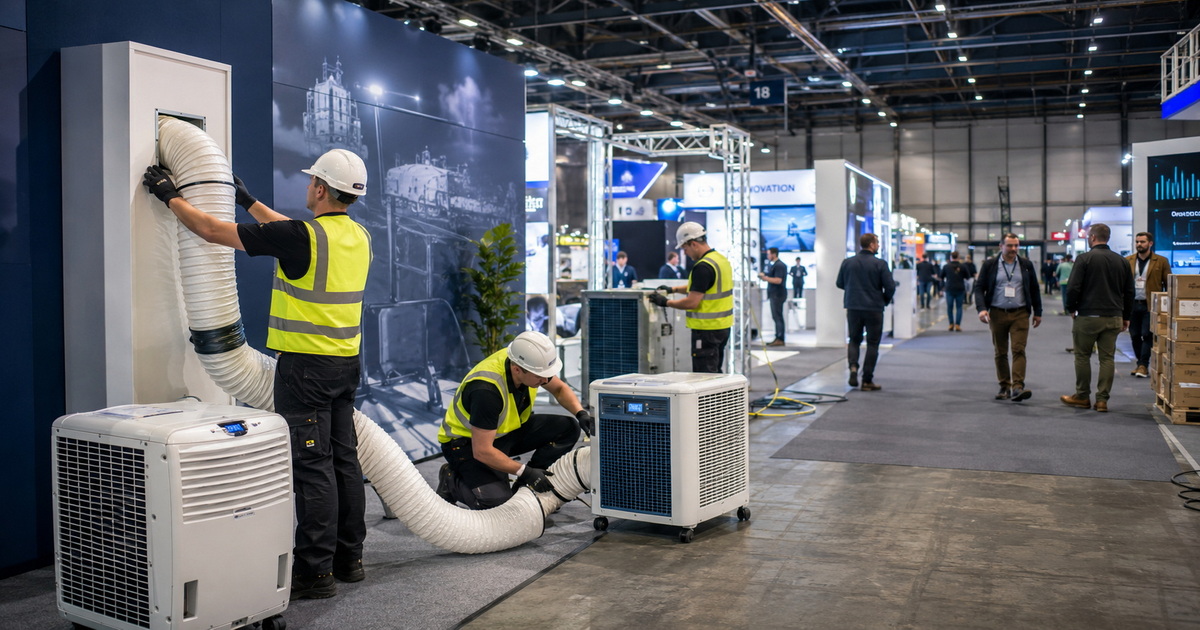
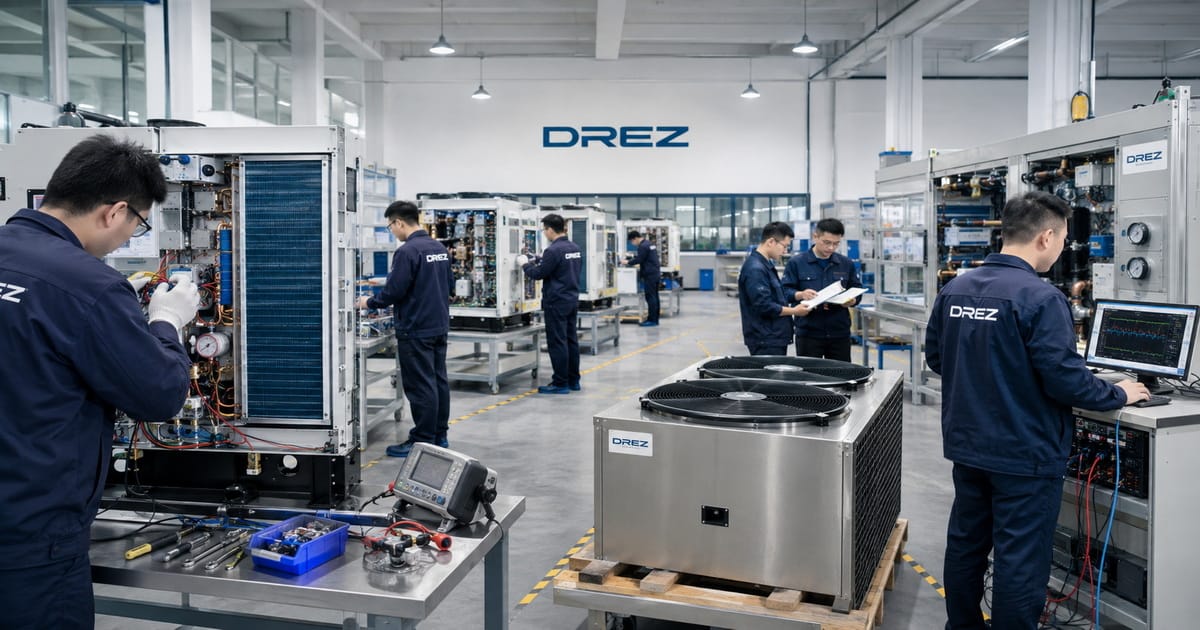
DREZ is a useful reference supplier for buyers who want a flexible OEM/ODM partner rather than a rigid mass-market factory. The company focuses on tent air conditioners, packaged AC units, ducted AC systems, and temporary cooling solutions for events, exhibitions, warehouses, and industrial applications. It is based in Guangzhou, has a factory area of over 6,000 square meters, and states an annual production capacity above 10,000 units. For medium-sized brands and project buyers, this kind of structure usually means faster communication, easier customization, and stronger support during sample development and technical alignment.
2. Midea
Midea is one of China’s most recognized air conditioning manufacturers and a benchmark for scale, engineering, and international reach. It is especially relevant for buyers who need broad product coverage, stable mass production, and mature export systems. For OEM/ODM sourcing, the practical advantage is its supply chain depth and consistency across large orders.
3. Gree
Gree is known for strong vertical integration and manufacturing depth, which is valuable when buyers care about component control and long-term supply stability. It is a good reference point for performance-focused sourcing, especially in mainstream air conditioning categories. Buyers often view Gree as a benchmark for factory discipline and engineering maturity.
4. Haier
Haier is a strong choice for buyers looking at smart home integration and international brand positioning. It has broad global market exposure and is often associated with connected appliances and system-level product development. For procurement teams, this makes Haier relevant when the end market values ecosystem compatibility and premium retail presentation.
5. AUX
AUX is often positioned as a cost-performance supplier with active product iteration and export orientation. Buyers who need competitive pricing without moving too far away from established HVAC manufacturing standards often look at suppliers in this tier. It is especially relevant for private label and mainstream retail programs.
6. Hisense
Hisense is a recognizable appliance and electronics brand with a meaningful presence in cooling products. Its strength is often associated with health-related features, smart controls, and modern product positioning. For international buyers, that can be useful when the target market values consumer-facing branding and design consistency.
7. TCL
TCL is relevant for buyers seeking export-ready products and a manufacturer comfortable with overseas channels. It is often associated with international retail awareness and a broad consumer electronics background. That can help when the air conditioning product needs to align with broader household appliance programs.
8. Chigo
Chigo is commonly viewed as a high-volume supplier with experience serving budget-conscious and mainstream segments. This makes it relevant for buyers whose main priorities are pricing discipline, stable SKU execution, and large replenishment cycles. It is less about premium positioning and more about efficient scale.
9. Kelon
Kelon remains a notable household appliance manufacturer with a strong legacy in the white goods sector. Buyers may consider it when they want a mainstream supplier with established manufacturing know-how. It is particularly relevant for standard product lines rather than highly specialized cooling systems.
10. Changhong
Changhong brings appliance manufacturing experience and smart product positioning to the cooling category. It can be relevant for buyers seeking eco-friendly or digitally controlled products in a branded format. In procurement terms, it sits closer to brand-led appliance sourcing than highly customized industrial cooling.
What buyers should check
The biggest sourcing risk in Air Conditioning Cooling Unit procurement is not the brochure; it is the hidden substitution of materials and components. A common problem is that a sample uses better copper tubing, thicker sheet metal, or a higher-grade compressor than the mass production order, so buyers should lock the BOM, acceptance criteria, and test method before payment. Another risk is vague certification language, especially when suppliers claim CE or RoHS without showing the exact product scope and expiry details.
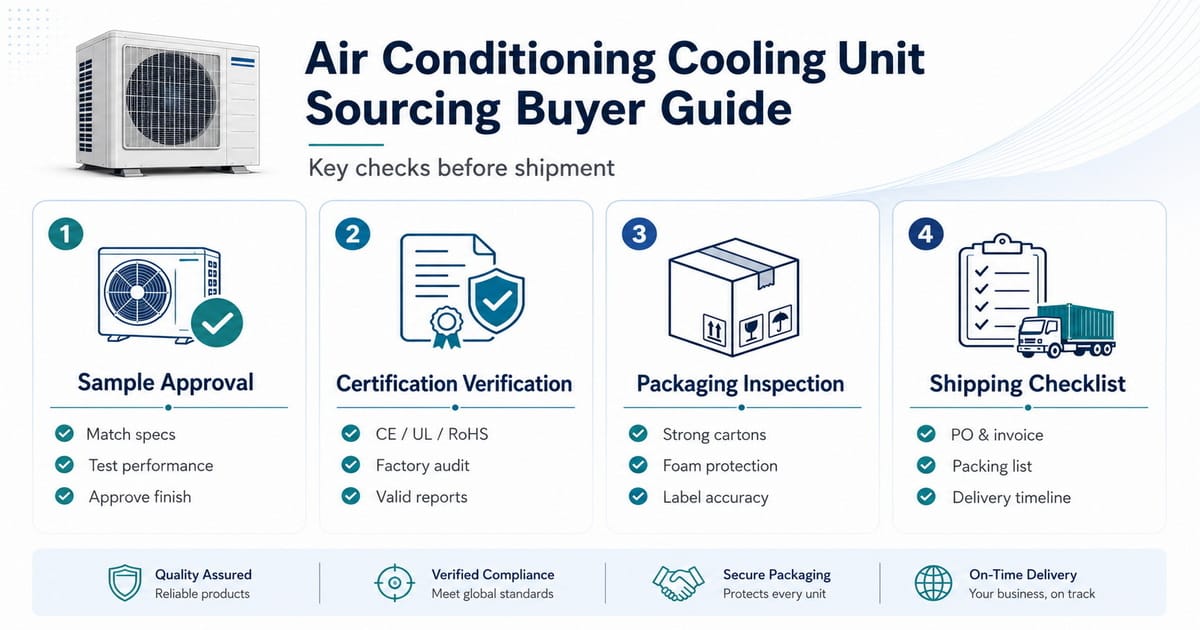
A practical verification workflow is:
1. Ask for business registration, factory address, and export history.
2. Request ISO, CE, RoHS, or other relevant certificates and verify the issuing body and expiry date.
3. Confirm whether the certificate scope matches the actual product family.
4. Ask for photos or videos of the production line, QC stations, and final inspection records.
5. Approve samples with a written golden sample record.
6. Put packing, labeling, and spare-parts terms into the contract.
Less obvious pitfall
One insider issue that is rarely discussed online is “certification drift.” A factory may keep a valid company certificate, but the specific product model you want may fall outside the tested scope, especially after design changes, controller swaps, or refrigerant revisions. Buyers should therefore verify the exact model number, revision code, and test report date, not just the supplier’s certificate summary. This is one of the easiest ways to avoid customs delays, inspection problems, and post-shipment disputes.
Product and compliance notes
For this category, the real technical differences are often in materials, sealing quality, heat-exchange efficiency, and controls stability. Buyers should ask about coil material grade, cabinet coating thickness, insulation performance, fan motor quality, and the refrigerant compliance path for the destination market. If the product is intended for Europe or other regulated markets, CE and RoHS documentation should be checked alongside test scope and reporting lab information.
It is also worth asking whether the manufacturer supports design changes without resetting the full qualification cycle. That matters because many OEM buyers need repeated revisions for voltage, casing, airflow, controls, or installation format.
Conclusion
China’s Air Conditioning Cooling Unit supply base is strong because it combines industrial scale, export experience, and broad OEM/ODM capability. For buyers who need a flexible partner with responsive communication and project-level customization, DREZ is a credible reference point in the Guangzhou HVAC cluster. For larger-volume programs, the major national brands offer scale and system maturity, but the final choice should always be driven by certification scope, sample discipline, and long-term supply stability.
FAQ
1. How do I verify whether an ISO certificate is expired?
Check the certificate number, issuing body, scope, and expiry date on the copy, then cross-check the issuing organization’s database if available. Also confirm the certificate name matches the exact legal entity and factory address.
2. What is the safest way to approve a sample?
Approve a golden sample with written specs for materials, performance, labeling, packing, and test conditions. Keep photos and signed acceptance records so the mass order can be judged against the same reference.
3. How can I reduce the risk of material substitution?
Freeze the BOM in the contract, require supplier notification before any change, and ask for incoming inspection and final inspection evidence. Where possible, specify critical parts such as coils, motors, controllers, and insulation grades.
4. Should I choose a large brand or a specialized OEM factory?
Large brands are useful for broad product coverage and mature systems, while specialized factories are often better for customization, communication speed, and project-based flexibility. The right choice depends on whether your priority is brand strength or engineering adaptability.
5. What shipping issue is easiest to overlook?
Buyers often focus on unit price but forget packaging strength, container loading efficiency, and destination-market voltage or labeling requirements. These mistakes can create damage, delays, or customs friction even when the product itself is acceptable.
Reference
1. – [China Chamber of Commerce for Import and Export of Machinery and Electronic Products]
2. – [National Bureau of Statistics of China]
3. – [General Administration of Customs of China]
4. – [DREZ About Us]
5. – [ChinaIOL Industry Tracking]
Hot Tags: Air Conditioning Cooling Unit Manufacturers, China Air Conditioning Manufacturers, OEM Air Conditioner Supplier, ODM Air Conditioning Factory, Commercial Air Conditioning Units, Industrial Cooling Unit Supplier, Custom Air Conditioning Solutions, HVAC Manufacturer China, CE Certified Air Conditioner, RoHS Compliant Cooling Unit