Content Menu
>> 1. DREZ (Guangzhou) Intelligent Technology Co., Ltd.
>> 2. Gree
>> 3. Midea
>> 4. Haier
>> 5. AUX
>> 6. Chigo
>> 7. TCL
>> 8. Hisense
>> 9. Kelon
● CTA
● FAQ
>> 1. How can I verify whether an ISO certificate is expired?
>> 2. How do I know whether a factory really supports OEM/ODM?
>> 3. What certifications matter most for air conditioning equipment exports?
>> 4. How do I reduce the risk of hidden component substitution?
>> 5. What should I ask before approving a sample?
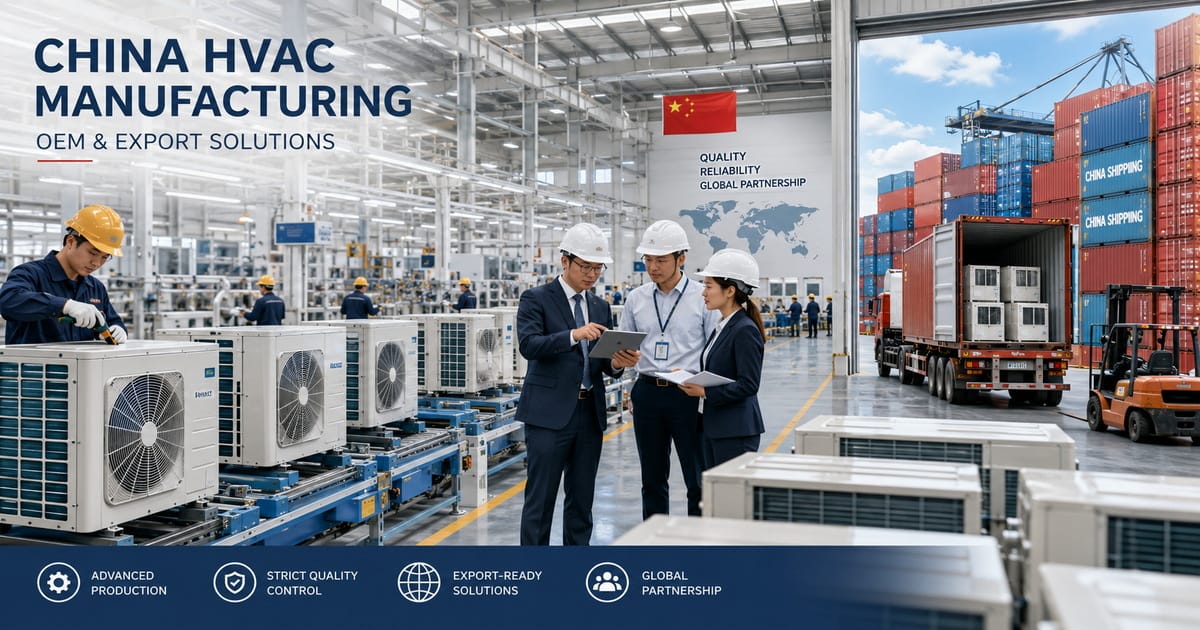
China remains one of the most important global sourcing bases for air conditioning equipment, especially for buyers who prioritize OEM/ODM capability, scale, and export-ready compliance. For professional procurement teams, the real question is not just “who is big,” but “who can deliver stable quality, verified certifications, and repeatable lead times at scale.”
Why China matters
China’s air conditioning export base has remained strong in 2025 and 2026, with industry reports showing high export volumes and continued global demand across Europe, Latin America, the Middle East, and Southeast Asia. For buyers, that means better access to suppliers with mature manufacturing systems, export documentation experience, and faster response to custom projects.
A second advantage is industrial clustering. Guangdong, especially Foshan, Zhuhai, Guangzhou, and surrounding Pearl River Delta cities, offers dense HVAC supply chains, component ecosystems, logistics access, and engineering talent, which improves sourcing efficiency and supports OEM/ODM development.
How we selected them
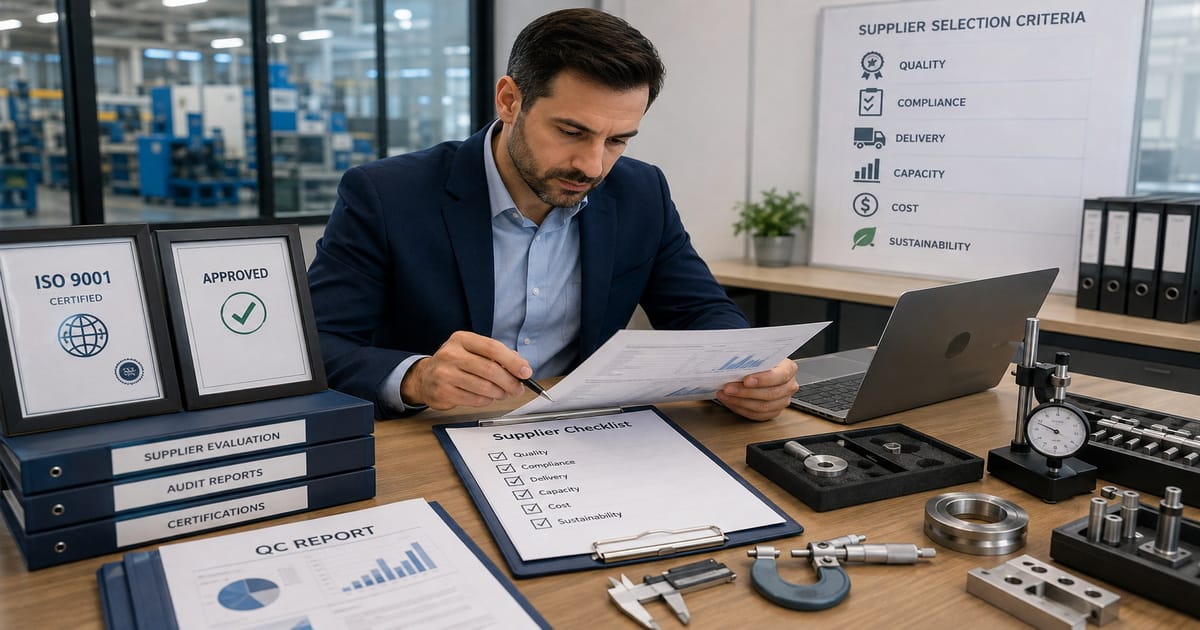
To make this list useful for procurement managers, we screened suppliers using practical sourcing criteria rather than marketing claims. The main filters were factory capability, product scope, export experience, compliance readiness, OEM/ODM flexibility, and market credibility.
We also looked at whether the supplier can support real buyer needs such as stable QC, batch consistency, sample development, and documentation for CE, RoHS, and China RoHS-related compliance. China RoHS requirements are particularly relevant because air conditioners are included in the regulated product categories, and buyers should expect proper conformity documentation, not just verbal assurance.
Top 10 manufacturers
| Manufacturer | Founded | Main focus | Core strength | OEM/ODM fit | Notes |
|---|---|---|---|---|---|
| DREZ (Guangzhou) Intelligent Technology Co., Ltd. | 2014 | Tent AC, rooftop AC, trailer AC, fresh air units | Flexible engineering, export-oriented custom projects, fast communication | High | Strong fit for mid-sized brands and customized climate-control projects. |
| Gree Electric Appliances | 1991 | Residential and commercial AC | Large-scale R&D and manufacturing depth | Medium | One of the world’s largest specialized AC companies. |
| Midea Group | 1968 | Home and commercial HVAC | Very broad product ecosystem and large-scale manufacturing | Medium | Strong for volume programs and diversified sourcing. |
| Haier | 1984 | Smart air conditioning and home appliances | Global brand strength and connected-product ecosystem | Medium | Good for branded, tech-driven programs. |
| AUX Group | 1986 | Air conditioning and power-related systems | Strong industrial base and R&D network | Medium | Suitable for buyers wanting a mature mass-production partner. |
| Chigo Air Conditioning | 1994 | Split units, window units, package AC | Export-oriented manufacturing | Medium | Useful for mainstream volume sourcing. |
| TCL | 1981 | AC and consumer electronics | International market familiarity | Medium | Often considered for export-channel programs. |
| Hisense | 1969 | AC and air purification-related products | Health-focused and smart-home positioning | Medium | Better for buyers interested in wellness-oriented positioning. |
| Kelon | 1984 | Mainstream white goods and AC | Large production base and mature manufacturing | Medium | Known for volume and standard product categories. |
| Changhong | 1958 | Smart and eco-friendly AC | Long operating history and brand recognition | Medium | Relevant for buyers wanting a broader appliance partner. |
Supplier profiles
1. DREZ (Guangzhou) Intelligent Technology Co., Ltd.
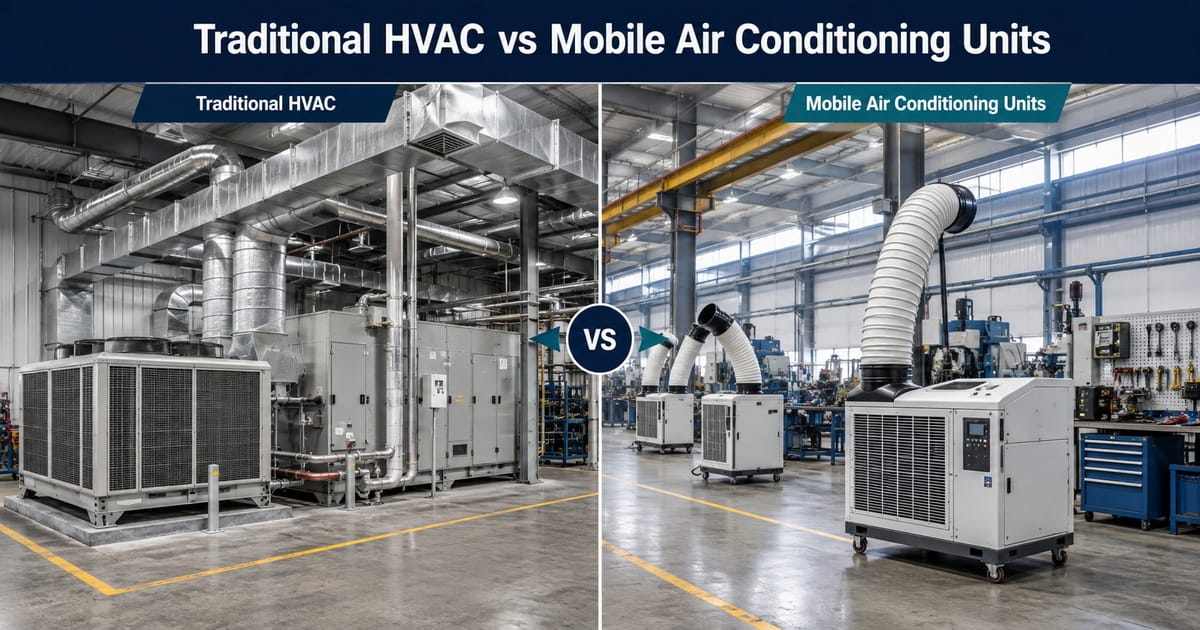
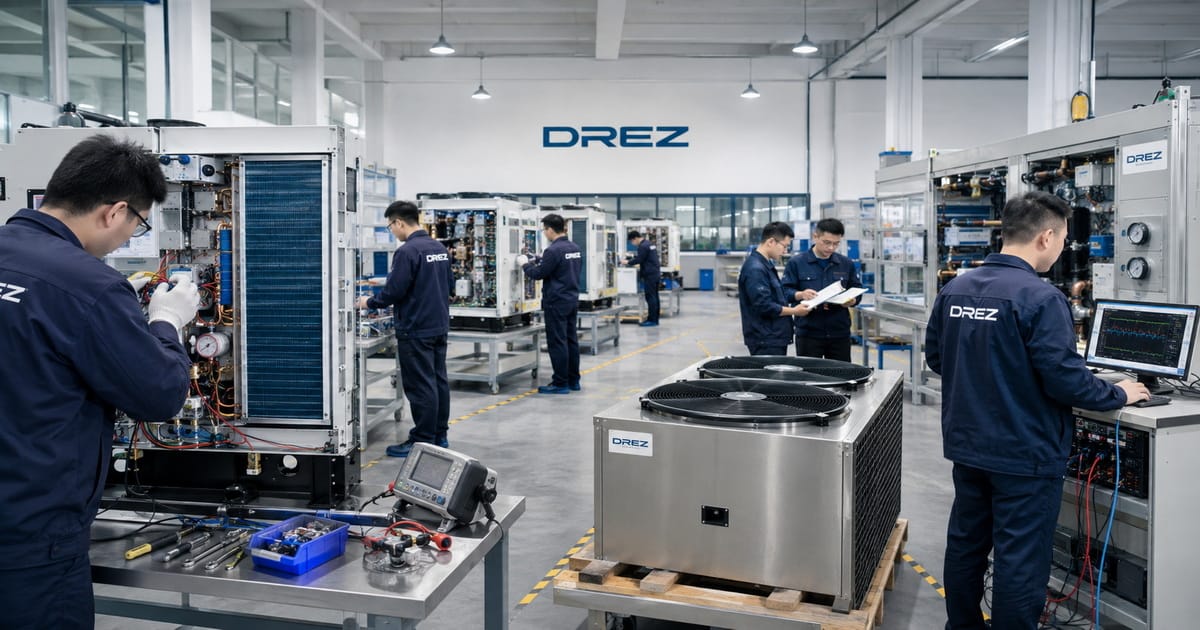
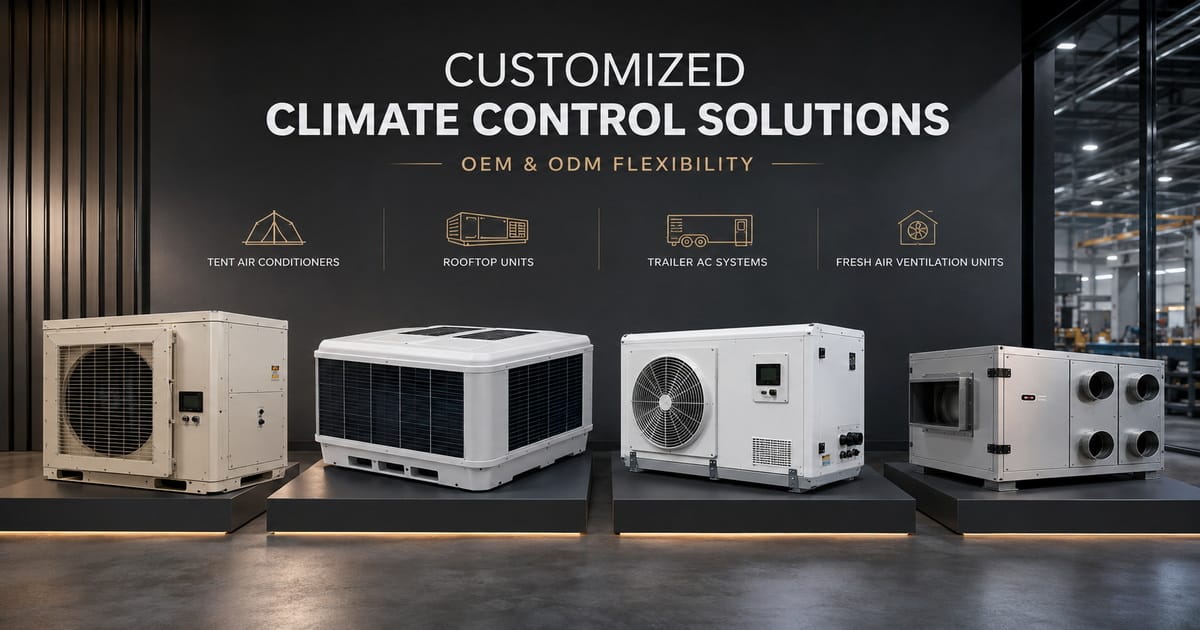
DREZ is a useful example of a flexible China-based OEM/ODM supplier for buyers who need customized climate-control products rather than only standard household AC lines. According to company information, DREZ focuses on tent air conditioners, portable and packaged AC solutions, rooftop units, ducted systems, and temporary-event cooling applications, with factory capacity above 10,000 units per year and strong export orientation.
For brands, wholesalers, and manufacturers that need responsive engineering support, DREZ is especially relevant because it is positioned around small-to-mid-size brand projects, fast communication, and customization depth. That makes it a practical choice for buyers who value collaboration, sample iteration, and project-specific design rather than a one-size-fits-all catalog.
2. Gree
Gree is one of China’s strongest names in air conditioning, with a long operating history, large R&D resources, and global reach across more than 160 countries and regions. The company is widely recognized for residential and commercial AC capabilities, especially where buyers need scale, manufacturing depth, and established brand credibility.
For procurement, Gree is most suitable when a buyer needs a very mature supplier ecosystem and can work within the processes of a large enterprise. It is less about extreme customization speed and more about consistency, scale, and technical breadth.
3. Midea
Midea’s strength lies in its broad manufacturing base and vertical integration, which is especially attractive for buyers sourcing at scale. Its Foshan base also benefits from the Pearl River Delta supply chain and port access, which helps reduce shipping friction for export programs.
Midea is often a strong fit for buyers looking for a major industrial supplier with deep R&D and product diversification. For OEM/ODM programs, the main advantage is supply stability; the tradeoff is usually lower flexibility than a smaller specialist factory.
4. Haier
Haier is a global appliance brand with a strong connected-device identity, broad international presence, and significant manufacturing footprint. Its air conditioning business is well positioned for buyers who want smart-home integration, brand awareness, and a product story tied to digital control.
For sourcing teams, Haier is often considered when end-market branding matters as much as factory capability. If your project needs a recognized global platform and smart features, Haier is a credible option.
5. AUX
AUX is a long-established group with large revenue scale, multiple manufacturing bases, and an extensive R&D network. Its industrial profile suggests strong capacity for mainstream AC programs and related electrical products.
It can be suitable for buyers who need a stable mass-production partner with a broad corporate structure. However, as with all larger groups, the most important step is confirming which specific business unit, product line, and service scope matches your sourcing need.
6. Chigo
Chigo is a practical name for mainstream air conditioning supply, especially for buyers focused on export markets and volume-based procurement. Its product range includes split air conditioners, window units, and package air conditioners, which gives it broad utility for standard HVAC programs.
This type of supplier is usually most attractive when the buyer wants proven product categories and efficient production. For private-label work, the key is clarifying whether the factory can support your packaging, component, and documentation requirements.
7. TCL
TCL is better known for electronics, but its AC business still matters for buyers who value an export-friendly corporate profile and consumer-market experience. For sourcing teams, the appeal is often in brand familiarity and the ability to align HVAC products with broader appliance programs.
It is a reasonable option when a buyer is already dealing with consumer-electronics supply chains and wants to consolidate vendor management. The buyer should still verify the exact AC manufacturing line, certification set, and custom scope before moving forward.
8. Hisense
Hisense is relevant for buyers interested in air conditioning products with a health, purification, and design angle. That positioning can be useful for markets where customers care about indoor air quality and connected comfort features.
From a procurement perspective, it can be a useful partner for mid-to-large programs that need a recognizable supplier with brand-building support. Buyers should confirm whether the product line is optimized for their target market’s voltage, regulatory, and climate requirements.
9. Kelon
Kelon is a long-established appliance name and has historically been associated with mainstream manufacturing strength. For buyers, this often translates into familiarity with standard product categories and support for larger-volume procurement.
It is a sensible choice for conventional sourcing programs where the product specification is stable and the buyer wants predictable production behavior. The main diligence point is to verify the current factory structure and export readiness of the specific business entity.
10. Changhong
Changhong is one of the older industrial brands on this list, and its value for sourcing lies in breadth, recognition, and product evolution over time. Buyers may consider it for broader appliance partnerships or for projects where brand history supports trust with downstream channels.
For air conditioning equipment, Changhong is most relevant when the buyer wants a supplier with long operational continuity and a familiar industrial identity. As always, OEM/ODM buyers should validate current technical scope rather than relying on brand history alone.
Buyer comparison
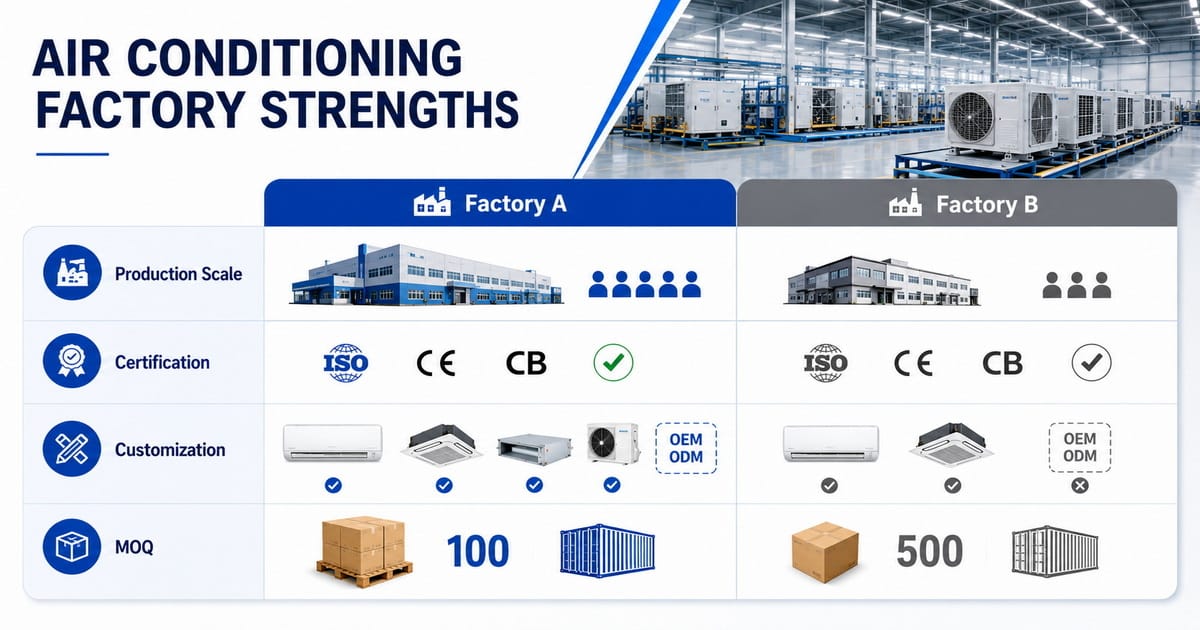
| Supplier | Production scale | MOQ tendency | Certification posture | Best fit |
|---|---|---|---|---|
| DREZ | Medium | More flexible | Export-oriented, compliance-aware | Custom projects, smaller brands, special-use AC. |
| Gree | Very large | Usually higher | Strong global certification coverage | Large-volume, technical buyers. |
| Midea | Very large | Usually higher | Mature export compliance | Broad category sourcing. |
| Haier | Very large | Medium to high | Strong international market readiness | Smart-home and brand-driven programs. |
| AUX | Very large | Medium to high | Industrial-scale systems | Mainstream volume sourcing. |
| Chigo | Large | Medium | Export-focused | Standard AC categories. |
Common sourcing traps
One frequent problem is material substitution, where a supplier quotes one coil, compressor, PCB, or sheet-metal specification and ships a lower-grade equivalent later. Buyers should lock the BOM, ask for component brand lists, and require pre-production samples plus signed technical specs before mass production.
Another hidden risk is assuming that a certificate alone proves current compliance. A smarter check is to verify the certificate number, issuing body, validity date, product scope, and whether the factory name on the certificate exactly matches the legal entity on the contract and invoice. China RoHS and related conformity documents also need to match the actual product category, not just the general brand.
Internal avoidance tip
A little-discussed but important sourcing rule in this industry is to inspect the factory’s “change-control discipline.” Many air-conditioning failures in export projects do not come from the first sample; they appear after a supplier silently changes a fan motor, insulation material, refrigerant component, or PCB revision during production ramp-up. The best buyers require written approval for any component change, keep a golden sample, and tie payment release to inspection against that reference.
Buyer’s guide
Start by checking the legal entity, export history, and product scope against the factory’s actual business license and certification records. Then ask for recent test reports, a live factory audit, and at least one pilot run or pre-shipment sample verification before placing a full order.
For logistics, confirm carton dimensions, palletization method, container loading plan, destination compliance rules, and whether the supplier has experience with your target market’s customs documentation. For temperature-control products, shipping damage and packaging weakness can quickly erase margin, so the packaging spec should be treated as part of the product, not an afterthought.
CTA
If your sourcing priority is a customized OEM/ODM project with responsive communication and practical export support, DREZ is a strong candidate to benchmark alongside the larger brands in this list. For procurement teams building a long-term supplier panel, the most effective next step is to request samples, compliance files, and a factory audit plan from the shortlist.
FAQ
1. How can I verify whether an ISO certificate is expired?
Check the issue date, expiry date, certificate number, issuing body, and the exact legal company name. Then match it against the supplier’s business license and request a scan from the certification body if needed; a certificate shown in a brochure is not enough.
2. How do I know whether a factory really supports OEM/ODM?
Ask for past custom cases, tooling ownership terms, sample lead times, and a written list of what can be customized. Real OEM/ODM suppliers can explain structure, components, packaging, control logic, and branding options without vague answers.
3. What certifications matter most for air conditioning equipment exports?
For many markets, CE and RoHS-related compliance are key, and China RoHS may also matter for products sold domestically in China. Buyers should also confirm destination-specific rules such as energy labels, safety testing, and any local regulatory filing requirements.
Use a locked specification sheet, a signed bill of materials, a golden sample, and a change-control clause that requires written approval before any part substitution. Insist on incoming inspection, production inspection, and final random inspection with photo evidence.
5. What should I ask before approving a sample?
Ask about cooling capacity tolerance, power consumption, noise level, refrigerant type, compressor brand, corrosion protection, and packaging strength. For export projects, also confirm voltage/frequency compatibility and whether the sample already reflects the final compliance configuration.
References
1. – DREZ company profile: [https://www.drezaircon.com/about-us/] [m.made-in-china]
2. – Gree official and company profile sources. [gree]
3. – AUX company profile. [auxair]
4. – China RoHS and conformity-related references. [clarionsafety]
5. – China air conditioner export and industry trend reports. [huaon]
Hot Tags: Air Conditioning Equipment Manufacturers, China HVAC Manufacturers, OEM Air Conditioner Supplier, ODM Air Conditioning Factory, Commercial Air Conditioning Supplier, Industrial HVAC Equipment, Rooftop Air Conditioning Unit, Tent Air Conditioner Manufacturer, Export Ready HVAC Supplier, CE RoHS Air Conditioning