Content Menu
● Why Factory Workshop Cooling Needs a New Approach
● Mobile Air Conditioning vs Traditional HVAC
● When Mobile Air Conditioning Is the Better Choice
● When Traditional HVAC Still Makes Sense
● Practical Decision Framework
● Industry Insight: The Hybrid Cooling Model
● FAQ
>> 1. Is mobile air conditioning a full replacement for HVAC?
>> 2. What type of factory is best suited for mobile air conditioning?
>> 3. Is mobile air conditioning expensive to operate?
>> 4. Can mobile air conditioning work with existing HVAC?
>> 5. How do I know whether to replace HVAC or add mobile cooling?
Factory cooling is no longer just a comfort issue. In many workshops, mobile air conditioning is becoming a practical alternative when traditional HVAC can no longer keep up with changing layouts, urgent heat loads, or temporary production demands. For plant managers and procurement teams, the real question is not whether HVAC is “better,” but when a mobile air conditioning system makes more business sense.
Why Factory Workshop Cooling Needs a New Approach
Traditional HVAC systems work well in stable, fully enclosed, and long-term environments. But factory workshops are often different. Heat loads change by shift, by machine, and by season. Production lines move, doors open frequently, and some zones may need cooling only during certain hours. In these situations, a fixed HVAC system can become expensive, slow to respond, and difficult to optimize.
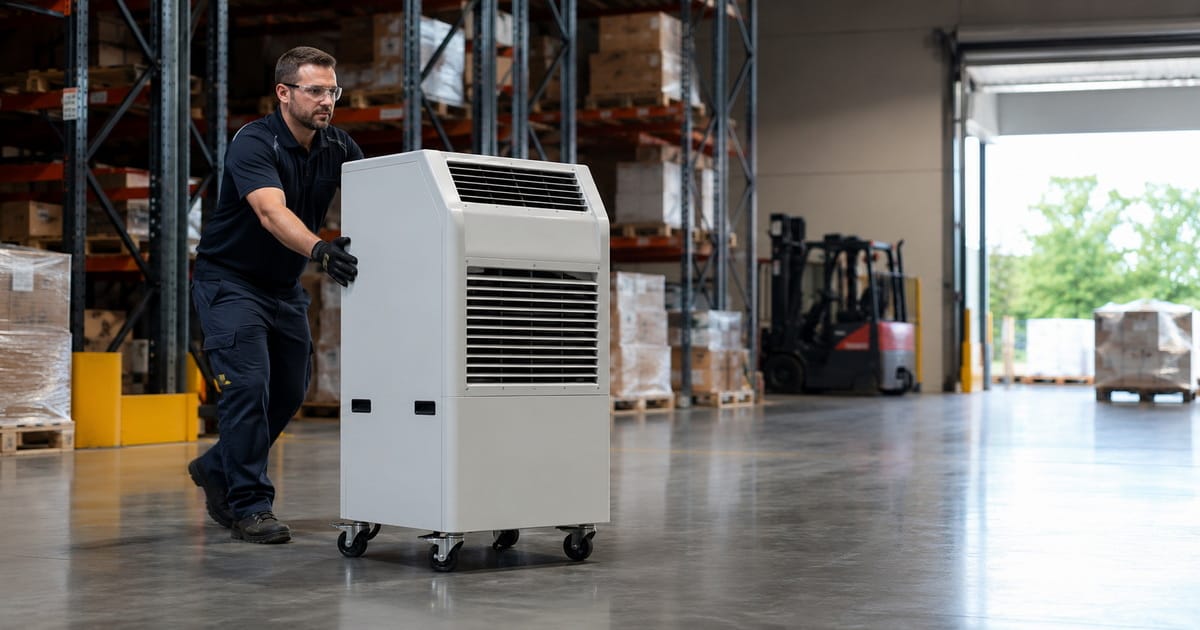
From an operational perspective, this is where mobile air conditioning creates value. It can be deployed quickly, positioned where the heat is strongest, and scaled to match temporary or seasonal demand. For factories that need rapid cooling, flexible zone control, or emergency temperature relief, mobile units can bridge the gap that traditional systems often leave behind.
Mobile Air Conditioning vs Traditional HVAC
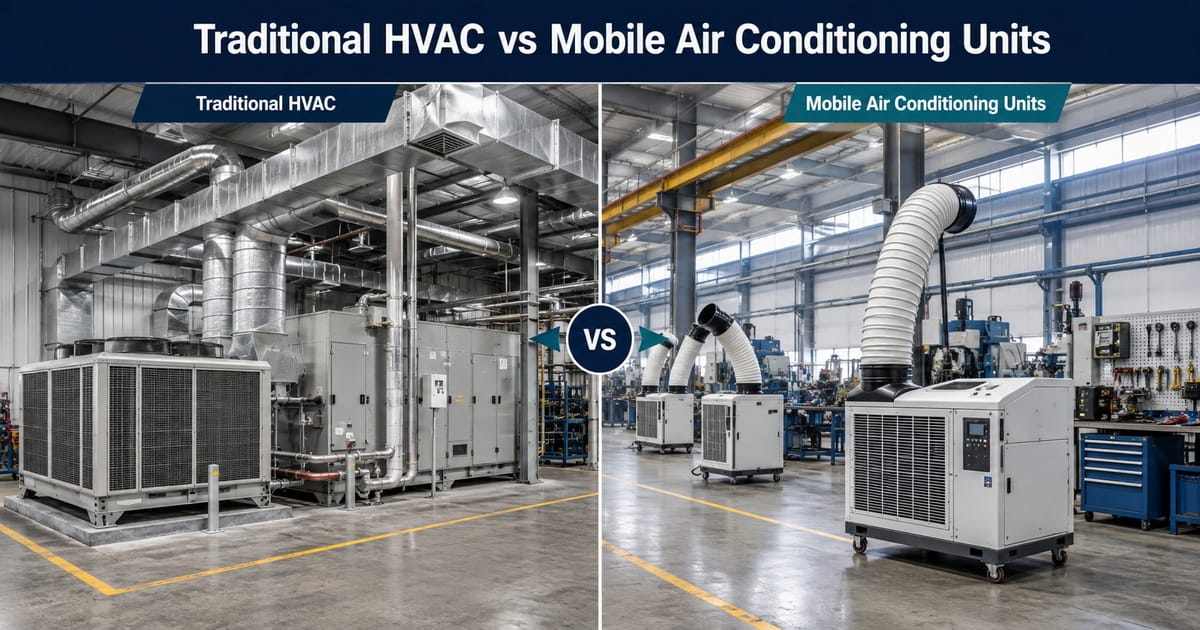
The key difference is not just the equipment type. It is the way each system serves the workshop. Traditional HVAC is built for centralized, long-term conditioning of a defined space. Mobile air conditioning is designed for flexibility, temporary deployment, and faster response to changing cooling needs.
| Factor | Mobile Air Conditioning | Traditional HVAC |
|---|---|---|
| Deployment speed | Fast | Slow to moderate |
| Flexibility | High | Low |
| Installation | Minimal to moderate | Significant |
| Best use case | Temporary, emergency, or changing workshop conditions | Stable, permanent facility cooling |
| Zone control | Strong for targeted areas | Better for whole-building conditioning |
| Capex impact | Often lower upfront | Usually higher upfront |
For many factories, the decision comes down to operational agility. If your workshop is constantly changing, a fixed HVAC design may lock you into a system that is hard to adapt. If your cooling need is stable and permanent, traditional HVAC may still be the right foundation.
When Mobile Air Conditioning Is the Better Choice
Mobile air conditioning is often the smarter option when the workshop has one or more of these conditions:
– The building is temporary, rented, or semi-open.
– The cooling demand changes frequently by season or production schedule.
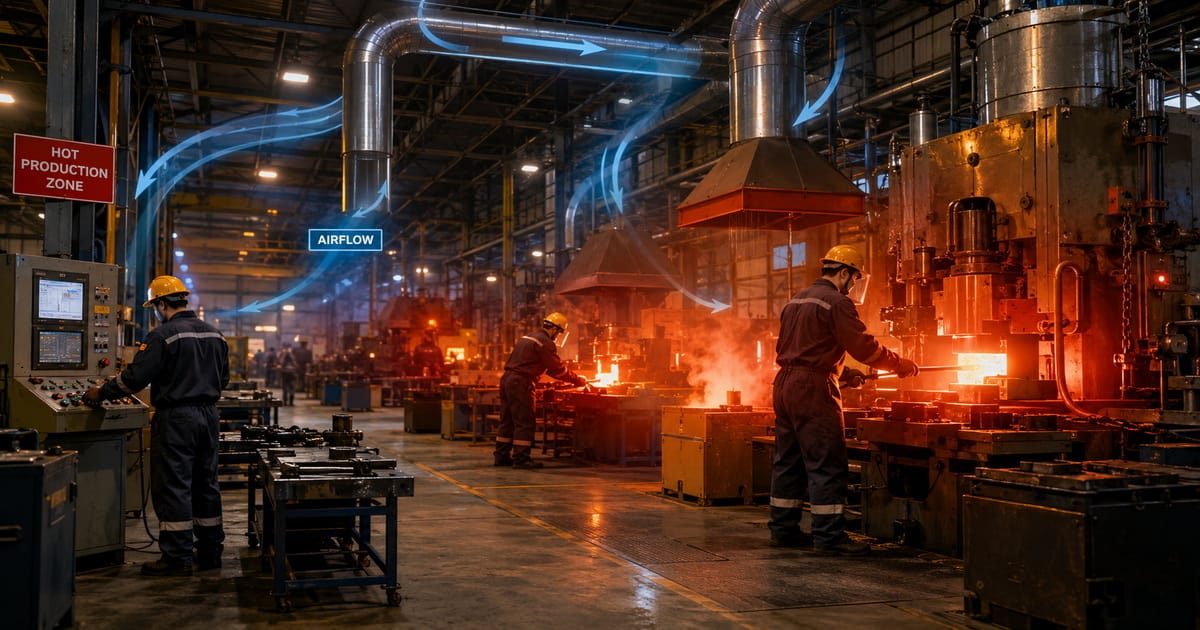
– One area overheats while the rest of the factory remains acceptable.
– You need emergency cooling during HVAC failure or maintenance.
– You want to protect workers, materials, or equipment before downtime occurs.
– The workshop layout makes ducting or major retrofits difficult.
In real factory environments, these are common scenarios. A production manager may not need to replace the entire HVAC system. Instead, a mobile unit can solve the actual pain point much faster: localized heat, process instability, or worker discomfort.
When Traditional HVAC Still Makes Sense
Traditional HVAC remains the better long-term choice in facilities with a stable layout and predictable load profile. If the workshop is enclosed, has consistent occupancy, and runs the same production processes all year, centralized HVAC can deliver a more integrated comfort solution.
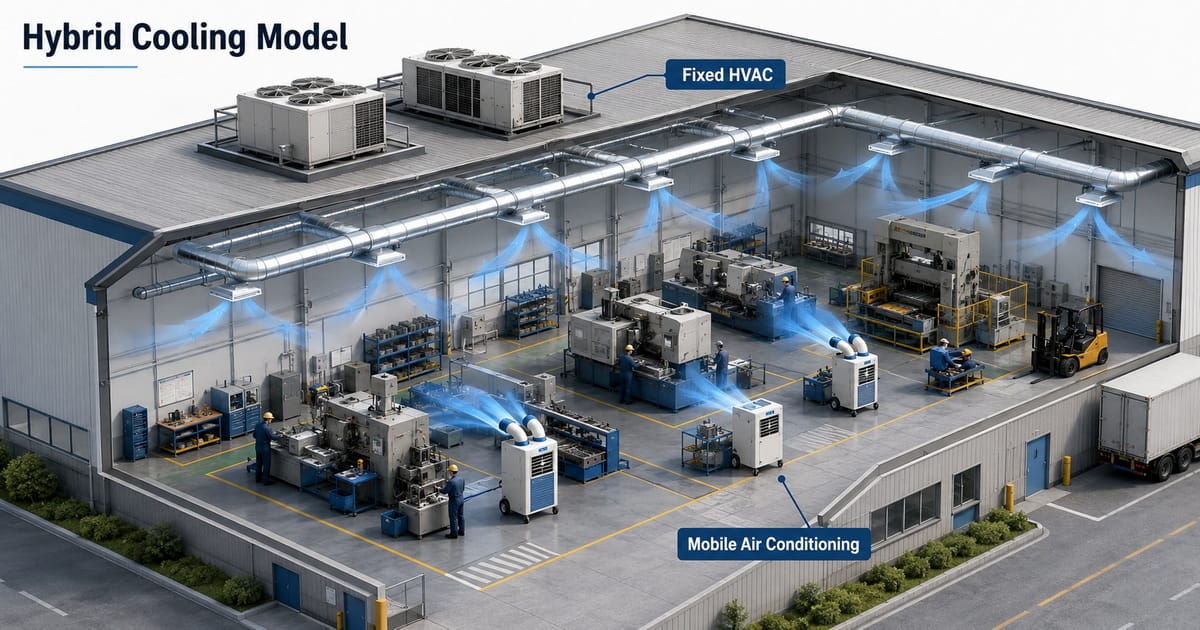
It is also worth considering HVAC when the building requires broad humidity management, air distribution, or filtration across the entire site. In those cases, mobile air conditioning may be an excellent supplement, but not always a full replacement. The best strategy is often a hybrid one: use HVAC for base load and mobile units for peak load or emergency backup.
Cost, Energy, and ROI
A common mistake is comparing only upfront equipment price. In industrial cooling, the real cost includes installation, downtime, maintenance, and production risk. Traditional HVAC may require more structural work and longer commissioning time, while mobile air conditioning can often start delivering value much sooner.
For many manufacturers, the ROI case is straightforward. If a mobile unit prevents even one production delay, rejects fewer temperature-sensitive products, or improves worker output during hot periods, it can justify its cost quickly. This is especially true for export-focused manufacturers who need reliable workshop conditions without committing to a major fixed-system retrofit.
Practical Decision Framework
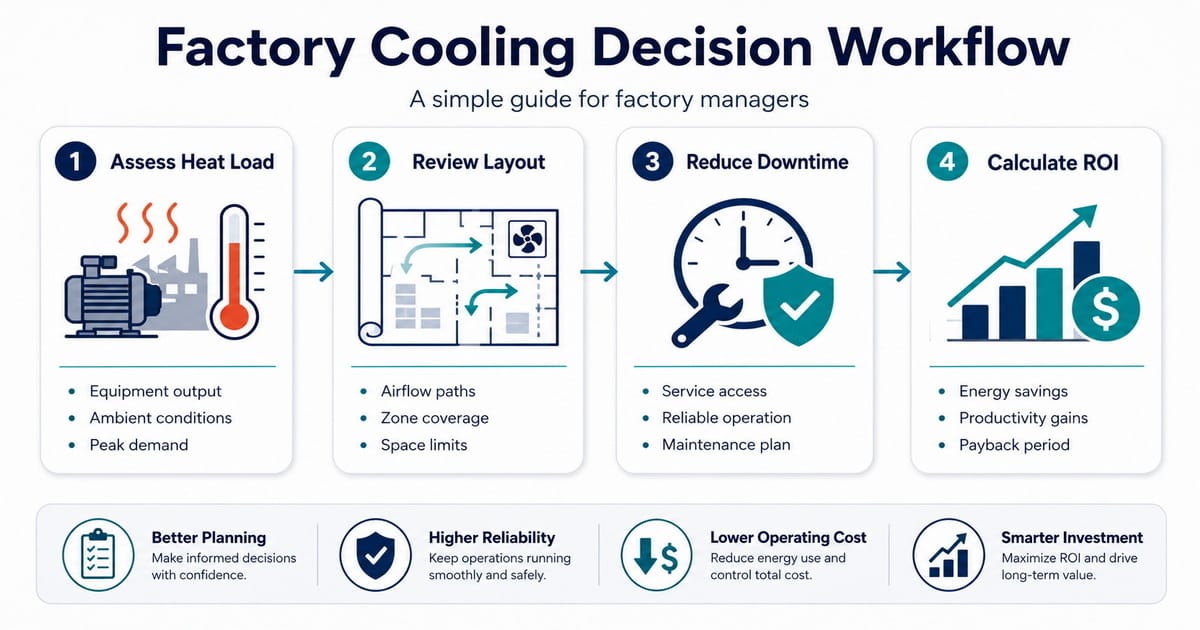
Use this simple decision process before replacing or supplementing HVAC:
1. Measure the actual heat problem.
2. Identify whether the issue is whole-building or zone-specific.
3. Check whether the workshop is permanent, temporary, or frequently reconfigured.
4. Estimate downtime risk if cooling fails.
5. Compare installation time, service access, and total cost of ownership.
6. Decide whether you need replacement, supplementation, or a hybrid setup.
This framework keeps the decision focused on business impact, not just equipment preference. A cooling system should support production resilience, not create another maintenance burden.
Industry Insight: The Hybrid Cooling Model
One of the most practical trends in industrial cooling is the hybrid model. Instead of relying on one large HVAC system for everything, factories increasingly combine fixed HVAC with mobile air conditioning units to handle spikes, hot zones, and temporary work areas.
This approach is especially useful in manufacturing plants with CNC machinery, packaging lines, testing zones, or seasonal labor peaks. A hybrid design lets managers protect critical zones without overbuilding the entire facility. For many B2B buyers, that balance between flexibility and reliability is the real advantage.
Why DREZ Is Relevant
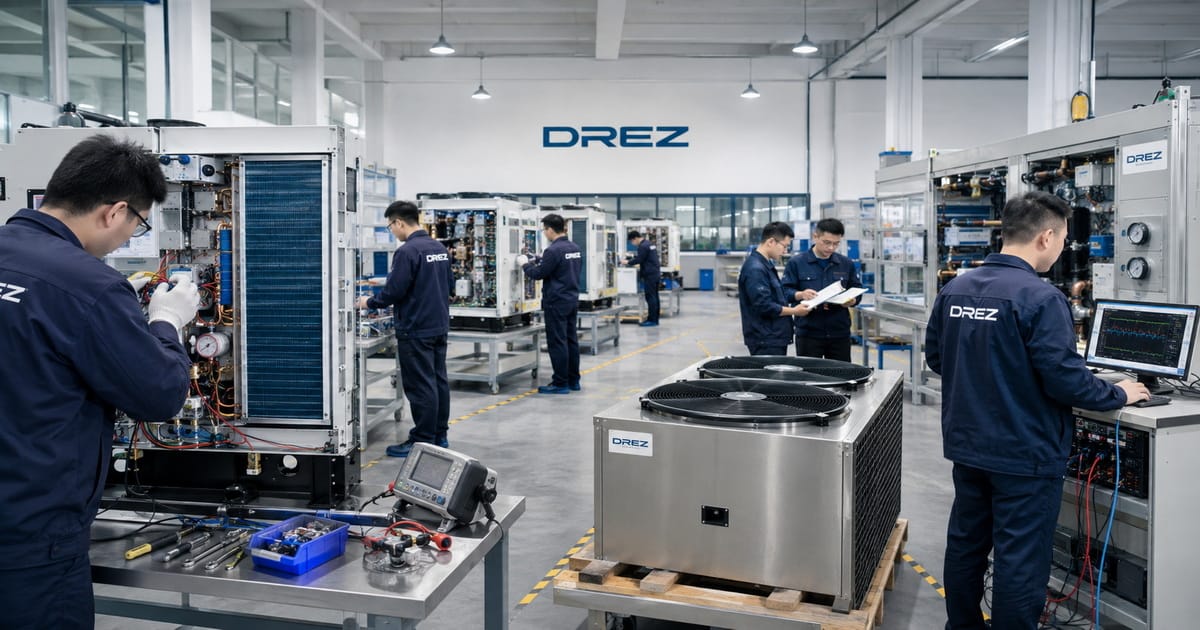
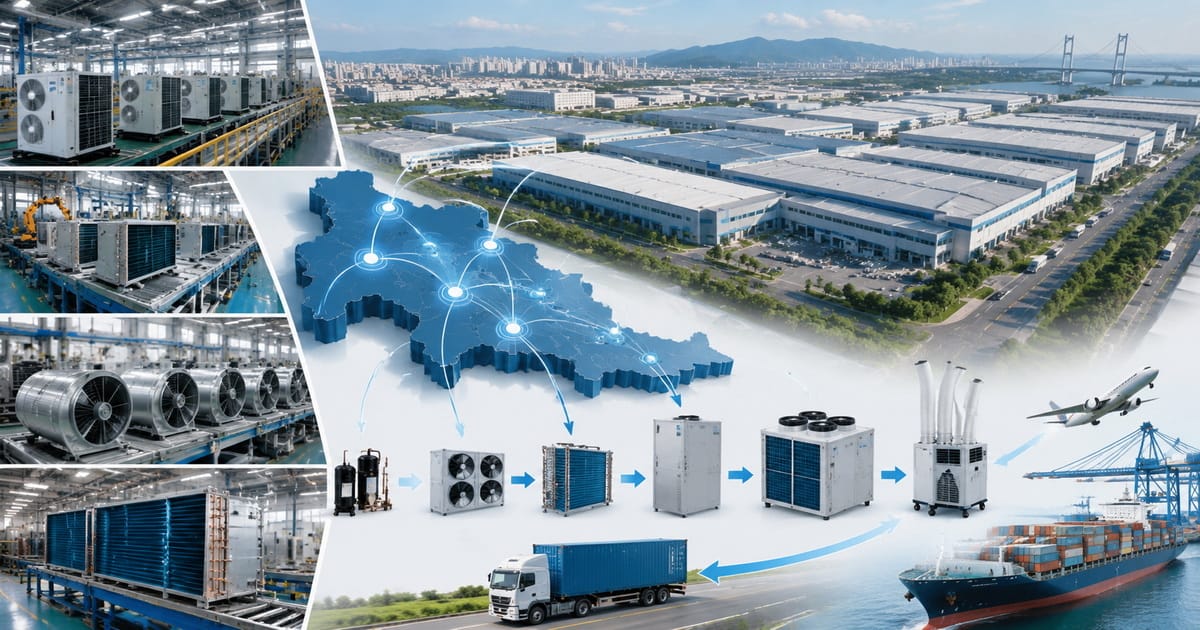
As a company focused on R&D, design, production, sales, and OEM/ODM customization, DREZ (Guangzhou) Intelligent Technology Co., Ltd. is positioned to support buyers who need application-specific cooling solutions rather than generic product selling. The company’s background in mobile and temporary air conditioning aligns well with the needs of factories, workshops, and export-oriented industrial clients.
That matters because industrial buyers rarely need only a machine. They need a solution that fits layout, load, timeline, and service expectations. OEM/ODM capability is especially valuable when overseas brands and wholesalers need differentiated products for their target markets.
Conclusion
Mobile air conditioning should replace traditional HVAC when the workshop needs faster deployment, flexible zone cooling, lower retrofit friction, or emergency temperature control. Traditional HVAC still wins when the facility is stable, permanent, and requires whole-building environmental management. The best decision is usually not “either/or,” but choosing the right cooling architecture for the actual production reality.
If your factory workshop is facing heat issues, start with a cooling audit of the hottest zones, then compare fixed HVAC replacement against a mobile air conditioning or hybrid setup before making a capital decision.
FAQ
1. Is mobile air conditioning a full replacement for HVAC?
Not always. It is best when the workshop needs flexible, temporary, or zone-based cooling rather than permanent whole-building conditioning.
2. What type of factory is best suited for mobile air conditioning?
Temporary workshops, open or semi-open production areas, facilities with changing layouts, and sites that need emergency cooling benefit most from mobile units.
3. Is mobile air conditioning expensive to operate?
Operating cost depends on runtime, load, and application, but mobile units can be cost-effective when they prevent downtime or avoid major retrofit work.
4. Can mobile air conditioning work with existing HVAC?
Yes. Many factories use mobile units as supplemental or backup cooling to handle hot zones and peak demand.
5. How do I know whether to replace HVAC or add mobile cooling?
Check whether the problem is whole-building or localized, whether the site is permanent or changing, and whether the business risk comes from comfort, quality, or equipment overheating.
References
1. DREZ About Us – Drez Air Conditioner Manufacturer: [https://www.drezaircon.com/about-us/] [drezaircon]
2. Top 10 Mobile Air Conditioning Manufacturers In China (2026 …): [https://www.drezaircon.com/top-10-mobile-air-conditioning-manufacturers-in-china-2026/] [drezaircon]
3. Drez (Guangzhou) Intelligent Technology Co., Ltd.: Portable …: [https://drez.en.alibaba.com/] [drez-aircon.en.made-in-china]
4. Mobile Air Conditioning vs Industrial Spot Cooler – Drez Aircon: [https://www.drezaircon.com/mobile-air-conditioning-vs-industrial-spot-cooler/] [drezaircon]
好的,这是您要求的热标签字符串:
Hot Tags: Mobile Air Conditioning, Factory Workshop Cooling, Industrial Cooling Solutions, Traditional HVAC Systems, Temporary Cooling Systems, Factory Cooling Units, Commercial Air Conditioning, OEM Air Conditioning Supplier, ODM Cooling Manufacturer