Content Menu
● Why Choose Trailer Air Conditioning Suppliers In China
● How We Evaluate High‑Quality Trailer AC Suppliers
>> 1. Factory certifications and compliance
>> 2. R&D and engineering capability
>> 3. Quality control and material management
>> 4. Delivery reliability and operational stability
● Technical Essentials For Trailer Air Conditioning
>> 1. Structural design and materials
>> 2. Refrigeration capacity and airflow engineering
>> 3. Electrical and environmental considerations
>> 4. Integration and serviceability
● China’s Industrial Clusters And Manufacturing Advantages
● Transparent Selection Criteria For The Top 10 List
● Top 10 Trailer Air Conditioning Manufacturers In China (2026)
>> 1. DREZ (Guangzhou) Intelligent Technology Co., Ltd.
>> 2. Shenzhen Uni‑Right Industrial & Trading Co., Ltd.
>> 3. Ningbo Hoome Information Technology Co., Ltd.
>> 4. Jinan Amrta Air Conditioning Co., Ltd.
>> 5. SONGZ Automobile Air Conditioning Co., Ltd.
>> 6. Dongguan Ruixin Environmental Protection and Energy‑Saving Equipment Co., Ltd.
>> 7. Guangdong Ruitai Ventilation and Cooling Equipment Co., Ltd.
>> 8. Foshan Yitong Environmental Protection Equipment Co., Ltd.
>> 9. Shanghai Daohe Industrial Development Co., Ltd.
>> 10. Huai’an Jujiu Energy‑Saving Technology Co., Ltd.
● Trailer AC Supplier Comparison: Capacity, MOQ And Customization Focus
● Buyer’s Guide: From Shortlist To First Shipment
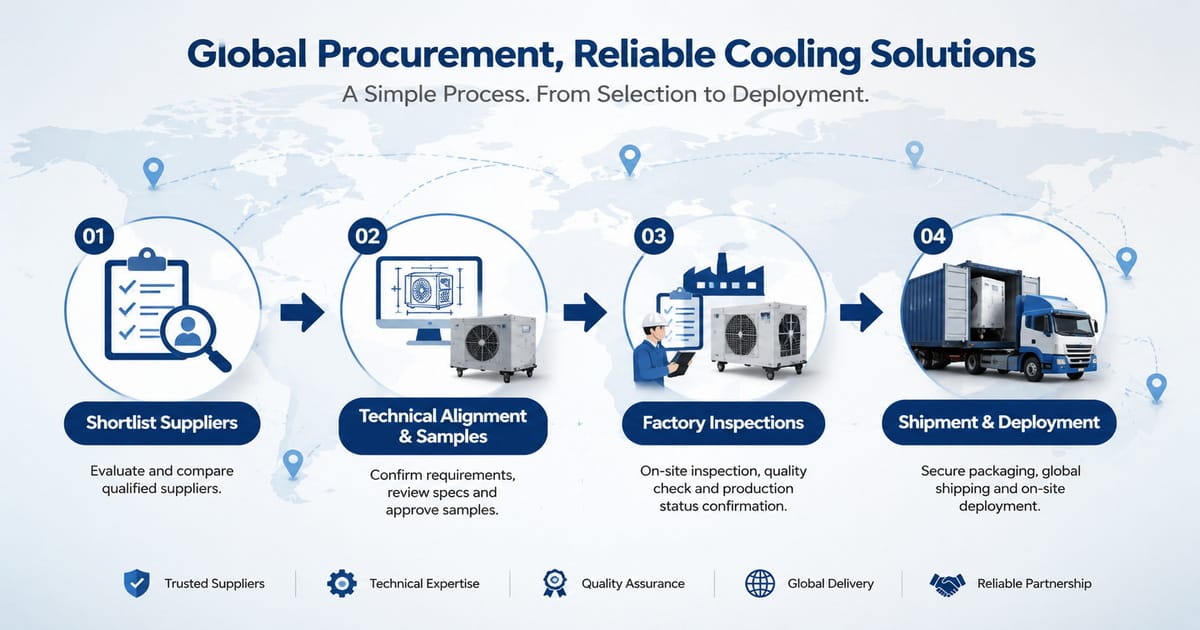
>> 1. Shortlisting and initial screening
>> 2. Technical alignment and sample development
>> 3. Contract details, inspections and logistics
● Common Industry Pain Points And How To Avoid Them
● FAQ: Advanced Questions From Trailer AC Procurement Managers
>> 1. How can I confirm that a factory’s quality certification is valid and current?
>> 3. What sample strategy is appropriate before ordering a large trailer AC fleet?
>> 4. How can I keep OEM trailer AC designs stable across several years of procurement?
Why Choose Trailer Air Conditioning Suppliers In China
Over the past two decades, China has built a complete ecosystem for climate control equipment, including compressors, coils, fans, control electronics, housings, and professional testing facilities. This ecosystem now supports large‑scale production of trailer air conditioning and mobile cooling systems for global buyers.
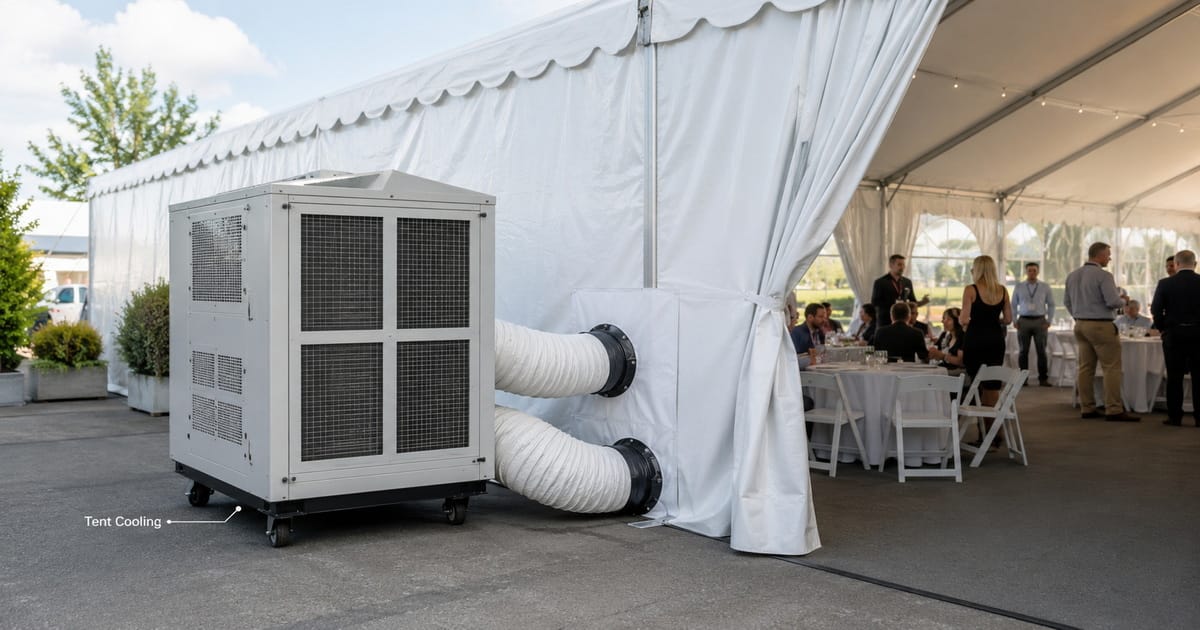
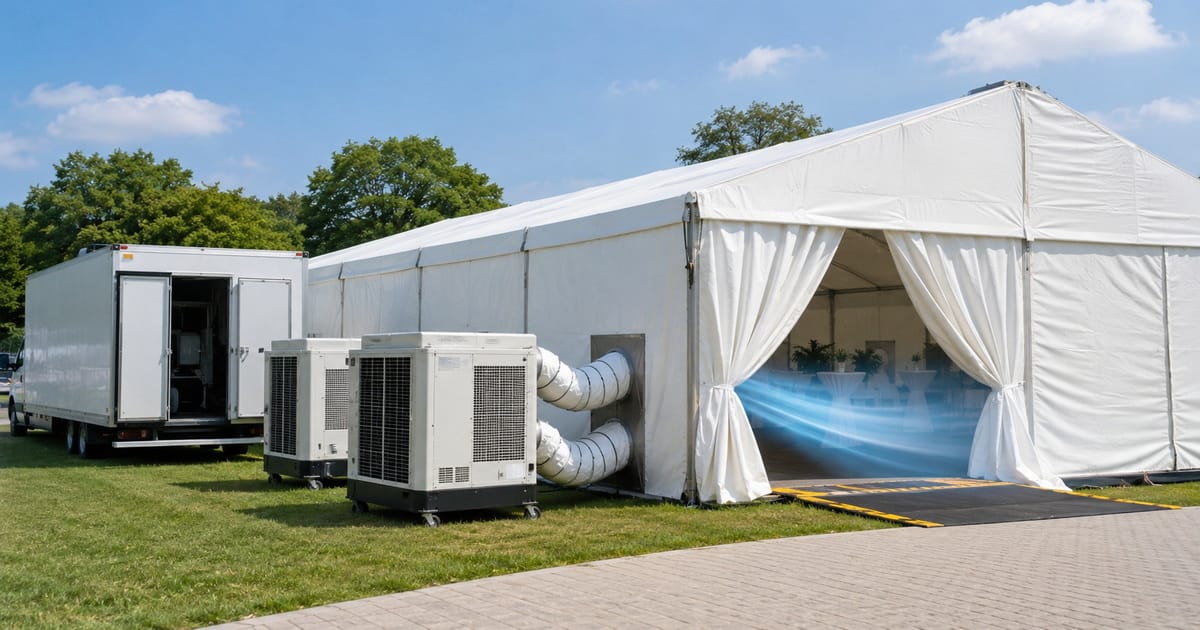
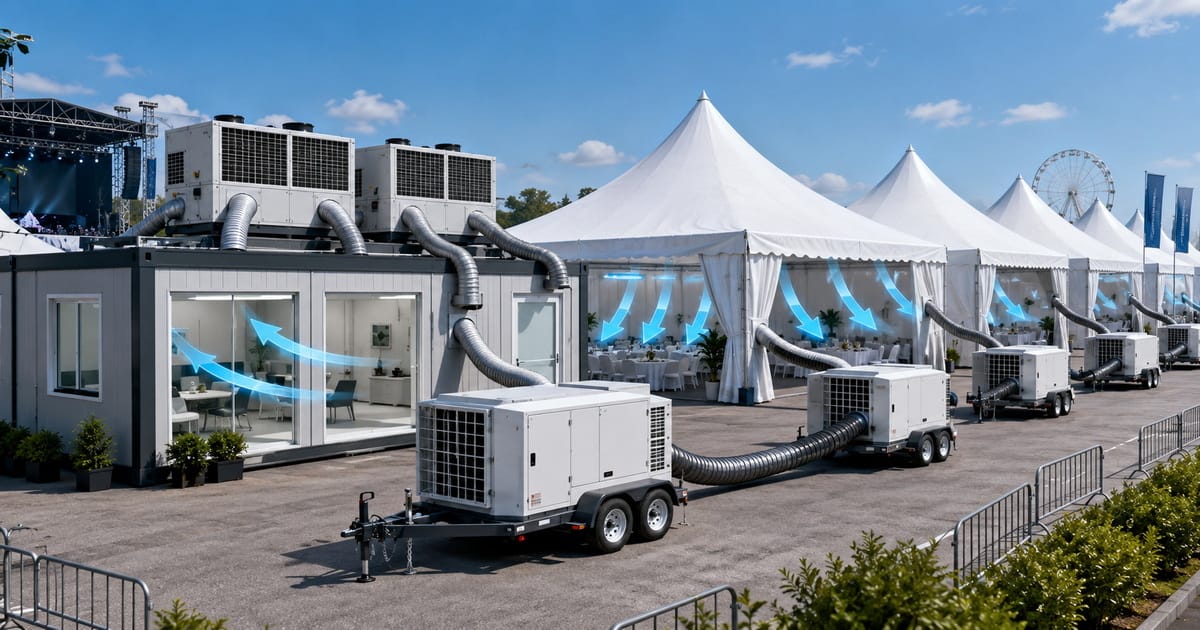
Manufacturers in regions such as Guangzhou, Shenzhen, Ningbo and Shanghai supply tent cooling units, trailer‑mounted air conditioners, rooftop packages and portable ACs to brand owners, rental fleets and industrial project contractors across multiple continents. For professional procurement managers, this industrial depth translates into flexible customization options, competitive total cost and increasingly sophisticated engineering support for project‑driven trailer HVAC solutions.
Industry data shows that trucks and trailer HVAC, together with RV and mobile air conditioning, is on a steady growth trajectory driven by fleet upgrades, mobile infrastructure projects and the rising demand for comfortable temporary spaces. Against this backdrop, sourcing from capable Chinese manufacturers offers both cost‑efficiency and long‑term scalability for trailer‑based cooling projects.
How We Evaluate High‑Quality Trailer AC Suppliers
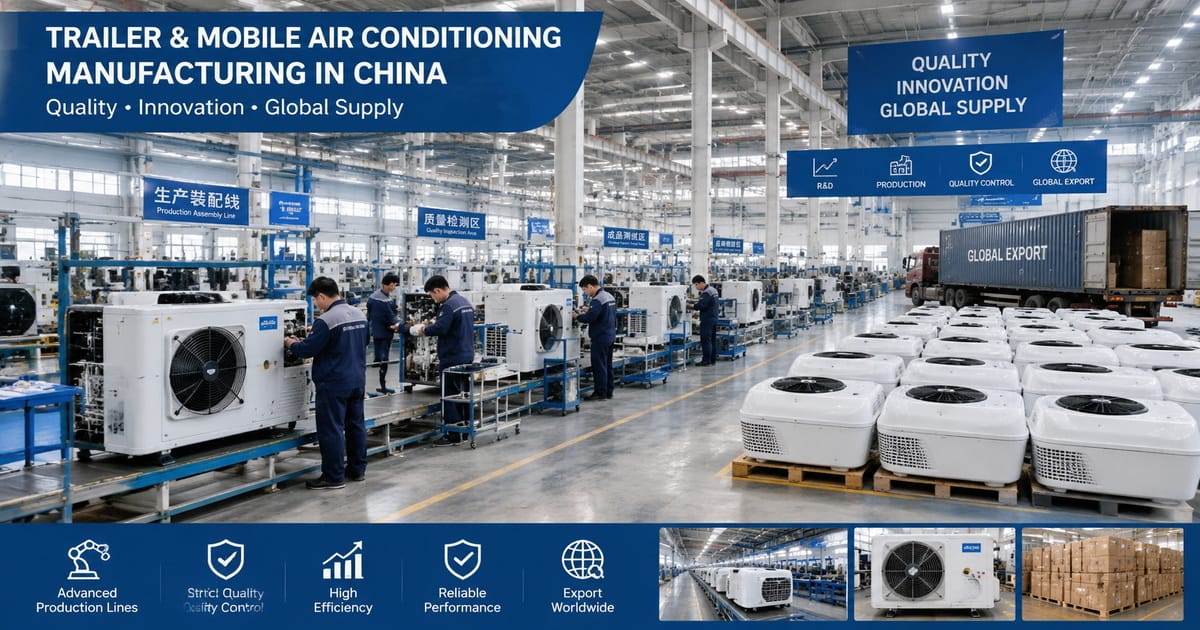
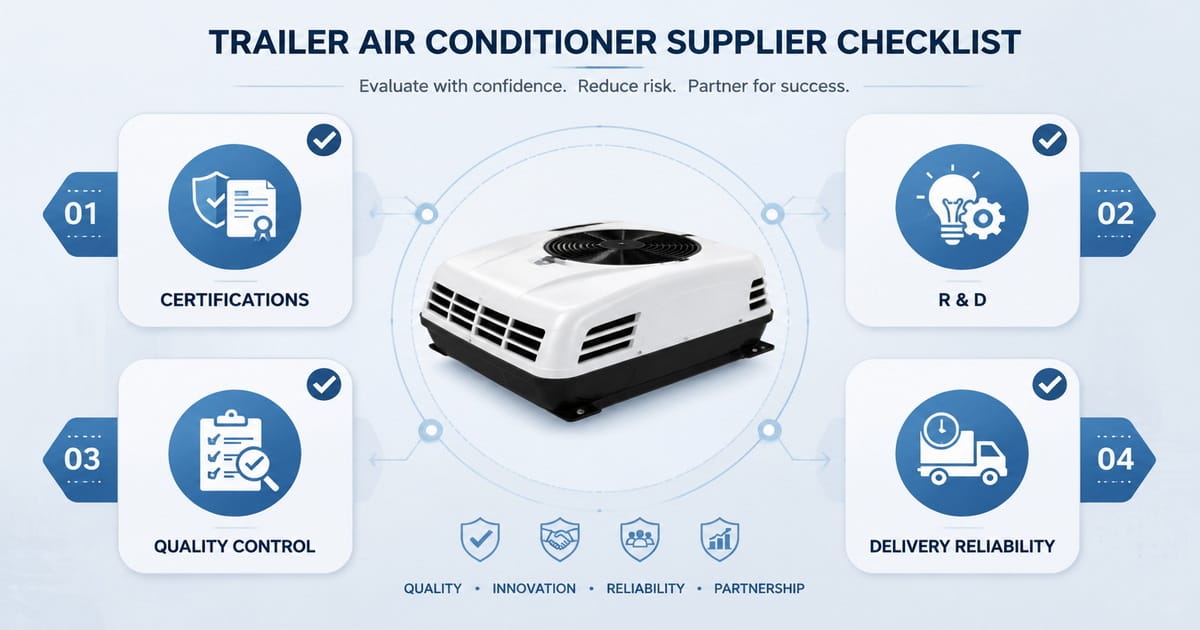
Before choosing manufacturing partners, procurement managers need clear evaluation criteria. In long‑term trailer AC sourcing, the following dimensions are typically decisive:
1. Factory certifications and compliance
Reliable manufacturers maintain formal quality management systems (for example, ISO‑based processes) and can provide valid certificates issued by recognized registrars. For export projects, they also handle electrical and safety approvals required in target markets, such as CE, EMC and relevant environmental regulations.
Beyond certificates, experienced buyers check whether processes are genuinely implemented: production records, inspection forms, test reports, and traceable documentation that can be reviewed during audits or site visits. Consistency between paperwork and shop‑floor practice is a key indicator of maturity.
2. R&D and engineering capability
Trailer air conditioning systems operate in harsher environments than standard residential units. They face frequent movement, vibration, dust, variable ambient temperatures and unstable power supply. This requires dedicated engineering capabilities rather than simple copying of household AC designs.
Strong manufacturers maintain teams that understand mobile HVAC applications, can design frames for different trailer chassis, optimize airflow in confined spaces and tune control logic for on‑off cycles typical of mobile usage. They are able to interpret technical drawings, co‑develop solutions with overseas engineering teams and support iterative optimization during pilot deployments.
3. Quality control and material management
Stable performance in trailer applications depends heavily on material quality and process discipline. Mature factories implement incoming material inspection, in‑process checks and final performance tests covering cooling capacity, electrical safety, leak detection and noise levels.
They maintain traceable inspection records and can share test reports, bill of materials snapshots and failure‑analysis cases when requested. Consistent QC coverage across peak and off‑peak production periods reduces the risk of hidden variability in fleet deployments.
4. Delivery reliability and operational stability
Trailer AC buyers often work with seasonal peaks – events, construction cycles, rental periods – and cannot afford stock‑outs or unpredictable lead times. Suitable partners provide clear data on annual capacity, typical lead times and contingency plans for busy seasons.
Factories that have supported large events, industrial zones or emergency deployments usually demonstrate more robust planning and risk‑control mechanisms. They can flex capacity while maintaining quality standards and documentation discipline.
DREZ (Guangzhou) Intelligent Technology Co., Ltd. offers a good illustration of this profile. The company operates sizable production facilities in Guangzhou’s HVAC cluster with an annual capacity above ten thousand units for mobile and tent air conditioning systems. A significant portion of its staff hold engineering or technical degrees, and the organization has supported thousands of high‑load temporary cooling projects. This combination of capacity, engineering orientation and field experience is a useful benchmark when assessing other trailer AC suppliers.
Technical Essentials For Trailer Air Conditioning
Trailer air conditioning shares core refrigeration principles with conventional HVAC, but several technical aspects become more critical in mobile applications.
1. Structural design and materials
Mobile units require reinforced housings and robust mounting frames to withstand vibration and transport shocks. Corrosion‑resistant coils and properly protected copper tubing are essential due to outdoor exposure and frequent movement.
High‑quality insulation materials, durable fasteners and well‑designed chassis interfaces extend service life and reduce the likelihood of refrigerant leaks or structural fatigue. For fleets, even small improvements in durability directly impact downtime and maintenance cost.
2. Refrigeration capacity and airflow engineering
Trailer interiors often feature uneven load distribution, mixed occupancy and limited return‑air paths. Effective systems manage airflow using carefully planned supply and return vents, balanced static pressure and appropriate fan curves.
Engineers must match compressor size, evaporator area and airflow to real‑world conditions: ambient temperatures, trailer insulation levels, occupancy patterns and door‑opening frequency. Designs based only on nominal capacity without field validation are one of the main causes of under‑performance in mobile HVAC projects.
3. Electrical and environmental considerations
Trailer AC units may run from generator power, shore power, vehicle alternators or site electrical systems. Product design must account for voltage and frequency variations, starting currents and protective devices.
For exports, manufacturers should provide documentation showing conformity with relevant electrical safety and electromagnetic compatibility requirements in the destination market. In addition, refrigerant selection, materials and disposal practices need to respect local environmental regulations and internal sustainability policies of buyers.
4. Integration and serviceability
Units installed on trailers or associated tent structures should allow convenient access to filters, coils, control boards and service valves. Service technicians need clear labeling and straightforward panel removal to minimize downtime.
Integration aspects—such as wiring harness routing, protection against impact during loading and unloading, and condensate management—must be considered at the design stage. Well‑integrated systems reduce installation errors and improve lifetime reliability across a fleet.
China’s Industrial Clusters And Manufacturing Advantages
China’s manufacturing advantage in trailer and mobile air conditioning arises from tightly integrated industrial clusters. These regions offer:
– Component ecosystems covering compressors, heat exchangers, fans, sheet metal, plastics, electronics and packaging.
– Dense networks of testing labs and technical service providers familiar with international standards.
– Mature export logistics and project management capabilities.
Guangzhou, Dongguan and Foshan host strong climate‑control clusters supplying tent AC, trailer‑mounted units, mobile air coolers and ventilation equipment. Shenzhen and Ningbo provide consumer‑appliance and portable AC ecosystems with efficient access to global shipping routes. Shanghai and surrounding areas contribute industrial‑grade climate solutions for factories and logistics hubs.
For procurement managers, this means they can build diversified yet manageable supplier portfolios: combining project‑driven factories like DREZ with high‑volume portable AC producers and industrial cooler specialists, all within overlapping cluster networks.
Transparent Selection Criteria For The Top 10 List
The manufacturers listed in this guide are chosen according to criteria aligned with typical mid‑ to long‑term trailer AC sourcing strategies:
– Demonstrated experience with mobile or trailer‑grade climate solutions (tent AC, trailer units, industrial mobile coolers).
– Clear export capability to at least one major region (Europe, North America, Middle East, Australia, Southeast Asia).
– Evidence of formal quality systems and routine performance testing.
– Openness to OEM and ODM work, including branding, structural customization and control‑logic adaptation.
– Location within or close to established HVAC or climate‑equipment manufacturing clusters in China.
The focus is not simply on general household AC brands, but on suppliers that can realistically support trailer and mobile applications through dedicated models or project‑based adaptations.
Top 10 Trailer Air Conditioning Manufacturers In China (2026)
1. DREZ (Guangzhou) Intelligent Technology Co., Ltd.
DREZ (Guangzhou) Intelligent Technology Co., Ltd. is an innovative climate‑control supplier integrating R&D, design, production, sales and customized solutions. The company focuses on tent and mobile air conditioning systems that can be deployed on trailers, temporary structures, event venues and industrial sites.
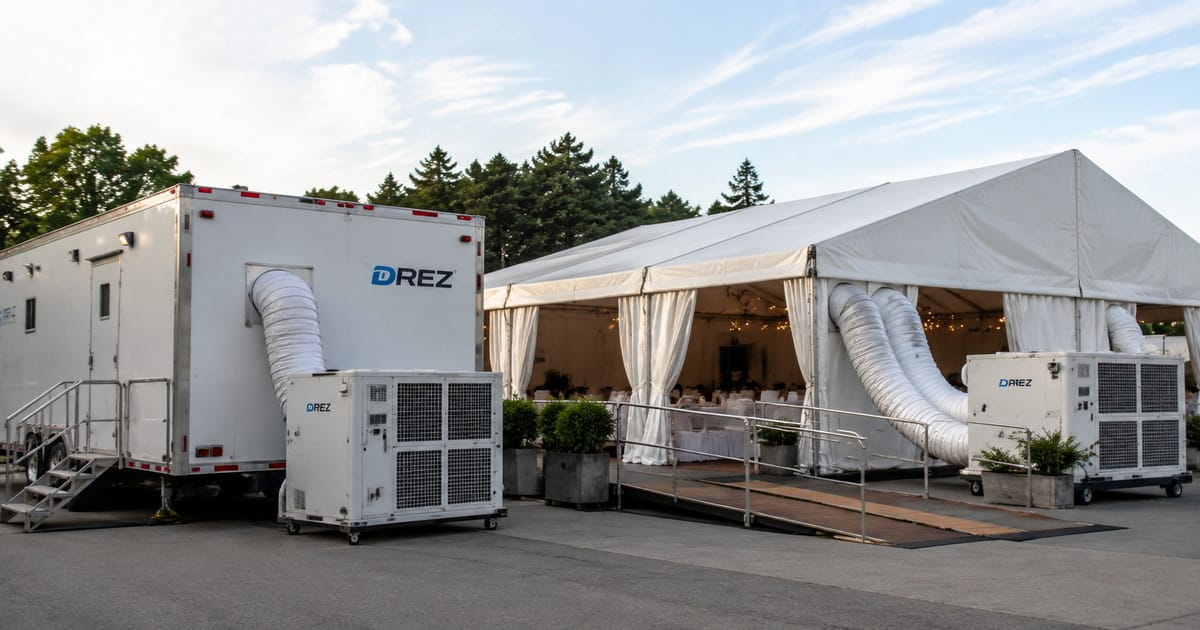
Its parent group has operated since the early 2000s, supporting thousands of cooling projects across mainland China, Hong Kong and Macao. This gives DREZ deep experience with high‑load, temporary and mobile HVAC scenarios, including large events and factory environments.
The product portfolio includes tent air conditioners, trailer‑mounted units, rooftop packages for steel structures and fresh‑air ventilation units. DREZ is particularly suited to overseas brand owners and project contractors seeking high cost‑performance combined with flexible engineering support. The company offers extensive OEM and ODM services: structural redesign for trailers and tents, capacity optimization, customized control logic and branding support for small and medium brands.
Key points:
– Location: Panyu District, Guangzhou, within a major climate‑control cluster.
– Capacity: Annual production above ten thousand units for mobile and tent AC.
– Markets: Domestic event and industrial projects plus expanding overseas business since the mid‑2010s.
– OEM/ODM: Deep customization with relatively flexible minimum order quantities for project‑based collaborations.
2. Shenzhen Uni‑Right Industrial & Trading Co., Ltd.
Shenzhen Uni‑Right Industrial & Trading Co., Ltd. combines manufacturing and trading functions to supply portable and mobile air conditioning products from Shenzhen. The company leverages local appliance and electronics ecosystems to serve consumer and light commercial markets.
For trailer projects, Uni‑Right is relevant when buyers need mid‑volume portable units or semi‑mobile solutions that can be integrated into light commercial trailers or cabins. It focuses on standardized product lines and supports common OEM needs such as logo printing, packaging design and minor specification adjustments.
Key points:
– Location: Shenzhen, with strong export logistics and appliance supply chains.
– Markets: Consumer and light commercial segments using portable AC.
– OEM/ODM: Branding and packaging‑oriented customization; suitable for retail‑oriented product lines.
3. Ningbo Hoome Information Technology Co., Ltd.
Ningbo Hoome Information Technology Co., Ltd. is associated with portable air conditioners and home appliance products manufactured in the Ningbo region. It typically operates at high volumes, supplying consumer markets and e‑commerce channels.
From a trailer HVAC perspective, Ningbo Hoome is relevant for buyers needing cost‑effective portable units to install in smaller trailers or mobile kiosks where heavy engineering is not required. Customization is mainly cosmetic, making this supplier more suitable for standardized consumer programs than for complex industrial or special‑purpose trailers.
Key points:
– Location: Ningbo, a coastal appliance‑manufacturing hub.
– Markets: Household portable AC and related consumer applications.
– OEM/ODM: Cosmetic changes, branding and packaging for high‑volume campaigns.
4. Jinan Amrta Air Conditioning Co., Ltd.
Jinan Amrta Air Conditioning Co., Ltd. manufactures packaged climate systems and air conditioning solutions for commercial and industrial applications. Its range includes fixed rooftop units and mobile equipment suitable for project‑based deployments.
For trailer AC buyers, Amrta is a candidate when projects require integrated systems combining fixed and mobile units, such as logistics hubs or industrial facilities with both permanent structures and mobile workspaces. Technical adjustments can be discussed at project level, but buyers should carefully review product portfolios to determine which models are appropriate for mobile or trailer use.
Key points:
– Location: Jinan, with a focus on commercial HVAC manufacturing.
– Markets: Commercial buildings, industrial sites and selective mobile deployments.
– OEM/ODM: Engineering modifications and project‑specific configurations.
5. SONGZ Automobile Air Conditioning Co., Ltd.
SONGZ Automobile Air Conditioning Co., Ltd. is a well‑known supplier of vehicle climate systems, serving bus, truck and special‑purpose vehicle manufacturers. Its core expertise lies in automotive HVAC under continuous vibration and changing operating conditions.
This background makes SONGZ a natural partner for trailer‑integrated air conditioning where systems must run reliably during transport or stationary operation. Typical applications include refrigerated trailers, mobile clinics, event trucks and specialized equipment vehicles. Collaboration usually focuses on platform‑specific system design, rather than stand‑alone units.
Key points:
– Markets: Automotive OEMs, bus and truck manufacturers, special vehicles.
– Strengths: Vibration‑resistant designs, automotive electrical integration and refrigerant management.
– OEM/ODM: Platform‑specific systems matched to vehicle programs and usage scenarios.
6. Dongguan Ruixin Environmental Protection and Energy‑Saving Equipment Co., Ltd.
Dongguan Ruixin Environmental Protection and Energy‑Saving Equipment Co., Ltd. produces mobile air coolers and energy‑saving cooling devices for factories, workshops and semi‑open spaces. Many of its products rely on evaporative cooling technology.
Although evaporative coolers differ from traditional compressor‑based AC, they play an important role in industrial environments and can be combined with trailer AC systems. Buyers may deploy Ruixin’s mobile coolers around trailers or inside large temporary structures to reduce overall heat load, especially in dry climates.
Key points:
– Location: Dongguan, within a strong industrial equipment cluster.
– Markets: Factories, workshops and semi‑open industrial zones.
– OEM/ODM: Airflow and coverage optimization, plus branding for industrial and commercial fleets.
7. Guangdong Ruitai Ventilation and Cooling Equipment Co., Ltd.
Guangdong Ruitai Ventilation and Cooling Equipment Co., Ltd. focuses on ventilation systems, large fans and mobile air coolers for industrial facilities. Its products emphasize high airflow rather than precision temperature control.
In trailer settings, Ruitai’s solutions are typically used to support large temporary structures or industrial trailers where robust ventilation is essential. Buyers targeting factory‑level deployments often equip both trailers and surrounding spaces with Ruitai devices to improve overall working conditions.
Key points:
– Markets: Industrial workshops, warehouses, production areas.
– Strengths: High‑airflow ventilation and energy‑efficient mobile cooling.
– OEM/ODM: Configuration tuning and branding for multi‑site industrial projects.
8. Foshan Yitong Environmental Protection Equipment Co., Ltd.
Foshan Yitong Environmental Protection Equipment Co., Ltd. is a newer player specializing in mobile air coolers and water‑cooled climate units positioned around energy efficiency and environmental protection.
Trailer AC buyers interested in low‑energy supplementary cooling for large temporary spaces or environmentally conscious projects can consider Yitong as a partner. Its equipment is often used as an additional layer of cooling alongside trailer AC systems in zones with lower temperature requirements.
Key points:
– Location: Foshan, an important manufacturing city in Guangdong.
– Markets: Energy‑sensitive warehouses, light industrial sites, temporary event spaces.
– OEM/ODM: Performance‑focused customization, plus branding aligned with energy‑saving messages.
9. Shanghai Daohe Industrial Development Co., Ltd.
Shanghai Daohe Industrial Development Co., Ltd. supplies mobile air coolers and heating equipment, such as hot‑blast stoves, for industrial and commercial customers. The company’s product mix addresses both summer cooling and winter heating needs.
For trailer applications, Daohe is attractive when mobile work trailers or temporary structures must operate year‑round in regions with significant temperature swings. Buyers can integrate cooling and heating solutions from a single supplier to streamline maintenance and spare‑parts management.
Key points:
– Location: Shanghai region, with strong industrial infrastructure.
– Markets: Industrial facilities and logistics operations facing seasonal extremes.
– OEM/ODM: Combined cooling and heating packages tailored to project requirements.
10. Huai’an Jujiu Energy‑Saving Technology Co., Ltd.
Huai’an Jujiu Energy‑Saving Technology Co., Ltd. focuses on energy‑saving ventilation and mobile cooling devices for factories and workshops. Its product range includes mobile air coolers and large fans optimized for continuous operation in industrial environments.
Buyers can utilize Jujiu’s solutions alongside trailer AC when fixed full‑coverage air conditioning is impractical, for example in large workshops using mobile maintenance trailers or service stations. The emphasis is on energy‑efficient airflow, durability and improved worker comfort.
Key points:
– Markets: Multi‑site industrial deployments and factory rollouts.
– Strengths: Energy‑saving ventilation and robust mobile cooling equipment.
– OEM/ODM: Airflow scaling, efficiency features and branding for industrial customers.
Trailer AC Supplier Comparison: Capacity, MOQ And Customization Focus
The table below compares typical tendencies among the listed manufacturers. Exact figures should be verified directly with each factory.
| Manufacturer | Capacity focus | Typical MOQ for OEM/ODM | Customization and compliance focus |
|---|---|---|---|
| DREZ (Guangzhou) | Medium‑to‑high capacity for mobile and tent AC, with project‑driven planning. | Flexible for project‑based OEM and small‑to‑medium brands. | Structural and control customization, export documentation aligned with project needs. |
| Shenzhen Uni‑Right | Mid‑to‑high volume portable AC for consumer and light commercial use. | MOQs aligned to retail runs and standardized models. | Branding and packaging customization; standard appliance compliance. |
| Ningbo Hoome | High‑volume household portable AC. | Higher MOQs tied to large consumer campaigns. | Cosmetic OEM; buyers must confirm electrical and environmental compliance model by model. |
| Jinan Amrta | Commercial packaged systems plus selected mobile units. | MOQs vary by project size; flexible for engineered solutions. | Project‑level engineering, documentation for building and industrial applications. |
| SONGZ Automobile AC | Large capacity in bus, truck and vehicle HVAC. | Tied to vehicle platform and program volumes. | Automotive HVAC standards, vibration‑resistant designs, vehicle integration. |
| Dongguan Ruixin | Bulk mobile air coolers for industrial sites. | Suitable for factory‑level orders across multiple workshops. | Airflow and coverage customization; safety and energy‑saving documentation. |
| Guangdong Ruitai | Industrial ventilation and cooling systems. | Favours multi‑site deployments with orders in hundreds of units. | Ventilation system design tuned to workshop layouts and regulations. |
| Foshan Yitong | Growing capacity in eco‑oriented mobile coolers. | Balanced MOQs, accessible for pilot projects. | Energy‑efficiency claims; performance and eco documentation for sustainability‑focused buyers. |
| Shanghai Daohe | Industrial mobile coolers and heaters. | MOQs shaped by combined cooling and heating packages. | Dual‑season climate solutions, project‑specific equipment combinations. |
| Huai’an Jujiu | Medium‑scale mobile coolers and ventilation devices. | Aligned to factory‑level and multi‑site rollouts. | Energy‑saving ventilation with emphasis on durability under continuous use. |
Buyer’s Guide: From Shortlist To First Shipment
1. Shortlisting and initial screening
Start by defining your primary trailer application: event trailers, workshop trailers, mobile clinics, refrigerated trailers or tent‑connected trailers. This determines whether you should prioritize project‑focused suppliers like DREZ, automotive‑integrated manufacturers such as SONGZ, or industrial cooling partners like Ruixin and Ruitai.
During shortlisting, evaluate product fit, reference projects, export track record in your region and the balance between pricing and engineering support. Request company profiles, catalogs and case studies. Eliminate factories with limited mobile or trailer experience, unclear communication habits or incomplete documentation practices.
2. Technical alignment and sample development
After shortlisting, move into technical alignment. Discuss cooling capacity ranges, power supply options, expected ambient conditions, trailer insulation levels and mounting interfaces. Agree on target noise levels, serviceability requirements and control strategies.
Order multiple samples from each candidate rather than relying on a single prototype. Test these units in representative trailers or tents, ideally logging temperature, humidity, energy consumption and noise during realistic operating cycles. This reduces the risk of selecting suppliers based on ideal lab conditions that do not reflect field reality.
3. Contract details, inspections and logistics
In the contract, include a detailed technical annex: agreed bill of materials, key component brands and models, performance criteria and test procedures. Freeze drawings and BOM at a specific revision and implement clear change‑control procedures.
One internal “avoid‑pitfall” practice used by experienced buyers is to require the factory to sign a clause stating that no component substitutions are allowed without written approval. Combined with random teardown inspections of units from the first batches, this strongly discourages silent downgrades of compressors, coils or electronic components between sample and mass production.
On the logistics side, verify packaging robustness and loading plans, especially if units will be transported long distances or installed in demanding environments. Define spare‑parts lists, preventive maintenance intervals and stock‑holding strategies before the first shipments arrive.
Common Industry Pain Points And How To Avoid Them
Real‑world trailer AC projects often encounter recurrent issues. Addressing them early can significantly improve fleet reliability.
– Performance mismatch
Systems sized on nominal capacity alone may not maintain comfort in poorly insulated trailers or extreme ambient temperatures. Always validate performance in real conditions and adjust capacity, airflow and insulation requirements accordingly.
– Component substitutions
When cost pressure increases, some factories may quietly change compressor brands, coil designs or control boards. Detailed BOMs, no‑substitution clauses and deliberate teardown inspections per batch help keep designs stable over time.
– Incomplete documentation
Missing or inconsistent declarations, test reports or manuals cause delays at customs and during installation. Agree on a documentation checklist at quotation stage and make complete paperwork a condition for shipment release.
– Weak after‑sales planning
Trailer fleets require clear preventive maintenance schedules, spare‑parts kits and response protocols. Set expectations in writing and integrate them into internal operating procedures so that technical teams know exactly how to support deployed units.
The combination of strict BOM management, sample‑to‑mass‑production consistency checks and documented maintenance plans forms an effective internal safeguard that many seasoned buyers quietly use, even though it is rarely discussed openly.
Conclusion
China’s trailer and mobile air conditioning industry combines mature component ecosystems, extensive export experience and increasingly sophisticated engineering capacities. Within this environment, manufacturers such as DREZ and the other companies profiled here offer different strengths, from project‑driven trailer units and tent AC to automotive‑integrated systems and industrial mobile coolers.
For procurement managers, the key is to align supplier selection with application requirements, capacity planning and risk‑control strategies. Clear evaluation criteria, disciplined sample testing, strict BOM management and documented maintenance plans together create a dependable foundation for long‑term cooperation with Chinese trailer AC manufacturers.
By using the insights and safeguards outlined in this guide, global buyers can build stable, scalable partnerships and deploy trailer‑based cooling solutions that perform reliably across diverse industrial, commercial and event scenarios.
FAQ: Advanced Questions From Trailer AC Procurement Managers
1. How can I confirm that a factory’s quality certification is valid and current?
Ask for the certificate showing the issuing registrar, scope and expiry date. Then check the registrar’s official website or database using the certificate number. During factory visits, compare internal process documents and records with the certificate scope to confirm that the system is actually implemented.
2. How do I verify that trailer AC units comply with electrical and safety requirements in my destination market?
Request declarations of conformity, detailed test reports from accredited labs and a summary of the standards applied. Ensure that reports list the exact models you intend to purchase. If necessary, commission an independent third‑party lab or inspection company to re‑test samples before mass production.
3. What sample strategy is appropriate before ordering a large trailer AC fleet?
For complex applications, many buyers use multiple samples per supplier—often between three and ten units—to test installation, performance variability and consistency of workmanship. Running field trials under realistic operating conditions provides insight that a single, “perfect” showroom sample cannot deliver.
4. How can I keep OEM trailer AC designs stable across several years of procurement?
Freeze designs at an agreed revision, maintain signed drawings and BOMs, and implement written change‑approval procedures. Hold annual technical reviews with the supplier to discuss performance feedback, failure analysis and potential improvements, while ensuring any design updates are documented and mutually approved.
5. What preventive maintenance practices are recommended for trailer AC used in intensive rental or industrial environments?
Define inspection routines before and after major deployments, including filter cleaning, coil inspection, electrical connection checks and basic refrigerant checks where permissible. Agree deeper maintenance intervals—such as semi‑annual or annual overhauls—based on manufacturer recommendations and operating intensity, and integrate them into fleet operating manuals.
References
1. Statista – China air conditioners market: forecast and segmentation overview
https://www.statista.com/outlook/cmo/household-appliances/major-appliances/air-conditioners/china
2. Baidu B2B Data – Air conditioner manufacturers ranking in China (2026)
3. Baidu B2B Data – Mobile air cooler manufacturers ranking in China (2026)
https://b2bdata.baidu.com/en/rank/k/all-area/mobile-air-cooler
4. Made‑in‑China – Portable air conditioner manufacturers directory
https://www.made-in-china.com/manufacturers/portable-ac.html
5. Ensun – Automotive HVAC manufacturers in China
https://ensun.io/search/automotive-hvac/china
6. SAE International – Procedure for mobile air conditioning system component and technician certification (J2911)
https://www.sae.org/standards/content/j2911_202002
7. DREZ (Guangzhou) Intelligent Technology Co., Ltd. – Company profile and product overview
https://www.drezaircon.com/about-us
Hot Tags: Trailer Air Conditioning, Mobile Air Conditioning Manufacturer, Trailer HVAC Supplier China, Tent Air Conditioner Factory, OEM Trailer Air Conditioner, ODM Mobile Cooling Solutions, Industrial Mobile AC Systems, China Trailer AC Manufacturer, Event Cooling Equipment Supplier, Automotive Trailer HVAC Systems